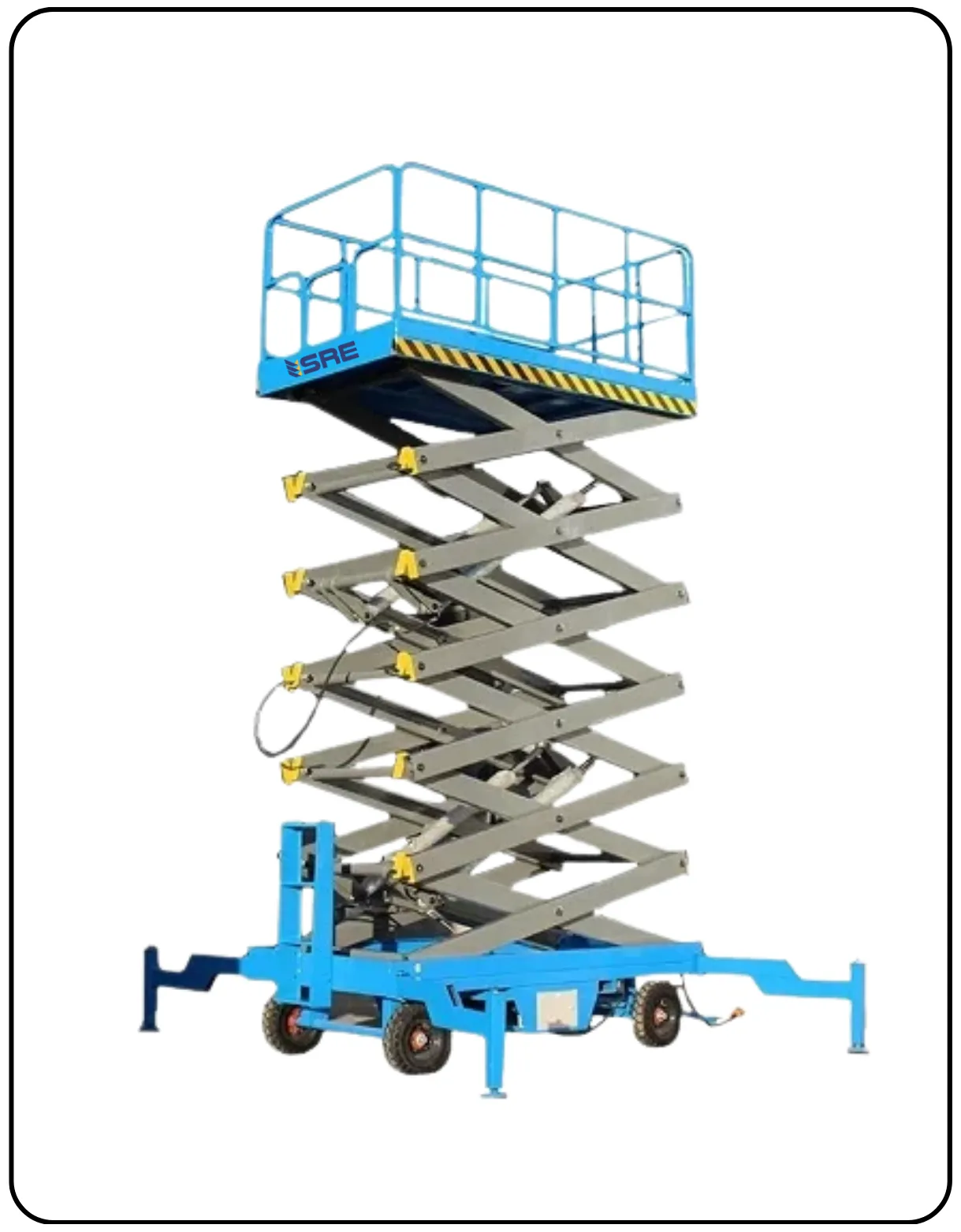
500 kg-900 mm (All Size Available)
Rs. 26000
(Taxes to be paid extra)
Brand: SRE
Min Order Qty: 1
In Bhosri’s industrial belt, many factories lose time and expose workers to strain when heavy components, bins, and assemblies are moved by hand between floor level and working height. A reliable lift platform solves this problem by improving height adjustment, reducing manual handling, and supporting safe load transfer. That is why many buyers looking for a
Scissor Lift Table in Bhosri
also compare proven lifting systems from
scissor lift manufacturer and supplier
solutions that fit shop floors, dispatch zones, production lines, and warehouse operations.
Why Industries in Bhosri Need a Scissor Lift Table
Many plants in Bhosri handle dies, fabricated parts, cartons, drums, and machine components at different heights every day. When operators depend on manual lifting, fixed-height benches, or makeshift platforms, the process becomes slow, unsafe, and inconsistent. A Scissor Lift Table in Bhosri solves this by giving controlled vertical movement for load positioning, and the result is better ergonomics, smoother workflow, and higher daily output.Procurement heads and factory managers often face a second problem: they need equipment that is affordable, durable, and easy to maintain without production disruption. SRE Material Handling Equipment Pvt. Ltd. addresses this with robust lift tables built for industrial use, practical dimensions, and dependable hydraulic lifting. The result is a buying decision that supports both budget control and long-term operational value.In locations such as Pune, Ahmedabad, Vadodara, Chennai, Hyderabad, Bangalore, Jaipur, and Noida, industries are upgrading material handling systems to reduce manual dependency and improve process safety. The same need is visible in Bhosri, where engineering units, warehouses, automotive vendors, and machine shops want equipment that fits compact spaces and repetitive workflows. A scissor lift table meets this need and delivers faster handling, safer loading, and lower operator fatigue.What Is a Scissor Lift Table?
Heavy items are hard to raise to the right working height using manual methods, and that creates back strain, product damage, and line delays. A scissor lift table is a platform lifting system that uses crossed support arms and hydraulic or powered actuation to raise and lower loads safely. The result is precise height control for assembly, inspection, packing, loading, and machine feeding applications.Buyers also need flexibility because one plant may handle raw material bins while another may position finished goods for packing. SRE offers models and configurations suitable for varied capacities, lift heights, and platform sizes, including options related to
hydraulic scissor lift
and
electric scissor lift
requirements. The result is easier integration into production, warehouse, and maintenance environments.Applications of Scissor Lift Table in Bhosri Industries
Many industrial units struggle when the same team must lift, align, and transfer loads at benches, conveyors, or machine stations. A scissor lift table solves this by bringing the workpiece or pallet to the right height instead of forcing workers to bend or reach. The result is safer handling and improved process consistency across shifts.Common industrial applications
- Assembly line height adjustment
- Pallet loading and unloading
- Machine feeding and component transfer
- Die and tool positioning
- Packing and dispatch stations
- Warehouse sorting and staging
- Maintenance and fabrication support tasks
Plants that deal with heavy tools and molds often need more than one lifting device for different tasks. In such cases, buyers also evaluate related equipment like
industrial die loader systems
for die movement and placement. The result is a more complete material handling setup that reduces downtime and improves changeover efficiency.Warehouses and shop floors with movement between stations face another issue: fixed lifting points cannot serve changing work zones. Teams often compare use cases with mobile solutions such as
mobile scissor lift table applications
when planning future expansion. The result is better selection based on workflow, floor space, and movement frequency.Key Features of SRE Scissor Lift Table
Industrial buyers do not just need lifting; they need controlled, reliable, and repeatable lifting under daily load cycles. SRE designs scissor lift tables with stable platforms, rugged structures, and dependable lifting mechanisms to handle industrial use. The result is smooth performance in factories, warehouses, and engineering units that cannot afford frequent equipment failure.- 500 kg load capacity suitable for many standard industrial handling tasks
- 900 mm lift height for ergonomic work positioning
- All size available for varied plant requirements
- Heavy-duty steel construction for long service life
- Stable scissor mechanism for controlled vertical movement
- Low maintenance design for reduced downtime
- Compact footprint for tighter industrial layouts
- Operator-friendly usage for repetitive handling cycles
Another common problem is equipment wear caused by poor design or underbuilt frames, especially in high-cycle operations. A properly engineered scissor lift table uses suitable materials, stable geometry, and quality hydraulic components to support regular lifting without excessive vibration or platform instability. The result is better safety, longer working life, and more predictable maintenance planning.Technical Specifications: 500 kg – 900 mm Model
Buyers need technical clarity before they approve any capital or operational purchase. Without clear specifications, it becomes hard to compare capacity, lift height, application fit, and cost. The table below gives the practical product details for the SRE Scissor Lift Table in Bhosri, helping procurement teams make a faster and more informed decision.| Specification | Details |
|---|
| Product Name | Scissor Lift Table |
| Location Focus | Bhosri |
| Brand | SRE |
| Load Capacity | 500 kg |
| Lift Height | 900 mm |
| Available Sizes | All sizes available |
| Price | Rs. 26000 |
| Taxes | Extra as applicable |
| Minimum Order Quantity | 1 Unit |
| Application | Material handling, loading, unloading, assembly, transfer |
| Operation Type | Industrial lifting platform |
| Safety Focus | Stable load handling and ergonomic working height |
| Maintenance | Low maintenance with routine inspection |
Benefits for Procurement Heads and Factory Managers
Procurement teams are under pressure to reduce cost without compromising operational reliability. When low-cost handling methods lead to injuries, damage, or cycle delays, the hidden cost becomes much higher than the initial saving. A Scissor Lift Table in Bhosri solves this by improving vertical load handling at the source, and the result is stronger return on investment through productivity and safety gains.1. Better workplace safety
Manual lifting of components and cartons increases the risk of strain, slips, and uncontrolled load movement. A lift table provides controlled height adjustment and better load access for operators. The result is a safer workstation and fewer avoidable handling incidents.2. Improved productivity
Time is lost when operators keep repositioning loads with blocks, ramps, or repeated manual effort. A lift table puts the material at the required height quickly and consistently. The result is faster cycle time and smoother process flow.3. Reduced product damage
Components can be dropped, dragged, or misaligned when handling is not stable. A scissor lift table gives a reliable platform for elevation and transfer. The result is lower damage risk and better handling quality.4. Lower operator fatigue
Repetitive bending and lifting reduce worker efficiency over long shifts. With proper lifting support, operators work in a more ergonomic posture. The result is less fatigue and more consistent output.5. Better use of floor space
Plants in Bhosri often have limited room between machines, racks, and movement aisles. A compact scissor lift table fits into work cells where bulky alternatives are not practical. The result is efficient handling without major layout change.Buyer-Focused Comparison: Why a Scissor Lift Table Makes Sense
Buyers usually compare a scissor lift table against manual handling, fixed tables, forklifts, and improvised lifting methods. Each option may solve part of the problem, but not all of it. The comparison below helps procurement heads and factory managers choose based on actual use, and the result is a more practical purchase decision.| Option | Problem | Solution Level | Result |
|---|
| Manual Lifting | High fatigue, injury risk, low efficiency | Very low | Poor safety and slow throughput |
| Fixed Height Table | No vertical adjustment | Low | Limited usability across tasks |
| Forklift Support | Not ideal for precise workstation height positioning | Medium | Useful for transport, not ergonomic work access |
| Improvised Blocks/Ramps | Unsafe and unstable | Very low | High risk and inconsistent operations |
| Scissor Lift Table | Need safe, stable, adjustable height handling | High | Better safety, productivity, and control |
If your facility handles both lifting and transfer tasks, you may also compare product combinations across SRE’s broader material handling lineup through the
SRE material handling equipment homepage
and use project-specific inquiry support through
industrial contact and inquiry support.
The result is a better-matched solution for present needs and future scaling.Safety, Standards, and Maintenance Considerations
A lift table can improve operations only when safety and maintenance are treated as part of the buying decision. Poor inspection practices, overload use, and uneven placement reduce equipment life and increase handling risk. Following recognized safety practices and using equipment as specified solves this issue, and the result is safer operation with longer service life.Buyers can refer to recognized guidance on safety systems and workplace lifting practices from authoritative bodies such as
OSHA materials handling guidance,
manufacturing standards information from
ISO standards resources,
and industrial compliance references through
Government of India labour and workplace safety resources.
The result is more confident evaluation of equipment safety, training needs, and compliance expectations.Basic maintenance checklist
- Inspect the platform and structure for visible wear
- Check hydraulic performance and leak points
- Confirm safe load limits are followed
- Keep moving parts clean and properly maintained
- Train operators on correct loading and unloading
- Review lifting smoothness and platform stability regularly
Why Choose SRE Material Handling Equipment Pvt. Ltd.
Industrial buyers often struggle to find a supplier that understands real factory conditions instead of offering generic equipment. SRE focuses on practical material handling solutions that match production needs, load requirements, and working environments. The result is a more dependable buying experience for procurement heads, maintenance teams, and factory managers.A second issue is after-sales confidence. Buyers want a supplier that can support discussion around specifications, application suitability, and order quantity even for a single unit requirement. SRE addresses this with industry-focused product support and accessible inquiry channels, and the result is smoother product selection from first contact to final procurement.- Industrial product focus
- Application-oriented equipment selection
- Single-unit ordering support
- Suitable for factories, warehouses, and engineering units
- Options across hydraulic and electric lifting solutions
- Practical pricing for industrial buyers
Industries and Locations Served
Industrial handling needs are not limited to one city or one type of plant. Manufacturers in Ahmedabad, Pune, Vadodara, Chennai, Hyderabad, Bangalore, Jaipur, and Noida all face similar problems with load height, worker fatigue, workstation flow, and safe transfer. SRE solutions are designed to address these recurring material handling issues, and the result is wider relevance across automotive, engineering, fabrication, logistics, and warehouse operations.For buyers in Bhosri, this matters because it shows the equipment is aligned with the same industrial standards expected in major manufacturing centers across India. A well-chosen Scissor Lift Table in Bhosri supports local productivity while matching the performance expectations seen in larger industrial clusters. The result is a stronger upgrade path for growing factories and established units alike.How to Select the Right Scissor Lift Table
Wrong equipment selection leads to underperformance, extra wear, or poor operator acceptance. The best way to avoid this is to evaluate the actual load, platform size, lift height, duty cycle, and available floor space before buying. The result is a lift table that fits the process instead of creating a new bottleneck.Checklist for buyers
- What is the maximum load in kg?
- What lift height is required for the workstation?
- What platform dimensions fit the material?
- How often will the table be used per shift?
- Is stationary or mobile movement needed?
- What level of safety control is required?
- What maintenance support is expected?
If you are comparing different lifting and handling products for a multi-use facility, reviewing related use cases such as
die loader use in industrial handling
can help define whether your operation needs one machine or a combination of systems. The result is smarter procurement with fewer compromises later.Conclusion
Factories in Bhosri need material handling systems that reduce manual strain, improve safety, and support consistent production flow. A properly selected Scissor Lift Table in Bhosri solves common shop-floor lifting problems through controlled elevation, ergonomic access, and reliable load handling. The result is better productivity, lower fatigue, and stronger value for procurement and operations teams.The SRE 500 kg-900 mm model is a practical option for buyers who want dependable industrial lifting at a competitive price point. With all sizes available, a minimum order quantity of one, and application support from a focused material handling brand, it is a useful investment for factories, warehouses, and engineering units. The result is a faster path from inquiry to implementation.Frequently Asked Questions
1. What is the load capacity of this Scissor Lift Table in Bhosri?
Many buyers need a standard model for daily industrial handling without overinvesting in oversized equipment. This SRE model offers a 500 kg load capacity, which suits many factory, warehouse, and assembly applications. The result is balanced performance for common lifting tasks.2. What is the lift height of the model?
Workstations often fail when the platform height does not match operator requirements. This model provides a 900 mm lift height to support ergonomic loading, unloading, and working access. The result is better operator comfort and smoother material positioning.3. What is the price of the 500 kg-900 mm scissor lift table?
Price uncertainty slows procurement approvals and vendor comparison. The listed price for this model is Rs. 26000, with taxes extra as applicable. The result is quick budgeting and easier commercial evaluation.4. Is this scissor lift table suitable for factory use in Bhosri?
Factory managers need equipment that can handle repetitive industrial work, not light-duty commercial usage. This model is intended for material handling, workstation support, and industrial load transfer applications. The result is better fit for manufacturing and warehouse operations.5. Can I order one unit only?
Some buyers need to test one machine before larger deployment, but many suppliers push bulk orders. SRE offers a minimum order quantity of 1 unit for this product. The result is easier pilot buying and phased expansion.6. Are custom sizes available?
Standard sizes do not always match platform dimensions, bin sizes, or workstation layouts. SRE mentions all sizes available for this scissor lift table range. The result is better application fit for varied industrial needs.7. How do I get a quote for a Scissor Lift Table in Bhosri?
Delayed inquiry response can slow urgent purchase decisions for production teams. You can contact SRE directly through the official inquiry page for pricing, specifications, and order discussion. The result is a faster buying process and clearer product selection.