SRE Material Handling Equipment Pvt. Ltd.: Manufacturer, Supplier And Exporter Dock Leveler in Gujarat.
SRE Material Handling Equipment Pvt. Ltd., Manufacturer And Supplier Of Dock Leveler in Ahmedabad.
Our Manufacturing Unit is in Ahmedabad, Vadodara, and Rajkot, Gujarat, India.
Dock Leveler in Ahmedabad: Practical Solutions for Modern Warehouse Operations
This is where the Dock Leveler becomes a practical solution. In cities like Ahmedabad, where manufacturing, logistics, and distribution activity continues to grow, warehouse teams increasingly rely on dock levelers to maintain speed, safety, and consistency at the loading dock.
In daily warehouse and factory operations, things look very different from even a decade ago. Shipment volumes have increased. Delivery timelines have become tighter. Labor availability is unpredictable. Safety expectations are higher.
The Changing Needs of Modern Warehouses and Industries
Warehouses today are no longer just storage spaces. They are active processing zones. Goods move in and out continuously.
Operations teams now deal with:
- Multiple vehicle sizes arriving throughout the day
- Tight dispatch and receiving windows
- Pressure to reduce manual handling
Rising safety expectations from workers and regulators
In real operations, the biggest delays often don’t happen inside storage areas. They happen at the dock—when trucks wait, forklifts hesitate, or workers struggle to bridge height differences manually.
What Is a Dock Leveler?
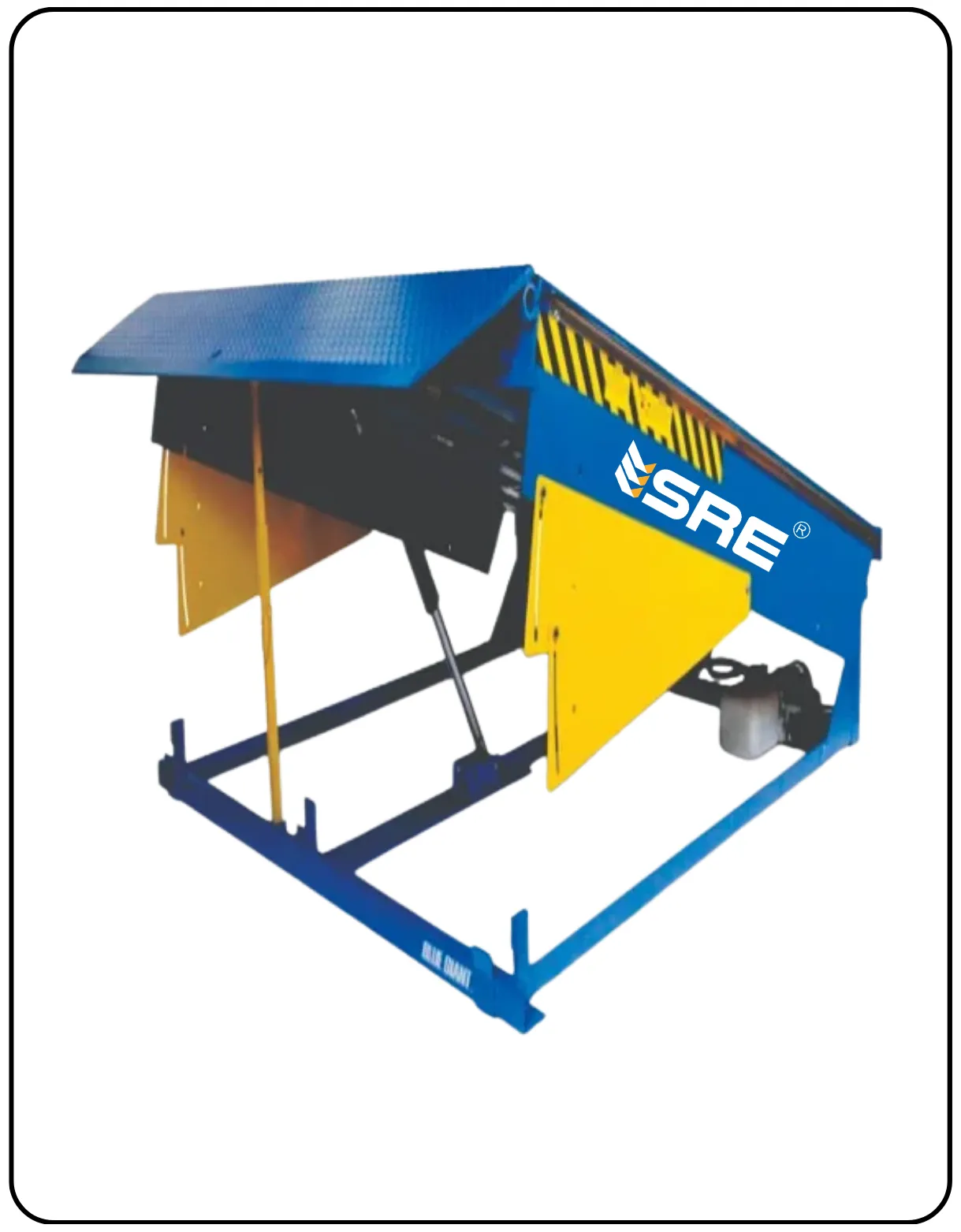
A dock leveler is a platform installed at the loading bay that bridges the height difference between the warehouse floor and the truck bed.
In simple operational terms, it creates a smooth, stable path so forklifts, pallet trucks, and workers can move goods in and out without climbing, lifting, or adjusting makeshift ramps.
Instead of workers dealing with uneven surfaces or manual wooden boards, the dock leveler automatically or mechanically adjusts to the truck height and stays stable during loading and unloading.
Why Dock Leveler Is Replacing Traditional Manual Methods ?
Earlier, many warehouses used:
- Wooden plank
- Loose metal plates
- Manual ramps
- Temporary blocks and wedges
These solutions worked only when volume was low and safety rules were flexible. Today, they cause more problems than they solve.
Manual methods create:
- Inconsistent loading heights
- Risk of slipping or shifting
- Worker fatigue from constant lifting and adjusting
- Delays when adjustments are needed
Modern dock levelers remove this uncertainty. They provide a controlled surface that adjusts once and stays stable throughout the operation. This consistency matters when multiple shifts and different teams use the same dock.
Productivity Gains in Daily Operations
In daily warehouse operations, small time savings add up quickly.
Without a dock leveler, workers spend time:
- Positioning makeshift ramps
- Adjusting for different truck heights
- Stopping when boards slip or move
With a dock leveler:
- Vehicles align faster
- Forklifts move directly into trucks
- Loading and unloading become continuous
Over a full shift, this saves hours. More importantly, it creates predictable workflow. Teams can plan dispatch and receiving times with confidence, instead of constantly adjusting for dock delays.
Improved Workplace Safety
Loading docks are one of the most accident-prone areas in a warehouse.
Common risks include:
- Forklifts tipping due to uneven surfaces
- Workers slipping on loose boards
- Pallet trucks getting stuck at height gaps
- Manual lifting injuries
A dock leveler creates a stable, even path between dock and vehicle. This reduces sudden drops, uneven transitions, and manual lifting.
In real operations, fewer slips and falls mean:
- Fewer injury-related absences
- Less downtime for investigations
- Lower stress for workers handling heavy loads
Safety is not just about rules—it is about giving people equipment that supports safe movement naturally.
Handling Heavier Loads with Ease
Modern warehouses handle heavier and denser loads than before.
Machinery parts, packaged goods, bulk materials, and palletized products all require stable movement paths. Manual ramps and planks are not designed for repeated heavy loads. They bend, shift, and wear out quickly.
Dock levelers are built to handle consistent weight movement. They stay stable under forklifts, loaded pallet trucks, and stacked pallets.
This stability gives operators confidence. They move at working speed instead of slow, cautious movements caused by fear of tipping or slipping.
Technology and Operational Efficiency
Dock levelers come in mechanical, hydraulic, and electric types. Each has different operational advantages.
- Mechanical systems work through simple springs and levers.
- Hydraulic systems use fluid pressure for smooth movement.
- Electric systems use motors and controls for easy adjustment.
From an operational view, what matters most is:
- Quick adjustment to different truck heights
- Smooth movement without jerks
- Minimal breakdown risk
- Easy control for workers
Reliable systems reduce waiting time at the dock and reduce frustration for operators who use the equipment daily.
Space Optimization and Maneuverability
In many Ahmedabad warehouses, space is limited. Buildings are often designed for high storage density, leaving little room at docks.
Dock levelers fit directly into the dock pit and do not take up extra floor space. When not in use, they stay flush with the dock floor.
This allows:
- Easy movement of forklifts near the dock
- No obstruction for storage or traffic lanes
- Better planning of narrow or compact loading areas
For facilities handling multiple vehicles in limited space, this makes a big difference.
Cost Efficiency Over Time
Some decision-makers hesitate because of initial equipment cost. But daily operations tell a different story over time.
Without proper dock equipment, warehouses face:
- Higher injury-related costs
- Slower vehicle turnaround
- Higher labor fatigue and turnover
- Damage to goods and equipment
Dock levelers reduce hidden costs by:
- Speeding up loading cycles
- Reducing injury risk
- Reducing damage from uneven movement
- Improving worker productivity
Over years of use, these operational savings usually outweigh the initial investment.
Sustainability and Compliance
Sustainable operations are not only about energy usage. They are also about reducing waste, damage, and unsafe practices.
Dock levelers support sustainability by:
- Reducing product damage during loading
- Reducing repeated repair of temporary ramps
- Supporting safer work conditions
Many safety and factory inspection standards now expect controlled loading systems rather than makeshift arrangements. Using proper dock equipment supports compliance with workplace safety expectations.
Integration with Warehouse and Factory Workflow
In real facilities, equipment must fit into existing systems.
Dock levelers integrate easily with:
- Forklift and pallet truck movement paths
- Conveyor systems near docks
- Loading schedules and dock assignments
- Safety barriers and dock shelters
They become part of the daily routine. Operators don’t need to think about them—they just use them as naturally as the dock floor itself.
Training, Ease of Use, and Maintenance
Most dock levelers are simple to operate. Basic training is enough for workers to understand:
- How to raise and lower the platform
- How to secure it before loading
- How to return it to rest position
Maintenance usually involves:
- Regular inspection
- Lubrication of moving parts
- Checking hydraulic or mechanical components
Predictable maintenance prevents sudden breakdowns that disrupt loading schedules.
Why Dock Leveler in Ahmedabad Needs a Reliable Manufacturer ?
Ahmedabad has a strong industrial base—textiles, pharmaceuticals, engineering goods, FMCG, and logistics hubs.
For this environment, choosing a reliable dock leveler supplier matters because:
- Local service support reduces downtime
- Experienced manufacturers understand industrial conditions
- Quality materials last longer under heavy use
- Compliance with safety standards avoids legal trouble
Decision-makers should look for manufacturers who focus on operational reliability rather than just selling equipment.
Conclusion
In today’s fast-moving industrial environment, loading docks can no longer be treated as minor support areas. They are central to speed, safety, and productivity.
A dock leveler creates a stable, efficient bridge between warehouse and vehicle. It reduces manual strain, improves safety, and keeps workflow predictable across shifts.
For warehouses and factories in Ahmedabad, investing in the right dock equipment is not about luxury—it is about building reliable daily operations.
Key Takeaways
- Productivity: Faster loading and unloading with consistent workflow
- Safety: Reduced risk of slips, falls, and manual handling injuries
- Load Handling: Stable movement for heavy and frequent loads
- Cost Efficiency: Lower long-term cost through fewer injuries and delays
- Industry Trend: Modern warehouses rely on dock levelers for reliability
Trending F&Q
Q1. How long does a dock leveler last in industrial use?
With proper maintenance, a good-quality dock leveler can last many years even in high-traffic warehouses.
Q2. Can dock levelers handle different truck sizes?
Yes, most dock levelers adjust to varying vehicle heights, making them suitable for mixed fleets.
Q3. Is training difficult for operators?
No. Basic operational training is usually enough for daily use.
Q4. Are dock levelers suitable for small warehouses?
Yes. They are especially useful where space is limited and workflow needs to stay smooth.
Q5. Do dock levelers require daily maintenance?
No. Regular checks and scheduled maintenance are enough to keep them working reliably.
Learn how Dock Leveler improves safety, speed, and efficiency for all your loading dock operations. Call +91 75728 19958 or email sremhepvtltd2025@gmail.com