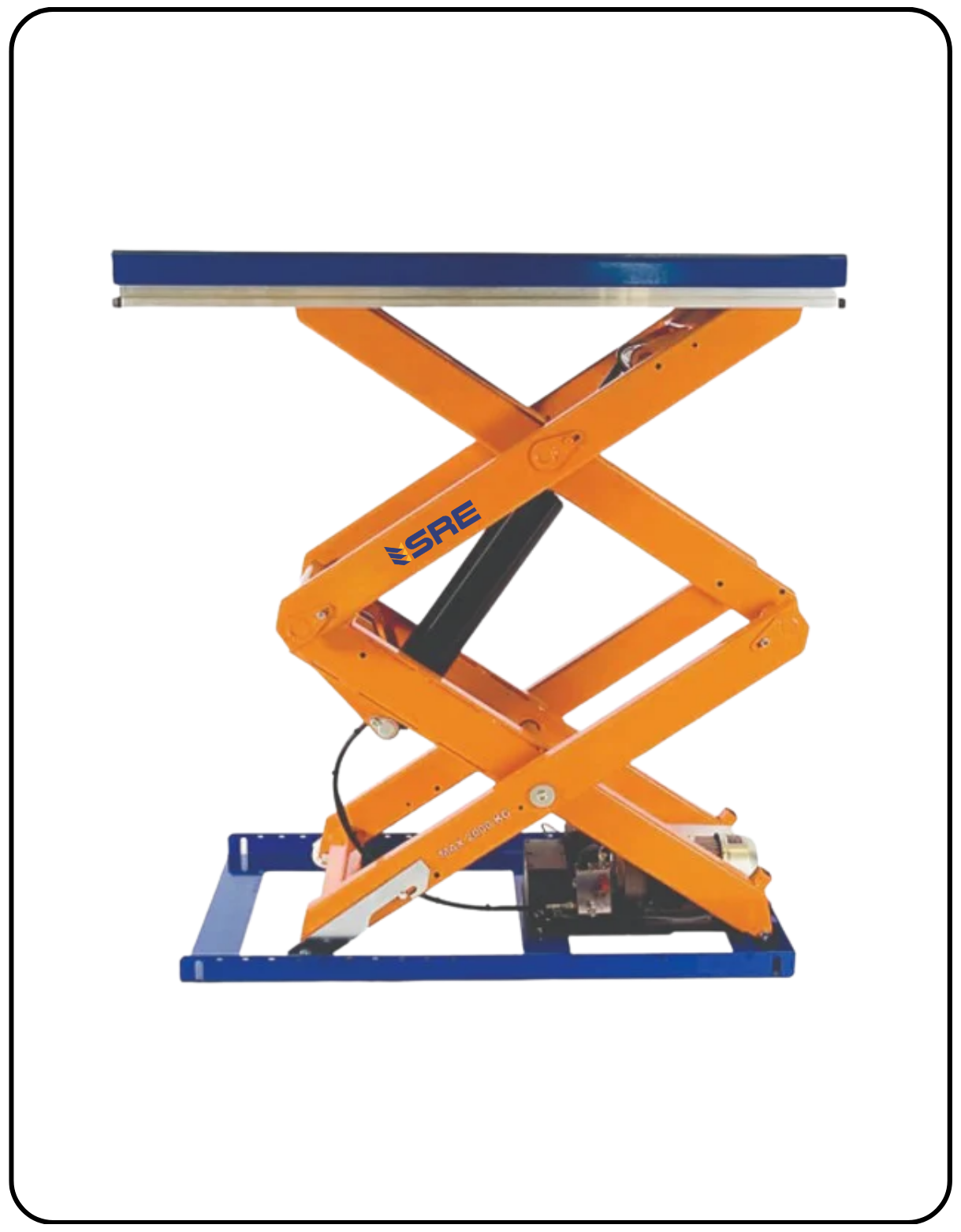
800 kg x 1500 mm H (All Size Available)
Rs. 150000
(Taxes to be paid extra)
Brand: SRE
Min Order Qty: 1
Manual lifting and poor load positioning slow down many factories, warehouses, and assembly units in Rajkot. That problem leads to worker strain, damaged goods, slower production cycles, and higher handling risk. The right solution is the Electric Scissor Lift Table in Rajkot from SRE Material Handling Equipment Pvt. Ltd., designed to raise loads safely to the correct working height. The result is better handling control, faster movement, and safer day-to-day operations for industrial buyers.
Procurement heads, warehouse managers, and plant teams often face another challenge. They need lifting equipment that is strong enough for daily use, compact enough for indoor work, and simple enough to fit into existing workflows. When facilities use fixed platforms, manual methods, or low-grade lifting tables, productivity drops and maintenance concerns rise. An electric scissor lift table solves that issue by giving operators powered lifting support for repetitive industrial tasks. The result is better productivity, less operator fatigue, and smoother handling across shop floors and storage zones.
Businesses in Rajkot, Ahmedabad, Pune, Vadodara, Chennai, Hyderabad, Bangalore, Jaipur, and Noida are also expected to improve safety while maintaining output. That is difficult when workers must lift heavy parts, cartons, dies, pallets, or components to different working heights without proper equipment. The SRE model offers 800 kg capacity and 1500 mm lift height, making it suitable for a wide range of industrial applications. The result is a practical and cost-effective lifting solution for buyers who want better floor efficiency and long-term operating value.
Many buyers also want to avoid overspending on equipment that is larger than their real requirement. At the same time, they do not want under-rated equipment that creates safety and performance issues later. This article explains where the lift table fits, which features matter, what specifications buyers should check, and why SRE is a reliable supplier for industrial use. The result is faster understanding and more confident purchase decisions.
Applications of Electric Scissor Lift Table in Rajkot
Manufacturing plants often lose time when parts and assemblies must be raised manually from floor level to machine level or workstation level. That slows production and increases the chance of improper handling. An Electric Scissor Lift Table in Rajkot gives operators a controlled way to lift and position loads at the required height. The result is improved workflow, better ergonomics, and more stable material movement on the shop floor.
Warehouses and dispatch sections face similar problems when cartons, bins, components, or palletized material must be lifted during packing, sorting, or staging. Without a powered lift table, workers spend more time bending, pulling, and repositioning loads. This electric lift table helps reduce that strain by bringing the load to a convenient working height. The result is faster handling, better worker comfort, and more efficient warehouse operations.
Tool rooms and maintenance departments also need safe lifting support. Heavy machine parts, tools, dies, and maintenance components often require accurate vertical movement during repair and servicing work. A manually managed setup increases delay and risk. The lift table provides a stable platform for these tasks. The result is quicker maintenance response and safer handling of industrial parts.
Packaging units and assembly stations often need repeated up-and-down movement of products or components. If the work height is wrong, the operator becomes slower and more tired through the shift. A powered scissor lift table improves this process by keeping material at a usable height through the task cycle. The result is better consistency and higher operator productivity.
Some facilities also use these lift tables for feeding components to machines, supporting inspection work, and moving heavy loads between process stages. That makes the equipment useful across multiple departments instead of one limited application. The result is stronger equipment utilization and better value from the investment.
Common industrial applications
- Assembly line load positioning
- Warehouse packing and sorting support
- Machine feeding and unloading
- Maintenance and tool room lifting tasks
- Inspection and testing support
- Component transfer between process stages
- Die and part handling in industrial units
Buyers often prefer a supplier that also offers related lifting systems because future expansion may require more than one product type. SRE supports that requirement through electric scissor lift product solutions and broader lifting systems for industrial use. The result is easier sourcing and better continuity for growing operations.
Key Features of Electric Scissor Lift Table in Rajkot
One common problem with low-quality lift tables is poor stability during lifting. That creates operator hesitation, load imbalance, and higher wear over time. The SRE lift table is built for industrial applications where reliable up-and-down movement matters every day. The result is more stable lifting and better operator confidence during handling work.
Capacity is a major buying factor because industrial users need to match the lift table to the actual weight of their loads. If the capacity is too low, the equipment becomes unsafe or unusable. If it is too high for the application, the purchase may not be cost-efficient. This model offers 800 kg capacity, which suits many routine industrial lifting tasks in warehouses, workshops, and production areas. The result is a balanced solution for buyers who need strong lifting support without moving to larger equipment.
Height matters just as much as capacity. Many tasks require lifting to a specific process or workstation height, and a mismatch reduces the equipment’s usefulness. This model provides 1500 mm lift height, which is practical for loading, unloading, assembly, and workstation support. The result is more flexibility in day-to-day use and better compatibility with common industrial workflows.
Another key feature is powered operation. Manual systems increase effort and slow down repeat use, especially when lifting happens throughout the shift. An electric scissor mechanism helps the operator raise and lower loads more efficiently. The result is less physical strain, faster cycle time, and better consistency in handling work.
Custom sizing also matters because industrial layouts differ from site to site. One standard platform size may not fit every workstation or movement path. SRE offers all size available support based on application need. The result is better fitment and more useful deployment inside the facility.
Main features at a glance
- Load capacity: 800 kg
- Lift height: 1500 mm
- Powered electric lifting support
- Stable platform for industrial load positioning
- Suitable for repetitive handling tasks
- Custom size support available
- Industrial-grade construction
- Brand: SRE
- Minimum order quantity: 1 unit
Buyers comparing lift tables with other scissor-based equipment often want multiple options from the same supplier. SRE also offers scissor lift manufacturer and supplier solutions and related products for different industrial lifting needs. The result is more buying flexibility and easier equipment planning.
Technical Specifications of Electric Scissor Lift Table in Rajkot
Technical details are essential for proper procurement. Without a clear specification sheet, buyers may choose a lift table that does not match the site layout, load profile, or working height. That creates internal delays and weakens the purchase decision. A structured specification view makes technical review easier for procurement teams, maintenance staff, and operations managers. The result is better comparison and lower buying risk.
| Specification | Details |
|---|---|
| Product Name | Electric Scissor Lift Table in Rajkot |
| Brand | SRE |
| Load Capacity | 800 kg |
| Lift Height | 1500 mm |
| Power Type | Electric |
| Size Availability | All Size Available |
| Price | Rs. 150000 |
| Taxes | Taxes to be paid extra |
| Minimum Order Quantity | 1 Unit |
| Applications | Warehouse handling, assembly support, maintenance, part transfer, inspection work |
Buyers often review equipment quality through broader industrial standards and process thinking. That helps them compare suppliers in a more structured way. General quality system guidance from ISO can support quality-focused discussions during evaluation. The result is clearer technical review and stronger internal approval confidence.
Benefits of Using an Electric Scissor Lift Table in Rajkot
The first major benefit is safer load handling. When operators lift heavy goods manually or work at awkward heights, the risk of injury and product damage increases. An electric scissor lift table reduces that problem by bringing the load to the correct working level. The result is safer daily movement and more controlled handling.
Another benefit is improved productivity. Repetitive lifting and repositioning slow down operations when the equipment is not suited to the task. A powered lift table helps reduce wasted motion and keeps workstations flowing better. The result is faster cycle time and more consistent output across the shift.
Better ergonomics also matter. Workers who must bend, stretch, or lift heavy items repeatedly become tired faster and work less efficiently. A lift table improves posture and makes load positioning easier. The result is reduced operator strain and better long-term work comfort.
Space efficiency is another practical gain. In many factories and warehouses, floor space is limited and every equipment choice must justify its footprint. A lift table supports vertical positioning without needing the size of larger material handling equipment. The result is effective load movement in a compact format.
Procurement teams also look at the total cost of ownership. Low-cost manual methods may seem cheaper at first, but they often create hidden costs in labor, handling time, and damaged material. A durable electric scissor lift table improves efficiency and reduces repeat handling problems. The result is stronger long-term value from one purchase.
Maintenance planning becomes easier when the equipment is selected for the correct application. Oversized or poorly matched machines often become hard to manage and underused. This lift table gives buyers a focused solution for routine vertical load movement. The result is easier integration and better day-to-day utilization.
Operational benefits
- Improves load safety during lifting and positioning
- Reduces manual handling effort
- Supports better workstation ergonomics
- Speeds up repetitive industrial tasks
- Helps protect goods from rough handling
- Fits many factory and warehouse applications
- Offers better long-term value for industrial buyers
Safe operating practice remains important even with quality equipment. Industrial safety guidance from OSHA can help teams review workplace lifting awareness and safer handling methods. The result is better operator discipline and safer use on the shop floor.
Buyer Comparison: Electric Scissor Lift Table vs Other Options
Buyers often compare an electric scissor lift table with manual lift tables, fixed platforms, hydraulic-only systems, and larger handling machines. The challenge is that each option solves a different problem. Choosing the wrong one either increases cost or limits actual usefulness. An electric scissor lift table stands out when buyers need repeat lifting, controlled positioning, and compact industrial use. The result is better fit for routine handling needs in factories and warehouses.
| Parameter | Electric Scissor Lift Table in Rajkot | Manual or Alternate Options |
|---|---|---|
| Load Handling | Powered support for 800 kg tasks | Manual methods may reduce speed and control |
| Lift Height | 1500 mm for routine industrial use | May be limited or slower to operate |
| Operator Effort | Reduced physical effort | Higher strain on workers |
| Workstation Fit | Useful for assembly, packing, and maintenance | Fixed platforms are less flexible |
| Productivity | Supports repeat cycle use | Manual handling slows repetitive work |
| Commercial Value | Balanced for industrial applications | Some options cost less but do much less |
Buyers who want broader scissor lift options often review regional and category-specific product support before making a decision. SRE supports that evaluation through hydraulic scissor lift solutions and application-based products for industrial handling. The result is easier side-by-side evaluation and better product matching.
Multi-location buyers also value regional market presence because similar handling needs appear in Rajkot, Ahmedabad, Pune, Vadodara, Chennai, Hyderabad, Bangalore, Jaipur, and Noida. SRE strengthens that confidence through die loader equipment for industrial movement, electric scissor lift support in Ahmedabad, electric scissor lift supply in Gujarat, and electric scissor lift manufacturer support in India. The result is stronger supplier confidence and easier expansion planning.
Why Choose SRE Material Handling Equipment Pvt. Ltd.
Industrial buyers need more than a product name and price. They need a supplier who understands how equipment performs in real warehouse, factory, and maintenance conditions. A lift table that looks right on paper may still fail to match the actual process if the supplier does not understand site use. SRE Material Handling Equipment Pvt. Ltd. focuses on practical material handling solutions built for industrial applications. The result is better equipment selection and more confidence during procurement.
Another challenge is fragmented sourcing. When one supplier handles lift tables, another handles stackers, and another handles loading equipment, vendor coordination becomes harder. That increases follow-up time and complicates future expansion. SRE helps reduce that issue through a broader industrial product portfolio. The result is simpler procurement management and better long-term vendor consistency.
Buyers also need commercial clarity. Clear capacity details, price guidance, application suitability, and direct contact access help procurement teams move faster. SRE supports that process with defined product information and practical industrial focus. The result is quicker supplier comparison and smoother internal approval.
Buyers who want a broader industry view before finalizing equipment can also review general material handling context through MHI. That can support internal discussion around warehouse and industrial equipment planning. The result is a more informed buying process.
For direct brand review and inquiry support, buyers can visit SRE Material Handling Equipment Pvt. Ltd. and use contact support for industrial lift table inquiries. The result is faster communication and easier purchase coordination.
Call to Action
Delaying the right lifting equipment purchase usually keeps teams dependent on slow, unsafe, and inefficient manual methods. That affects productivity, worker comfort, and load safety across the shift. If you need an Electric Scissor Lift Table in Rajkot with 800 kg capacity and 1500 mm lift height, SRE is ready to support your requirement. The result is safer handling, faster workflow, and better control of industrial lifting tasks.
Procurement heads, plant managers, warehouse teams, and factory owners often need quick commercial and technical guidance before placing an order. Without direct response, projects and internal approvals slow down. SRE offers a clear path for quotation, application discussion, and buying support. The result is faster decision-making and easier execution.
Frequently Asked Questions
1. What is the load capacity of the Electric Scissor Lift Table in Rajkot?
Buyers need clear capacity information before selecting any lift table because wrong capacity affects safety and performance. This model offers 800 kg load capacity for industrial applications. The result is better product matching and safer handling.
2. What is the lift height of this electric scissor lift table?
Lift height is important because workstation and process requirements depend on proper load level. This model provides 1500 mm lift height for routine factory and warehouse use. The result is practical vertical movement for daily applications.
3. What is the price of the Electric Scissor Lift Table in Rajkot?
Pricing clarity helps procurement teams compare suppliers and plan budgets. The listed price of this model is Rs. 150000, with taxes extra. The result is easier commercial planning and faster internal review.
4. Where can this lift table be used?
Buyers often want to confirm real application fit before sending an inquiry. This lift table can be used in warehouses, production lines, assembly units, maintenance departments, tool rooms, and packaging areas. The result is stronger application relevance and better buying confidence.
5. Is this electric scissor lift table suitable for repetitive industrial work?
Many buyers need equipment that can support repeated use without slowing operations. Yes, this model is suitable for repetitive lifting and positioning tasks in industrial environments. The result is better productivity and smoother workflow.
6. Can I get this lift table in different sizes?
Standard dimensions do not fit every industrial layout. SRE offers all size available support based on application requirement. The result is better fitment and easier deployment at the site.
7. How can I get a quote from SRE?
Delayed communication often slows urgent purchase decisions. You can contact SRE through the inquiry page for pricing, product details, and order support. The result is faster quotation response and smoother procurement action.