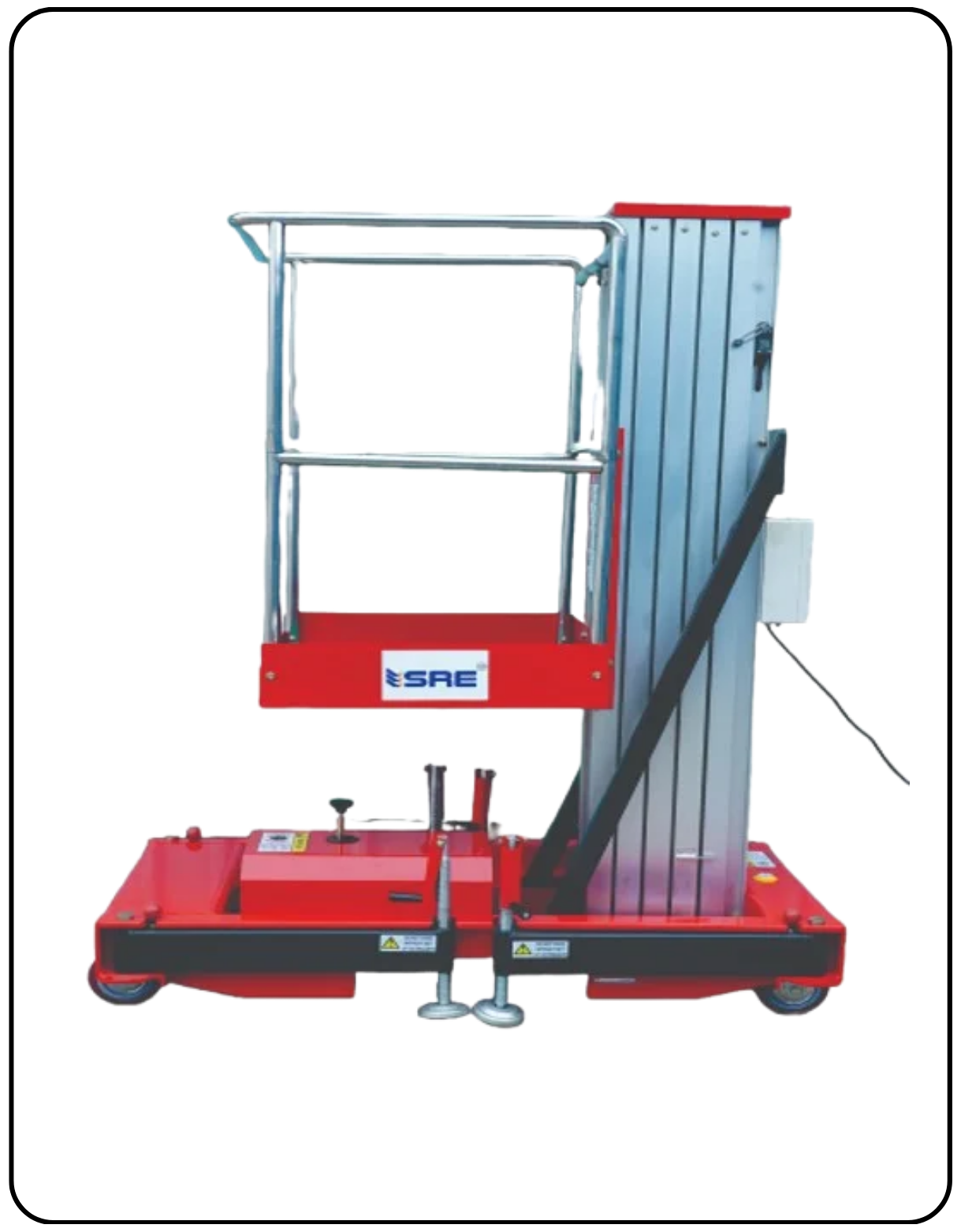
130 Kg-6 Meter (All Size Available)
Rs. 175000
(Taxes to be paid extra)
Brand: SRE
SKU: SRE 151
Min Order Qty: 1
Introduction: Why Industrial Buyers Need a Mobile Aerial Work Platform
Plant managers and maintenance heads often struggle when elevated work has to be completed within short shutdown windows. Manual access tools take extra setup time, reduce worker efficiency, and increase the chance of unsafe positioning near electrical lines, ducting, lighting systems, and overhead machinery. A Mobile Aerial Work Platform in Chakan solves this problem by giving operators a controlled platform with stable lifting, better reach, and easier movement inside industrial facilities. The result is reduced downtime, safer access, and better use of maintenance manpower in high-demand environments.Procurement teams also face pressure to choose equipment that balances purchase cost, durability, and long-term operating value. Lower-grade machines may appear affordable at first, but they often create repair issues, service delays, and performance limits that affect plant operations. SRE addresses this with industrial-grade access equipment built for daily use and practical plant conditions in India. The result is stronger buying confidence and better return on investment for industrial buyers, procurement heads, and factory owners who need reliable height access equipment.As industrial clusters in Pune, Chakan, Ahmedabad, and Bangalore expand, height access needs are becoming more frequent in warehouses, automotive plants, fabrication units, and engineering workshops. Teams need compact equipment that can handle daily movement, safe elevation, and easy operator use without taking up unnecessary floor space. Buyers comparing models can review SRE’s mobile aerial work platform product range to understand how industrial access systems fit into routine maintenance planning. The result is a more informed selection process and a better match between equipment capability and actual site needs.Applications of Mobile Aerial Work Platform in Chakan
Factories and warehouses often lose valuable time when elevated service tasks depend on unsafe or inefficient access methods. That creates delays in inspections, maintenance, and utility work, especially in facilities where overhead systems need routine attention. A mobile aerial work platform solves this by giving operators safe vertical access with smooth positioning and reduced manual effort. The result is faster task completion and better maintenance flow across industrial locations.Common Industrial Applications
- Electrical maintenance and cable tray servicing
- Lighting installation and replacement
- HVAC duct inspection and repair
- Warehouse rack inspection
- Overhead pipeline checks
- Factory equipment inspection at height
- Facility management tasks in industrial buildings
- Signboard installation and indoor maintenance work
Key Features of SRE Mobile Aerial Work Platform in Chakan
Many industrial buyers face equipment issues because machines are selected on basic lift height alone, without considering movement, stability, and everyday site use. That creates problems during real operations when the platform has to perform repeatedly across departments. SRE solves this with a machine built for industrial reliability, safe operator positioning, and practical handling. The result is a stronger fit for buyers who need durable access equipment for regular use.- 130 Kg load capacity for elevated industrial work
- 6 meter lifting height for common plant and warehouse applications
- Compact mobile design for movement inside factories
- Stable working platform for safer operator access
- Industrial-grade structure for long service life
- Available in all size options based on use case
- Easy controls for operator convenience
- Low maintenance design for regular operations
Technical Specifications
Buyers often face delays in approval when technical details are scattered or incomplete. A clear specification sheet helps procurement teams, engineers, and plant managers assess the machine faster and compare it with operational needs. The table below presents the key details in a simple format. The result is quicker evaluation and better alignment between budget and application.| Parameter | Specification |
|---|---|
| Product Name | Mobile Aerial Work Platform in Chakan |
| Brand | SRE |
| SKU | SRE 151 |
| Load Capacity | 130 Kg |
| Lifting Height | 6 Meter |
| Size Availability | All Size Available |
| Price | Rs. 175000 |
| Taxes | Extra as applicable |
| Minimum Order Quantity | 1 Unit |
| Usage | Industrial Height Access |
Benefits of Using a Mobile Aerial Work Platform
Elevated work becomes expensive when every task needs multiple workers, extra setup time, and frequent repositioning. Manual methods add delay and often lead to fatigue during repetitive maintenance jobs. A mobile aerial work platform solves this by improving reach, control, and stability for one operator or a light-duty task setup. The result is better productivity and stronger safety performance in daily operations.1. Safer Work at Height
Unsafe access remains a serious issue in plants, warehouses, and utility areas where workers must reach elevated service points. A properly designed platform reduces instability and gives operators a better working position than ladders or temporary stands. The result is lower risk exposure and stronger compliance support. For general workplace safety guidance, buyers can review OSHA safety resources.2. Faster Maintenance Cycles
Maintenance delays often come from setup time rather than the repair itself. Mobile platforms reduce that issue by allowing faster access to elevated points with fewer adjustments. The result is quicker completion of electrical, mechanical, and facility work.3. Better Use of Labor
Plants that depend on manual access tools often assign extra workers just to support height access activities. A mobile aerial work platform reduces that burden by making overhead work more controlled and efficient. The result is improved labor allocation and less wasted effort across shifts.4. Lower Long-Term Cost
Frequent rental use or repeated replacement of unsafe access tools can push maintenance costs higher over time. Buying a durable machine from SRE offers a more stable solution for regular industrial use. The result is better ownership value and reduced dependence on temporary arrangements.Buyers who want to discuss application fit, load handling needs, and recommended sizes for their facility can connect directly through the SRE contact page for industrial inquiries. The result is a faster buying process with more relevant equipment guidance for actual site conditions.Buyer-Focused Comparison: Mobile Platform vs Traditional Access Methods
Industrial buyers often compare a mobile aerial work platform with ladders, stools, scaffolding, or temporary fabricated stands because the upfront cost looks lower. That creates a narrow decision process that ignores safety, speed, downtime, and repeat-use value. A direct comparison helps procurement teams evaluate what truly affects plant performance. The result is smarter capital planning and a more reliable access strategy.| Criteria | Mobile Aerial Work Platform | Ladder / Temporary Setup |
|---|---|---|
| Safety | Stable and controlled working platform | Higher fall risk and lower stability |
| Setup Time | Fast | Often slow and manual |
| Operator Comfort | Better position for elevated tasks | Strain during extended work |
| Repeat Industrial Use | Suitable for daily applications | Limited for frequent overhead work |
| Productivity | High | Moderate to low |
| Professional Compliance | Better suited for plant standards | Often not ideal for regular industrial tasks |
Why Choose SRE Material Handling Equipment Pvt. Ltd.
Industrial buyers do not only purchase a machine; they also invest in support, reliability, and the supplier’s understanding of plant operations. Choosing the wrong source can lead to poor service response, lower build quality, and equipment that does not match real use conditions. SRE solves this by offering industrial-focused access solutions designed for Indian factories and warehouses. The result is stronger trust for buyers looking for mobile aerial work platform manufacturers and commercial buyers seeking practical long-term value.- Industrial application-focused equipment design
- Reliable support for plant and warehouse requirements
- Product options for different capacity and height needs
- Competitive pricing for industrial procurement
- Strong emphasis on safety, productivity, and maintenance ease
- Suitable solutions for Indian operating conditions