SRE Material Handling Equipment Pvt. Ltd.: Manufacturer, Supplier, And Exporter Of Aerial Lift in India.
SRE Material Handling Equipment Pvt. Ltd., Manufacturer And Supplier Of Aerial Lift in Mumbai.
Our Manufacturing Unit is in Ahmedabad, Vadodara, and Rajkot, Gujarat, India.
Elevating Work in Mumbai: A Down-to-Earth Guide for Industrial Activities
In today’s rapid industrial and storage settings, decision-makers are continuously seeking methods to boost output, lower hazards, and support lasting operational steadiness. As goods movement networks become more intricate, the strain on internal logistics has grown. Warehouse floors are more congested, production lines move faster, and deadlines feel stricter. In everyday facility tasks in Mumbai and comparable industrial centres, activities that once involved considerable human power now call for machinery capable of matching output volume, safety standards, and employee expectations.
An Aerial Lift has appeared as a sensible remedy for many of these hurdles. Not as a showy addition, but as a practical instrument that aids personnel, enhances protection, and keeps processes flowing without needless hindrances. This piece looks at why aerial lifts are becoming more pertinent for warehouse proprietors, factory supervisors, logistics personnel, and purchasing departments concerned with actual performance results, rather than promotional jargon.
Shifting Requirements of Current Warehouses and Industries
Over the past decade, the demands placed on storage and industrial activities have changed notably. The era where a basic truck and manual ladders sufficed for most jobs is over. Today’s facilities contend with:
- Greater output targets — Increased order volumes and quicker delivery windows.
- Wider product ranges — More items, more shelf levels, more complex picking procedures.
- Worker safety standards — Stricter rules and a genuine focus on employee welfare.
- Workforce changes: Staff fluctuations necessitate equipment to lessen physical stress.
For instance, in a standard Mumbai storage area handling fast-moving consumer goods, crews might process dozens of loads hourly. Material handlers need access to high storage areas, perform checks, retrieve goods, or carry out servicing on shelving and illumination—often multiple times per shift. In these situations, lack of efficiency or unsafe methods are more than mere nuisances. They directly impact output, staff morale, and operational expenditures.
These concrete workflow difficulties push for a reassessment of conventional approaches. This is where Aerial Lifts—engineered for secure, managed access at height—prove highly valuable.
What Exactly Is an Aerial Lift?
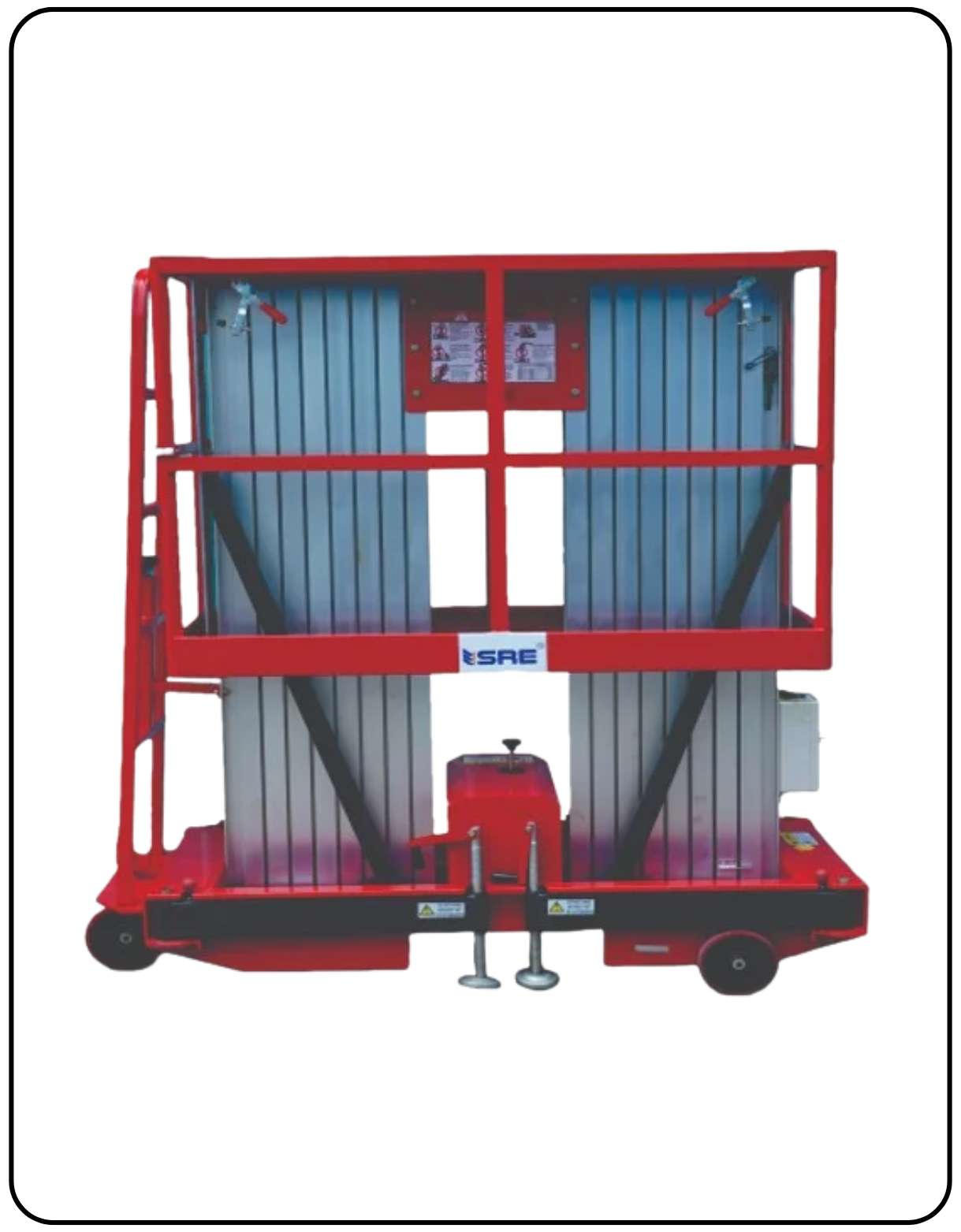
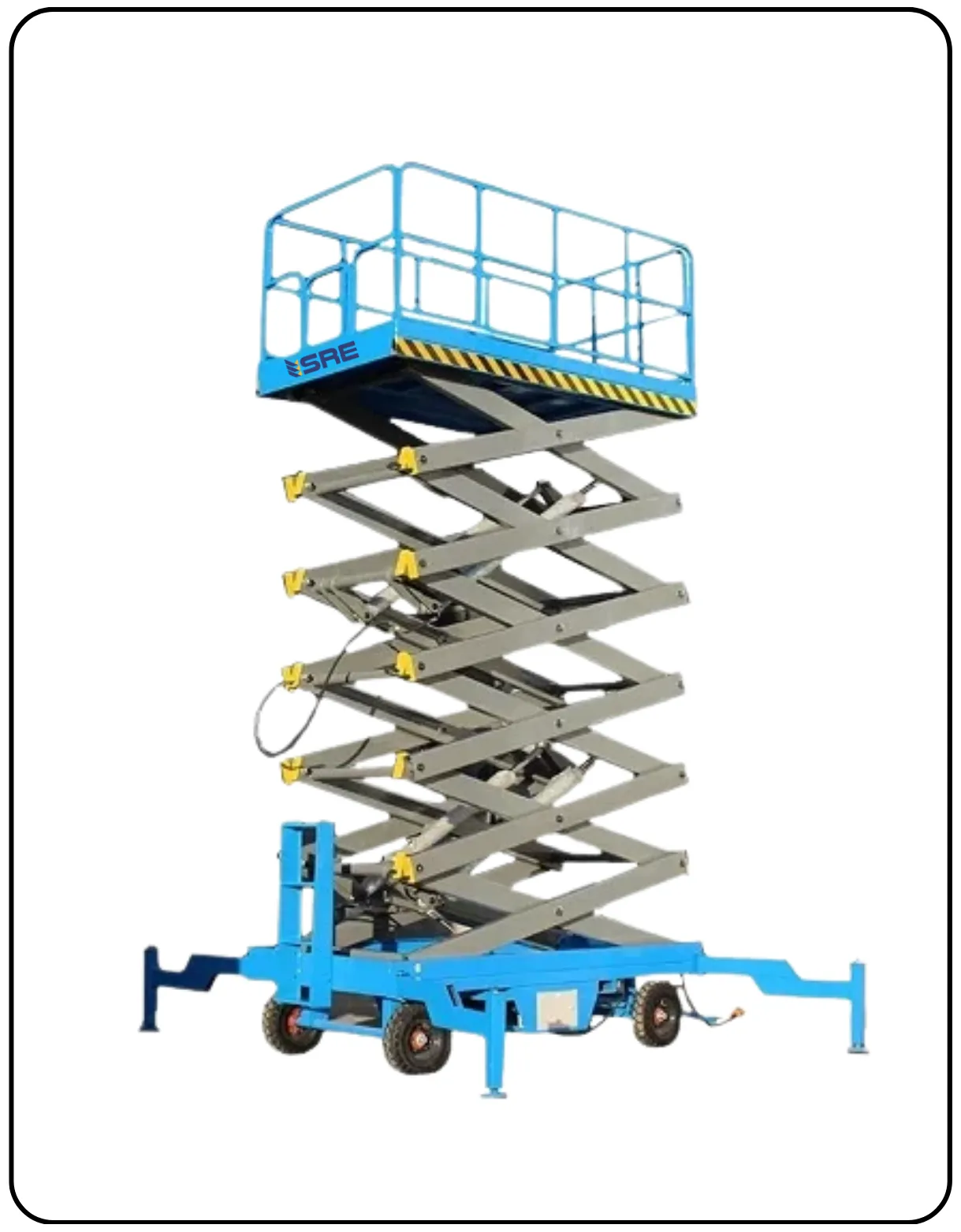
In practical industrial terms, an Aerial Lift is a piece of machinery that safely raises people and their equipment to complete work overhead. Unlike simple ladders or makeshift setups, aerial lifts supply:
- Secure elevated workstations
- Regulated vertical motion
- Operator aid and safety aspects
- Seamless integration into facility operations
In storage facilities or factories, aerial lifts enable teams to reach upper racks, tend to lighting, conduct audits, or complete inventory counts—all while minimising strain and danger. The units might run on electricity or hydraulics and are constructed with materials suitable for industrial settings.
This isn’t a textbook explanation; it reflects what workers experience on site—an alternative to precarious climbing and inefficient manual stages that interrupt workflows and stretch labour capacity.
Why Are Aerial Lifts Superseding Older or Manual Gear?
For years, sites depended on manual apparatus such as ladders, scaffolding, or improvised surfaces. These techniques were long accepted due to familiarity. However, day-to-day use has revealed clear shortcomings:
- Worker tiredness: Constant ascending and balancing depletes energy and slows down work.
- Lack of uniformity: Different users approach ladders differently, leading to varied results.
- Safety hazard: Drops from elevation remain a primary source of warehouse injuries.
- Process interruption: Frequent setting up and repositioning breaks task sequences.
Conversely, aerial lifts deliver consistent, managed elevation with minimal preparation. In routine warehouse activities, floor supervisors frequently observe that those operating aerial lifts maintain a more consistent tempo and show less evidence of fatigue over extended shifts. The distinction isn’t theoretical—it’s about dependable performance across the entire workforce, even when under strain.
Output Improvements in Everyday Tasks
One of the most noticeable gains from utilising aerial lifts is enhanced productivity. When your crew isn’t wasting time readjusting ladders or pausing mid-job to stabilise equipment, operations run more smoothly.
Consider usual circumstances in an industrial area:
- Stock Refilling: Instead of waiting for a ladder to be positioned and vetted for security, an aerial lift can be deployed rapidly and positioned exactly at the required height.
- Regular Checks: Personnel can ascend and descend with their tools readily available, cutting down on the number of trips up and down stepped devices.
- Servicing Jobs: Repetitive overhead work like swapping lamps or examining sensors gets done quicker and with less physical imposition.
Across all shifts, this consistency supports predictable results. Teams aren’t just quicker; they are more dependable. Workflows see less downtime, and managing peak demand periods is simpler because the tools assist, rather than impede, efficient action.
Enhanced Workplace Security
Compromising on safety within industrial settings is unacceptable. Aerial platforms contribute to more secure work environments in tangible, demonstrable ways:
- Ergonomic Support: Less strain or need to balance precariously in uncomfortable stances.
- Regulated Ascent: Movement is smooth and predictable, even when transporting gear or modest cargo.
- Unobstructed Operator Zone: Personnel are shielded from slipping or losing footing.
Experience confirms that integrating aerial lifts into regular duties sees a drop in height-related incidents. Managers note fewer near-accidents, and safety assessments often show better adherence to sector benchmarks.
This isn’t a vague assertion; it’s a tangible result of substituting precarious manual access methods with deliberate, engineered solutions.
Managing Greater Weights Effortlessly
Contemporary storage facilities often contend with heavier or larger goods. Be it palletised elements in production or substantial cartons in distribution hubs, lifting weight aloft without fitting gear elevates hazards.
Aerial devices are constructed to:
- Take on heftier accessory loads
- Sustain platform equilibrium
- Balance the user and machinery securely
For tasks demanding tools or replacement components at raised levels, aerial lifts negate the requirement for numerous return trips or balancing mass on portable steps. This translates to quicker task finalisation with less physical strain.
Technology and Workflow Effectiveness
Modern aerial access machinery isn’t merely mechanical staging; it incorporates attributes that boost operational time and dependability:
- Battery-powered models with extended running cycles.
- Hydraulic mechanisms deliver fluid, steady lifting performance.
- Low-intervention components that lessen unscheduled stoppages.
In bustling environments such as a Mumbai distribution centre during peak demand, equipment reliability directly impacts output. Industrial-grade aerial lifts are built for continuous daily operation with minimal halts—a key consideration for procurement and operations staff when forecasting capacity.
Their power setups are devised for reliable function, and routine upkeep is simple for technical teams to plan.
Space Utilisation and Agility
Area inside storage facilities is a prime commodity. Passageways are tight, storage levels are high, and any machinery must navigate skillfully without impeding movement.
Aerial platforms excel here as they:
- Can fit into confined lanes without an excessive footprint
- Maneuver and align readily with racking structures
- Elevate platforms vertically without undue outward reach
Practically, this implies less inventory rearranging is needed to make way for equipment—a considerable benefit when floor space is both actively used and financially valued.
Operators often observe that aerial lifts reposition faster between jobs and require less room than older, bulkier apparatus.
Long-Term Value Proposition
It is crucial to assess expense based on long-term utility, not just initial outlay. Aerial lifts:
- Diminish costs associated with injuries
- Reduce labor inefficiencies
- Bolster steady work processes
- Cut down on operational downtime and unforeseen repairs
These factors accumulate within industrial budgets. While the first purchase is a factor, the return via reduced hazards, smoother task execution, and fewer interruptions can be considerable. Finance and purchasing departments frequently view aerial lifts as a means to stabilise operational costs, rather than an unpredictable drain.
When comparing the full cost of ownership over several years, aerial platforms typically outperform traditional manual methods, particularly when safety adherence and ergonomic benchmarks are factored in.
Environmental Responsibility and Standards Adherence
Today’s industrial endeavours cannot overlook ecological and regulatory mandates. Aerial lifts support this outlook in various ways:
- Cleaner operations: Electric models lower emissions versus those using combustion engines.
- Power optimisation: Newer systems use energy conservatively and often feature energy recapture.
- Regulatory alignment: Height access gear built for the industry frequently meets or exceeds safety criteria, simplifying compliance documentation.
Teams adopting aerial lifts find it simpler to align with internal directives on environmental effect and external rules on workplace safety.
Blending with Factory and Warehouse Routine
Genuine operational worth emerges when equipment integrates frictionlessly into existing setups. Aerial lifts interface well with:
- Stock tracking setups
- Standard upkeep procedures
- Shift-based task assignments
- Automated or partially automated material movement
This is about smart workflow design, where access at elevation is no longer a delay but a predictable phase of the work. For instance, maintenance intervals that once held up order fulfilment can be planned with minimal overlap because aerial lifts enable tasks to be finished faster and on schedule.
Instruction, User Friendliness, and Servicing
A frequent concern for purchasing departments involves training and care. Aerial lifts are engineered for accessible operation:
- Elementary operator instruction
- Clear safety validations
- Consistent servicing schedules
Unlike intricate machinery needing specialist technicians, aerial lifts can be learned rapidly by current personnel. Maintenance is systematic, not disruptive—driven by time in service rather than emergency breakdowns.
This predictability eases planning and budgeting, reducing reliance on outside service calls or unexpected halts.
Why Partnering with a Trustworthy Maker is Key?
Selecting quality machinery should stem from practical assessments:
- Construction quality and industrial hardiness
- Availability of replacement components
- Prompt service assistance
- Proven track record with industrial clientele
Operations personnel value manufacturers who grasp real storage challenges—beyond mere equipment specifications on paper. When service support is timely, and expertise matches on-site requirements, aerial lifts consistently deliver their intended value.
For dependable industrial aerial device solutions in Mumbai and beyond, look into partnering with SRE MATERIAL HANDLING EQUIPMENT PRIVATE LIMITED—an experienced supplier that grasps genuine warehouse necessities. Discover more at https://www.sremhepvtltd.com/.
Summary:
Modern factory and storage operations require tools that support promptness, security, and dependability. Aerial lifts meet these requirements practically—aiding teams to work more effectively, lessen risk, handle heavier materials confidently, and maintain operational time across shifts.
Instead of viewing aerial lifts as optional gear, see them as a strategic resource in your operational arsenal. When chosen and deployed thoughtfully, they boost both workplace security and output—contributing to quantifiable, lasting worth.
If you are assessing equipment choices for your Dock Leveler And Drum Handling Equipment storage floors or manufacturing areas in Mumbai, investigating reliable aerial lift possibilities is a worthwhile step.
Crucial Points to Note
- Productivity: Aerial lifts cut down on time lost in manual elevation tasks and support steady work cycles.
- Well-being: They lessen physical strain and minimise hazards when performing elevated work.
- Load Capacity: They manage heavier and bulkier items with stability and command.
- Value for Money: They deliver long-term benefits via reduced injuries, minimal downtime, and improved labour efficiency.
- Sector Trend: Aerial lifts are becoming vital fixtures in modern storage and industrial settings.
FAQs
Q1. How does an aerial platform enhance safety over standard steps?
- Aerial lifts supply stable decks, protective railings, and regulated vertical travel that ladders cannot match, substantially cutting down on fall-related dangers.
Q2. Are aerial devices complicated to run?
- No. Most aerial lifts feature straightforward controls that can be mastered with basic instruction—making them suitable for varied storage facility personnel.
Q3. What upkeep does an aerial lift need?
- Routine checks focus on power sources, hydraulics, and safety features. These are predictable and can be woven into standard service plans.
Q4. Can aerial lifts navigate tight storage aisles?
- Yes. Modern aerial devices are designed for nimbleness and optimal space use, making them appropriate even in confined storage setups.
Q5. Are there energy-conscious aerial lift selections?
- Many lifts operate on batteries and are designed with power efficiency in mind, aligning with green objectives and lowering running expenses.
#AerialLift #IndustrialEquipment #WarehouseOperations #MaterialHandling #SafetyAtWork #OperationalEfficiency #SREMaterialHandlingEquipmentPrivateLimited #MumbaiIndustry #SupplyChainOptimization #FactoryManagement #WarehouseTechnology