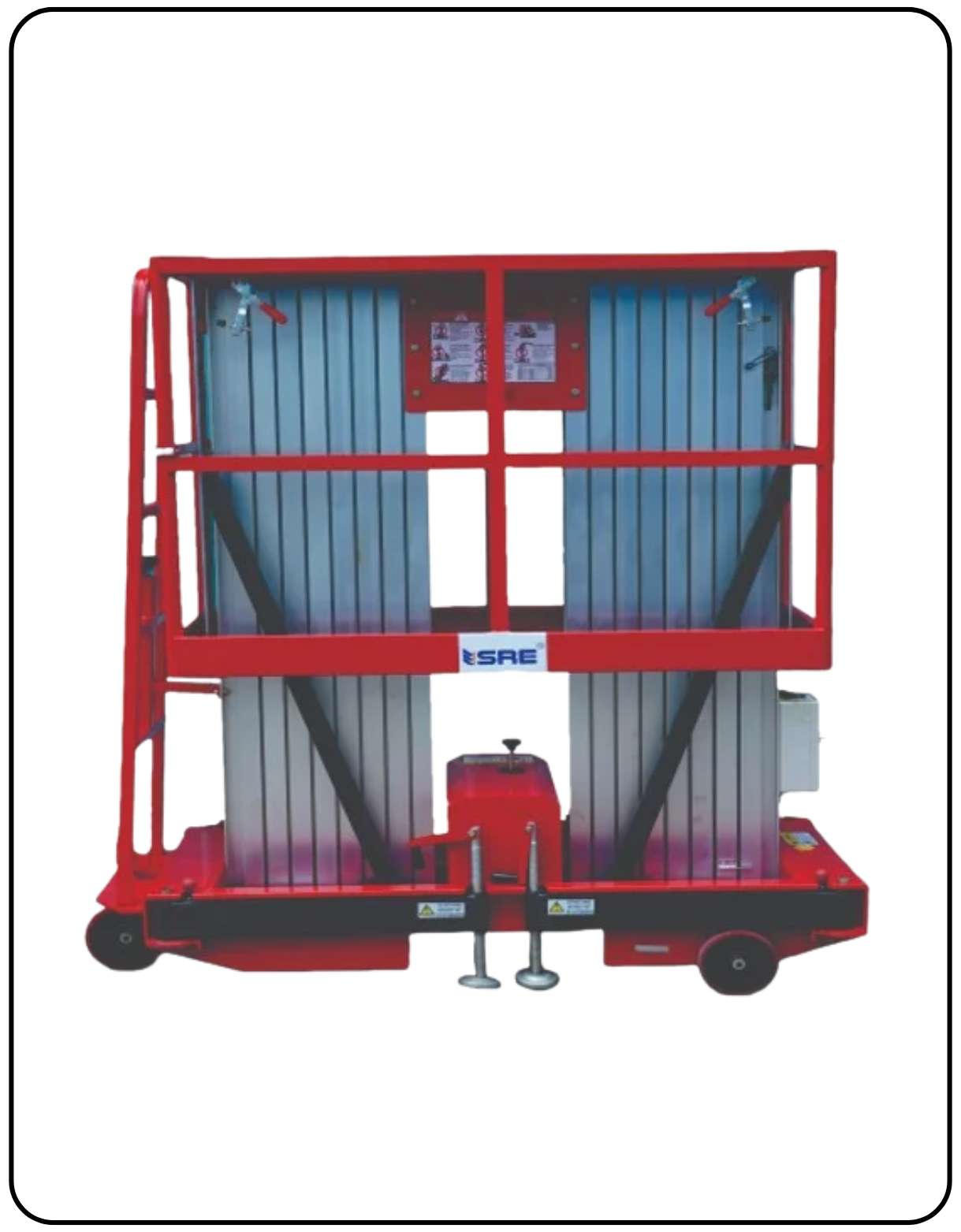
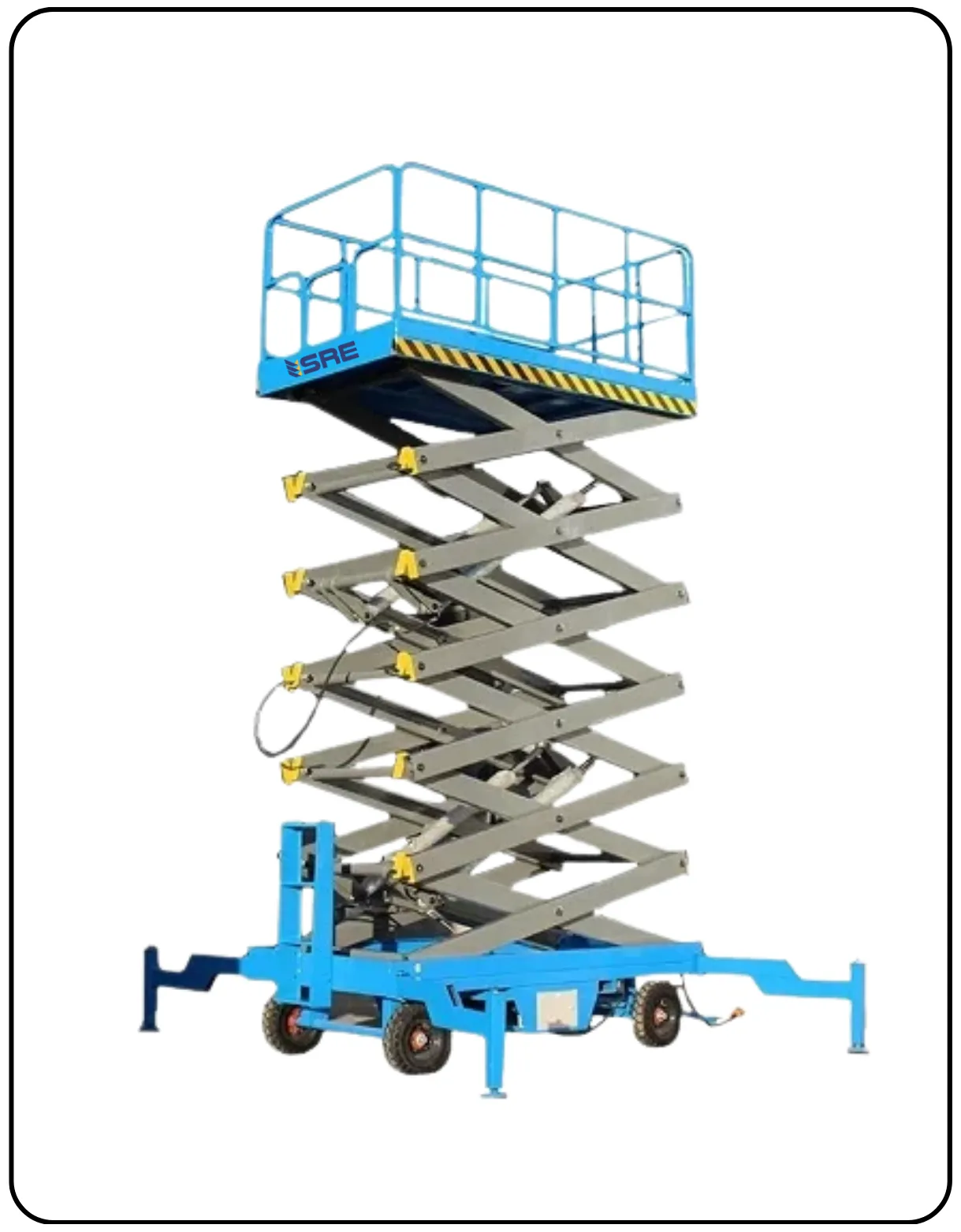
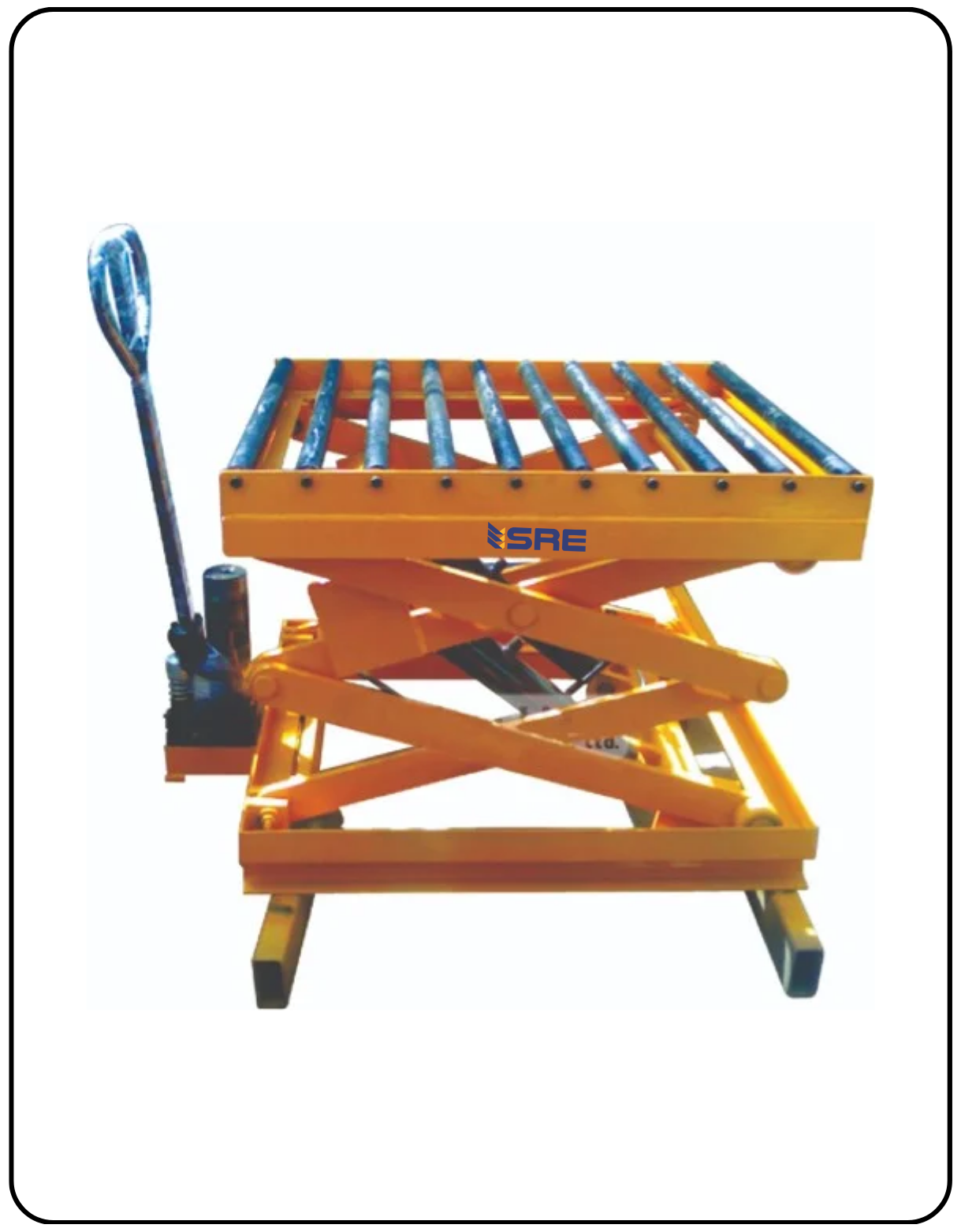
SRE Material Handling Equipment Pvt. Ltd.: Manufacturer, Supplier, And Exporter Of Aerial Work PlatForm in India.
SRE Material Handling Equipment Pvt. Ltd., Manufacturer And Supplier Of Aerial Work Platform in Mumbai.
Our Manufacturing Unit is in Ahmedabad, Vadodara, and Rajkot, Gujarat, India.
Aerial Work Platform in Mumbai: Tangible Fixes for Contemporary Industrial Activities
Throughout the daily routines of warehouses and factories covering Mumbai’s commercial areas, leadership personnel are observing a definite shift. Shifting market needs, tighter delivery windows, and increasing product volumes are straining established methods for working at heights and internal transport logistics. For those managing operations, supply chains, and procurement, balancing output and safety presents genuine operational hurdles — specifically speed, volume, dependability, and above all, on-site safety.
Against this backdrop, the Mobile Elevating Work Platform (MEWP) is appearing not as a premium option, but as a sensible, dependable remedy for concrete issues that facility owners, plant supervisors, and industrial users contend with daily.
In this discussion, we will examine the work realities prompting this uptake, clarify precisely what an MEWP signifies in an industrial context, and demonstrate how it boosts output, safety, cost-effectiveness, and lasting worth within actual warehouse and factory processes.
The Evolving Requirements of Current Warehouses & Industrial Processes
In numerous industrial sites within and near Mumbai, how work is done has transformed markedly over the last decade. Factors fueling this change include:
- Expanding order volumes — e-commerce and retail demands have pushed storage facilities to handle greater SKU diversity and quicker turnover.
- Stricter delivery deadlines — expectations for same-day and next-day delivery stretch cycle times to their utmost.
- Operational intricacy — multiple phases of work are currently run in parallel: item retrieval, packing, area setup, restocking, and verification checks.
In day-to-day tasks, this translates to more frequent jobs needing elevated access: stock audits on high shelving, servicing fixtures, swapping out lights, accessing ductwork or HVAC, and occasional equipment repair.
Historically, these jobs were managed using ladders, temporary staging, or makeshift lifting gear. However, these hands-on techniques are increasingly showing limitations in a high-tempo, safety-conscious setting.
Issues managers routinely report involve:
- Staff exhaustion from constantly maneuvering ladders or scaffolding.
- Variable output across work periods when elevation tasks are involved.
- Safety incidents stemming from unstable bases or rushed procedures.
- Poor positioning leads to cumulative stress injuries over time.
Facility supervisors overseeing throughput and safety statistics often query: Must there be a better approach to managing elevated tasks reliably and securely? For many sites, the answer has materialised as the MEWP — an industrial product designed for genuine operational demands.
What Exactly Is a Aerial Work Platform?
Simply put, a Aerial Work Platform (AWP) is a mechanical apparatus that raises personnel and necessary tools to the required elevation safely and effectively. It is not an abstract concept or an occasional rental; it is a specifically engineered industrial instrument.
From a practical industry standpoint:
- It is constructed for regular utilisation in active settings.
- It supplies steady, manageable elevation for people and essential gear.
- It fits into ongoing processes without disrupting other material transport systems.
Unlike simple ladders or jury-rigged supports, an MEWP is designed to facilitate routine, predictable access to upper work zones — be it for inventory oversight, maintenance, or standard operational functions.
It is important to note: This gear does not substitute for heavy-duty moving equipment such as counterbalance trucks or pallet movers. Rather, an MEWP supplements primary material handling systems by addressing the distinct needs associated with safe, repeatable elevated tasks that form part of daily duties.
Why Are MEWPs Superseding Older / Manual Equipment?
Across Mumbai’s industrial plants, the change from manual aids to MEWPs is not merely a trend — it is an operational imperative driven by deeper business objectives.
Reducing Strain and Ensuring Consistency
In typical warehouse activities, tasks needing elevation occur frequently. Manually repositioning ladders or scaffolding halts the workflow and contributes to worker fatigue. Over a shift duration, this can diminish focus and performance.
In contrast, MEWPs provide:
- Regulated vertical travel, removing the need for constant climbing.
- Solid platforms, lessening the physical burden on operators.
- Simple repositioning capabilities minimise time lost between jobs.
This results in more consistent productivity throughout the shift, rather than performance dips caused by fatigue or compromises made for speed.
Workflow Efficiencies Across Operations
Manual methods demand time — setting up ladders, confirming stability, and checking safety protocols each time. Conversely, an MEWP can often be relocated and ready for use rapidly with minimal preparation.
For storage facilities where ‘time equals money,’ these gains mount up quickly.
Productivity Gains in Everyday Tasks
In routine operations, productivity is gauged not by individual tasks but by the fluency of operations across a whole shift.
Here is how MEWPs contribute:
Quicker Task Finalisation
An MEWP removes the constant repositioning and safety checks linked to ladders. An operator can transition between assignments faster, assured that the platform offers secure support.
Uniform Output Across Shifts
In many setups, supervisors observe performance differences between experienced staff and newer employees — particularly for jobs requiring work aloft. MEWPs contribute to levelling this gap because:
- The proficiency period is shorter than with improvised techniques.
- Workers can complete tasks using closely related standard procedures.
- This uniformity aids supervisors in forecasting daily output with greater accuracy.
Enhanced Site Safety
Security remains a primary concern for industrial decision-makers. Falls from height account for a disproportionate share of workplace injuries. In facilities using ladders or precarious supports, these risks are amplified.
MEWPs tackle this through:
Stable, Managed Motion
Unlike ladders, which depend on a person’s balance and hold, MEWPs feature:
- Firm guardrails
- Secured platform areas
- Meticulously controlled raising mechanisms
- This significantly lowers the probability of slips and falls.
Ergonomic Access Points
By keeping staff within a protected platform, MEWPs encourage natural posture and movement. This means less twisting, overreaching, or awkward positioning — all factors that contribute to strain injuries in the long run.
Managing Heavier Loads Without Strain
In daily material handling, weightier items — such as testing devices, inspection gear, or lighting units — sometimes need accompanying personnel working at height.
Manual approaches struggle here:
- Workers might need to ascend with one hand free, carrying equipment in the other.
- Heavy components may need separate lifting, adding stages to the job.
MEWPs offer stable decks capable of safely supporting both the worker and the required apparatus. The payoffs include:
- Easier manipulation of heavier objects
- No precarious balancing during ascent or descent
- Superior control over tools and supplies
This directly bolsters output and minimises Magnetic Lifter And Hydraulic Stacker the risk of dropped items and resulting harm.
Technology & Operational Effectiveness
Contemporary MEWPs are not just basic lifting devices — they are engineered with features that boost operational time and dependability.
Key operational positive aspects frequently include:
Power and Battery Systems
Many MEWPs utilise efficient electric or hybrid power mechanisms that allow for:
- Extended operational intervals
- Rapid recharging or swapping capabilities
- Reduced noise output in indoor settings
This contrasts with older hydraulic or combustion-based systems that require more upkeep and air ventilation.
Mechanical Durability
Industrial MEWPs are built with robust components designed to endure frequent relocating, machine vibration, and consistent loading.
This translates to:
- Less idle time for fixes
- Predictable servicing schedules
- A longer functional lifespan compared to makeshift setups
In reality, a dependable MEWP becomes an integrated component of the daily operational gear — akin to pallet jacks or conveyor belts — rather than an occasional rental item.
Space Utilisation & Agility in Movement
Spatial constraints are a fact of life in many Mumbai warehouses and plants. Constricted lanes, tall racking, and densely packed machinery make maneuvering difficult.
Conventional scaffolding or bulky lifts often impede workflow. Conversely:
- Many MEWPs possess compact footprints
- Certain versions can access narrow aisles
- Responsive steering permits operation even in crowded sections
This ensures:
- Minimal interruption to material flow
- Clear routes for forklift and pallet transit
- Effective application of vertical space without sacrificing ground-level accessibility
For many industrial locations where floor area is limited, these attributes directly support ongoing work rather than disrupting it.
Long-Term Cost Savings
For procurement staff and financial planners, the overall expense of ownership outweighs the initial purchase price.
MEWPs deliver value over time via several pathways:
Decreased Accidents and Related Expenditures
Workplace mishaps lead to:
- Insurance claims
- Indemnity payouts
- Productivity losses
- Fines for non-compliance
By lowering the probability of both falls and strain injuries, MEWPs contribute toward a safer, less costly operational environment.
Integration with Facility Workflow
A frequent concern among operations teams is whether new assets will mesh with their existing procedures.
In practice, MEWPs fit in smoothly by:
- Supplementing established material handling systems — not replacing them.
- Supporting scheduled task planning — they can be incorporated into daily job assignments.
- Improving routine upkeep workflows — reducing reliance on external contractors.
For instance, light fixture checks or rack inspections can be timed with the same operational discipline used for stock replenishment or quality audits.
This establishes MEWPs as a tool that operational personnel depend on, rather than an intermittent add-on.
Training, Ease of Use & Maintenance
A practical industrial tool must be easy to use and maintain.
Here’s how AWPs meet those needs:
Simple Operational Training
Workers typically require only basic training to:
- Operate controls
- Understand load limits
- Position the platform safely
This means less time spent in certification training and more time focused on productive work.
Why Choosing a Reliable Manufacturer Matters?
When decision‑makers invest in industrial equipment like an Aerial Work Platform, the choice of manufacturer matters — not for marketing reasons, but for operational reliability.
A reliable manufacturer brings:
- Product durability is built from industry‑tested components
- Field support for setup and service
- Documentation that supports safety and compliance
- Experience with industrial clients who understand real workflows
It’s practical to evaluate vendors based on service support and operational fit, not just upfront cost.
For operations that depend on consistency, choosing a partner that understands the rigours of warehouse and factory work is essential.
Conclusion:
In modern warehouse and industrial operations in Mumbai and beyond, predictable performance, safety, and efficiency are non‑negotiable. The Aerial Work Platform has become an operational tool that addresses these needs without complexity or hype.
From minimising fatigue and improving safety to enhancing workflow efficiency and long‑term cost value, AWPs support real, measurable improvements in daily operations.
For industrial decision‑makers considering next‑generation material handling and workplace safety solutions, the practical question is not whether an AWP is modern, but whether daily operations can continue efficiently without one.
If you are evaluating elevated work solutions for your facility, explore reputable industrial partners who can help you assess needs, match the right equipment, and support seamless integration into your workflow.
Visit https://www.sremhepvtltd.com/ for more information and expert guidance.
Key Takeaways
- Productivity: AWPs enable faster, more consistent task completion across shifts.
- Safety: Stable platforms and controlled movement reduce the risk of falls and strain
- Load Handling: Workers can manage tools and equipment at heights without added risk.
- Cost Efficiency: Long‑term savings arise from fewer injuries, less downtime, and predictable maintenance.
- Industry Trend: AWPs are becoming standard in modern warehouses and factories focused on operational excellence.
FAQS
1. Are AWPs suitable for all warehouse heights?
- AWPs come in various capacities and reach options. Selecting the right model depends on your facility’s height requirements and task profiles.
2. Do workers need special certification to operate an AWP?
- Basic operational training is usually required, but most AWPs are designed for intuitive use with short training cycles.
3. How do AWPs impact daily schedules?
- AWPs integrate into workflow planning and often improve predictability by reducing ad‑hoc interruptions for safety checks and setup.
#AerialWorkPlatForm #IndustrialEquipment #WarehouseSafety #MaterialHandling #MumbaiIndustry #SRE_MATERIAL_HANDLING_EQUIPMENT_PRIVATE_LIMITED #WarehouseEfficiency #FactoryOperations