Die Loader in India
Die Loader Manufacturer and Supplier in India
SRE Material Handling Equipment Pvt. Ltd.: Leading Die Loader Manufacturer and Supplier in India.
Introduction
Over the past decade, warehouse and industrial operations in India and across India have changed significantly. Higher order volumes, faster delivery expectations, and stricter safety norms have reshaped how factories and logistics hubs function. What once relied heavily on manual labor and basic lifting tools now demands more structured, safe, and efficient Material Handling Equipment.
In daily warehouse operations, one of the most common challenges is working at height safely while maintaining speed and productivity. Whether it is inventory stacking, maintenance work, or loading/unloading tasks, organizations often face delays due to equipment limitations and worker fatigue.
This is where the Die Loader has become a practical and reliable solution for many industries. It bridges the gap between manual effort and advanced lifting systems, offering controlled elevation, improved safety, and better operational flow.
The Changing Needs of Modern Warehouses / Industries
Modern supply chains operate under constant pressure. Warehouses in India’s industrial zones like India, Rajkot, and Vadodara are handling higher SKU diversity, faster dispatch cycles, and tighter deadlines.
Some real operational challenges include:
- Frequent vertical movement of goods
- Limited aisle space in storage areas
- Increasing labor costs and fatigue
- Safety compliance requirements
- Pressure to reduce downtime
In many facilities, teams still rely on ladders or manual platforms, which slows down operations and increases risk. As workflows become more complex, industries require equipment that can adapt to continuous movement, variable loads, and multi-shift operations.
What Is a Die Loader?
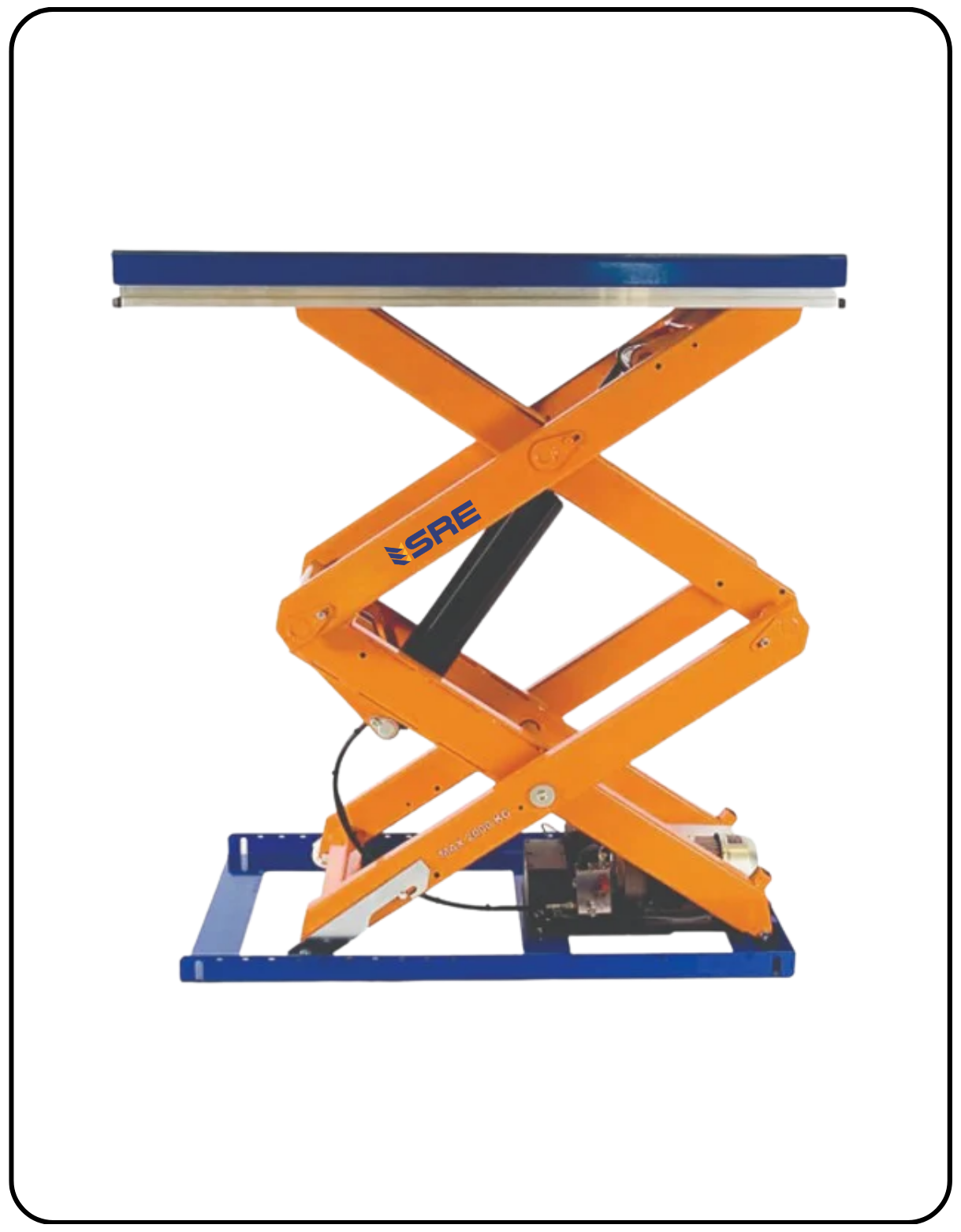
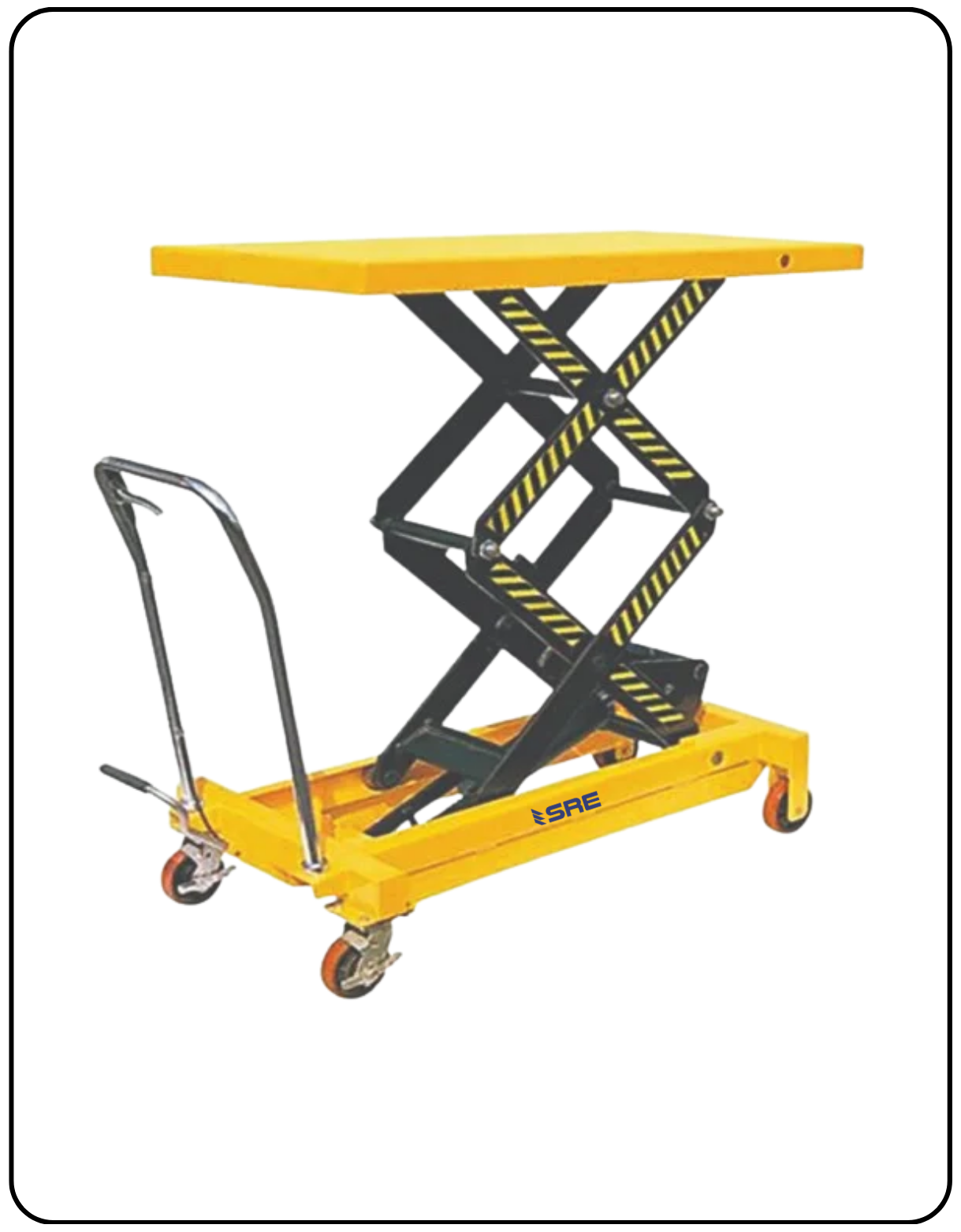
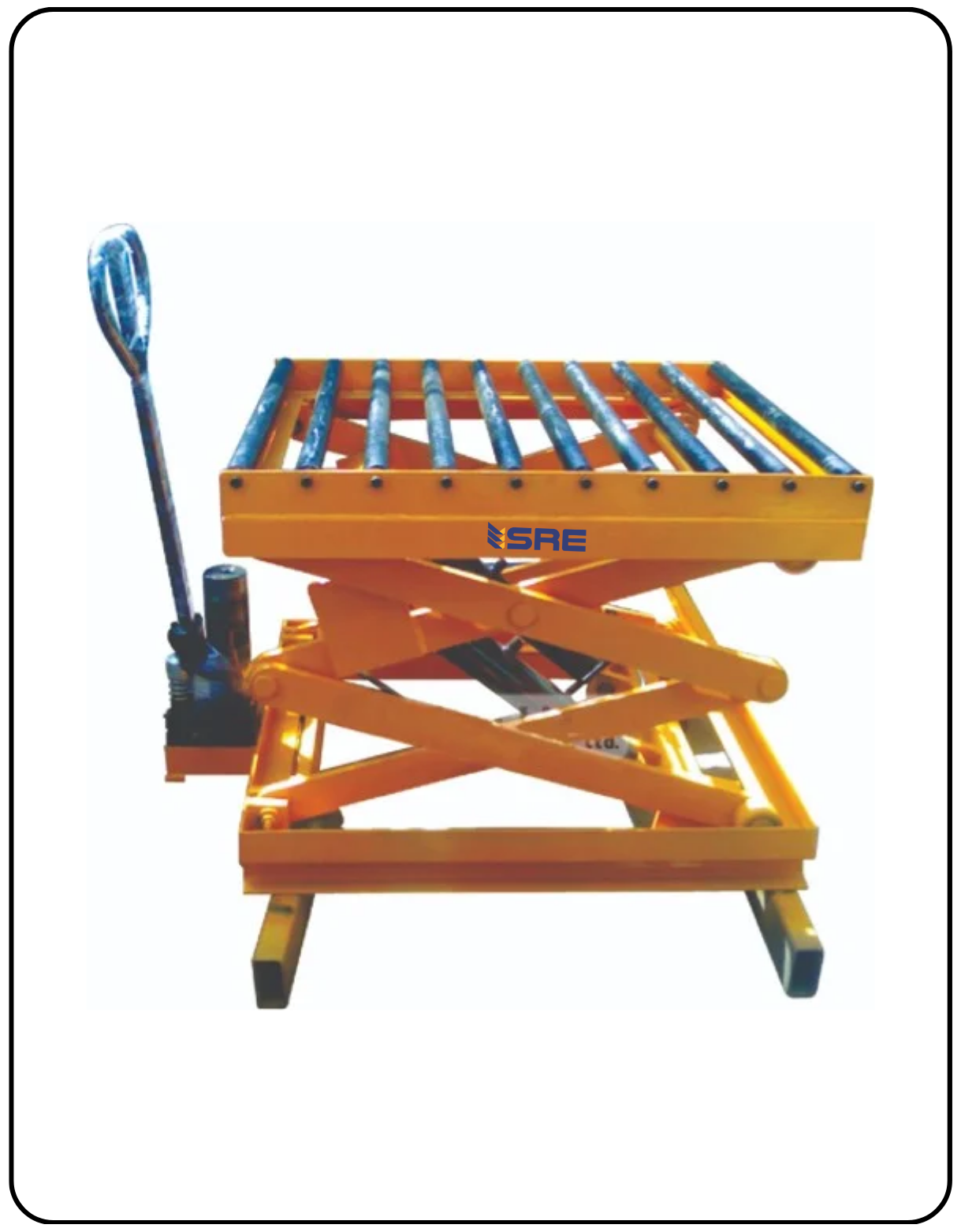
A Die Loader is a mechanical lifting platform designed to move workers and materials vertically in a stable and controlled manner. It uses a crisscross (scissor-like) mechanism that extends upward when hydraulic or electric force is applied.
In simple industrial terms, it is a safe working platform that replaces ladders and makes height-based tasks more structured and stable. It is commonly used in warehouses, factories, construction sites, maintenance operations, and logistics hubs.
Unlike temporary lifting solutions, a Die Loader is designed for repeated, daily use in demanding environments.
Why Die Loader Is Replacing Traditional / Manual Equipment
Earlier, most height-related tasks were performed using ladders, scaffolding, or makeshift platforms. While these methods are still in use in some places, they come with clear limitations.
Comparison:
Manual Methods:
- High physical strain
- Limited stability
- Slower operations
- Higher risk of falls
Die Loader:
- Stable working platform
- Controlled elevation
- Faster task completion
- Reduced physical effort
In real warehouse environments, the difference is visible in daily output. Workers can focus on tasks instead of balancing themselves or adjusting unstable equipment.
Productivity Gains in Daily Operations
One of the most noticeable benefits of using a Die Loader is improved productivity. In multi-shift warehouse environments, even small time savings per task add up significantly.
Operational improvements include:
- Faster picking and stacking at height
- Reduced setup time compared to ladders
- Smooth vertical movement without interruptions
- Better coordination between teams
In practical scenarios, teams can complete repetitive height-based tasks consistently across shifts without performance drop-offs due to fatigue.
Improved Workplace Safety
Safety is a critical concern in every industrial setup. Falls from height remain one of the most common workplace injuries in warehouses.
A Die Loader improves safety through:
- Stable base support during elevation
- Guardrails to prevent accidental falls
- Controlled lifting mechanism
- Reduced need for risky climbing
In daily operations, this reduces dependency on unsafe improvisations and helps organizations maintain compliance with workplace safety standards.
Handling Heavier Loads with Ease
Modern warehouses do not just move lightweight goods. From packaged cartons to industrial components, load handling requirements vary significantly.
A Die Loader provides:
- Strong load-bearing capacity
- Stable lifting even under uneven weight distribution
- Controlled elevation without sudden movement
This stability is important in industries where product damage or imbalance can lead to operational losses.
For a better understanding of financial decision-making concepts such as investment planning, asset valuation, and ROI analysis that support long-term industrial equipment purchases, resources like Investopedia offer clear and practical business education insights.
Technology & Operational Efficiency
Depending on the model, Die Loaders operate using hydraulic or electric systems. Both systems are designed for consistent lifting performance.
Key operational advantages include:
- Reliable power systems for continuous use
- Minimal downtime due to mechanical simplicity
- Smooth lifting and lowering cycles
- Energy-efficient operation in electric models
In industrial environments, uptime is critical, and Die Loaders are generally built to support long operational hours with minimal interruption.
Space Optimization & Maneuverability
One of the overlooked advantages of a Die Loader is its compact structure. Warehouses in India often face space constraints due to high storage density.
Benefits include:
- Compact footprint for narrow aisles
- Easy movement in tight warehouse layouts
- Suitable for indoor and semi-indoor environments
- Flexible positioning for multiple tasks
This makes it practical for facilities where space utilization is a key operational priority.
Cost Efficiency Over Time
While procurement cost is always a consideration, industrial decision-makers focus more on lifecycle value.
Over time, a Die Loader contributes to:
- Reduced workplace injuries and compensation costs
- Lower labor fatigue and turnover
- Faster task completion
- Reduced dependency on multiple manual tools
The long-term operational savings often outweigh the initial investment when the equipment is used regularly.
Sustainability & Compliance
Modern industries are increasingly focusing on cleaner and more efficient operations.
Die Loaders support this by:
- Reducing manual workload dependency
- Supporting electric-powered operation models
- Helping organizations meet safety compliance requirements
- Encouraging structured workflow systems
This aligns with broader industrial sustainability and workplace safety goals.
For global business news, economic trends, and industrial market insights that influence investment decisions and supply chain strategies, platforms like Bloomberg provide authoritative and data-driven coverage of worldwide markets and industries.
Integration with Warehouse / Factory Workflow
A Die Loader is not a standalone tool; it integrates into daily operations.
Common workflow applications:
- Inventory management at elevated racks
- Maintenance of machinery and lighting systems
- Loading/unloading in dispatch zones
- Assembly line support in factories
Its adaptability allows it to be used across multiple departments without workflow disruption.
Comprehensive Range of Material Handling & Die Loader Solutions
- Hydraulic Die Loader: A heavy-duty lifting solution powered by hydraulic systems, designed for stable vertical movement of workers and materials in warehouses and factories.
- Electric Die Loader: Energy-efficient lifting equipment operated on electric power, suitable for indoor operations requiring smooth, noise-free elevation.
- Mobile Die Loader Platform: Portable lifting platform with wheels, allowing easy movement across different work areas for flexible height access tasks.
- Fixed Dock Die Loader: Stationary lift installed at loading docks to simplify goods transfer between trucks and warehouse floors safely and efficiently.
Training, Ease of Use & Maintenance
One of the reasons Die Loaders are widely adopted is their ease of operation.
Key points:
- Basic operator training is sufficient
- Simple control systems for movement
- Predictable maintenance schedules
- Low mechanical complexity compared to other lifting systems
This makes it suitable even for facilities with mixed skill-level workforce.
Why Choosing a Reliable Manufacturer Matters
In industrial equipment, quality and service support play a major role in long-term performance.
A reliable manufacturer ensures:
- Proper structural design and load safety
- Availability of spare parts and service support
- Compliance with industrial standards
- Better durability in high-usage environments
For businesses in India looking for dependable material handling solutions, working with experienced manufacturers is important.
One such trusted name is: SRE MATERIAL HANDLING EQUIPMENT PRIVATE LIMITED
Their focus on industrial-grade lifting solutions supports warehouse and factory operations with practical engineering and service support.
Conclusion
In today’s fast-moving industrial environment, efficiency, safety, and reliability are no longer optional—they are essential. A Die Loader helps organizations achieve these goals by improving workflow stability, reducing manual strain, and enhancing operational speed.
For warehouses and factories in India, it represents a practical step toward safer and more structured material handling systems.
Key Takeaways
- Productivity: Faster height-based operations and reduced downtime
- Safety: Lower risk of falls and workplace injuries
- Load Handling: Stable and controlled lifting performance
- Cost Efficiency: Long-term savings through reduced labor strain
- Industry Trend: Increasing adoption in modern warehouses and factories
Trending FAQs
Q1. Where is a Die Loader commonly used?
- It is widely used in warehouses, factories, logistics hubs, and maintenance operations.
Q2. Is a Die Loader suitable for indoor warehouses?
- Yes, compact models are designed specifically for indoor and narrow aisle usage.
Q3. What industries in India use Die Loaders the most?
- Logistics, manufacturing, automotive, pharma, and e-commerce warehousing.
Q4. How much training is required to operate it?
- Basic operational training is usually sufficient for safe usage.
Q5. What is the main advantage over ladders?
- Improved safety, stability, and faster task completion.
Seek a Quote or Technical Consultation
If your facility requires secure and dependable vertical access, discuss your operational context with a Dependable Die Loader Manufacturer. Our team at SRE MATERIAL HANDLING EQUIPMENT PRIVATE LIMITED offers recommendations rooted in application, technical blueprints, and straightforward pricing.
Explore: SRE MATERIAL HANDLING EQUIPMENT PRIVATE LIMITED to lodge your query and obtain a solution harmonized with your operational requirements.