SRE Material Handling Equipment Pvt. Ltd.: Manufacturer, Supplier, And Exporter Of Dock Leveler in India.
SRE Material Handling Equipment Pvt. Ltd., Manufacturer And Supplier Of Dock Leveler in Chakan.
Our Manufacturing Unit is in Ahmedabad, Vadodara, and Rajkot, Gujarat, India.
Dock Leveler in Chakan: Essential Equipment for Secure, Swift, and Dependable Material Handling
Within the daily rhythm of warehouse and manufacturing sites, the loading dock is where operational effectiveness is either maintained or gradually eroded. As centers in and near Chakan manage increased throughput, stricter delivery timelines, and diverse vehicle fleets, outdated loading processes prove inadequate. Stoppages at the dock create knock-on effects throughout the entire distribution network—affecting how personnel are used, the speed at which trucks can depart, and well-being on site.
A Dock Leveler presents itself as a sensible response to these escalating needs. It’s not positioned as a passing technological fad, but rather as crucial equipment that brings loading areas in line with actual functional requirements. This article explores how dock levelers enhance contemporary industrial processes, based on tangible rationale instead of mere sales claims.
Evolving Demands for Contemporary Warehouses and Production Sites
Facilities such as warehouses and manufacturing plants located in key industrial zones like Chakan face continuous strain. Shipping quantities shift daily, transport vehicle dimensions differ, and clients anticipate quicker shipments with reduced mistakes.
Frequent difficulties observed in operational areas feature:
- Disparate truck bed heights resulting in hazardous approach angles
- Human interventions delaying the throughput of loading stages
- Operator tiredness during routine material handling duties
- Heightened chances of falls, stumbles, and spinal harm
- Variability in performance between different work shifts
When undertakings expand, these difficulties transition from isolated events to systemic obstacles. Venues now require machinery that guarantees uniformity, security, and rapid throughput—without introducing added complication.
What Function Does a Dock Leveler?
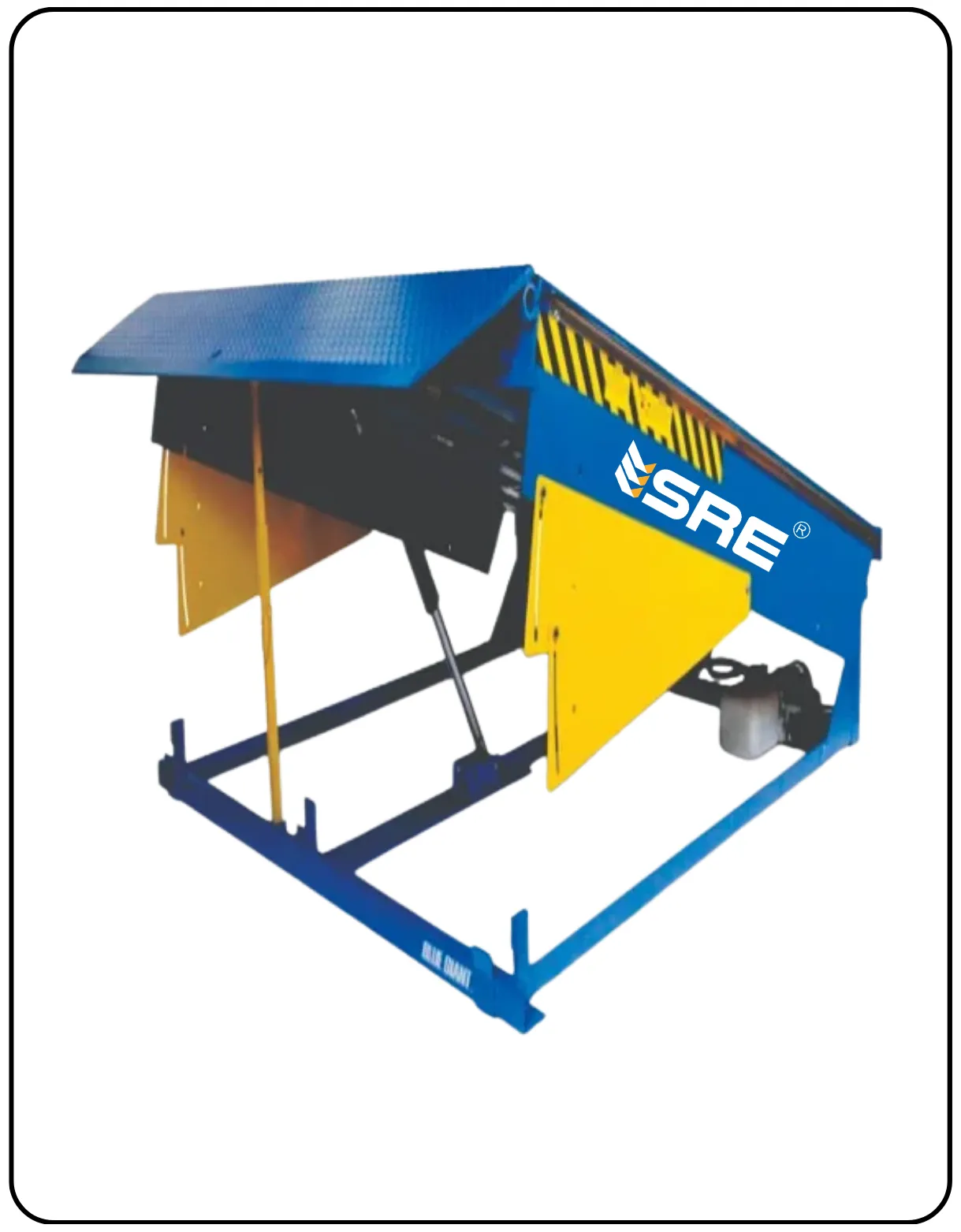
A Dock Leveler is a platform, powered mechanically, hydraulically, or electro-mechanically, that is integrated into the loading bay. Its core purpose is straightforward: it spans the elevation discrepancy between the internal floor level and the trailer floor.
Functionally, it generates a firm, flat connection point, enabling safe and effective transit of goods by forklifts, pallet movers, and personnel. Rather than resorting to makeshift arrangements like timber supports or temporary inclines, dock levelers offer a managed and reproducible method for every transport docking at the bay.
Why Dock Levelers Are Superseding Older Loading Gear
Older, hand-operated loading setups worked when there was less freight and truck models were uniform. Now, they bring about unnecessary hazards.
Manual techniques frequently lead to:
- Stress on the workforce
- Wasted moments tweaking temporary platforms
- Inventory harm from unevenness
- Increased accident likelihood
A Dock Leveler substitutes unpredictability with steadiness. It lessens bodily exertion, makes the loading procedure uniform, and permits staff to concentrate on precise placement instead of wobbling and peril.
Productivity Boosts in Routine Tasks
In busy settings, minor slowdowns accumulate fast. A dock leveler assists by:
- Cutting down on how long vehicles wait
- Enabling quicker forklift movement in and out
- Sustaining consistent loading pace throughout different work periods
In day-to-day warehouse activities, groups frequently observe more fluid processes after dock levelers are put in place. The procedure relies less on personal ability and more on dependable system performance—a key change for sites running several shifts.
Safer Work Environments
Loading bays statistically stand out as one of the highest-risk zones within a site. Irregular ground, mobile machinery, and substantial weights generate continuous hazard.
Dock platforms enhance security through:
- Offering a firm, slip-resistant floor
- Minimizing abrupt elevation shifts
- Facilitating managed travel for powered industrial trucks
From a human factors viewpoint, personnel endure less tension, fewer unnatural stances, and diminished tiredness—particularly across extended unloading/loading periods.
Managing Substantial Weights Effortlessly
Contemporary storage facilities deal with bulkier unit loads and increased vertical storage. Human-powered methods find it difficult to keep things steady under these circumstances.
A Loading Dock Plate is engineered to reliably bear its specified weight capacity. This steadiness enables forklift movement without jolts, lessening the impact on merchandise and cutting down on harm to both items and the machinery used for movement.
Tech and Workflow Streamlining
Based on the use case, loading dock equipment might employ hydraulic setups, mechanical coil systems, or electrically boosted configurations. The true benefit in function comes from:
- Dependable activation
- Reduced time out of service
- Steady output despite differing weather
Industrial sites in Chakan frequently favor machinery that operates dependably over extended shifts, over units boasting sophisticated capabilities but demanding more complex upkeep.
Space Efficiency and Agility
Docking zones frequently have limited room. A cleverly engineered dock leveler fits neatly within the pit area, avoiding interference with forklift operation or foot traffic lanes.
This small footprint aids in:
- Optimized utilization of dock spaces
- Fluid circulation of vehicles
- Enhanced compatibility with tight-aisle warehouse schemes
Ongoing Fiscal Prudence
Although a dock leveler represents a significant outlay, its true worth stems from operational economies over simple initial expense.
Enduring advantages comprise:
- Fewer on-site accidents
- Diminished worker exhaustion
- Decreased product spoilage
- Quicker vehicle processing
As time progresses, these elements foster demonstrable cost-effectiveness and consistent operational performance.
Durability and Adherence
More environmentally sound practices extend beyond just what is emitted. They encompass less material scrap, healthier work settings, and meeting safety regulations.
Dock leveling equipment aids adherence through:
- Lowering chances of mishap
- Encouraging consistent loading methods
- Conforming to industrial safety standards
Premises prioritizing enduring viability frequently see their dock setups as an element of their adherence plan.
Dock Leveler Integration with Warehouse and Factory Operations
A dock leveler functions as part of a larger system. It interacts with equipment like forklifts, conveyor systems, pallet jacks, and warehouse management software.
When selected correctly, it blends seamlessly into current operational flows, assisting with both receiving and shipping activities while maintaining existing procedures.
Training, Simplicity of Use, and Upkeep
A key practical benefit of dock levelers is their simple operation.
- Personnel need little instruction
- The controls are uncomplicated
- Servicing is foreseen and scheduled
This user-friendliness lessens reliance on expert staff and promotes workforce adaptability.
Why Selecting a Trustworthy Producer Is Important
Dock levelers don’t all function identically under actual usage. The standard of components, precision in construction, and assistance offered directly affect how dependable they are over time.
When assessing producers, those making choices usually look at:
- Demonstrated background in the sector
- Adherence to safety regulations
- Ease of obtaining maintenance and replacement parts
- Clear technical details
In areas such as Chakan, businesses frequently favor partnering with reputable vendors like SRE MATERIAL HANDLING EQUIPMENT PRIVATE LIMITED, recognized for providing functional material management systems supported by ongoing service.
In Summary
A Dock Leveler has transitioned from being a discretionary piece of equipment to essential infrastructure for expanding warehouses and production plants. It serves as a tangible solution to actual operational hurdles, aiding sites in boosting safety, uniformity, and output at a crucial juncture.
For executives in Chakan, the choice of appropriate dock infrastructure hinges less on the hardware itself and more on fostering fluid daily workflows with minimized hazards and slowdowns.
Should your site be examining dock performance, a thorough assessment of dock leveler necessities makes a solid initial step.
Main Points
- Throughput: Swifter, more regular unloading and loading activities
- Security: Decreased likelihood of harm and enhanced comfort for workers
- Cargo Movement: Steady transfer of bulkier pallets
- Financial Benefit: Less unproductive time and savings over the long haul
- Sector Move: Dock systems recognized as fundamental to enhanced performance
Trending FAQs
Q1. Is a dock leveler necessary for medium-sized warehouses?
Yes. Even moderate volumes benefit from safer and more consistent loading operations.
Q2. Can dock levelers handle different truck heights?
They are designed to accommodate a wide range of vehicle bed heights.
Q3. How much training is required for operators?
Basic operational training is usually sufficient.
Q4. Are dock levelers suitable for continuous shift operations?
Yes, when correctly specified for load capacity and usage frequency.
Q5. What factors should be considered before installation?
Load capacity, dock dimensions, vehicle types, and service support.
Get expert dock leveler solutions tailored to your warehouse needs. Call +91 9316 208879 or sremhepvtltd2025@gmail.com for assistance now.
#DockLeveler #ChakanIndustries #WarehouseSafety #MaterialHandlingSolutions #LoadingDockEfficiency #IndustrialInfrastructure #SREMaterialHandling #SupplyChainOperations #WarehouseOptimization