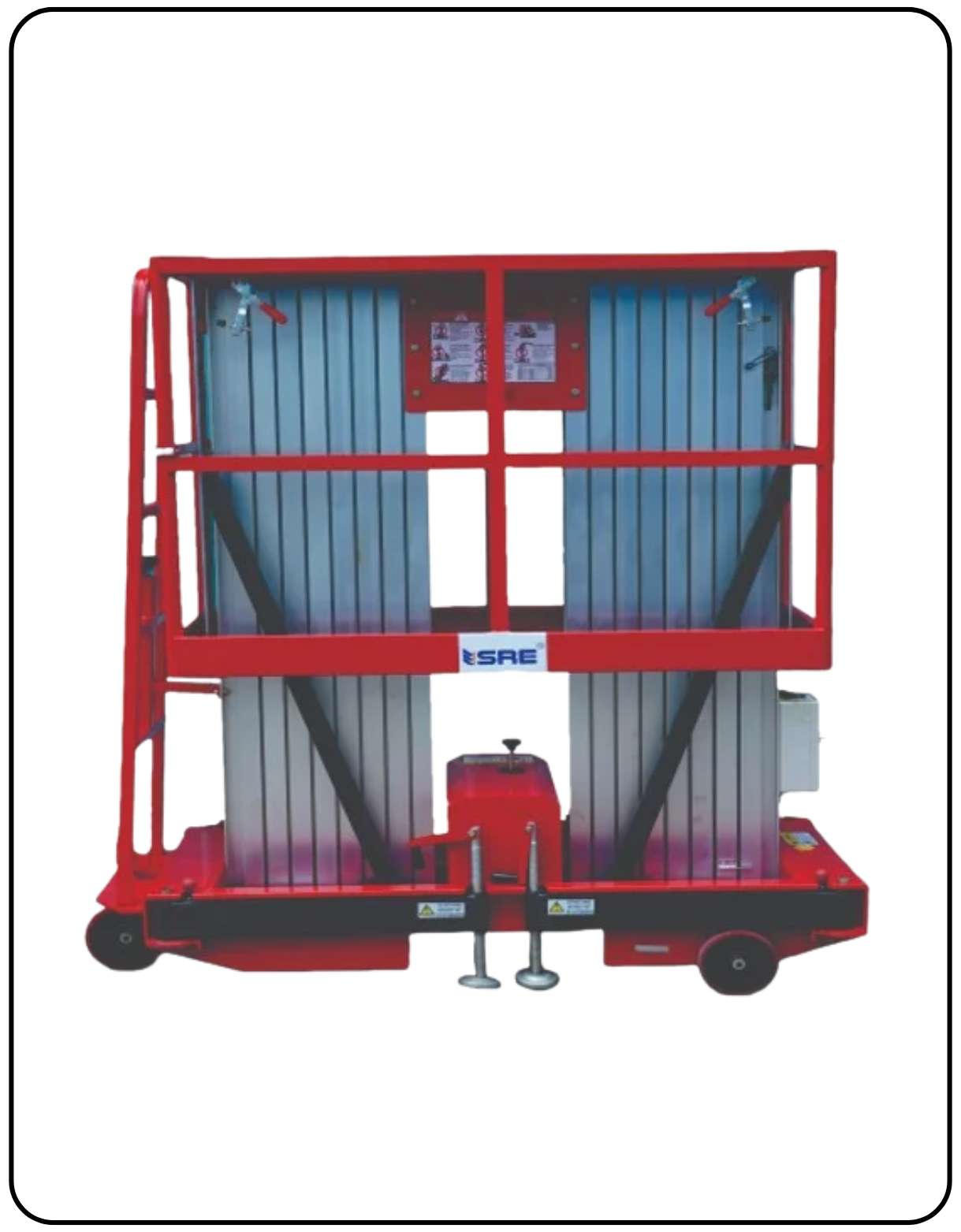
SRE Material Handling Equipment Pvt. Ltd.: Manufacturer, Supplier, And Exporter Of Dock Leveler in India.
SRE Material Handling Equipment Pvt. Ltd., Manufacturer And Supplier Of Dock Leveler in Nashik.
Our Manufacturing Unit is in Ahmedabad, Vadodara, and Rajkot, Gujarat, India.
Dock Leveler in Nashik: A Practical Guide for Industrial Leaders
In the fast-paced world of warehousing and industrial logistics, every minute counts. Businesses are moving more products than ever before, customer expectations for speed and accuracy are rising, and internal workflows are being pushed to deliver higher throughput with limited resources. In daily warehouse operations, tasks that once felt routine — loading pallets off trailers, shifting goods between docks, or staging outbound shipments — have become pressure points that affect overall performance, safety, and profitability.
Against this backdrop, Dock Leveler systems have emerged as a practical solution to real operational bottlenecks. For warehouse owners, factory managers, operations heads, supply-chain managers, and procurement teams in Nashik and beyond, understanding Dock Levelers — not as buzzwords but as workhorse infrastructure — is essential to making informed decisions that improve efficiency, safety, and long-term value.
This blog draws on real-world experience from industrial settings to explain what Dock Levelers are, why they matter, and how they fit into daily operations. It is written for decision-makers who balance operational pressure with practical logistics realities.
The Changing Needs of Modern Warehouses and Industries
In today’s industrial environment, warehouse operations are no longer just about storing goods. They are about moving them quickly and reliably through increasingly complex supply chains.
Rising Operational Pressures
Whether your facility handles consumer goods, industrial parts, auto components, or perishable products, the pressures are similar:
- Increased volume of inbound and outbound shipments
- Tight delivery deadlines driven by e-commerce and just-in-time production
- Higher handling frequency due to smaller, more frequent shipments
- Labor challenges, including retention and fatigue
In many facilities in Nashik and Maharashtra, labor teams spend significant time bridging the gap between dock height and truck bed levels. These routine operations — historically done with simple planks, manual ramps, or improvised solutions — are no longer sufficient for consistent throughput.
Real-Life Workflow Challenges
A common scenario in daily warehouse operations looks like this: a truck arrives for unloading. The dock height is not perfectly aligned with the truck bed. Workers spend time adjusting wooden boards or metal plates. Forklift operators wait. The clock ticks. Delays cascade into other tasks, operational rhythm breaks, and safety risks rise.
Dock Levelers provide a practical way to eliminate these friction points so that dock-to-truck transitions are controlled, consistent, and efficient.
What Is a Dock Leveler?
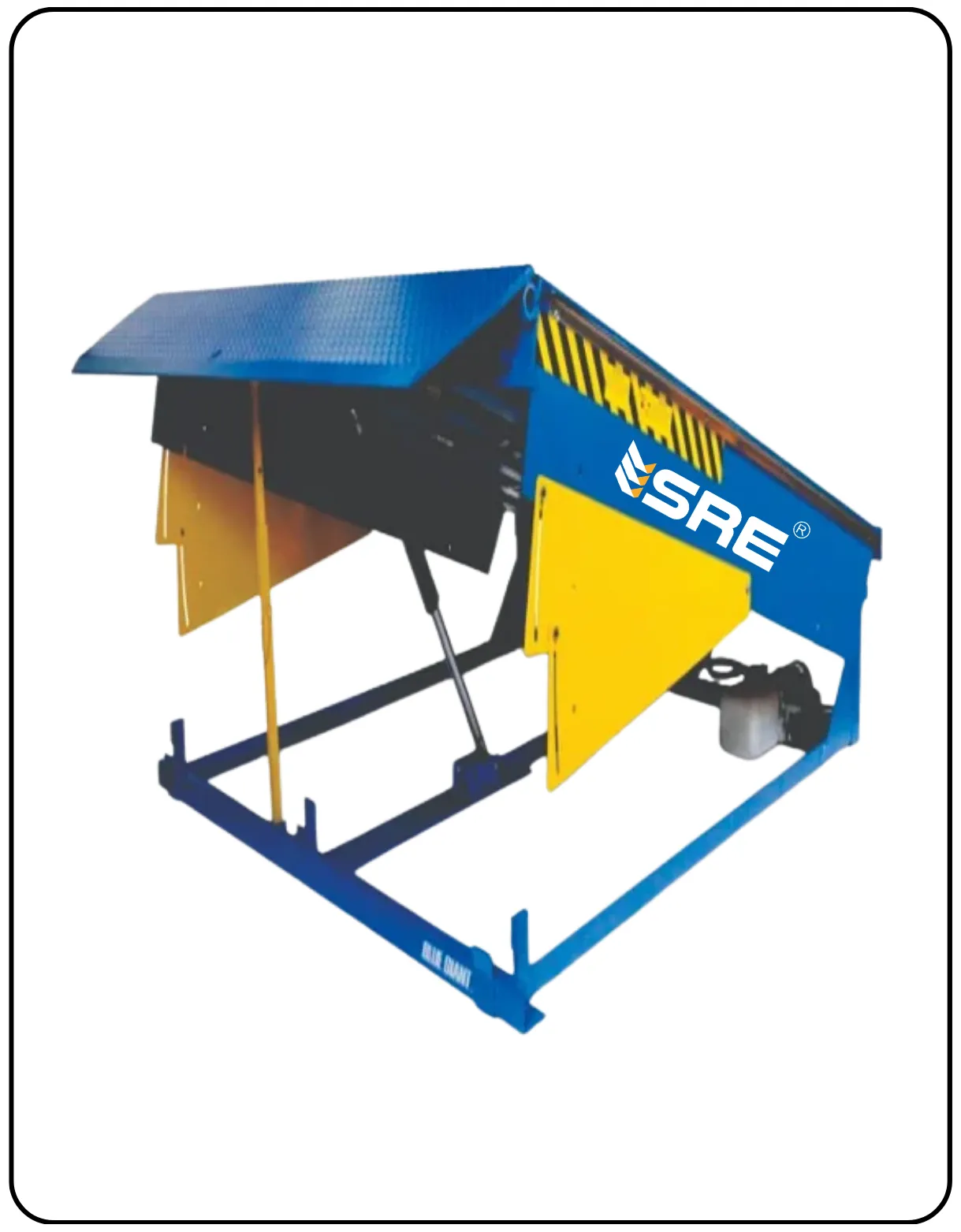
In simple industry terms, a Dock Leveler is a device installed at a loading dock that creates a smooth, safe surface between the building floor and a truck or trailer bed. It bridges the height difference so forklifts and pallet trucks can move loads without abrupt transitions.
Unlike a textbook definition that reads like engineering jargon, in everyday use a Dock Leveler is:
- A work surface that adjusts to varying truck heights
- A safety interface that reduces jolts and drop-offs
- A labor aid that reduces manual effort and wait time
This equipment is foundational infrastructure, not an add-on. It directly affects how goods enter, exit, and move within your facility.
Why Dock Levelers Are Replacing Traditional or Manual Equipment?
Many older facilities relied on manual methods — wooden boards, fixed ramps, or adjustable planks — to bridge height differences. These solutions worked only in limited circumstances and introduced multiple problems:
- Labor Fatigue: Manual ramps require repeated lifting, positioning, and alignment by staff. Over a shift, this adds up to physical strain and rising injury risk.
- Inconsistency: Wooden ramps warp, improvised solutions shift, and manual tools rarely align perfectly with truck beds. Each variation increases handling time and forklift jolts.
- Inefficiency: Time waiting for a safe crossing point — whether adjusting planks or double-checking alignment — slows the entire workflow. When you’re aiming for consistent output across shifts, these small delays aggregate into meaningful productivity loss.
Productivity Gains in Daily Operations
A warehouse or factory dock is a high-traffic zone. Goods are constantly moving in and out. Any delay at this point affects downstream processes — picking, sorting, staging, dispatching.
In daily operations, here’s how a Dock Leveler improves productivity:
- Faster Transitions: With hydraulic or spring-assisted Dock Levelers, adjusting to truck bed heights becomes a matter of seconds. Forklifts and pallet jacks move without stopping for manual adjustments.
- Consistent Throughput: Across different shifts and operators, the handling process becomes predictable. Teams know what to expect, which reduces training time and errors.
- Less Waiting Time: Truck drivers wait less for dock readiness, reducing dwell time. This improves scheduling efficiency and strengthens relationships with carriers.
In facilities handling hundreds of shipments per week, these incremental improvements translate into measurable productivity gains.
Improved Workplace Safety
Safety is a core concern in any industrial operation. Docks are inherently risky areas: moving vehicles, heavy loads, tight spaces, and constant human interaction.
Here’s how Dock Levelers contribute to safety in practical terms:
- Reduced Injury Risk: Manual ramps and boards are uneven, can slip, and often require lifting heavy pieces. Dock Levelers provide a firm, anchored platform that reduces slips, trips, and strains.
- Controlled Movement: With proper surface alignment, forklifts do not face sudden drops or rises that can destabilize loads or overturn equipment.
- Ergonomic Support: Teams spend less time bending, lifting, and adjusting makeshift tools. Over time, this reduces fatigue-related incidents.
Importantly, safety improvements are practical — not theoretical. In facilities with high handling volume, consistent dock alignment prevents minor jolts that cumulatively contribute to accidents.
Handling Heavier Loads With Ease
Modern warehouses handle heavier pallets, larger containers, and bulk shipments. Older manual solutions were not designed for these demands.
A Dock Leveler is engineered to:
- Support high-capacity loads safely
- Maintain stability even with fully loaded forklifts
- Distribute weight evenly to reduce structural stress
For facilities handling industrial products, automotive parts, or bulk consumer goods, this reliability is essential. Without it, operations face increased risk of equipment damage or human injury.
Technology & Operational Efficiency
While a Dock Leveler might seem like simple machinery, modern systems offer thoughtful engineering that supports uptime, reliability, and ease of use.
- Mechanical Advantages: Hydraulic systems, spring-assist designs, and robust construction reduce breakdowns and simplify adjustments.
- Operational Reliability: High-quality Dock Levelers maintain performance across shifts and seasons. In environments with frequent loading cycles, this reliability minimizes downtime.
- Low Technical Complexity: Unlike complex automated systems that require specialized technicians, many Dock Leveler models are designed for straightforward use and basic maintenance.
Your operational teams can adopt them with minimal interruption to existing workflows.
Cost Efficiency Over Time
Price is one consideration — but true cost efficiency comes from long-term value.
Here’s how Dock Levelers deliver return on investment:
- Reduced Injuries: Fewer workplace injuries translate to lower medical and compensation costs, and reduced disruption to operations.
- Lower Labor Stress: Teams spend less time on manual alignment tasks, freeing them to focus on core material handling.
- Less Downtime: Reliable dock interfaces mean fewer interruptions in loading cycles.
When decision-makers assess equipment investments, it’s important to look beyond upfront cost to long-term operational savings.
Why Choosing a Reliable Manufacturer Matters?
Not all Dock Levelers are created equal. The practical difference between good equipment and poor equipment shows up in reliability, service support, and longevity.
When evaluating suppliers:
- Consider industry experience and installation track record
- Ask about after-sales support and spare parts availability
- Prioritize quality over price alone
- Seek partners familiar with local industrial conditions
A reliable manufacturer understands real-world warehouse challenges — and supports you beyond the sale.
For trusted Dock Leveler solutions and expert guidance, explore SRE MATERIAL HANDLING EQUIPMENT PRIVATE LIMITED — a partner with practical industry focus and operational experience.
Learn more: https://www.sremhepvtltd.com/
Conclusion:
In today’s competitive industrial landscape, small operational inefficiencies add up to significant costs. Dock Levelers address a specific but critical part of material handling — the transition between dock and truck bed. By reducing manual effort, improving safety, stabilizing load handling, and integrating smoothly with workflow systems, Dock Levelers deliver practical value that supports productivity and long-term operational resilience.
For warehouse owners, operations heads, supply-chain managers, and procurement teams in Nashik and beyond, investing in the right Dock Leveler system — and partnering with an experienced provider — is a decision that pays dividends in reliability, safety, and efficiency.
If you’re reevaluating dock operations as part of your facility upgrade or expansion plan, the time to explore modern Dock Leveler solutions is now.
Key Takeaways
- Productivity: Dock Levelers reduce transition delays and improve operational rhythm.
- Safety: They significantly lower fatigue and injury risk compared to manual methods.
- Load Handling: Designed to support heavy loads with stability and control.
- Cost Efficiency: Long-term value comes from reduced downtime, injuries, and labor stress.
- Industry Trend: Modern warehouses increasingly rely on automated, reliable dock infrastructure.
FAQS
1. How long does a Dock Leveler installation take?
- Installation timelines vary by model and site conditions but typically range from a few hours to a day. Planning with your supplier ensures minimal disruption.
2. Do Dock Levelers require specialized power sources?
- Some hydraulic systems use standard plant power, while others offer battery-assisted options. Choose based on your facility’s energy infrastructure.
3. Can Dock Levelers handle all truck heights?
- Most modern levelers are designed for a wide range of truck bed heights. Check specifications against your typical truck mix.
4. Are Dock Levelers compatible with all types of forklifts?
- Yes — they provide a stable surface for various material handling equipment, including counterbalance forklifts, pallet jacks, and reach trucks.
5. How often should Dock Levelers be maintained?
- A: Routine checks — weekly or monthly, based on usage — ensure longevity and safety.
#DockLeveler #WarehouseEfficiency #IndustrialSafety #MaterialHandling #DockSolutions #LogisticsOptimization #WarehouseOperations #SRE_MATERIAL_HANDLING_EQUIPMENT_PRIVATE_LIMITED