
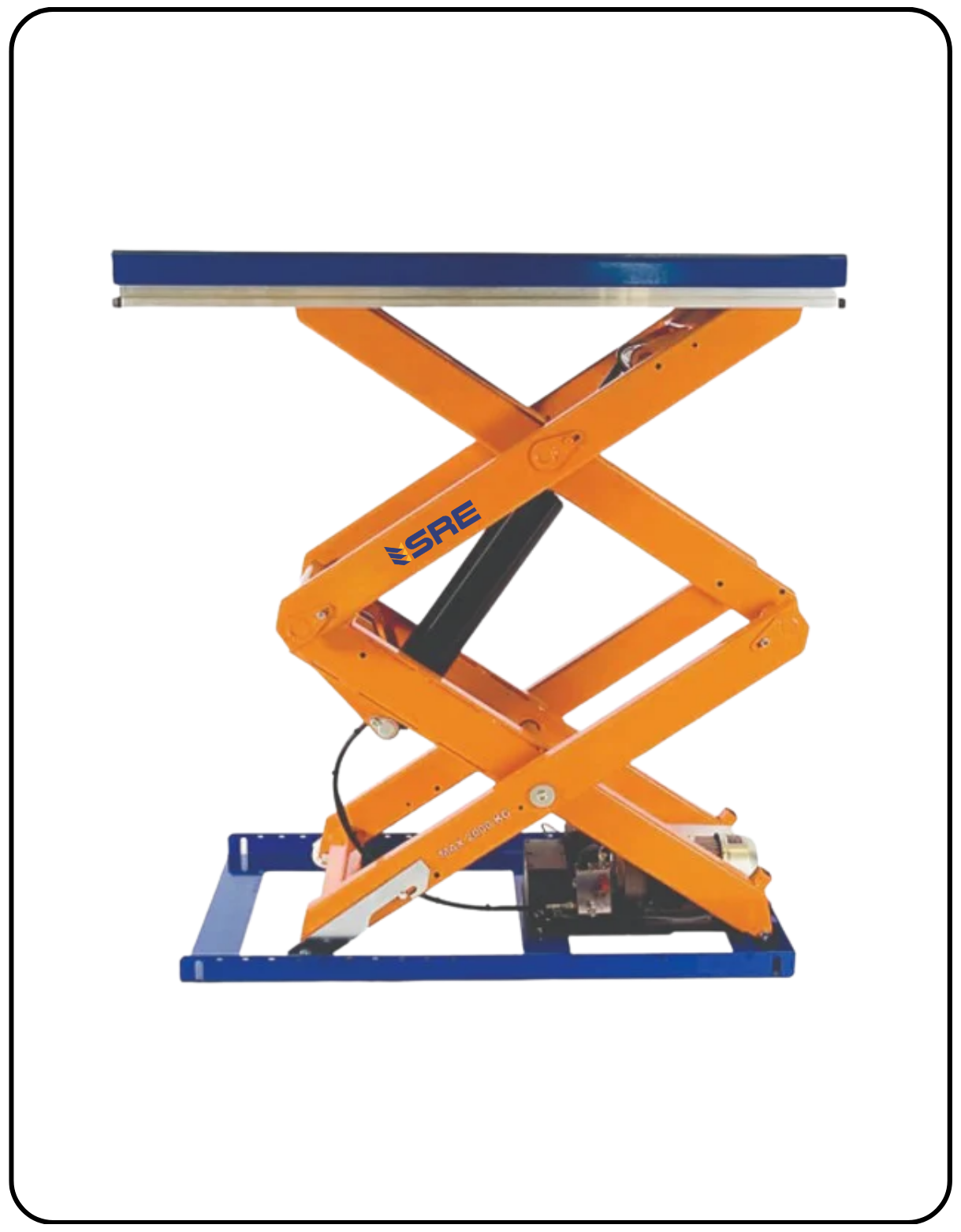
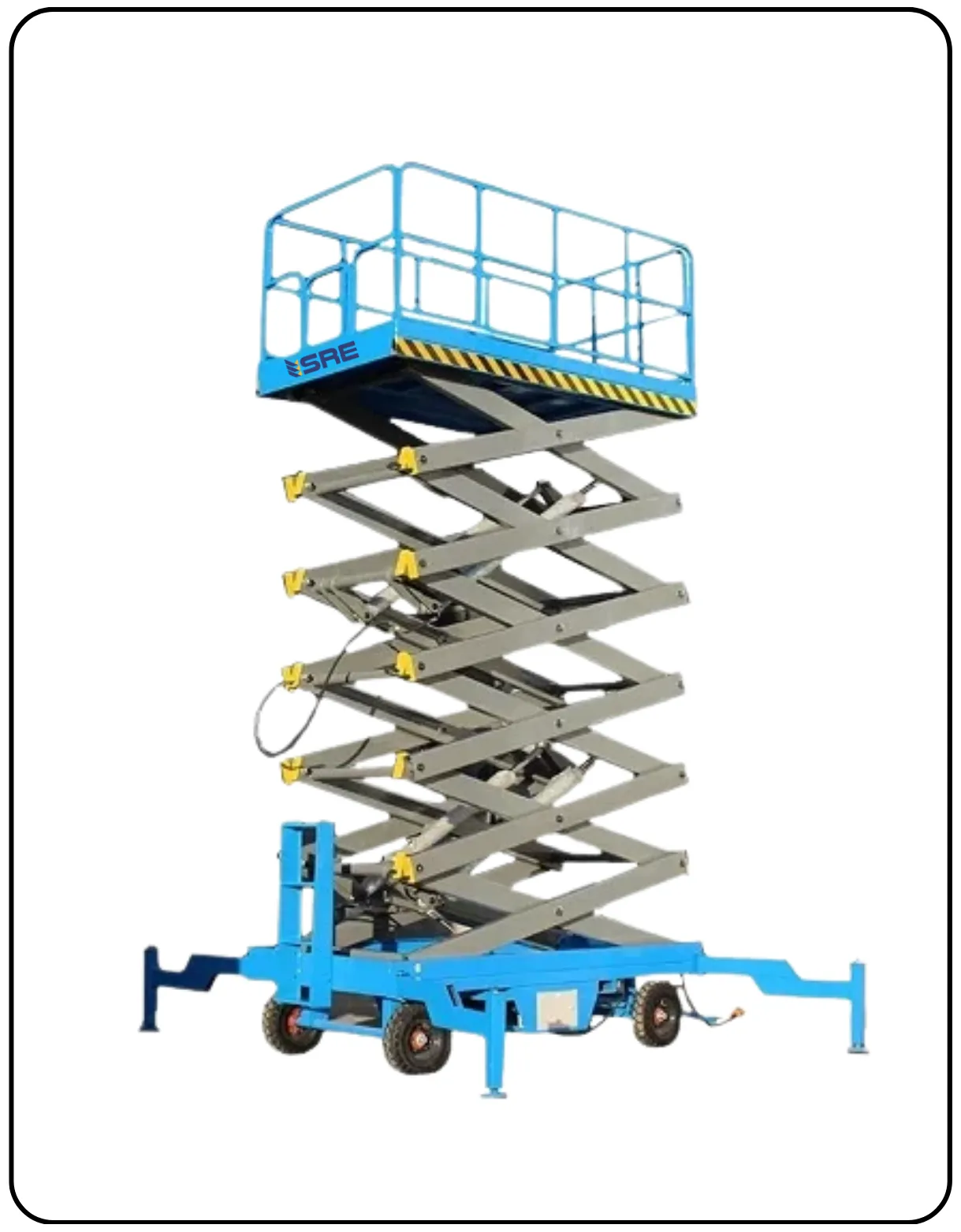
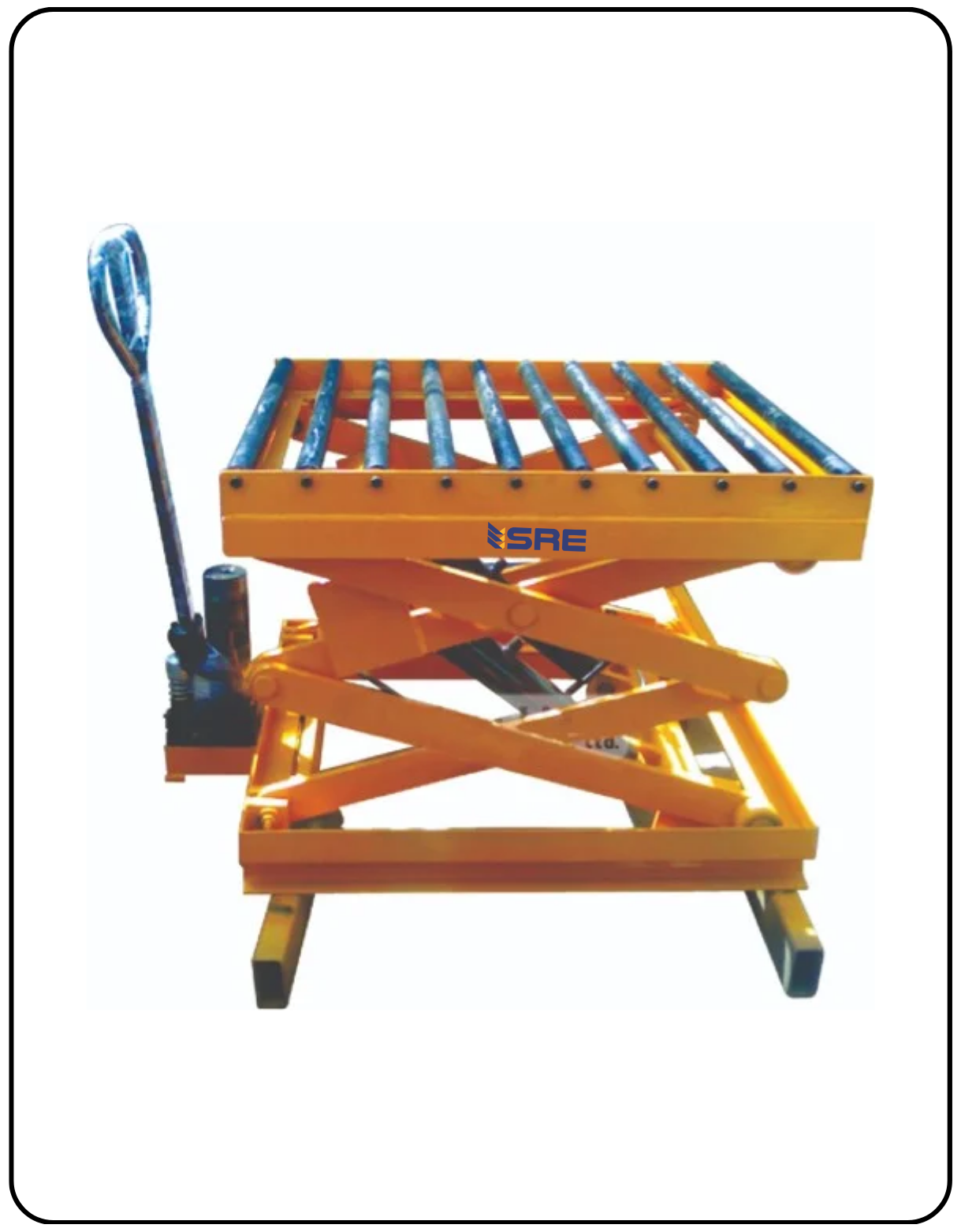
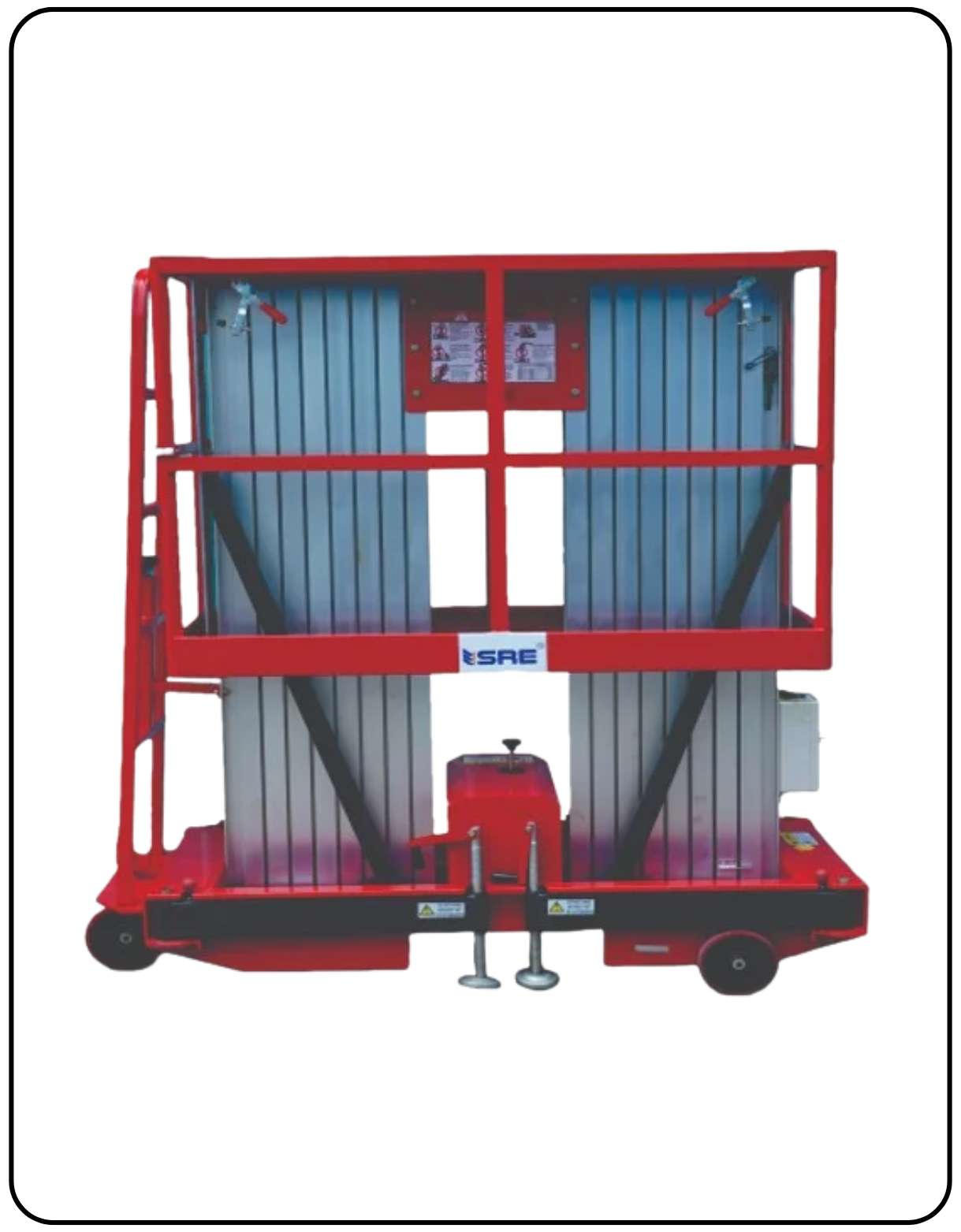
SRE Material Handling Equipment Pvt. Ltd.: Manufacturer, Supplier, And Exporter Of Electric Scissor Lift Table in India.
SRE Material Handling Equipment Pvt. Ltd., Manufacturer And Supplier Of Electric Scissor Lift Table in Mumbai.
Our Manufacturing Unit is in Ahmedabad, Vadodara, and Rajkot, Gujarat, India.
Electric Scissor Lift Platforms in Mumbai: Useful Insights for Safer, Quicker Industrial Movement
In the everyday warehouse and factory activities throughout Mumbai, the demands for speed and quantity have significantly increased. What was once manageable with manual movement now frequently causes backups, worker exhaustion, and avoidable safety hazards. Tight shipping deadlines, operations running multiple shifts, and greater inventory movement mean teams are raising, setting, and shifting cargo far more often than previously.
For many site supervisors and facility proprietors, the Electric Scissor Lift Table has become a sensible method to steady workflows without overtaxing personnel or available space. The goal isn’t automation merely for its own sake. It’s about equipping teams with a trustworthy device that lessens stress, boosts uniformity, and functions well within actual shop-floor settings.
The Evolving Requirements of Contemporary Industrial Sites and Storage Facilities
Storage hubs in Mumbai and nearby industrial areas have accelerated in both tempo and complexity.
Tighter delivery windows, varied order dimensions, and rising client expectations translate to continuous internal transit. Materials no longer just travel from the loading dock to storage racks. They move repeatedly throughout the day between packaging, checking, component grouping, and shipping areas.
In numerous manufacturing plants, parts travel across workstations that were not initially designed for today’s output volume. This results in:
- Frequent bending and lifting
- Congestion near shared handling gear
- Stalling when cargo cannot be set in place swiftly
- Heightened tiredness during extended shifts
Over an extended period, these points of difficulty manifest as slower production, increased error percentages, and more safety occurrences. Construction Crane And Electric Order Picker The strain isn’t abstract—it’s evident on the floor during the latter half of every work period.
What Exactly Is an Electric Scissor Lift Table?
An electric scissor lift table is a mechanized platform that can raise or lower items to an appropriate operational elevation. Unlike fixed surfaces or improvised setups, it permits operators to bring materials to a comfortable level for packing, assembly, or handoff.
To put it plainly, it eliminates the necessity to:
- Manually elevate containers onto higher surfaces
- Stack pallets by hand
- Repeatedly stoop to access loads on the floor
The “scissor” mechanism delivers stable vertical motion, while the electric power source ensures a smooth, managed lift. In routine workflows, this means less guesswork and fewer unsafe shortcuts when loads need relocation.
Why Electric Scissor Lift Tables Are Superseding Older/Manual Gear?
Established handling techniques—like hand pallet trucks, static-height surfaces, or basic trolleys—still serve certain purposes. However, they were not engineered for the volume and frequency modern warehouses manage.
In typical storage activities, teams frequently dedicate more time adapting to equipment limitations than transporting goods. Manual lifting might seem feasible initially, but across hundreds of moves during a shift, physical drain accumulates.
An Electric Scissor Lift Table lessens reliance on physical strength. The height adapts to the specific job, rather than forcing the process to fit the equipment. Over time, this brings about:
- Fewer brief interruptions due to fatigue
- More consistent handling across different shifts
- Reduced disparity in output between seasoned workers and newcomers
This transition isn’t about replacing staff. It’s about removing needless physical demands so personnel can concentrate on precision and operational fluidity.
Productivity Boosts in Everyday Workflows
Small time savings accumulate significantly in material movement. When loads can be elevated to the correct height, teams avoid losing precious seconds readjusting boxes or pallets.
Over a complete work period, this translates to:
- Quicker cycles for order retrieval, packing, and transfer
- Smoother transitions between work areas
- Reduced idling while waiting for shared lifting apparatus
More critically, output achieves greater uniformity. Morning and late shifts often display comparable performance because physical exhaustion plays a diminished role. For managers tracking performance indicators, this steadiness is more valuable than just peak speed figures.
Enhanced Workplace Safety
Safety improvements stemming from controlled lifting are tangible, not theoretical ideals.
Repetitive bending, twisting, and lifting are primary drivers of back and upper-body injuries. Even when loads are within acceptable weight ranges, repetition over time increases the inherent risk.
With powered vertical assistance:
- Cargo remains within an ergonomic working zone
- Hands are kept away from crushing hazards
- Movement is both predictable and regulated
In facilities that have adopted powered lift platforms, safety discussions usually pivot from “How can we manage strain?” to “How do we standardize secure handling methods across all teams?” This shift in perspective inherently lowers accident statistics over time.
Managing Greater Weights Effortlessly
Contemporary workshops frequently encounter heavier and more diverse consignments. Large-scale packaging, combined shipments, and bigger parts are now standard.
Physically moving items works up to a point. When the weight exceeds what personnel can comfortably lift, teams devise stopgaps—using makeshift supports, seeking extra help, or postponing tasks.
A powered lifting platform offers:
- Firm support for substantial payloads
- Precise placement at transition points
- Improved alignment with conveyor systems, storage racks, or workstations
The stability element is often overlooked. Regulated vertical motion minimizes load shifting, a frequent source of minor incidents and merchandise damage.
Technology and Operational Smoothness
From an efficiency perspective, dependability outweighs optional features.
Electric lifting tables generally utilize straightforward battery or electrical setups engineered for frequent use. What teams value in day-to-day practice includes:
- Consistent operational availability
- Straightforward recharging procedures
- Minimal daily inspections
When machinery functions identically across every work period, scheduling simplifies. Managers can plan activities without accounting for worker exhaustion or equipment variability. Over extended periods, this consistency supports smoother planning efforts.
Optimizing Space and Mobility
Available floor area in facilities around Mumbai is seldom abundant.
A streamlined lift platform can operate in confined lanes and close to shelving without significant layout overhauls. This is important in older buildings where reconfiguring traffic paths is impractical.
Enhanced mobility equates to:
- Reduced crowding near packing areas
- Easier entrance in densely packed storage sections
- More versatile utilization across various departments
Instead of dedicating sections to stationary setups, teams can situate lift tables where the work is happening. This adaptability frequently distinguishes theoretical efficiency from actual progress.
Long-Term Expense Effectiveness
The cost assessment for handling machinery should extend beyond the initial purchase price.
Over time, workflows heavily reliant on manual effort result in:
- Increased sick leave due to strain-related ailments
- More frequent minor workplace injuries
- Slower output during high-demand intervals
- Variable performance between different shifts
A mechanized lifting option doesn’t eliminate these problems entirely, but it lessens their incidence and impact. Lower accident rates and more steady output translate to fewer interruptions and less unforeseen downtime. For purchasing departments, this enduring steadiness often validates the expenditure more convincingly than short-term cost savings.
Environmental Responsibility and Adherence to Rules
Sustainability in industrial settings encompasses more than just reduced emissions. It also involves creating systems that avoid exhausting people or depleting resources.
Electric handling apparatus promotes cleaner operations by lessening dependence on fuel-burning alternatives indoors. Crucially, it aligns with a compliance focus:
- Improved workspace ergonomics
- More controlled material movement
- Clearer safety methodologies
In official reviews and internal checks, these aspects reflect a mature strategy toward workplace wellbeing and accountability, which many organizations now expect as standard practice.
Fitting into Existing Factory and Warehouse Routines
New apparatus yields value only if it integrates with established procedures.
Lifting tables fit smoothly with:
- Work areas for packing and shipping
- Assembly assembly lines
- Quality inspection stations
- Zones for transferring pallets
Since they don’t demand elaborate foundational work, teams can introduce them gradually. This minimizes disruption and allows managers to gauge real-world effects before wider departmental implementation.
Simplicity in Use, Maintenance, and Instruction
Adoption often falters when equipment seems overly complex.
Many lift tables have intuitive controls, which speeds up operator training. Personnel generally require fundamental instruction on:
- Safe load limits
- Best practices for controlled lifting motions
- Simple daily checks
Maintenance tends to be planned rather than reactionary. Regular inspections and scheduled servicing keep the time spent out of service low. From an operational leader’s standpoint, predictable upkeep is simpler to timetable than emergency fixes stemming from overly taxed manual gear.
The Significance of Selecting a Dependable Supplier?
The performance of equipment varies over the lifespan.
For both purchasing and operations personnel, assessing suppliers involves looking beyond mere technical specifications. This includes:
- Uniformity in construction quality
- Accessibility of service assistance
- Ease of obtaining replacement parts
- Understanding of local working environments
In Mumbai’s industrial context, rapid support response is vital. Equipment stoppage during peak seasons creates subsequent delays across shipping and manufacturing schedules.
Firms like SRE MATERIAL HANDLING EQUIPMENT PRIVATE LIMITED are frequently judged not just on their product range, but on service dependability and sustained backing. Practical experience in operational settings usually carries more weight than marketing descriptions.
Summary:
For those making industrial technology choices, equipment selection dictates the everyday conditions on the factory floor. The Electric Scissor Lift Table represents more than just a fashionable upgrade. It is a necessary answer to tangible pressures—increasing volumes, tighter deadlines, and the imperative to safeguard personnel from unnecessary physical strain.
When introduced thoughtfully, it fosters more consistent throughput, safer handling, and more reliable routines. Over time, these modest operational gains accumulate to form more robust operations.
If you are assessing improvements in material handling, looking at verifiable applications and supplier assistance—such as those provided at https://www.sremhepvtltd.com/—can help anchor decisions in tangible results instead of assumptions.
Core Takeaways
- Output: Reduces time spent on handling and stabilizes results across work shifts
- Safety: Encourages ergonomic working elevations and guided movement
- Weight Management: Handles heavier shipments with improved steadiness
- Expense Management: Decreases long-term disruption from injuries and fatigue
- Sector Movement: Reflects the shift toward practical, people-focused machinery
FAQs
1. Are electric lift tables appropriate for smaller workshops?
- Yes. Compact versions are designed for narrow spaces and limited floor footprints, making them practical even in older buildings.
2. How much instruction do operators require?
- Standard initial operational guidance is usually adequate. Most teams become proficient quickly once safety protocols are clearly communicated.
3. Can they manage diverse types of loads?
- Lift tables are employed for everything from packaging to component parts and palletized products. The crucial element is matching the weight capacity to the actual job demands.
4. Does this increase the complexity of upkeep?
- Maintenance is scheduled and predictable. Compared to downtime caused by injuries or wear on manually used equipment, it’s simpler to manage operationally.
#ElectricScissorLiftTable #MaterialHandlingSolutions #WarehouseEfficiency #IndustrialSafety #MumbaiIndustry #LogisticsOperations #FactoryWorkflow #SREMaterialHandlingEquipment