
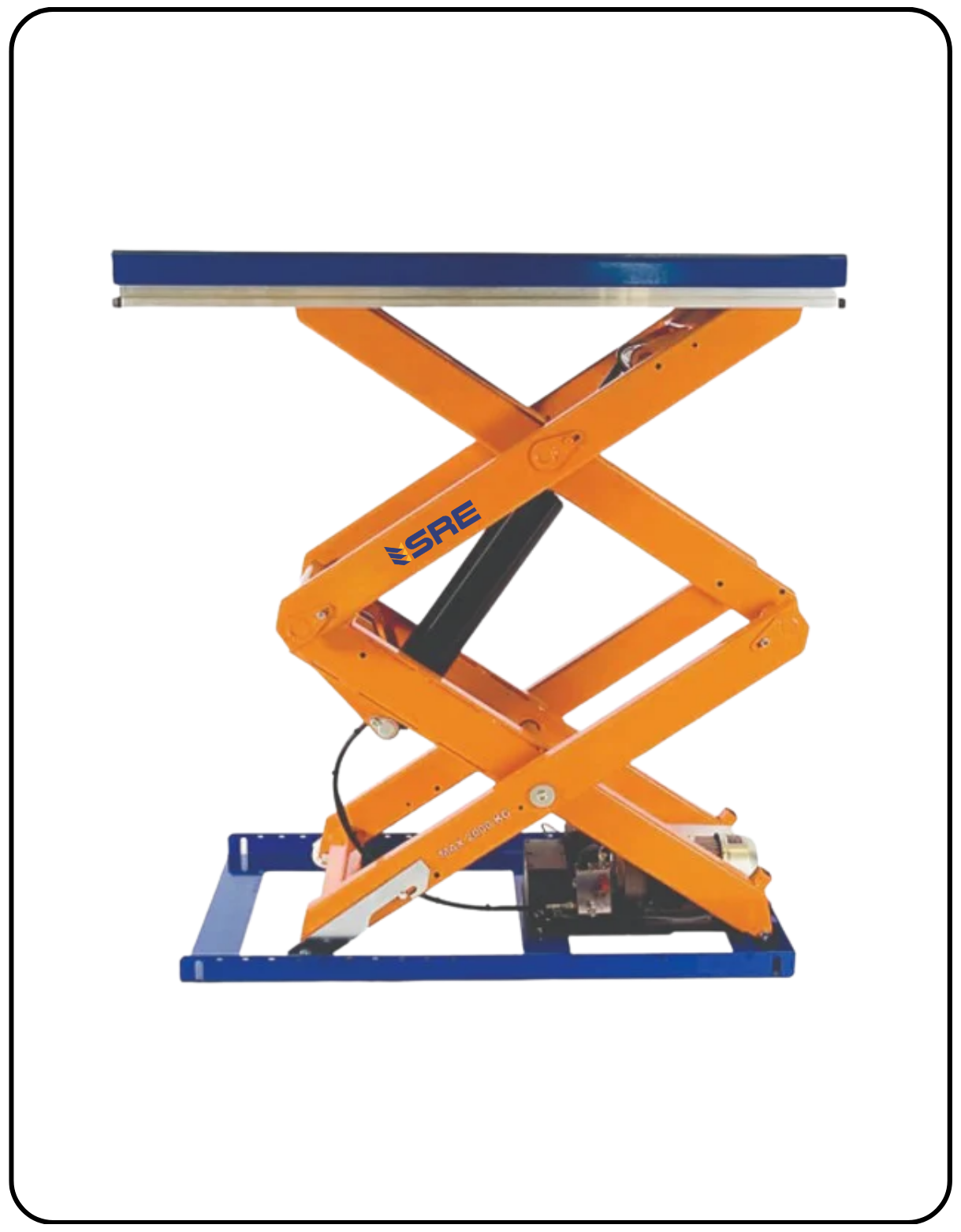
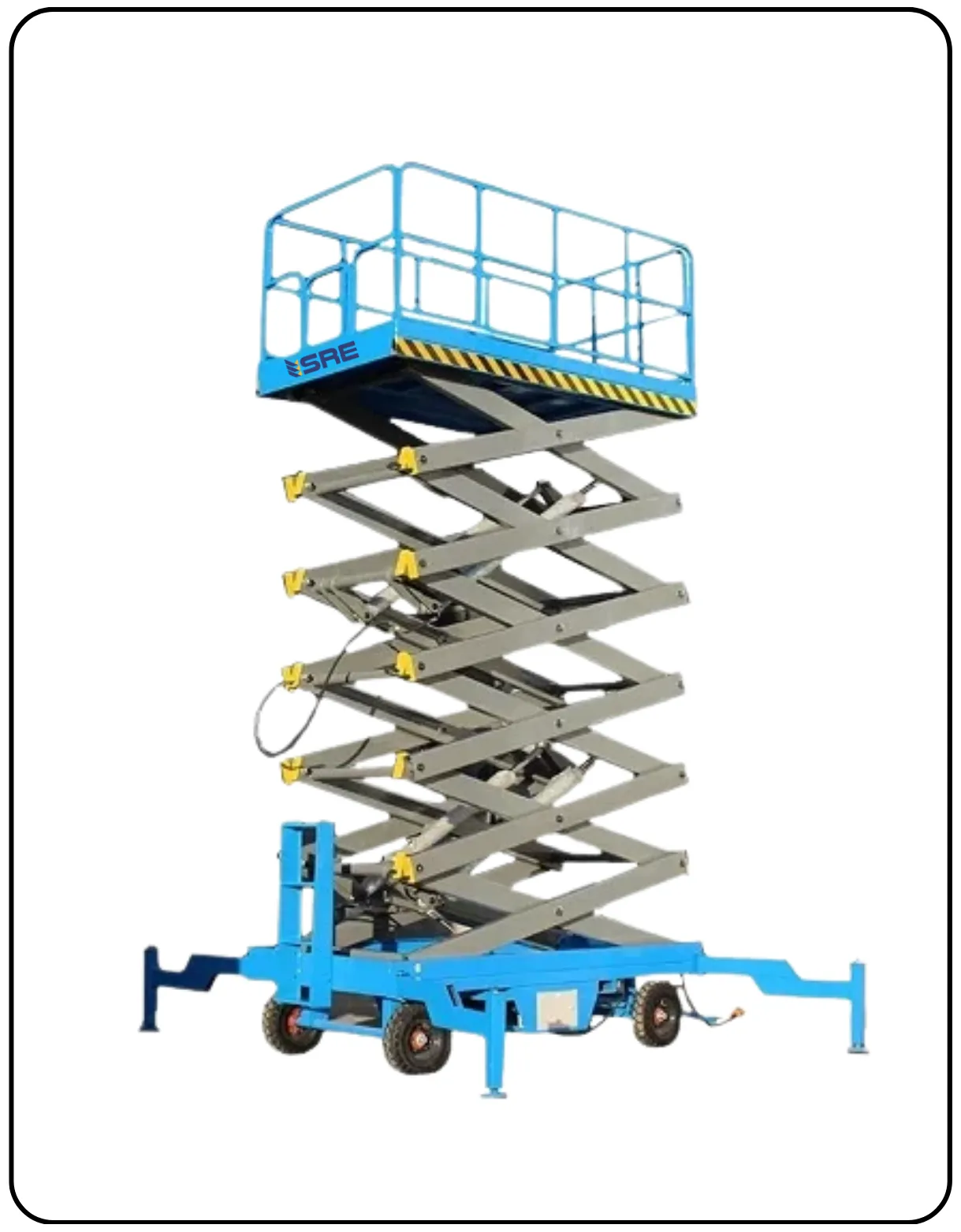
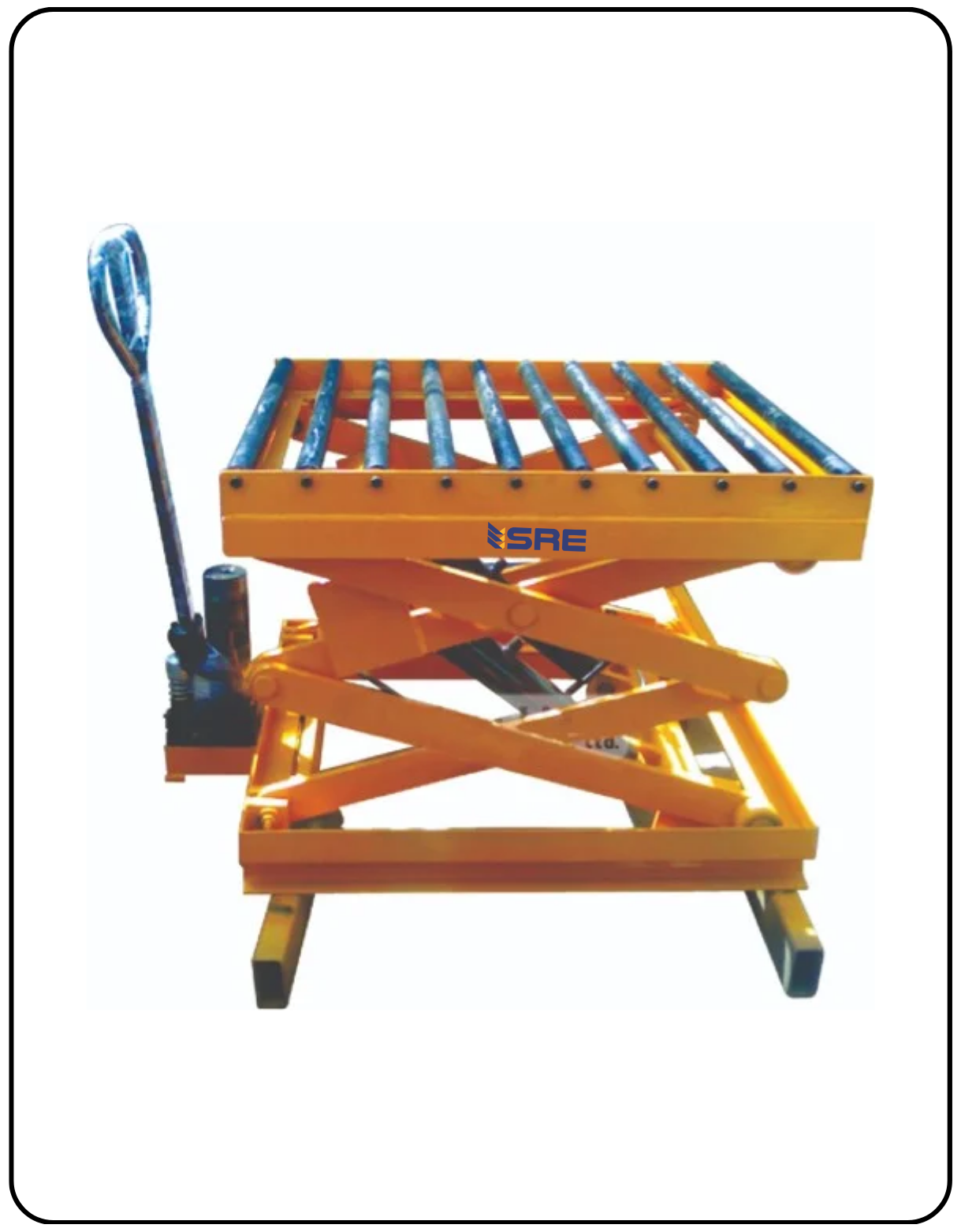
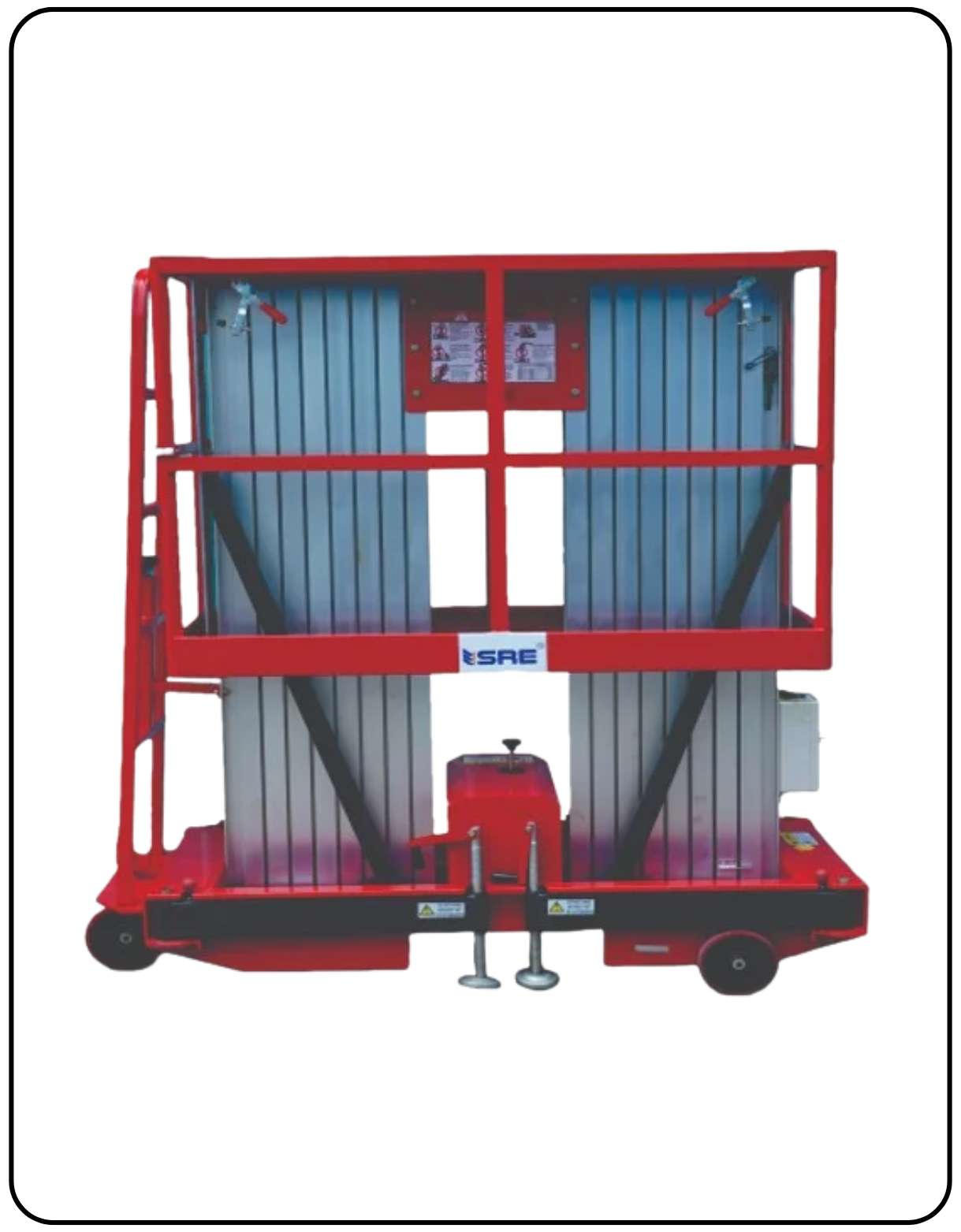
SRE Material Handling Equipment Pvt. Ltd.: Manufacturer, Supplier, And Exporter Of Electric Scissor Lift Table in India.
SRE Material Handling Equipment Pvt. Ltd., Manufacturer And Supplier Of Electric Scissor Lift Table in Nashik.
Our Manufacturing Unit is in Ahmedabad, Vadodara, and Rajkot, Gujarat, India.
Electric Scissor Lift Tables in Nashik: Practical Height Adjustment for Today’s Industrial Tasks
Work rhythms in warehouses and production floors around Nashik have noticeably accelerated over the past decade. Throughput demands are greater. Delivery windows are shorter. Personnel are required to move goods more quickly, with fewer mistakes and reduced instances of injury. For many Nashik-based operations, these pressures translate into tangible issues: staff manually lifting heavy items, improvised dollies pushed beyond capacity, and recurrent holdups at packaging or assembly points.
This is where an Electric Scissor Lift Table demonstrates its practical utility. It’s not merely a “modern accessory,” but rather a device that aids workers in operating at the optimal elevation, transporting loads more securely, and ensuring operations run consistently across shifts. In settings where moving materials still heavily relies on human strength, minor upgrades to lifting and positioning gear can significantly affect output, safety levels, and worker exhaustion.
Evolving Demands in Modern Industry and Storage
Nashik’s industrial facilities are currently managing a blend of traditional manufacturing and burgeoning distribution activities. Many serve automotive tiers, agricultural processors, packaging lines, and localized distribution hubs.
Operational demands have intensified from several angles:
- Elevated expected daily volumes
- Tighter customer delivery schedules
- A greater variety of product units (SKUs) and mixed shipments
- Leaner staffing arrangements
- Increased scrutiny regarding safety adherence
In actual job routines, this frequently means employees are perpetually bending, hoisting, and readjusting items during packing, examination, module construction, or pallet stacking. Over extended periods, these repetitive movements decrease pace and elevate the chances of musculoskeletal harm. Equipment that lessens unnecessary manual lifting becomes less about “mechanization” and more about maintaining output without overtaxing the workforce.
Defining the Electric Scissor Lift Table
An electric scissor lift table is fundamentally a platform whose height is adjustable, powered by an electric raising mechanism. In practical industry terms, it enables operatives to bring loads up or down to a comfortable working altitude at the touch of a switch.
On the factory floor, typical uses include:
- Aligning parts during assembly work
- Modifying the height of boxes during packing tasks
- Raising heavy components to workbench level for inspection purposes
- Shifting cargo between roller conveyors and pallets
Unlike fixed benches or manually operated trolleys, the elevation can be modified numerous times during a workday. This adaptability makes it valuable in settings where load dimensions and required actions vary often.
Why Electric Scissor Lift Tables Are Superseding Older Manual Gear?
Non-powered lifting aids and fixed-height work surfaces have existed for ages. They remain suitable for light-duty functions. However, as item weights rise and throughput goals increase, their constraints become apparent.
In day-to-day tasks, traditional methods result in:
- Variable working elevations
- Increased physical strain on the user
- Slower handling of bulkier items
- Greater reliance on individual physical power
Electric lift tables diminish this dependence on raw human force. The lifting action is regulated and replicable. Operators concentrate on placement and navigation, not the exertion of lifting the object itself. Over time, this fosters more uniform output between shifts and fewer slowdowns linked to fatigue.
Productivity Improvements in Regular Use
Efficiency boosts gained from lift tables are not usually sudden leaps. They derive from minor, consistent enhancements.
When cargo is consistently positioned at the correct height:
- Order fulfillment and packing require fewer steps
- Assembly actions flow more smoothly
- Staff spend less time realigning items
- Transitions between work zones are faster
In many warehouses, the identical task is repeated hundreds of times per shift. Saving just a few seconds per cycle accumulates significantly. More critically, output uniformity improves. Teams working overnight can sustain comparable handling speeds to day crews because the physical toll is lessened.
Enhancing Workplace Well-being
Injury avoidance is one of the most compelling justifications for adopting lift tables. Aches in the lower back, shoulder issues, and repetitive stress injuries are prevalent in material handling settings.
By keeping loads near waist level:
- Personnel avoid deep stooping and awkward reaches
- Cargo remains more stable during transport
- The hazard of unintended drops lessens
- Movements gain better control
Electric lift tables also provide metered vertical motion. This mitigates unexpected jolts sometimes associated with hand jacks or makeshift lifting techniques. From an audit standpoint, deploying defined lifting gear shows a more methodical approach to workplace ergonomics.
Managing Heavier Shipments with Ease
Modern storage facilities handle loads that are both heavier and more diverse than previously. Mixed pallets, large volume cartons, and equipment segments all necessitate secure support during hoisting and positioning.
Electric scissor lift tables are engineered to manage these loads via:
- Stable platform surfaces
- Balanced elevation across the scissor assembly
- Regulated rising and lowering
This stability is vital for the operator. When a load feels anchored, handling becomes more precise. This is particularly helpful during alignment tasks or when transferring items between differing heights, such as from the floor to a conveyor belt level.
Technology and Operational Smoothness
From an operations standpoint, the asset value of electric lift tables stems from their dependability. Battery-operated or electrically driven mechanisms eliminate the variability found in manual labor.
Key advantages include:
- Reliable lifting velocity
- Consistent performance across all operational hours
- Reduced outage time compared to fully manual setups under intensive usage
- Simpler linking with powered transport systems and work centers
In facilities running multiple shifts, operational uptime is paramount. Equipment that functions identically at noon and midnight allows managers to schedule workloads with greater accuracy. Service intervals also become more foreseeable, cutting down on unexpected stoppages.
Space Utilization and Mobility
Area is consistently restricted in storage facilities and production plants. Narrow passageways, densely packed storage sections, and crowded work cells are common.
Contemporary lift tables are designed to fit within these tight settings:
- Minimal floor space requirement
- Suitability for narrow traffic lanes
- Easy placement adjacent to workstations
- Harmonization with the current product flow routes
Rather than introducing bulky machinery that impedes movement, lift tables often supplant ad-hoc stands and disposable pallets that clutter work zones. Over time, this contributes to neater, better-organized operational areas.
Long-Term Financial Efficiency
The financial assessment of material handling assets shouldn’t cease with the initial acquisition expenditure. In sustained operations, the true expenses arise from:
- Absences due to injury
- Diminished output caused by fatigue
- Equipment malfunctions
- Higher staff turnover due to physically taxing work
Lift tables help achieve cost-effectiveness by lowering these secondary operational burdens. Fewer strain-related incidents mean fewer interruptions. Reduced exhaustion translates to steadier production. Predictable equipment function minimizes downtime. Collectively, these elements forge a more stable operational structure.
Environmental Responsibility and Regulatory Adherence
Industrial sustainability today encompasses more than just power usage metrics. It includes cleaner processes, less waste generation, and safer working environments.
The electric lifting apparatus supports this philosophy by:
- Decreasing reliance on frequently failing manual aids
- Promoting energy-conscious material conveyance
- Aligning with safety and ergonomic compliance standards
For organizations preparing for inspections or accreditations, having defined lifting solutions in place signals a more organized approach to workplace configuration and regulatory compliance.
Incorporation into Factory and Warehouse Routines
A lift table only proves beneficial if it slots seamlessly into established work patterns. In practical terms, this means deploying the equipment where work currently occurs:
- Packaging desks
- Assembly conveyors
- Inspection bays
- Shipping zones
When correctly situated, lift tables become integral to the routine. Operators use them without altering their fundamental process. Supervisors can plan material transit with fewer points requiring hands-on manual intervention. Gradually, this embedding boosts overall process consistency.
Training, User Friendliness, and Servicing
A major driver for the widespread adoption of electric lift tables is their inherent simplicity. Users do not require extensive technical schooling to operate them safely.
In most workplaces:
- Basic usage instruction requires only a brief orientation
- Controls are intuitive
- Service schedules are predictable
- Minor faults can often be spotted early by existing technical staff
This ease of operation is vital in settings characterized by high personnel churn or continuous shift work. Equipment that is simple to run and service lessens the need for specialist technicians for everyday tasks.
The Importance of Selecting a Dependable Equipment Provider
Not all lift tables meet the same construction standard. For those making procurement choices in industry, durability and available technical assistance often outweigh headline performance figures.
When reviewing vendors, essential factors include:
- Overall build quality and longevity
- Accessibility of local service support
- Experience in industrial settings
- Conformity with safety and performance benchmarks
- Ease of obtaining replacement components
Partnering with recognized manufacturers who grasp real-world industrial demands mitigates long-term hazards. A strong local service presence, such as that available in regions like Nashik, is also beneficial, as operational delays while awaiting assistance can disrupt workflows.
One illustration of a regional partner experienced with material handling solutions is SRE MATERIAL HANDLING EQUIPMENT PRIVATE LIMITED. Their web portal (https://www.sremhepvtltd.com/) offers details on available equipment and support resources for industrial clients. Procurement personnel should assess such suppliers based on their service network reach and technical back-up capabilities.
Conclusion:
For warehouses and factories in Nashik, the Electric Scissor Lift Table is less about adopting new technology and more about addressing everyday operational challenges. It helps teams work at safer heights, handle heavier loads with more control, and maintain steady productivity across shifts.
When introduced thoughtfully into existing workflows, lift tables support both operational efficiency and worker well-being. Over time, these practical benefits compound into more stable operations, fewer injuries, and more predictable output. For decision-makers planning incremental improvements rather than large-scale automation projects, this type of equipment often represents a sensible, low-disruption upgrade.
Key Takeaways
- Productivity: Steadier output across shifts through reduced manual handling
- Safety: Lower risk of strain injuries with ergonomic lifting
- Load Handling: Better control and stability for heavier or mixed loads
- Cost Efficiency: Long-term savings through reduced downtime and fatigue
- Industry Trend: Growing adoption of powered lifting solutions in modern warehouses
FAQS
Q1. Is an electric scissor lift table suitable for small warehouses in Nashik?
- Yes. Many compact models are designed for narrow aisles and limited floor space. The key is matching load capacity and platform size to actual operational needs.
Q2. How much training do operators typically need?
- Basic operational training is usually enough. Most facilities integrate lift table use into standard safety briefings.
Q3. Can lift tables be used in both warehouses and factories?
- Yes. They are commonly used in packing zones, assembly lines, inspection stations, and dispatch areas.
Q4. What maintenance should be planned?
- Routine checks on lifting mechanisms, power systems, and safety features are typically sufficient. Predictable maintenance schedules help avoid downtime.
Q5. Are electric lift tables suitable for continuous multi-shift operations?
- When selected and maintained correctly, they are designed for regular industrial use and can support multi-shift environments.
#ElectricScissorLiftTable #MaterialHandling #WarehouseEfficiency #FactoryOperations #IndustrialSafety #NashikIndustry #SREMATERIALHANDLINGEQUIPMENTPRIVATELIMITED