
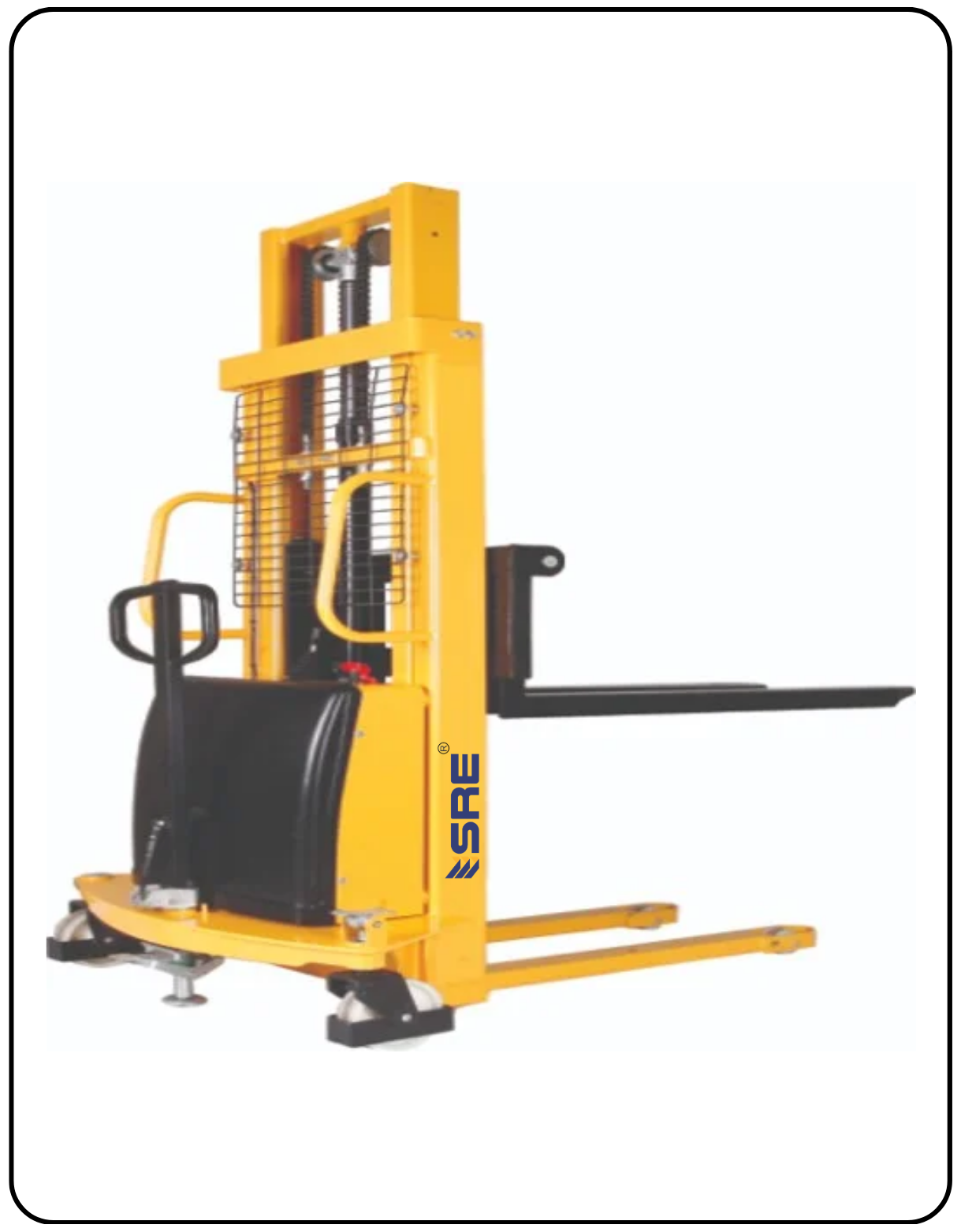
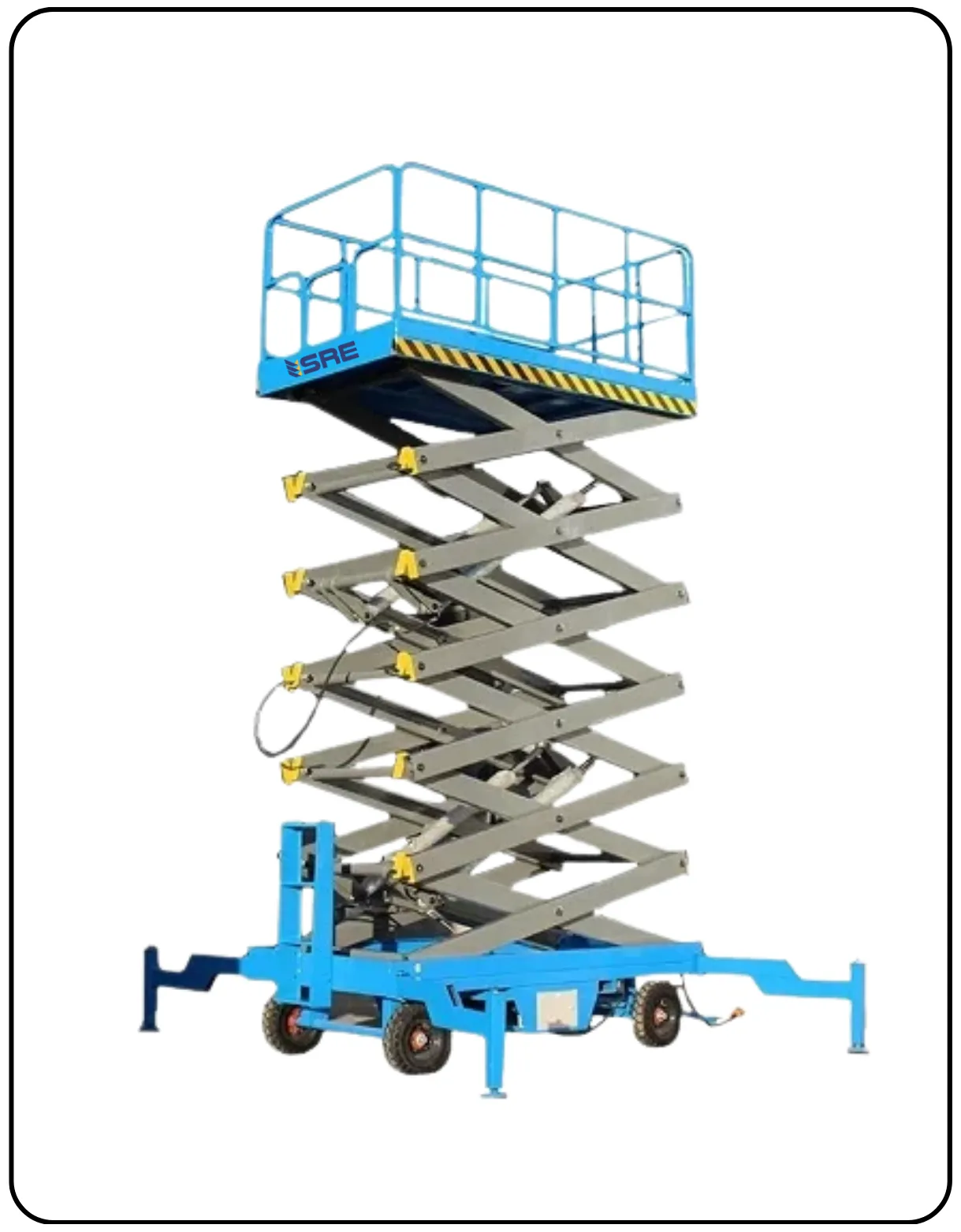
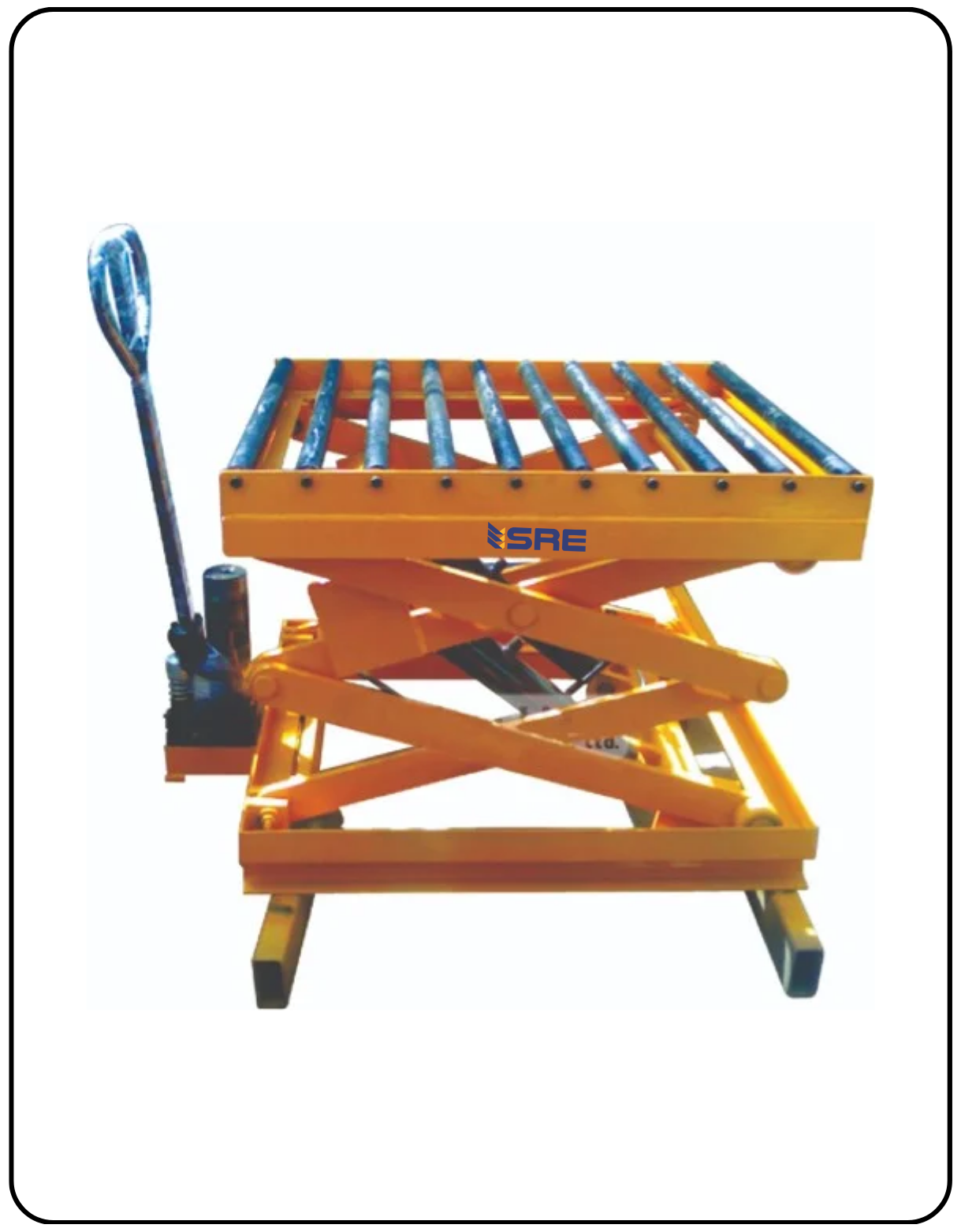
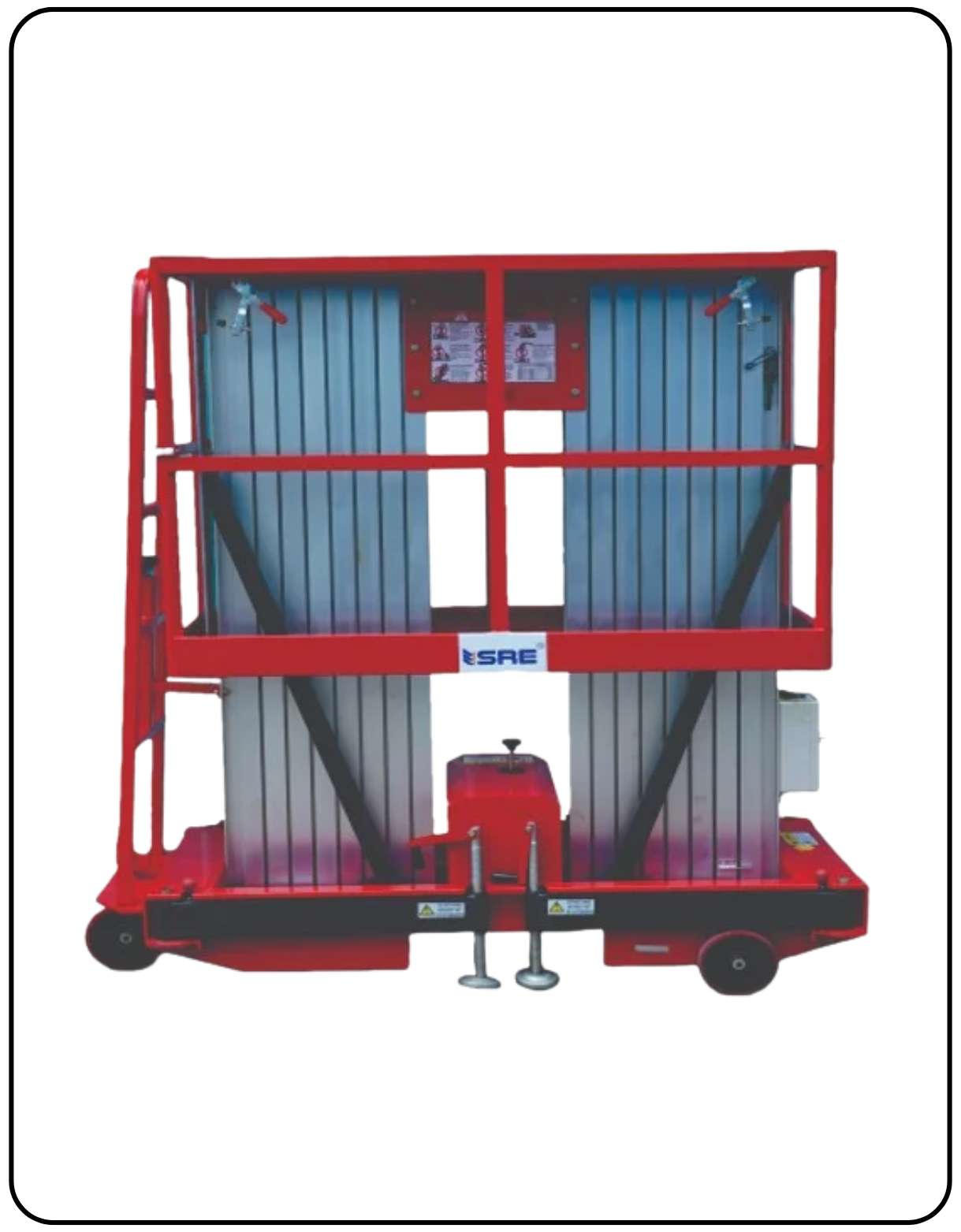
SRE Material Handling Equipment Pvt. Ltd.: Manufacturer, Supplier, And Exporter Of Electric Stacker in India.
SRE Material Handling Equipment Pvt. Ltd., Manufacturer And Supplier Of Electric Stacker in Nashik.
Our Manufacturing Unit is in Ahmedabad, Vadodara, and Rajkot, Gujarat, India.
Electric Stacker in Nashik: Practical Solutions for Modern Warehouse Challenges
Over the last ten years, how storage and factory work is done has transformed significantly. Methods that were suitable for slower, manual environments now struggle confronting demands for quicker output, stricter timelines, and greater safety mandates. In day-to-day stockroom activities, supervisors face targets for speed and volume that stress both personnel and machinery to their maximum. Team member exhaustion, safety incidents, and flow blockages are more than minor issues; they directly impact output, expenses, and client contentment.
This is where an Electric Stacker becomes significantly more important than just another piece of gear. For site proprietors, plant supervisors, logistics directors, supply chain executives, and purchasing departments in and around Nashik, selecting the correct stacker isn’t about following trends; it’s about resolving genuine, ongoing operational difficulties with sensible, dependable engineering.
The Evolving Requirements of Current Storage Facilities
Today’s storage hubs are constantly pressed to:
- Manage rising delivery quantities spurred by online retail and lean logistics.
- Sustain precision amidst more product types and tighter inventory monitoring.
- Hit delivery dates that allow minimal lag time in order picking, packaging, and shipping.
- Maximize space utilization to postpone or avoid spending on new construction.
During a standard working period, staff repeatedly raise, push, draw, and position goods across pathways and staging zones. These repeated motions slow down as tiredness sets in, especially during busy seasons. Slow travel through aisles, inconsistent handling between different workers, and sudden lifting mechanism failures can all build up into costly delays.
Considering these hurdles, operational leadership is prioritizing machinery that supports steady work processes without introducing extra risk or complicated upkeep. An Electric Stacker fulfills this necessity by offering regulated power for material movement without being overly complex or costly.
Defining the Electric Stacker
In practical industry terms, an Electric Stacker is a powered device built for raising, lowering, and relocating goods stacked on pallets or bundled within storage and industrial settings.
Unlike hand stackers that require physical exertion for every lift and move, electric stackers utilize battery-operated motors and lifting components to assist the operator. In routine tasks, this means:
- Lifting and lowering without major effort
- Precise control over forward and backward movement
- Reduced physical weariness for operators over extended shifts
Consider it a middle ground between manual aids (like typical pallet jacks) and larger lift trucks, specialized for managed indoor travel, confined areas, and frequent stopping and starting.
Why Electric Stackers Are Supplanting Older Manual Gear
Manual pallet jacks and manual lifters served storage houses well for lighter work, but they show limitations when workloads increase. The primary distinction with Electric Stackers is found in operator comfort and performance uniformity.
Less Fatigue & More Consistent Results
In routine stockroom jobs, material handlers might move many product loads in one shift. With manual gear, every lift and push contributes to muscle strain. Over time, this slows down work rate and heightens the chance of handling errors. Electric stackers transfer the physical load from the operator to a regulated, powered system. This leads to:
- Longer efficient working times with decreased physical strain
- Steady performance across shifts, irrespective of individual operator strength
- Less variation in how loads are managed, enhancing dependability
Boosting Efficiency in Daily Tasks
One of the first improvements storage teams observe with electric stackers is saved time. In day-to-day duties, even minor slowdowns accumulate:
- A manual lift requiring extra fiddling on uneven floors.
- Slower pushing across narrow corridors.
- An unstable load needing repositioning before being set down.
With an Electric Stacker, operators gain precise command over motion and lifting:
- Electric drive systems accelerate smoothly, avoiding abrupt starts and stops.
- Powered lifts place loads at the exact level needed for shelving or racking.
- Simple controls shorten instruction periods and reduce handling mistakes.
The outcome is a noticeable increase in output, not because the machine is inherently faster, but because it cuts down on wasted action and human error in practical, everyday procedures.
Enhancing Safety in the Workplace
Storage facilities are active environments. Improving safety is not just about following rules; it’s about safeguarding personnel, minimizing disruptions, and building confidence among teams.
In real-world working scenarios, injuries often occur when operators overextend, handle difficult shapes, or lose command of a manually propelled pallet. Electric stackers help lessen these exposure factors:
- Regulated Travel: Electric power means operators don’t depend on brute strength to move heavy items, reducing slips, falls, and strain injuries.
- Ergonomic Operation: By transferring physical demands to powered mechanisms, operators avoid repetitive stress on their backs, shoulders, and wrists.
- Superior Balance: Modern stackers incorporate design elements that stabilize loads while moving, minimizing tipping hazards.
A safer workspace means fewer job-related injuries, fewer days lost to absence, and lower costs related to insurance or worker compensation—all significant factors for leadership focused on maintaining continuous operations.
Moving Heavier Shipments with Ease
Warehouse tasks are dynamic; product dimensions shift, customer orders differ, and peak times require greater lifting capability. A manual stacker can quickly reach its physical limits, forcing unwanted pauses or collaborative handling (where two staff coordinate one lift).
Electric stackers are engineered for greater weight capacities while maintaining stability and control:
- Powered Lifting Mechanisms: Higher weight limits achievable without operator strain.
- Stable Base and Wheel Arrangement: Designed to keep loads steady, even while traveling.
- Flexible Lift Heights: Useful for pallet rack arrangements at various levels.
Recent shifts toward bulk merchandise or mixed-pallet loading make this capacity difference even more pronounced. When purchasing departments evaluate equipment, they must factor in current product ranges as well as future expansion, and electric stackers provide adaptability across both.
Technology for Greater Operational Effectiveness
Beyond simply lifting and positioning, contemporary Electric Stackers incorporate technological aspects that support operational readiness and dependability, which is crucial for facilities running multiple shifts.
Key technological benefits involve:
- Dependable Power Sources: Long-lasting battery options (lead-acid or lithium) that support a full shift without needing mid-day recharging.
- Smart Power Use: Systems that optimize battery drain based on the load, avoiding wasted energy.
- Simple Performance Checks: Some stackers feature built-in monitoring for motor health, battery status, and usage patterns, enabling preventative upkeep.
For operations managers, this means less unexpected downtime. Equipment that signals maintenance requirements before failure occurs helps keep schedules predictable.
Space Savings & Agility
Commercial premises command high prices. In numerous distribution centers, every inch of floor space is vital, particularly in metropolitan areas like Nashik where property values are substantial.
Electric stackers are engineered with maximizing space as a priority:
- Compact Dimensions: Smaller frames and narrower designs compared to full-scale forklifts.
- Narrow Aisle Capability: Suitable for tightly packed shelving and confined pathways.
- Electric Steering: Allows for sharp turns while maintaining balance.
This makes them perfect for storage sections of moderate density, packaging zones, and staging areas where larger lift trucks are either impractical or excessive.
Long-Term Financial Advantages
Acquisition choices for material movement gear ought to always factor in the overall cost of ownership, not solely the initial purchase price.
An Electric Stacker typically delivers enduring worth through:
- Labor Cost Reduction: Greater output with fewer physical limitations.
- Lower Injury Expenses: Fewer strain-related incidents decrease lost time and insurance payouts.
- Extended Asset Lifespan: Robust build and routine upkeep lead to longer service periods.
- Energy Economy: Electric power systems are cheaper to run than those using combustion engines.
When procurement groups collaborate with finance and operations, these metrics build realistic return on investment models that reflect true value delivered over years of service, beyond the initial outlay.
Eco-Friendliness & Regulatory Adherence
Environmental concerns are increasingly central to corporate accountability and meeting regulations. Electric stackers aid in creating a greener operational profile:
- No Local Fumes: Unlike internal-combustion units, electric models produce no onsite exhaust.
- Quieter Operation: Decreases noise exposure for personnel.
- Energy Efficient: Lower power use per handling cycle.
For industrial sites striving for ISO conformity or sustainability objectives, electric material movement solutions support compliance without sacrificing output.
Blending with Facility Operations
Any deployed apparatus must integrate into current workflows without disrupting other operations. Electric stackers excel here because they:
- Integrate smoothly with conveyor systems, picking stations, and racking structures.
- Enhance automated systems like scanning or WMS (Warehouse Management Systems).
- Can be slotted easily into shift schedules without significant coordination efforts.
On the floor, supervisors often appreciate that stackers don’t necessitate specialized structural modifications; they fit into regular warehouse traffic flows with minimal adaptation.
Staffing, Simplicity, and Servicing
Leaders in finance and operations frequently inquire, “How much team preparation will be needed?” and “What about upkeep?”
Electric stackers perform well on both fronts:
- Intuitive Controls: Built for straightforward use – lift, descend, move forward, and reverse with minimal learning difficulty.
- Straightforward Servicing: Wear-prone items are easily identifiable and routine (wheels, power sources, lift chains) without obscure components.
- Operator Familiarity: Personnel can achieve proficiency quickly, lessening variation in material handling.
This operational simplicity is a tangible benefit, especially in facilities relying on temporary staff or experiencing shift changes.
The Importance of Selecting a Reputable Vendor
Not all electric stackers are created equal. Opting for a maker with proven industry background, rigorous quality checks, dependable service networks, and swift parts availability makes a discernible difference.
An established vendor understands:
- Actual day-to-day industrial application, beyond marketing specifications.
- The critical nature of post-sale assistance—replacement parts, expert servicing, guarantees.
- Adherence to established safety codes and certification benchmarks.
This type of relationship minimizes risk, guarantees asset longevity, and supports ongoing business aims without unforeseen issues.
Summary
In the changing environment of warehouse and industrial tasks, tools like the Electric Stacker are not optional extras; they are practical answers to current difficulties. From reducing worker fatigue and improving security to boosting productivity and supporting green initiatives, electric stackers provide measurable, daily benefits.
For decision-makers within Nashik’s industrial sector, selecting the correct material handling equipment is about streamlining operations, ensuring personnel welfare, and maintaining consistent output—not merely acquiring more machinery.
To investigate dependable selections and support for electric stackers customized to your operational needs, explore SRE MATERIAL HANDLING EQUIPMENT PRIVATE LIMITED’s website at https://www.sremhepvtltd.com/ and make contact with their product consultants.
Key Takeaways
- Productivity: Electric stackers boost handling speed and uniformity across all shifts.
- Safety: Decreased operator strain and controlled movement reduce accident probability.
- Load Capacity: Engineered for more substantial weights with enhanced stability and ease.
- Cost Effectiveness: Delivers long-term worth via less downtime and operational savings.
- Industry Direction: Aligns with contemporary warehouse requirements for efficiency, adherence, and ecological responsibility.
Trending FAQs
Q: How does an electric stacker compare with a forklift?
- An electric stacker is more compact, easier to use in narrow aisles, and suited for controlled indoor movements. Forklifts handle higher capacities but need more space.
Q: Can electric stackers operate for a full shift?
- Yes modern battery systems often support full‑shift usage with proper charging practices.
Q: What maintenance do electric stackers require?
- Routine checks of batteries, wheels, lift chains and controls similar to other powered equipment ensure reliable operation.
Get expert guidance on electric stacker solutions for your operations. Call +91 9316 2088798 or sremhepvtltd2025@gmail.com for assistance now.
#SelfProppiledScissorLiftTable #MaterialHandling #WarehouseEfficiency #IndustrialOperations #SREMaterialHandlingEquipmentPrivateLimited #WorkplaceSafety #NashikIndustrySolutions