
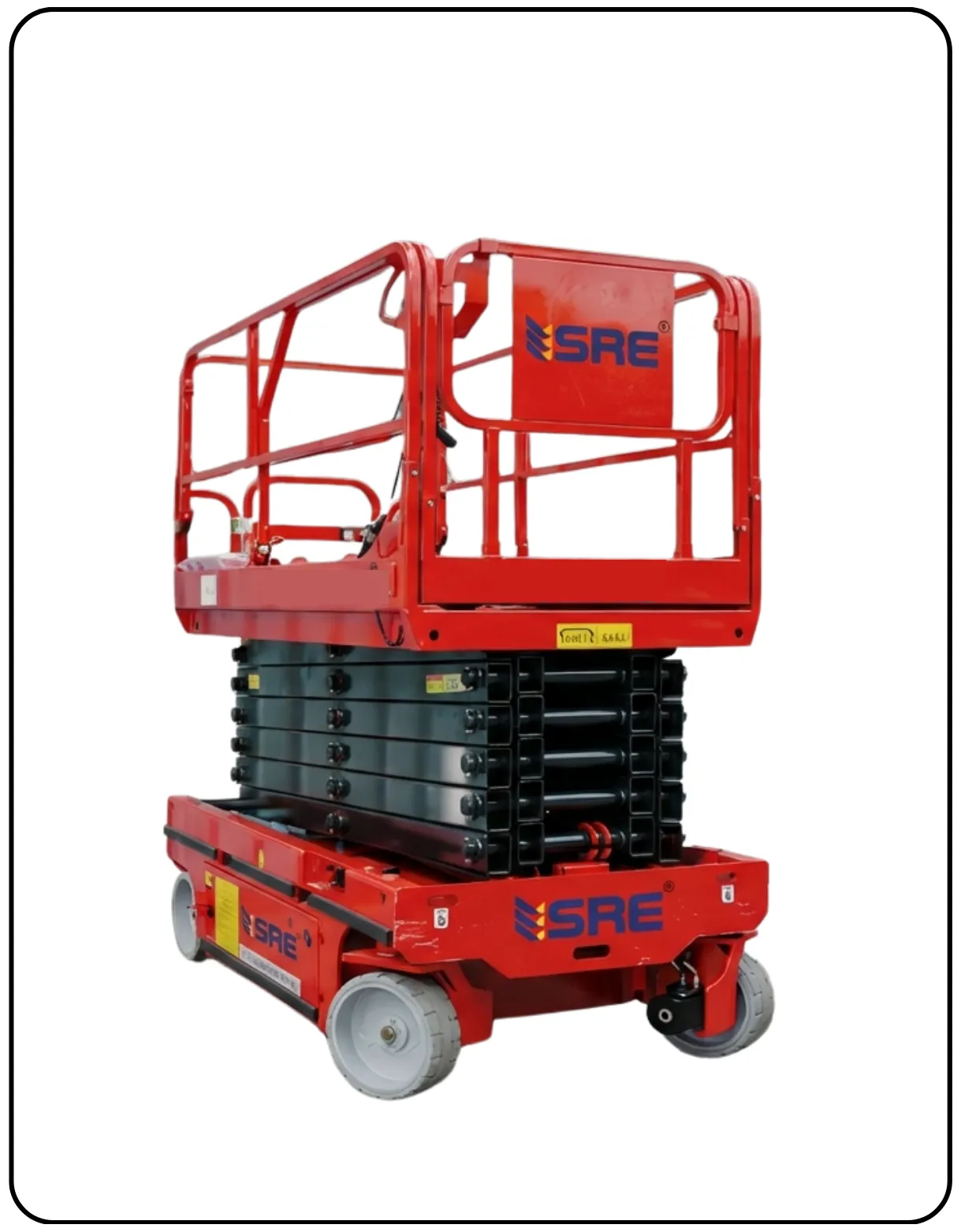
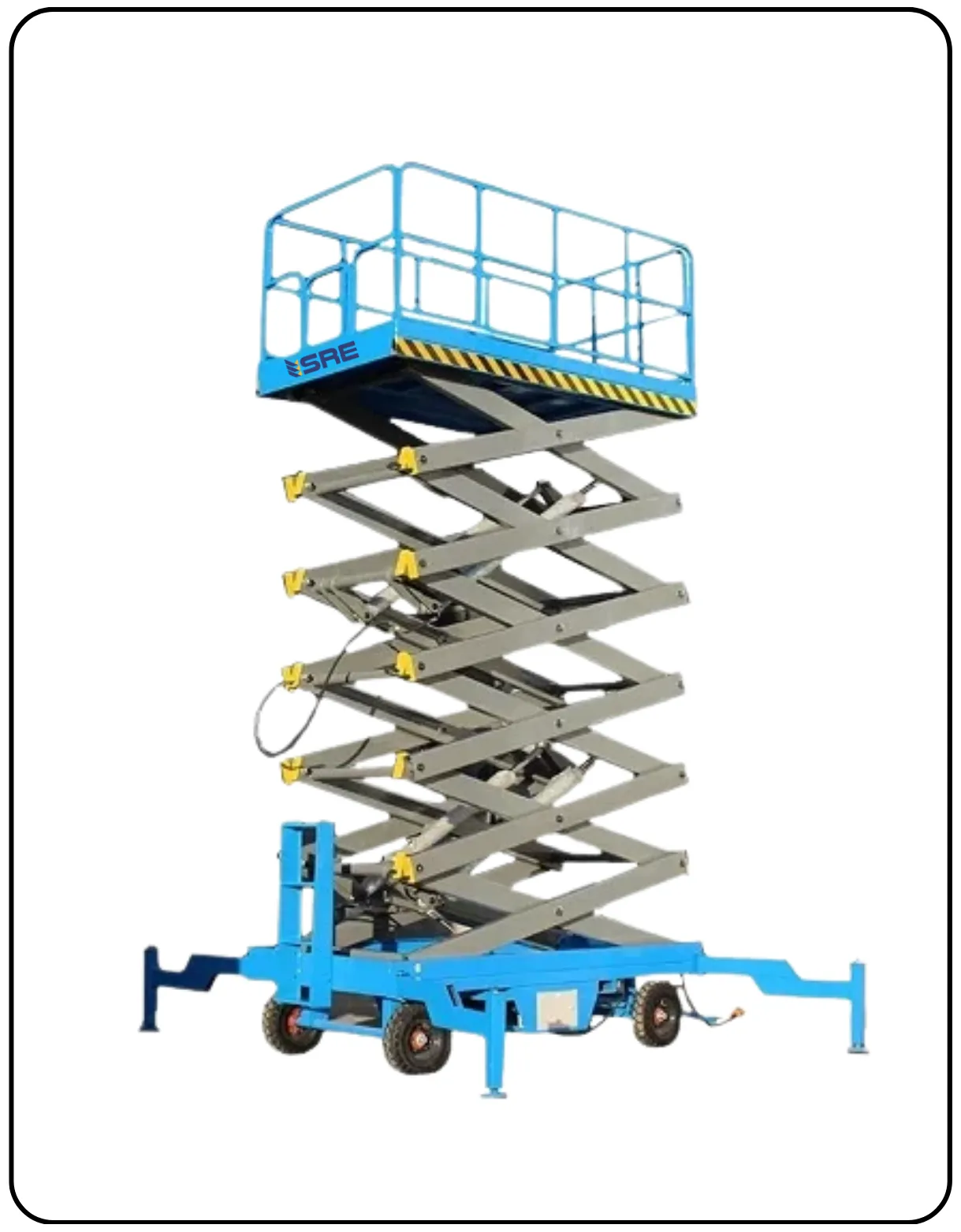
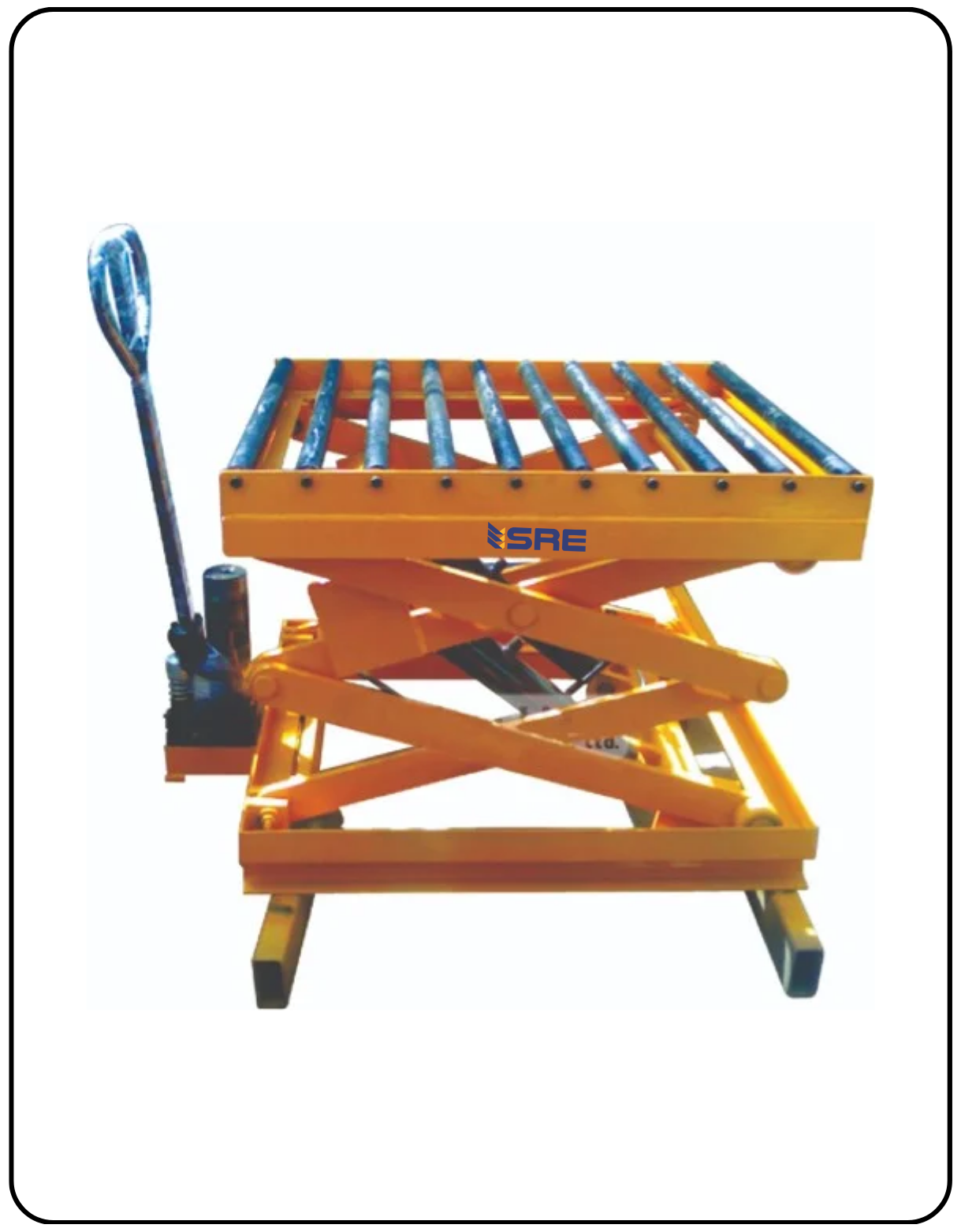
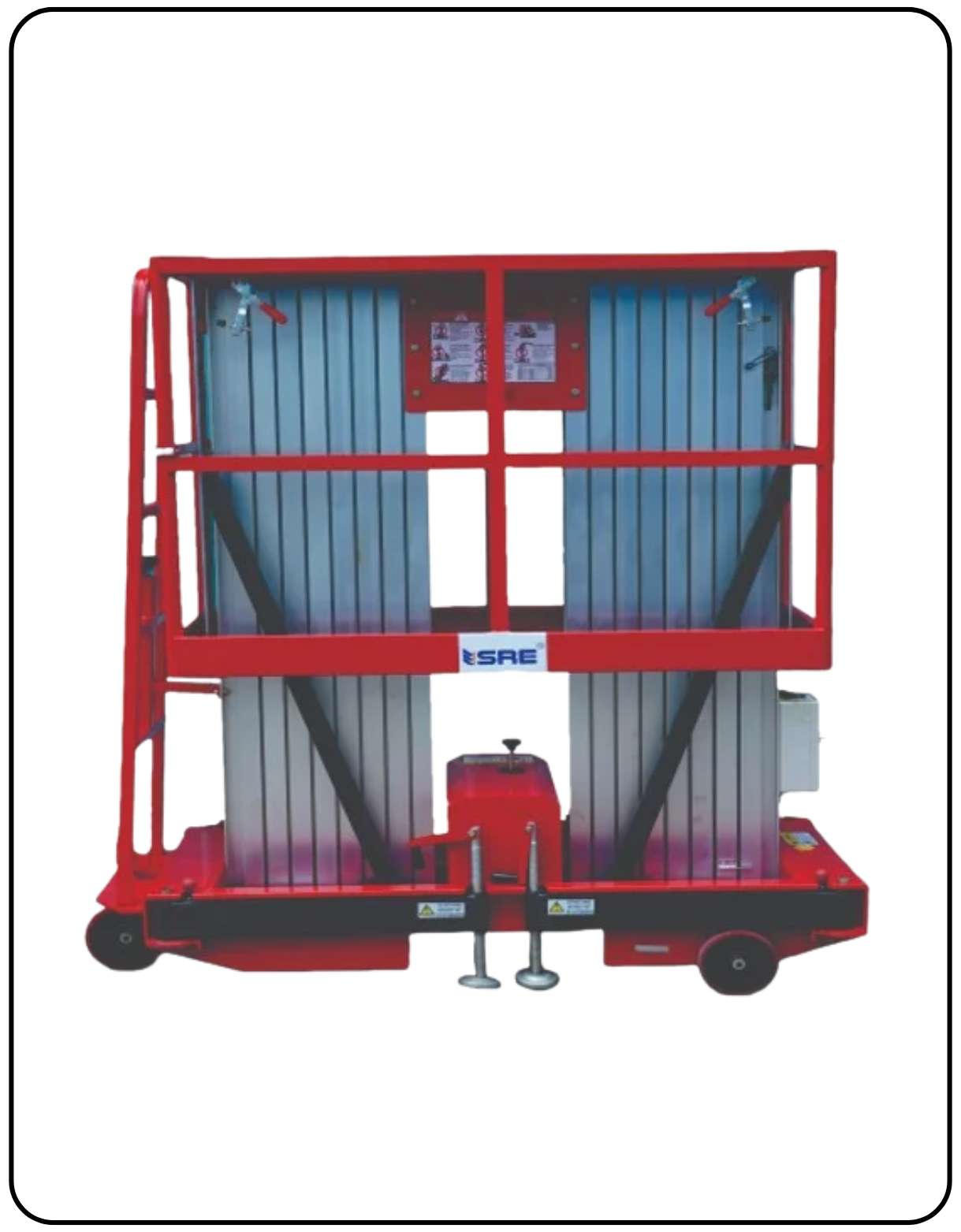
SRE Material Handling Equipment Pvt. Ltd.: Manufacturer, Supplier, And Exporter Of Fully Automatic Self Scissor Lift Table in India.
SRE Material Handling Equipment Pvt. Ltd., Manufacturer And Supplier Of Fully Automatic Self Scissor Lift Table in Nashik.
Our Manufacturing Unit is in Ahmedabad, Vadodara, and Rajkot, Gujarat, India.
Fully Automatic Self Scissor Lift Table in Nashik: A Practical Guide for Industrial Operations
In today’s fast-moving industrial setting, high performance and dependable operation are essential. Site supervisors, plant directors, logistics executives, and purchasing staff are always searching for tangible methods to boost output while minimizing dangers and expenses. In the day-to-day running of storage facilities, typical hurdles such as large quantities, staff tiredness, safety incidents, and managing heavier cargo are part of the daily routine. These pressures are real and directly influence schedules, profitability, and staff welfare.
As industrial activities advance in places like Nashik and further afield, machinery that can reliably support internal material movement without adding new complexity or safety risks becomes crucial. This brings us to the Fully Automatic Self-Scissor Lift Table — presented not as a showy update, but as a practical fix for routine workflow sticking points.
The Evolving Demands of Contemporary Warehouses and Factories
Industrial and storage settings today differ considerably from just five years ago. Several factors are shaping the daily work experience:
- Increasing operational demands: Consumer wishes for swift deliveries and a wider array of products necessitate quicker throughput.
- Uptick in volume: The expansion of online retail, just-in-time supply chains, and frequent order cycles means more internal movements occur during a single workday.
- Safety benchmarks: Firms aim to cut down on workplace injuries, both for adherence to rules and to safeguard their personnel.
- Staffing trends: Securing skilled operators and keeping them is harder, and repetitive manual tasks contribute to staff leaving.
Against this backdrop, internal goods movement — transferring items from receiving bays to storage shelves, staging zones, and production lines — becomes a key area for efficiency gains. Older manual methods or basic mechanical aids often struggle to keep pace with both speed and safety standards.
Defining the Fully Automatic Self-Scissor Lift Table
Fundamentally, a Fully Automatic Self-Scissor Lift Table is a powered lifting surface that moves loads up and down using a scissor-style apparatus, managed automatically instead of by hand. Unlike straightforward hydraulic or hand-operated tables, the fully automatic version incorporates motorized action, sensors, and operational systems to handle lifting and placement without continuous human input.
This description avoids industry jargon. What matters most to those overseeing operations is that the unit:
- Eliminates the necessity for manual cranking or pumping.
- Delivers steady lifting capability across work periods.
- Integrates safely into routine tasks.
Why Fully Automatic Self-Scissor Lift Tables Are Superseding Older/Manual Gear
Most storage facilities and factory floors have depended on manual lift tables, dollies, or simple carts for moving items internally. While these instruments are familiar, they also highlight ongoing operational weaknesses:
Manual Effort and Variability
In daily tasks, the repeated lifting or repositioning of heavy objects causes operator exhaustion within hours. Fatigue is more than just discomfort — it slows down work, leads to more errors, and increases the likelihood of injury. Manual systems rely on human exertion for every movement, and no two operators function identically.
Constrained Output
Standard mechanical tables require both time and effort to adjust heights and shift loads. In contrast, fully automatic tables provide quicker, consistent lifting cycles. Personnel can dedicate their attention to task quality rather than physical strain.
Workflow Stoppages
Manual handling frequently becomes a bottleneck during busy times. When one employee struggles with a load while others wait, overall output decreases. Automating the lifting segment removes that choke point, allowing for smoother progressions.
Practically speaking, swapping manual equipment for a fully automatic solution supports three key results:
- Reduced operator strain
- More uniform output
- Fewer holdups across shifts
Increases in Productivity During Daily Tasks
Industrial decision-makers consistently name productivity as a primary measure for assessment. In actual warehouse settings:
Manually lifting and positioning a single pallet can take 1–2 minutes.
Employing a fully automatic lift table often cuts that time to under 30 seconds per movement, particularly where precise height matching is needed.
These savings accumulate rapidly. Over a shift involving hundreds of moves, time saved with each action translates directly into output enhancements.
Consider the workflow: Instead of interrupting an order picker’s rhythm to adjust a table manually, workers can shift loads efficiently without pausing to pump or crank. Fully automatic tables help maintain momentum between tasks — from emptying containers to organizing items for dispatch.
Enhancing Safety in the Workplace
Safety is not optional; it’s a core business requirement. Warehouses and factories regularly report strains and sprains among the most common injuries, especially in activities involving lifting and bending.
This is where Fully Automatic Self-Scissor Lift Tables offer tangible benefits:
Controlled Motion
Motorized lifts provide predictable, steady movement. There is no sudden descent or awkward manual force that might cause an item to shift unexpectedly.
Fewer Strain-Related Injuries
Operators are less likely to engage in risky actions when handling heavy cargo. Over time, this means fewer workdays lost and reduced costs related to workers’ compensation.
Ergonomic Handling
In day-to-day application, bringing load heights in line with conveyor belts or workstations at comfortable levels minimizes bending and reaching actions often linked to musculoskeletal issues.
For operations prioritizing safety, automated lift tables become a sensible choice for lessening repetitive strain and meeting updated workplace wellness standards.
Moving Heavier Loads with Simplicity
Modern storage facilities often handle larger and more diverse items — from big pallets to bulk containers and assembled parts.
Manual and partially automated equipment has definite physical restrictions. A fully automatic lift table is engineered to manage such loads consistently because:
- The scissor structure ensures stable dispersal of vertical force.
- High-capacity versions can bear substantial weight without human strain.
- Operators can position items exactly where needed without estimation.
For operations in Nashik dealing with growing product lines or seasonal high volume, this capability lessens disruptions associated with managing cumbersome weights. Incorporating equipment such as the Chain Block and Hoist and Construction Crane further strengthens lifting capacity and load control, enabling smoother handling of heavy materials while maintaining safety and operational continuity.
Technology & Work Process Efficiency
Fully automatic setups are about more than just raising and lowering; they concern reliable functioning and predictable performance.
Power Systems
Most modern tables utilize sealed battery packs or direct electrical connections. These systems are designed to:
- Supply consistent power throughout the shift.
- Minimize downtime with quick recharging or battery exchange options.
- Support repeated actions without performance decline.
In actual use, unreliable machinery — even if labeled “automatic” — often creates more problems than it solves. Solid design and robust power sources make a difference in operational uptime and dependable scheduling.
Mechanical Strengths
Well-engineered scissor lift tables feature reinforced frames and quality hydraulic or electric actuators to maintain stability when loaded. This is important when aligning shipments with conveyors, loading docks, or elevated workstations.
Users benefit from predictable movement, clear controls, and fewer mechanical surprises during periods of heavy workload.
Optimization of Space & Agility
Premises real estate is premium. Crowded pathways are more than bothersome — they impede progress and heighten hazards.
Completely automated scissor lift platforms enhance space utilization because:
- Their compact physical presence suits slender access routes
- They allow accurate placement without extensive turning room
- Certain designs require minimal spinning area, fostering smoother processes
Stakeholders ought to examine how these platforms integrate with current setups. Frequently, they permit closer-packed aisle arrangements without sacrificing secure access or ease of reach — a tangible benefit when maximizing storage density.
Long-Term Financial Soundness
Initial expenditure is a factor, but industrial success hinges on total running expenditures. Assessing an apparatus solely by its price tag overlooks several future advantages:
Fewer Accidents
A reduction in strain-related incidents lowers healthcare outlays and downtime. Healthier personnel translate to fewer absences and more dependable shift staffing.
Easing Labor Strain
When duties demand less physical effort, staff contentment generally rises. Better morale and less employee churn save on recruitment and coaching.
Gains in Effectiveness
Time recovered during each lift cycle accumulates across shifts and periods. Those accumulated moments eventually result in demonstrable increases in output.
In short, automated systems frequently recoup their initial outlay through enhanced results, improved safety records, and diminished hidden expenditures.
Green Credentials & Adherence to Rules
Increasingly, procurement departments and operations heads are measured by sustainability markers. While a lift platform may seem purely functional, it can bolster wider adherence and environmental aims:
- Cleaner Operations: Properly maintained electric apparatus generates fewer pollutants than older manual gear (especially if powered by efficient energy cells rather than combustion motors).
- Energy Conservation: Contemporary automatic platforms are engineered to require minimal power per operation.
- Readiness for Audits: Automated setups with clear protective measures simplify inspections and compliance reviews.
In regular activity, this often means simpler interactions with safety and environmental assessors, and a stronger record of compliance.
Blending with Production and Facility Procedures
New apparatus only proves valuable if they fit seamlessly into existing arrangements — spanning from lift trucks and conveyance systems to warehouse administration software (WMS).
Totally automatic self-scissor lift platforms can weave into operations by:
- Aligning required elevation levels with conveyor and pallet mover needs
- Planning utilization around peak operational periods
- Coaching teams to structure tasks around platform availability and positioning
In practice, groups that incorporate lift tables into staging areas, receiving bays, or packaging lines observe process continuity rather than interruption. Coordinated effort — more than just equipment capability — dictates operational achievement.
Instruction, Simple Operation & Servicing
Contrary to intricate automation assemblies needing extended familiarization, fully automatic lift platforms are built for simple deployment:
- Fundamental Controls: Users grasp primary functions within a few hours
- Predictable Servicing: Standard upkeep concentrates on power units, surfaces, and control responsiveness — avoiding complex adjustments
- Standardized Checks: Daily pre‑shift inspections become routine, much like any industrial implement
Accessible guidance documentation and practical safety guidelines assist teams in using the gear correctly from the start.
The Significance of Selecting a Dependable Vendor
Not every lift platform performs identically in actual industrial settings. When vetting suppliers, operational teams should prioritize:
- Established background in industrial material conveyance apparatus
- Transparent documentation covering safety, load capacities, and guarantee agreements
- Availability of regional assistance and service for upkeep and fixes
- Conformity with pertinent industry benchmarks
For groups planning long‑term acquisitions, the partnership with respected suppliers is as crucial as the equipment’s technical specifications.
Summary
In the day‑to‑day running of industrial sites and stockrooms, the Fully Automatic Self Scissor Lift Table is not a luxury — it’s a functional instrument addressing genuine hurdles: hazard mitigation, output, physical strain, and cost-effectiveness. In settings facing rising demand and tighter deadlines, resolutions that streamline material movement without adding complexity represent strategic assets.
For executives in Nashik and elsewhere, grasping the process advantages and integration dynamics of these assemblies can lead to safer working environments, more dependable procedures, and better deployment of personnel capabilities.
To look into sound and practical Fully Automatic Self Scissor Lift Table selections customized for industrial applications, explore SRE MATERIAL HANDLING EQUIPMENT PRIVATE LIMITED at https://www.sremhepvtltd.com/.
Principal Learnings
- Productivity: Automatic lift platforms cut down cycle time and support stable output across shifts.
- Safety: Regulated motion and ergonomic height accommodation lessen accident probability.
- Load Bearing: Engineered for heavier weights with firmness and exactness.
- Value Over Time: Future savings stemming from fewer injuries, reduced worker fatigue, and better throughput.
- Industry Trajectory: Reflects evolving necessities toward safer, more efficient internal logistics networks.
Trending FAQs
1. What is a Fully Automatic Self Scissor Lift Table used for?
- It is used to lift, position, and move heavy loads safely and efficiently within warehouses and factories.
2. How is it different from a manual lift table?
- It operates using powered controls, reducing physical effort, improving consistency, and increasing safety.
3. What load capacity options are available?
- Capacities vary by model, typically ranging from light-duty warehouse loads to heavy industrial applications.
4. Is it suitable for narrow warehouse aisles?
- Yes, many models are compact and designed for easy maneuverability in tight spaces.
5. Does it reduce workplace injuries?
- Yes, it minimizes manual lifting, lowering the risk of strain and musculoskeletal injuries.
Contact us for efficient and safe lift solutions. Call +91 9316 2088798 or sremhepvtltd2025@gmail.com for assistance now.
#FullyAutomaticSelfScissorLiftTable #MaterialHandlingSolutions #WarehouseEfficiency #IndustrialSafety #SREMaterialHandlingEquipmentPrivateLimited #NashikIndustries #SmartMaterialHandling #FactoryAutomation #LiftTableSolutions #SupplyChainEfficiency