
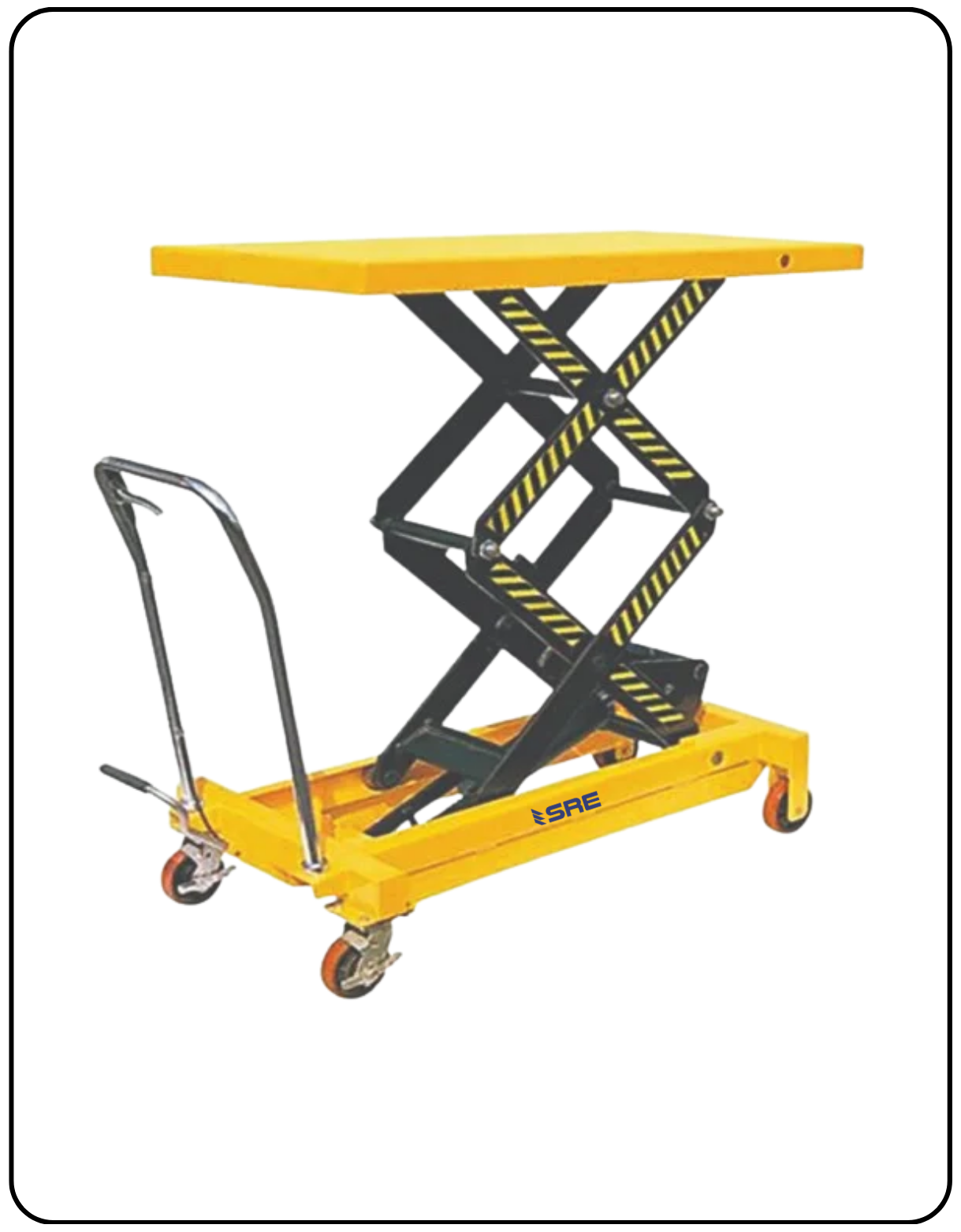
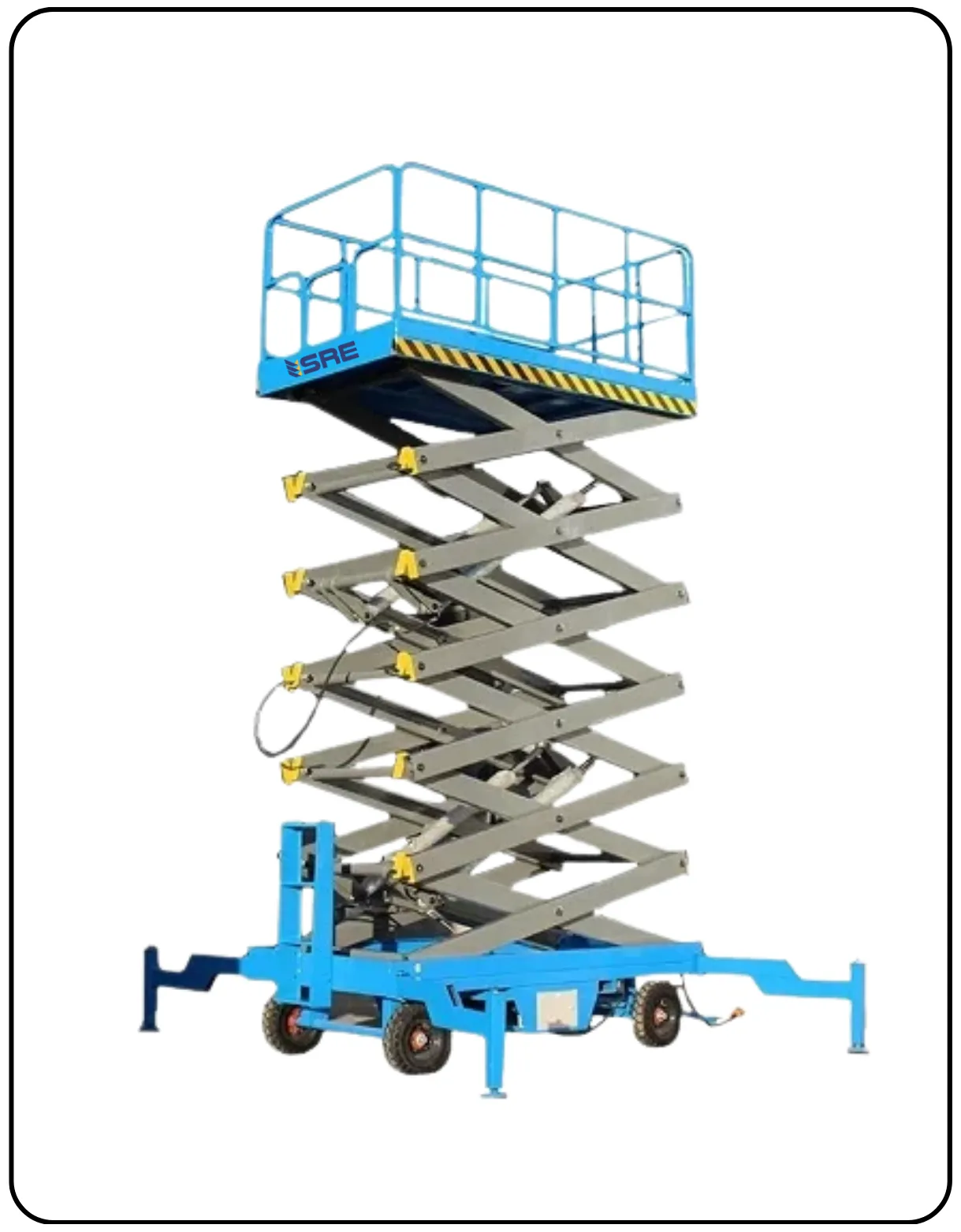
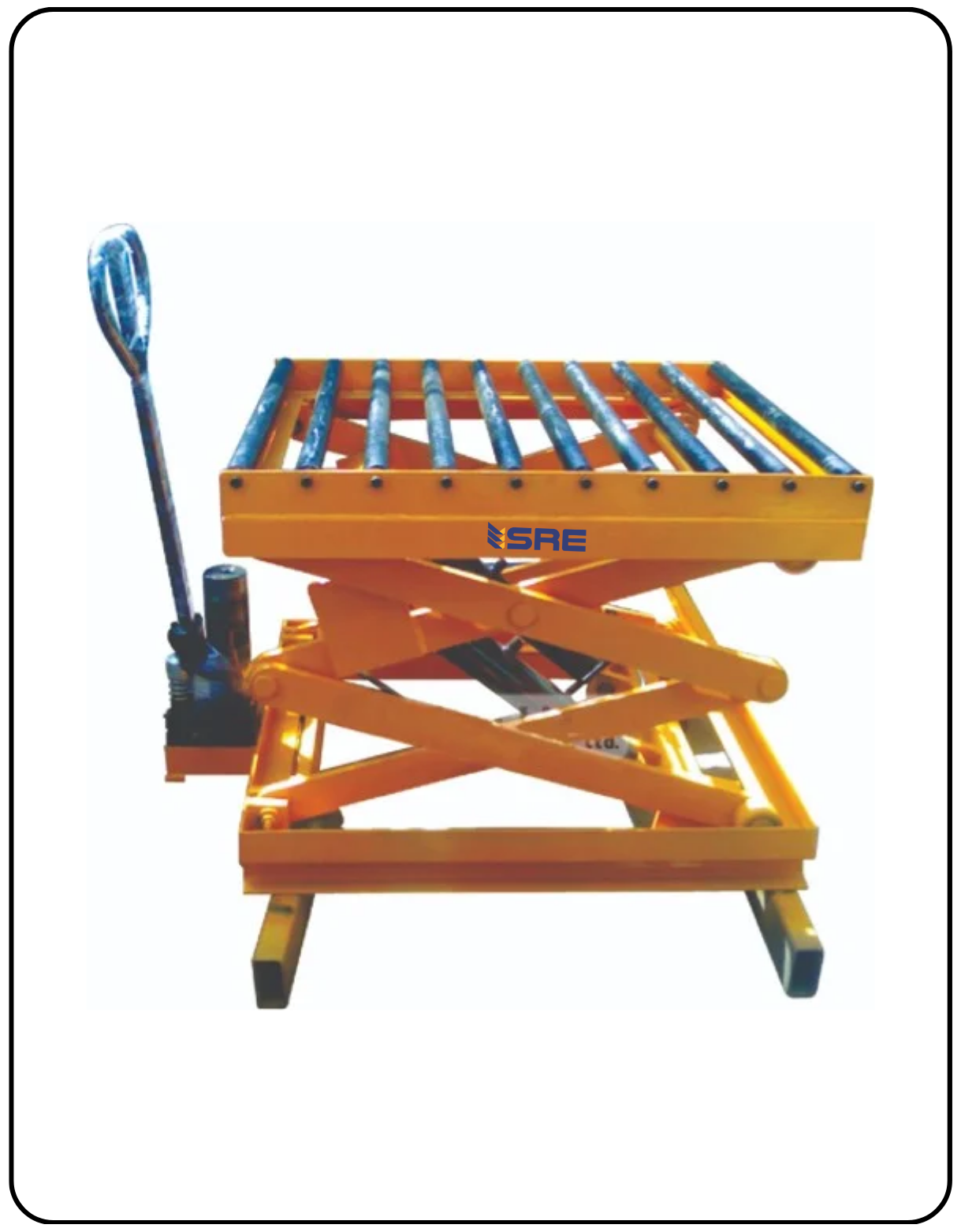
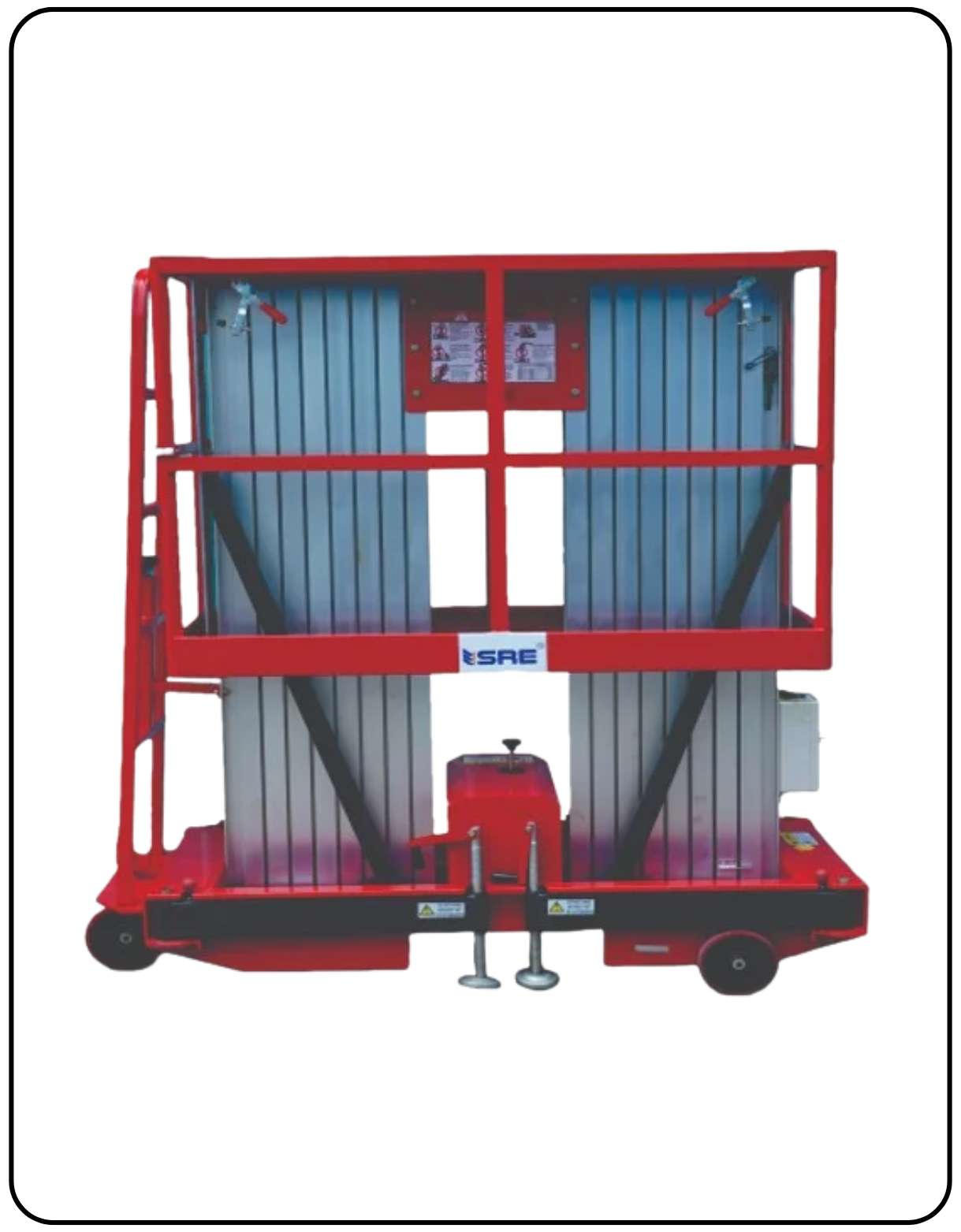
SRE Material Handling Equipment Pvt. Ltd.: Manufacturer, Supplier, And Exporter Of Hydraulic Scissor Lift Table in India.
SRE Material Handling Equipment Pvt. Ltd., Manufacturer And Supplier Of Hydraulic Scissor Lift Table in Nashik.
Our Manufacturing Unit is in Ahmedabad, Vadodara, and Rajkot, Gujarat, India.
Hydraulic Scissor Lift Table in Nashik: Practical Solutions for Real Industrial Challenges
In today’s fast‑paced industrial and warehouse environments in Nashik and across India, operational demands have increased dramatically. Businesses are under constant pressure to improve throughput, reduce costs, maintain safety, and support fast turnaround times. Warehouse owners, factory managers, operations heads, supply‑chain leaders and procurement teams know this reality intimately — especially where material handling is core to daily productivity.
In daily warehouse operations, moving inventory efficiently and safely between workstations, floors, and storage zones is a persistent challenge. Manual handling often leads to fatigue, inconsistent results and safety incidents, all of which erode productivity over time.
This is where the Hydraulic Scissor Lift Table emerges not just as another piece of equipment, but as a practical tool that addresses real operational needs. It streamlines internal material movement, improves ergonomics, and supports heavy load management — all while fitting into existing workflow systems without disruption.
The Changing Needs of Modern Warehouses and Industries
Warehouses and industrial operations in Nashik and beyond are no longer static storage spaces. They have evolved into dynamic hubs where speed, accuracy and safety determine competitiveness. Several trends are shaping these environments:
- Rising Order Volumes: E‑commerce and supply‑chain variability have increased the pace and volume of goods moving through warehouses.
- Shorter Delivery Windows: Customers expect faster fulfillment, putting pressure on internal material flow.
- Workforce Constraints: Labour availability, fatigue management, and skill variability are constant operational considerations.
- Safety Compliance: Emphasis on workplace safety standards has shifted from optional to essential in cost assessments.
Within these evolving pressures, internal logistics — the movement of goods between receiving, storage, value‑add stations and outbound — creates bottlenecks if not managed with fit‑for‑purpose tools. Traditional manual lifting, drag‑and‑shift methods, and improvised platforms fail to keep pace and compromise both safety and throughput.
What Is a Hydraulic Scissor Lift Table?
In pragmatic terms, a Hydraulic Scissor Lift Table is a robust material‑handling solution designed to raise and lower loads vertically using a hydraulic mechanism. Unlike forklift trucks or conveyor systems — which move goods horizontally — the lift table is focused on controlled vertical positioning.
Operators can place heavy pallets or equipment on the platform and, with simple controls, adjust the height to match workstations, shelving units, mezzanine levels or loading docks.
Unlike textbook definitions that focus on components, think of it this way: it’s a powered vertical work surface. In daily use, it removes repetitive strain from workers, aligns goods at ergonomic heights and reduces bottlenecks at transfer points.
Why Hydraulic Scissor Lift Tables Are Replacing Traditional/ Manual Methods?
Most warehouses still rely heavily on manual labor and traditional tools like low‑tech trolleys or improvised ramps to move goods. But these methods have clear limitations:
- Manual Handling Fatigue: Constant lifting and lowering promote physical strain, leading to slower output and injuries.
- Inconsistent Results: Human operators vary in speed and strength; performance drops over long shifts.
- Safety Risks: Unseen load shifts, awkward postures and uncontrolled movements increase incident rates.
In contrast, hydraulic lift tables provide consistent elevation control and reduce the need for manual lifting. Operators spend less time aligning loads manually and more time on value‑creating tasks.
In daily operations, teams using lift tables experience fewer strain‑related breaks and more predictable workflows across shifts — a fundamental improvement in operational reliability.
Productivity Gains in Daily Operations
In warehouses and factories, productivity isn’t just about speed — it’s about consistency and predictability. Hydraulic scissor lift tables deliver measurable benefits:
- Faster Load Positioning: Instead of manually adjusting height or using multiple tools, teams can position loads precisely with minimal effort.
- Reduced Cycle Time: With consistent lift speeds, transfer points become faster, and workers stay focused on tasks that add value.
- Standardized Process Across Shifts: Regardless of individual strength or experience, operators can repeat the same movement profile throughout the day.
For example, when receiving bulk materials from truck docks, a hydraulic lift table can quickly align pallet heights with dock levels. This eliminates the stop‑start patterns common to manual adjustments and improves throughput during peak hours.
By optimizing these small but frequent operations, daily material flow becomes smoother — translating into fewer delays, fewer errors and better overall output.
Improved Workplace Safety
Safety isn’t a buzzword — it’s a measurable factor in operational performance. Injuries reduce workforce, increase costs, and pull focus from strategic tasks.
Hydraulic scissor lift tables contribute to safer workplaces through:
- Ergonomic Handling: Reducing awkward bending and lifting actions.
- Controlled Movement: Hydraulic systems enable smooth, predictable motion that limits load shifting.
- Stable Platforms: Quality lift tables maintain load stability, reducing slips or accidental tilting.
In warehouses where heavy cartons, components, or parts are moved regularly, reducing the reliance on manual lifting directly lowers the risk of musculoskeletal disorders — a common cause of workplace injuries.
Daily operational experience demonstrates fewer first‑aid incidents and smoother workflows when hydraulic lifting replaces manual workarounds.
Handling Heavier Loads with Ease
Modern warehouses regularly handle heavier loads due to bulk ordering, consolidated shipments, or automated processes. Traditional manual methods can’t cope with these heavier demands.
A hydraulic scissor lift table designed for industrial use can:
- Support high load capacities without compromising stability.
- Maintain consistent vertical movement even under load.
- Integrate seamlessly with other equipment, such as pallet jacks or shrink wrappers.
For example, a factory receiving heavy machinery components can set up a lift table at the unloading bay. Instead of relying on multiple workers to reposition each pallet, the operator uses the lift table to align load height, reducing both risk and cycle time.
The result is a safer, faster handling process that can cope with varying load types without special adaptations.
Technology & Operational Efficiency
Hydraulic scissor lift tables may seem simple, but modern models incorporate technology that improves uptime and reliability:
- Hydraulic Power Units: Efficient, low‑maintenance pumps and cylinders ensure smooth operation.
- Durable Controls: Rugged push‑button or joystick interfaces designed for industrial environments.
- Energy Considerations: Some units incorporate eco‑friendly power systems or low‑leak hydraulics to reduce energy waste.
From an operational standpoint, reliability is paramount. Equipment that stops working in the middle of a shift creates costly delays. High‑quality lift tables reduce unscheduled maintenance and fit into preventive maintenance schedules seamlessly.
This focus on uptime and operational continuity is essential for managers tasked with meeting throughput targets day after day.
Space Optimization and Maneuverability
Warehouses must balance equipment needs with limited floor space. Bulky machinery may solve one problem, but create another — congestion.
Hydraulic scissor lift tables are engineered with compact footprints that fit into:
- Narrow aisles
- Dock areas
- Loading bays
- Assembly lines
Because they offer vertical movement without expansive structures, they integrate into tight spaces effectively. In high‑density operations where floor space is at a premium, this compact design translates into better overall space utilization.
Moreover, many models can be paired with mobile bases or wheels, allowing teams to reposition them where needed without excessive effort.
Cost Efficiency Over Time
Cost is always a concern, but the equation for material handling equipment shouldn’t focus solely on purchase price. Long‑term value includes:
- Lower Injury‑Related Costs: Fewer worker injuries reduce medical claims and compensation liabilities.
- Reduced Labor Fatigue: Less downtime due to exhaustion or strain equals higher throughput.
- Lower Equipment Downtime: Durable hydraulic systems with scheduled maintenance deliver reliable performance.
For procurement teams and financial planners, these long‑term benefits translate into a healthier ROI compared to patchwork solutions and manual labor dependency.
In fact, hidden operational costs — such as overtime due to slow workflows or rework caused by handling errors — often outweigh the initial investment in quality material handling equipment.
Sustainability and Compliance
Environmental and regulatory compliance matter now more than ever. Efficient material handling supports sustainability goals by:
- Reducing energy waste compared to inefficient lifting methods.
- Minimizing material damage and waste from dropped or mishandled loads.
- Supporting workplace safety compliance frameworks (such as ISO standards).
In regulated industries, demonstrating operational safety and environmental responsibility is not optional. Organizations that embed safer, more efficient equipment in workflows build stronger compliance profiles and operational resilience.
Integration with Warehouse and Factory Workflow
A Hydraulic Scissor Lift Table is not a standalone tool — it must complement existing systems. Successful integration includes:
- Syncing With Conveyor or Sorting Lines: Matching lift heights to line levels for smooth transitions.
- Positioning at Dock Doors: Aligning heights with trailers and receiving bays.
- Supporting Assembly Stations: Bringing parts to ergonomic heights for operators.
In experienced operations, lift tables are strategically located where they remove bottlenecks, rather than as afterthoughts. Operators and team leads often collaborate to map material flow and place lift tables where they deliver the highest impact.
This integration mindset ensures that equipment supports, rather than disrupts, workflow cadence.
Training, Ease of Use, and Maintenance
One concern many operations heads have is the learning curve and upkeep of new equipment. In reality:
- Hydraulic lift tables are intuitive: Basic controls require minimal training.
- Safety features are straightforward: Operators quickly learn best practices through short on‑site training.
- Maintenance is predictable: Hydraulic systems benefit from scheduled checks on fluid levels, seals and moving parts.
In daily practice, teams can be fully productive with minimal downtime for training or servicing. This simplicity reinforces consistency and reliability — two non‑negotiable factors in industrial performance.
Why Choosing a Reliable Manufacturer Matters?
Selecting the right manufacturer matters because not all hydraulic lift tables are created equal. A dependable manufacturer ensures:
- Quality and durability: Equipment designed for industrial duty cycles, not occasional use.
- After‑sales support: Parts availability, service responsiveness, and technical guidance.
- Compliance and safety standards: Products built to meet regulatory requirements.
For industrial buyers and operations planners in Nashik, working with experienced manufacturers reduces risk. An informed, responsive partner helps guide equipment choice based on real operational needs — not generic product specs.
One such partner is SRE MATERIAL HANDLING EQUIPMENT PRIVATE LIMITED, a company with practical experience in delivering material handling solutions tailored to real industry demands. Visit their website at https://www.sremhepvtltd.com/ for detailed product information and support options.
Conclusion:
In modern warehouses and industrial settings, efficiency is not an abstract goal — it’s a daily requirement. The Hydraulic Scissor Lift Table is a practical, proven solution that enhances productivity, improves safety, supports heavier load handling, and delivers long‑term operational and cost benefits.
For decision‑makers responsible for internal logistics, integrating reliable material handling equipment like hydraulic lift tables into your workflow can reshape performance in fundamental ways. Approach implementation with clear goals, operator training, and a trusted manufacturer partner to maximize returns.
Key Takeaways
- Hydraulic Scissor Lift Tables address core challenges in material handling, including speed, safety, and fatigue.
- They improve productivity by standardizing load positioning and reducing cycle times.
- Better ergonomics and controlled movement significantly reduce workplace injuries.
- Compact design supports space optimization in crowded warehouse layouts.
- Long‑term cost efficiency comes from reduced downtime, injuries, and operational delays.
- Integration with broader workflow systems enhances daily operational continuity.
- Choosing a reliable manufacturer is essential for performance and support.
FAQS
Q1: What load capacities can hydraulic scissor lift tables handle?
- Hydraulic scissor lift tables are available in a range of load capacities. Choose based on specific load requirements in your facility, and consult with manufacturers to ensure correct sizing for safety and performance.
Q2: Is specialized training required for operators?
- Basic operation can be taught quickly, often within a few hours. Focused training on safety practices and routine maintenance ensures effective long‑term use.
Q3: How do lift tables improve workplace safety?
- They reduce manual lifting, provide stable platforms for heavy loads, and control vertical movement, significantly lowering ergonomic risk factors.
Q4: Can hydraulic lift tables be integrated with conveyors and automation?
- Yes — with proper layout planning, scissor lift tables can be positioned at transfer points, aligning with conveyor heights and automation flow.
Q5: What maintenance is required?
- Routine checks include hydraulic fluid levels, seals and structural inspections. Preventive maintenance keeps reliability high.
#HydraulicScissorLiftTable #MaterialHandling #WarehouseEfficiency #IndustrialEquipment #WorkplaceSafety #ProductivitySolutions #SREMaterialHandling #SREMaterialHandlingEquipmentPrivateLimited #WarehouseOperations #FactoryManagement #InternalLogistics #SupplyChainSolutions