
SRE Material Handling Equipment Pvt. Ltd.: Manufacturer, Supplier, And Exporter Of Hydraulic Stacker in India.
SRE Material Handling Equipment Pvt. Ltd., Manufacturer And Supplier Of Hydraulic Stacker in Mumbai.
Our Manufacturing Unit is in Ahmedabad, Vadodara, and Rajkot, Gujarat, India.
Hydraulic Stackers in Mumbai: Practical Worth for Contemporary Warehouse & Manufacturing Activities
In the day-to-day running of storage facilities throughout Mumbai and other manufacturing zones, there is a persistent need to shift more products, quicker and more securely. Regardless if you oversee large pallet quantities, restricted area configurations, or teams working multiple shifts, the expectations piled upon internal material movement are transforming. Storage arrangements are becoming tighter, order quantities are climbing, and delivery timelines are stricter than ever before.
Within this setting, depending only on manual movement or outdated equipment for shifting goods raises the risk of operational issues — spanning from worker exhaustion to safety lapses — and slows down output. Hydraulic stacker setups are progressively becoming a sensible, dependable, and economically sound remedy to these difficulties.
This article examines the way a hydraulic stacker can blend into your operational sequence, tackle primary drawbacks, and yield quantifiable improvements in how you operate. We will concentrate on actual workplace hurdles, straightforward explanations, and balanced assessments to aid your determination on whether a hydraulic stacker suits your premises.
The Shifting Requirements of Modern Storage & Industrial Sectors
Business activity in Mumbai — encompassing production sites, logistics parks, and distribution centers — has experienced considerable expansion in both the pace of operations and the volume of goods being moved through these locations. In typical daily operations, teams deal with:
- Transferring bulk pallets between loading bays and storage zones
- Frequent adjustments to inventory positioning for order completion
- Staging goods for cross-docking with minimal delay allowances
While order deadlines have compressed, workforce expectations alongside safety benchmarks have concurrently increased. Numerous storage facilities still rely on manual pallet movers, trucks, or even strenuous manual lifting within narrow corridors.
What Exactly Is a Hydraulic Stacker?
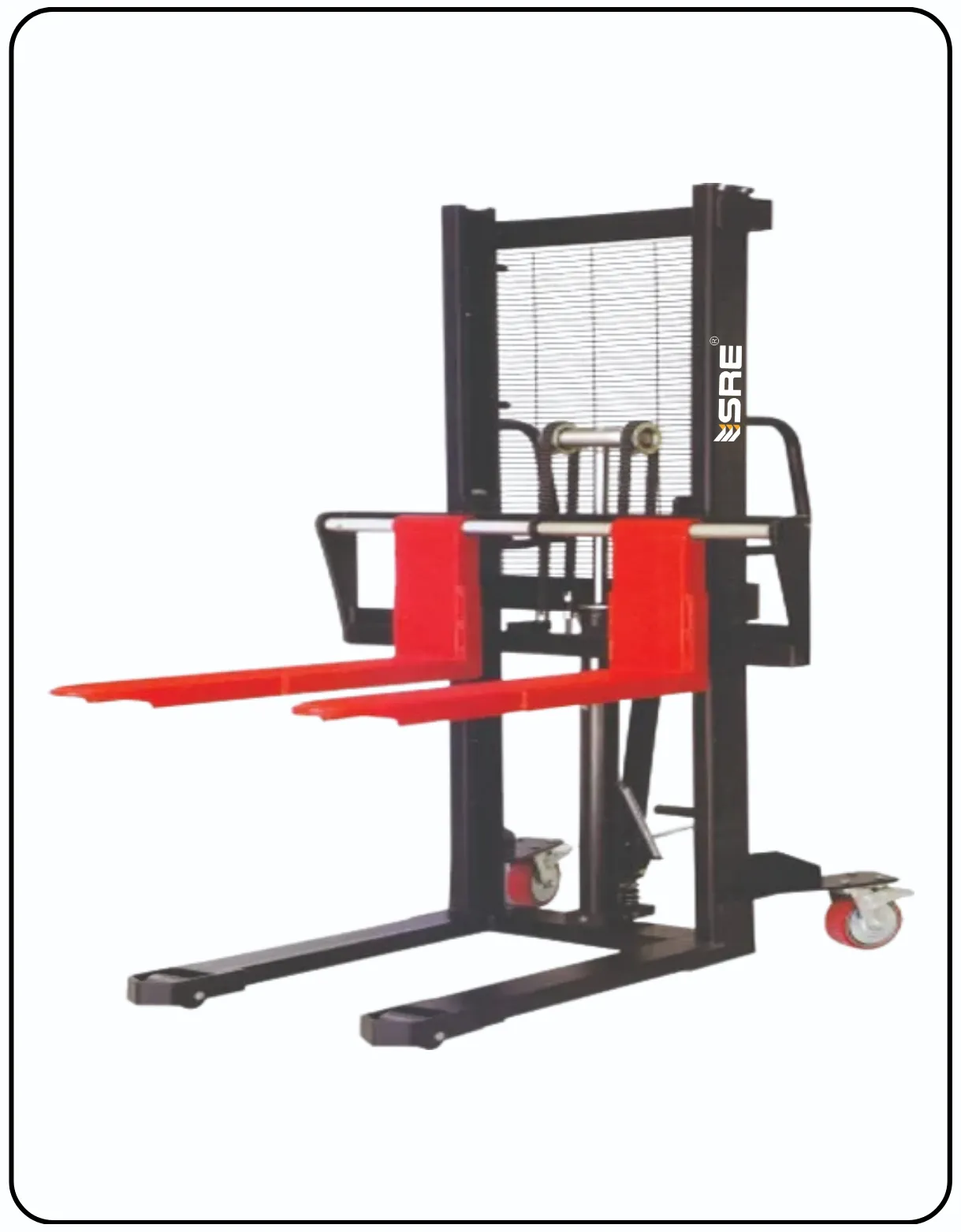
In practical industrial terms, a hydraulic stacker is a piece of equipment made for moving materials, engineered to elevate, descend, and shift palletized cargo utilizing hydraulic lifting mechanisms. In contrast to a simple hand pallet jack, a hydraulic stacker provides vertical lifting capability — allowing operators to place pallets onto shelving or raised platforms.
Defining features of a hydraulic stacker typically include:
- A hydraulic raising/lowering system (manual, partially electric, or fully electric)
- Fork arms sized for standard pallet dimensions
- Load-bearing capabilities appropriate for medium-duty warehouse functions
- Easily maneuverable chassis designed for confined spaces
The term “hydraulic” merely indicates the method employed to raise and lower loads — a fundamental concept proven in industrial machinery for many years.
Why Hydraulic Stackers Are Superseding Older / Manual Gear?
In many premises, manual pallet jacks and basic carts remain the default for transporting loads. Although familiar and inexpensive, these tools possess limitations:
Manual Methods
- Heavily relies on the strength of the operator
- Increase tiredness during extended shifts
- Offer restricted stacking elevation
- Result in inconsistent load handling
Enhanced Workplace Security
Safety is not solely a matter of adherence to rules — it is a core operational imperative. Manual lifting and awkward handling contribute significantly to storage facility accidents. In day-to-day scenarios, hydraulic stackers boost safety by:
- Minimizing awkward lifting postures
- Removing strain from lifting loads
- Allowing for regulated fork motion with reduced jarring or sideways tilting
- Decreasing hazards from slips and trips during manual lifting tasks
Operators are able to position pallets accurately at shelf height without repetitive strain. This lessens both immediate injuries and gradual fatigue, factors frequently leading to workplace incidents.
Moving Heavier Stocks With Less Effort
Storage houses managing pallet loads of moderate weight (often between 500–2000 kg) discover that hydraulic stackers provide the correct blend of capability and agility.
Compared to basic jacks, stackers offer:
- Superior steadiness when raised
- Even load distribution
- A reduced chance of cargo shifting
- Assurance when handling dense or irregularly shaped pallets
In operations running across multiple shifts, this results in fewer abrupt stops, less spoiled merchandise, and smoother setups for outgoing shipments.
Maximizing Space & Agility
Storage layouts in urban industrial locales such as Mumbai frequently feature limited aisle widths, small turnarounds, and compact storage lanes. Hydraulic stackers provide value here because:
- They possess a smaller turning sweep compared to larger forklift trucks
- They fit easily into tighter shelving arrangements
- Operators can navigate between pallets without needing extensive reshuffling
In practical workflow terms, this means fewer delays during item selection and placement, and better utilization of every square meter of floor surface.
Good Value Over the Long Term
Cost effectiveness relates to lasting benefit, not merely the initial purchase price. When assessing the expenditure on a hydraulic stacker, bear in mind:
Lowered Costs Linked to Injuries
Fewer accidents at work translate to less unproductive time, fewer insurance claims, and minimized halts in operations.
Environmental Responsibility & Compliance
Hydraulic stackers help foster cleaner, more compliant operations in several key ways:
- Electric or semi-electric variants lessen emissions and noise output
- Efficient load management reduces time spent idling and unnecessary movements
- Reduced physical strain aligns with best practices for workplace ergonomics
These positive aspects support both environmental targets Aerial Work Platform and regulatory adherence concerning workplace safety and emission benchmarks in industrial zones.
Fitting Into Storage / Factory Processes
In actual operational settings, no piece of equipment functions in isolation. A hydraulic stacker connects with:
- Loading docks for handling arriving pallets
- Shelving structures for organized stock
- Picking pathways for order fulfillment
- Cross-dock areas for rapid processing
Operators can collaborate with conveyor belts or digital stock Dock Leveler monitoring systems. The stacker becomes an integrated element of a synchronized internal logistics sequence instead of an isolated instrument.
Learning, Simplicity of Operation & Upkeep
A frequent worry among purchasing departments concerns the time needed to master new apparatus. In reality:
- Hydraulic stackers demand minimal instruction — operators rapidly grasp the lift and movement controls
- Manual versions are uncomplicated; electric controls resemble familiar user interfaces
- Routine upkeep is predictable — lubrication points, hydraulic system checks, and battery management
This predictability reduces interruptions caused by user errors or neglected maintenance.
Why Selecting an Established Supplier Is Important?
When dealing with equipment for moving goods, the quality of the item outweighs marketing promotions. When choosing a source for a hydraulic stacker, evaluate:
- Experience with industrial applications
- Accessibility of replacement components and maintenance support
- Adherence to safety standards
- A local presence for assistance and coaching
A reputable manufacturer ensures your stacker provides consistent functioning and operational availability throughout its service duration.
For those making selections in Mumbai and wider regions, partnering with a reliable entity guarantees both ongoing operational flow and peace of mind.
Summary:
In today’s rapidly moving industrial landscape, operational dependability and safety are crucial for meeting output targets. Hydraulic stackers deliver tangible, quantifiable advantages in:
- Increased output from quicker task completion times
- Better safety and reduced worker strain
- More intelligent utilization of space in compact facilities
- Cost savings over time through consistent performance
If your facility is grappling with large pallet volumes, tight quarters, or repetitive lifting duties, investigating a hydraulic stacker can harmonize your procedures with current operational necessities.
To look into options that suit your specific storage configuration and output rate, reach out to SRE MATERIAL HANDLING EQUIPMENT PRIVATE LIMITED — a trusted affiliate for material management systems in Mumbai and beyond.
Visit: https://www.sremhepvtltd.com/
Essential Points to Note
- Productivity: Hydraulic stackers boost output by cutting down manual lifting time and standardizing lifting cycles.
- Safety: They decrease fatigue and injuries by enabling controlled, ergonomically sound load management.
- Load Management: Stackers handle heavier cargo with superior balance and firmness compared to manual techniques.
- Economic Benefit: Over time, they lower the total cost of ownership through less downtime and reduced labor strain.
- Sector Trend: Modern storage facilities are increasingly adopting hydraulic stackers to satisfy increasing operational demands.
FREQUENTLY ASKED QUESTIONS
1. What are the usual lifting capacities for hydraulic stackers in manufacturing use?
- The majority of hydraulic stackers manage between 500 and 2000 kg, making them suitable for warehouse and factory tasks of medium scale.
2. Do hydraulic stackers need specialized operator accreditation?
- Often, basic instruction is adequate. However, facilities maintaining formal safety protocols may incorporate stacker usage into their internal qualification processes.
3. Are electric hydraulic stackers a worthwhile investment?
- For tasks involving high volume and demands spanning multiple shifts, electric stackers lessen operator exertion and increase consistency — frequently validating the expenditure.
#HydraulicStacker #WarehouseEfficiency #IndustrialEquipment #MaterialHandlingMumbai #SREMaterialHandlingEquipmentPrivateLimited #LogisticsOptimization #SafetyInWarehouses #OperationalProductivity