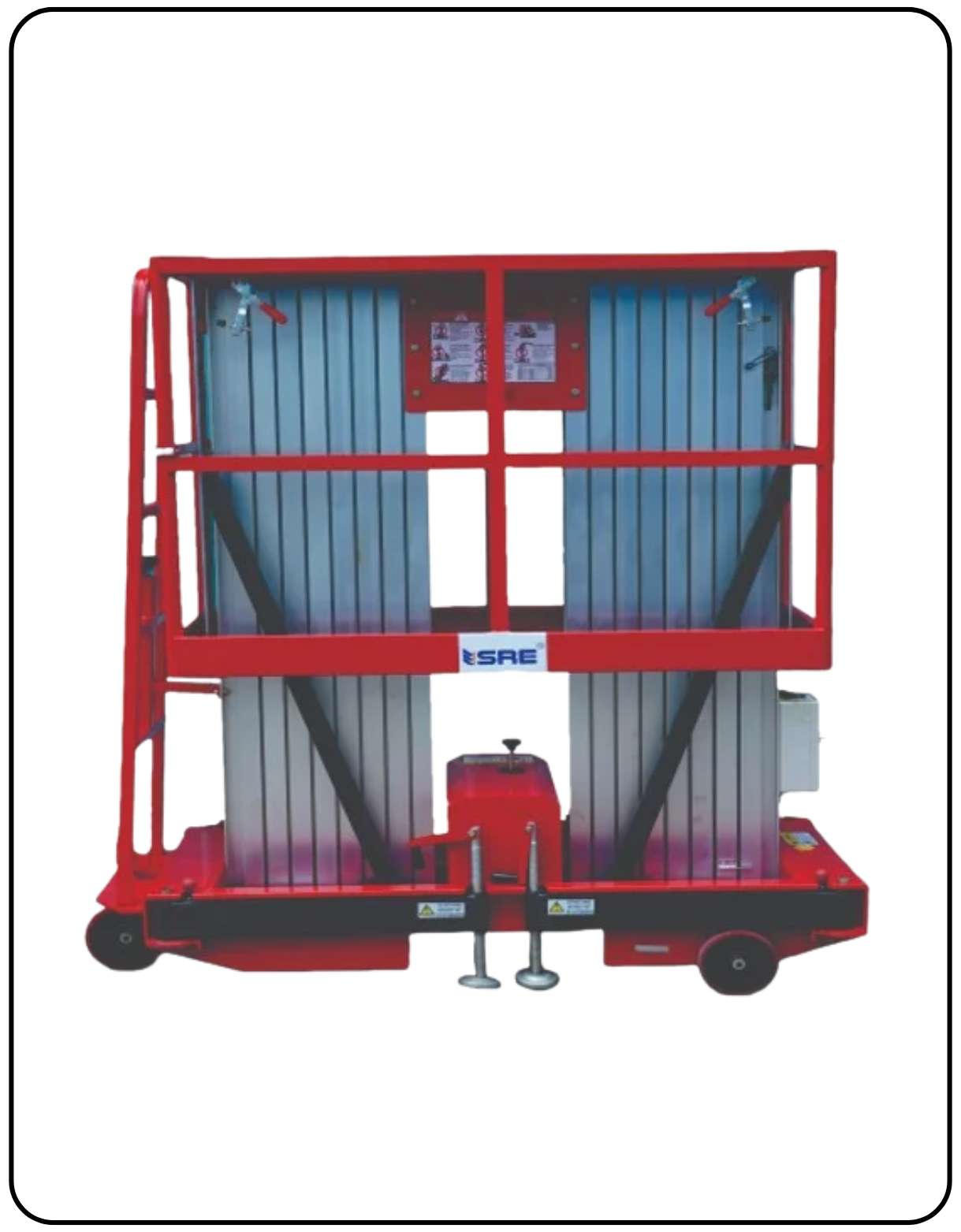
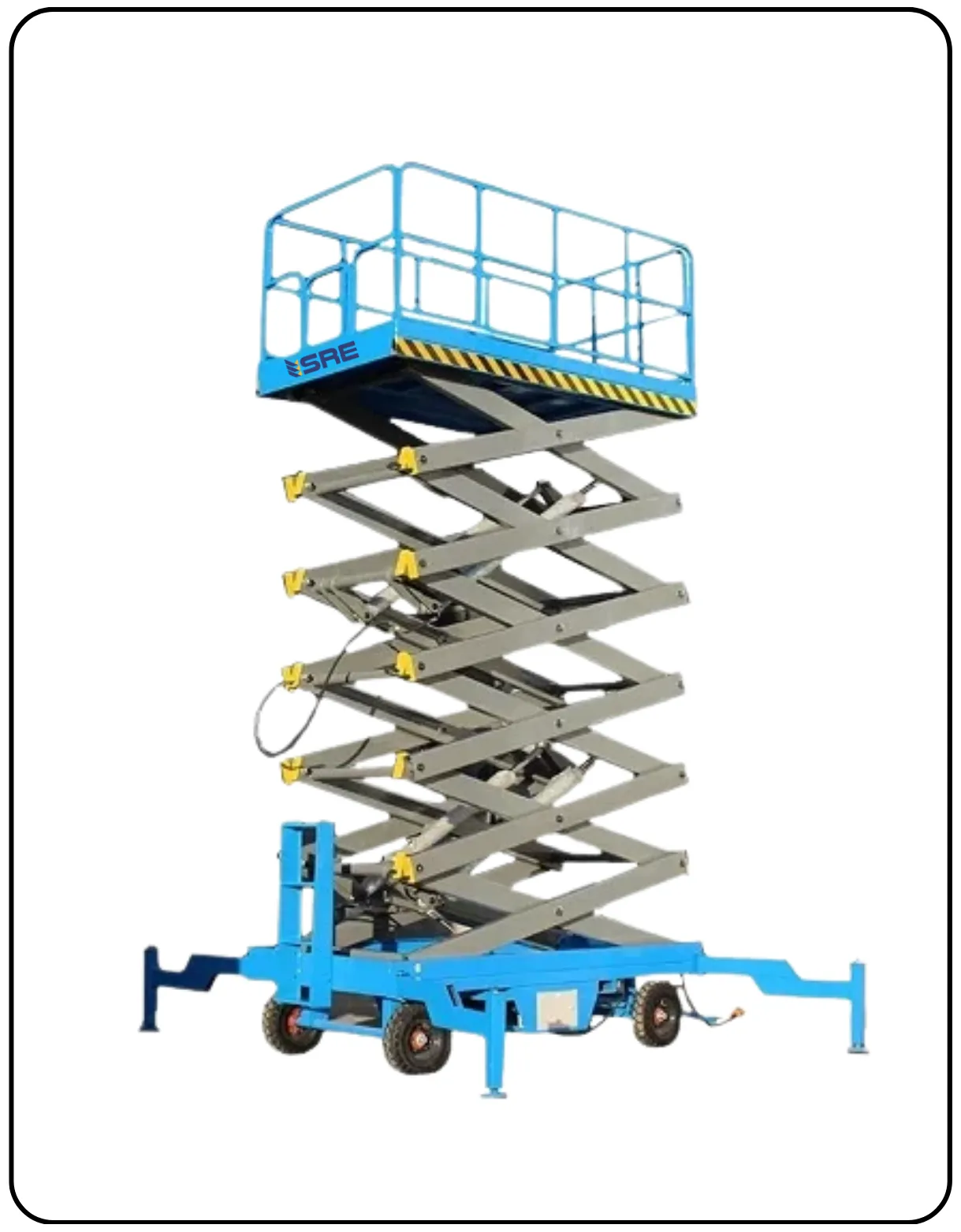
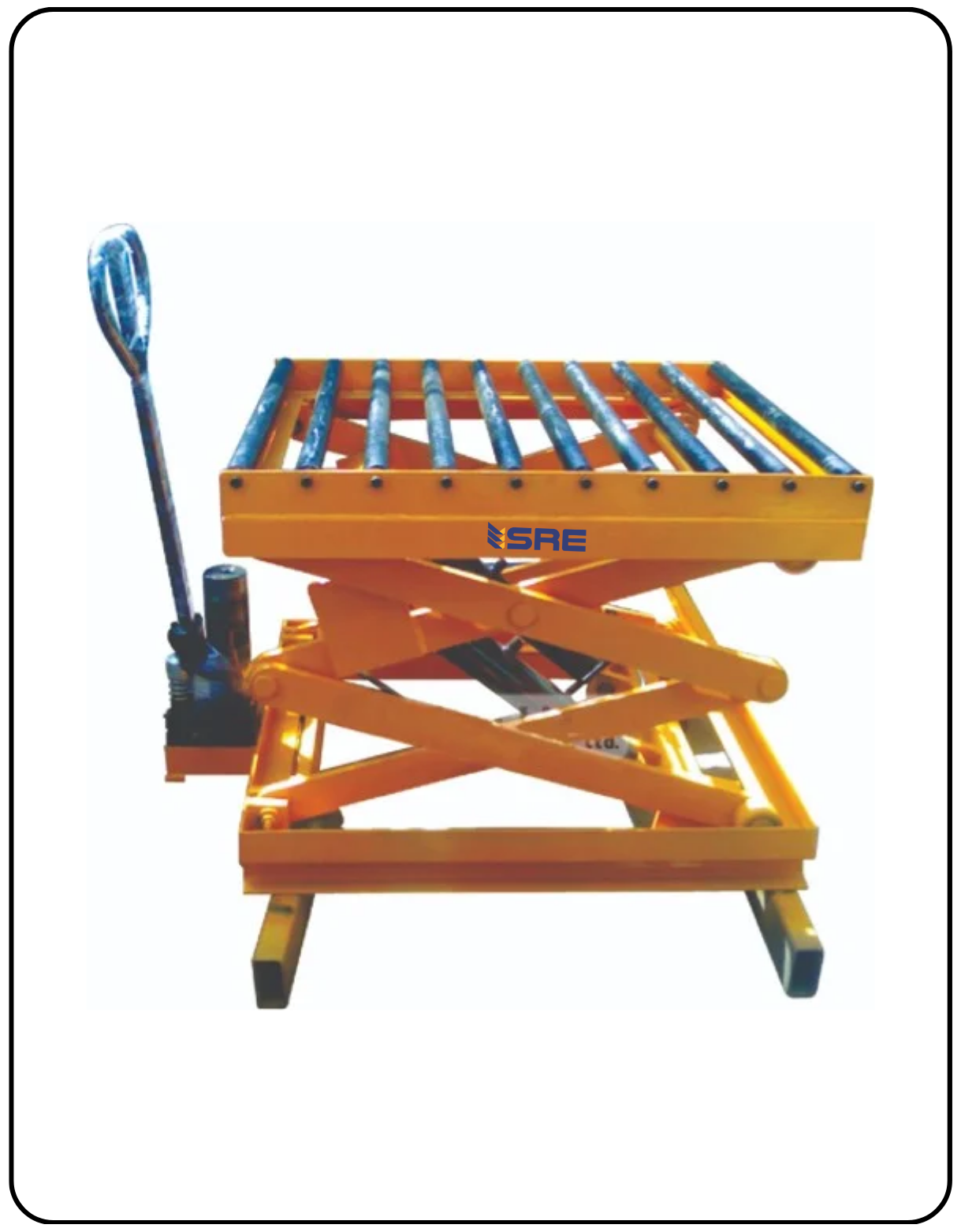
SRE Material Handling Equipment Pvt. Ltd.: Manufacturer, Supplier, And Exporter Of Mobile Aerial Work Platform in India.
SRE Material Handling Equipment Pvt. Ltd., Manufacturer And Supplier Of Mobile Aerial Work Platform in Bhosri.
Our Manufacturing Unit is in Ahmedabad, Vadodara, and Rajkot, Gujarat, India.
Mobile Aerial Work Platform in Bhosri: A Practical Guide for Warehouse & Industrial Decision‑Makers
In everyday industrial and warehouse settings, small enhancements can significantly affect safety, output, and cost management. As sites in Bhosri and throughout Maharashtra expand to satisfy growing demand, the strain on internal processes and logistics personnel is at an all-time high. Speed, operational volume, the health of the workforce, and adherence to safety regulations are primary concerns.
Against this background, putting resources into suitable material handling and finding solutions is more than just an operational decision—it’s a vital move for strategy. Among these solutions, the Mobile Aerial Work Platform in Bhosri has surfaced as a useful instrument for bridging the gap between manual effort and mechanically driven efficiency.
The Evolving Requirements of Contemporary Warehouses & Industrial Sites
Warehouses and factories today are far from the quiet, sluggish places of the past. In 2026, market expectations are driven by:
- Quicker delivery timelines stemming from e-commerce and just-in-time supply chain frameworks.
- Greater output demands as production figures climb.
- Labor difficulties, including tiredness, staff turnover, and variations in skill levels.
- Strict safety adherence, both legally and culturally.
From our dealings with warehouse supervisors, a frequent observation is that older tools—simple ladders, non-powered lifts, and stationary platforms—find it hard to keep pace with changing workflow patterns. Modern equipment such as Dock Leveler systems and specialized Drum Handling Equipment helps streamline loading operations, improve safety, and adapt more effectively to dynamic warehouse environments.
Defining the Mobile Aerial Work Platform
Fundamentally, a Mobile Aerial Work Platform is a powered elevated access solution crafted to safely raise personnel and equipment to heights that are otherwise challenging to access during warehouse, upkeep, or logistics activities.
Crucially, this explanation isn’t purely academic; it reflects how operators and logistics teams actually deploy the equipment:
- A portable system that can relocate swiftly without the bother of traditional setup.
- A raised platform that offers a firm surface for working aloft.
- A design that supports both routine duties and repetitive processes.
Put simply in operational terms: instead of hauling ladders across active corridors or setting up scaffolding that requires hours to assemble, teams can utilize a Mobile Aerial Work Platform for safe elevation, efficient movement, and more consistent task completion.
How Mobile Aerial Work Platforms Are Superseding Classic & Manual Approaches
In real warehouse settings, manual methods incur unseen expenses:
- Increased worker fatigue and hazards as tasks extend over longer periods.
- Uneven positioning when personnel depend on poorly placed ladders.
- Disruption whenever tools are jury-rigged or setups shift.
A Mobile Aerial Work Platform resolves numerous such issues—not through exaggeration, but through its inherent design. By enabling workers to reach elevated spots without excessive strain, the platform promotes more predictable operations and uniform procedures across teams.
Enhancements in Daily Productivity
Operations managers in Bhosri’s industrial sector often point to the subsequent improvements once a Mobile Aerial Work Platform is integrated:
Saving Time
Time is a valuable asset on warehouse floors. When workers cease taking minutes to position ladders or constantly adjust scaffolding, every task becomes more efficient.
For example:
- Restocking shelves happens more quickly as elevated pickers cut down on transit time and repositioning effort.
- Inspections of lights or overhead conveyor systems require fewer halts to primary functions.
Based on our on-site observations, facilities that adopt aerial platforms frequently experience a noticeable decrease in the completion time for elevated jobs—sometimes by as much as 15–30%, depending on how often the task occurs.
Steady Output Across Shifts
A persistent hurdle in high-volume facilities is the variation in output between work crews. Standard equipment and manual improvisations often result in fluctuating work rates. A powered platform, conversely, provides the same support regardless of who is operating it, provided basic instruction has been provided.
This uniformity is beneficial because:
- Shift planners can forecast output more accurately.
- Supervisors dedicate less time to resolving inefficiencies.
- Workers build stronger certainty in task execution.
Boosting Workplace Safety Levels
Safety is not merely a regulatory hurdle; it is fundamental to ongoing operations and employee welfare.
Conventional elevated work methods frequently contribute to incidents such as:
- Slips and falls resulting from unstable ladder placements.
- Physical stress from reaching at awkward angles.
- Operator errors in assembling makeshift supports.
From our discussions with safety personnel and floor managers, one point is consistently clear: removing common risk factors leads to fewer interruptions, reduced insurance liabilities, and greater confidence among teams.
Managing Heavier Inventory with Greater Ease
Modern warehouses handle much more than just small parcels and cartons. Palletized goods, heavy storage racking, and machinery components often demand elevated support or manipulation.
A Mobile Aerial Work Platform addresses this by delivering:
- Platforms rated for load capacity are able to support personnel and tools.
- Engineered balance and stability for vertical and side-to-side movement.
- Built-in load assistance that minimizes the need for secondary handling.
Operators, we have seen that the platform is designed not just for reaching a height, but for managing the work at that height securely and predictably.
Technology & Operational Efficiency
Beyond mechanical leverage, contemporary Mobile Aerial Work Platforms include features that bolster uptime and reliability: both primary considerations for operations personnel in 2026.
Battery & Power Systems
Dependable battery function is important because:
- Power-related interruptions impede workflows.
- Lengthy shifts necessitate steady performance without pauses during tasks.
- Rapid recharging and effective energy consumption lessen reliance on surges in facility power.
Platforms today increasingly employ battery setups that balance operating duration and swift recharge periods, vital for sites running multiple shifts or facing peak demand intervals.
Mechanical Advantages
Fluid control mechanisms, swift steering response, and platform stabilization features allow operators to focus on their duties rather than struggling with the machinery.
These operational benefits may seem minor, but collectively they influence:
- Uniformity in task progression
- Operator assurance
- Maintenance predictability
Space Optimization & Maneuverability
Area within storage facilities is highly valued. Constricted aisles and dense racking can pose challenges for access equipment that is large or difficult to position.
A Mobile Aerial Work Platform engineered for industrial settings provides:
- A small physical profile: fitting into aisles without impeding movement.
- Agile handling: requiring less time and space for adjustments.
- Flexible setup: appropriate for diverse settings (broad aisles, tight corners, raised work areas).
Based on our observations, facilities that opt for compact yet capable platforms find they can:
- Navigate passageways without interrupting forklift or AGV traffic.
- Utilize the same equipment across various zones without time lost to adjustments.
- Sustain workflow continuity even in areas with dense storage.
This efficient space utilization directly contributes to output and floor safety.
Cost Efficiency Over Time
Decision‑makers often hesitate regarding initial outlay, particularly for gear that appears to offer only minor improvements. However, genuine cost efficiency emerges when total ownership duration is reviewed.
Consider the cost progression:
- Reduced downtime resulting from incidents or staging delays.
- Less strain on personnel, which leads to fewer injuries and absences.
- Higher throughput, speeding up inventory cycles.
When discussing expenditure with purchasing departments, the focus shifts from “the expense today” to “the value realized over subsequent months and quarters.”
Sustainability & Compliance
Sustainability extends beyond emissions: it involves responsible operation within regulatory guidelines and stakeholder expectations.
A Mobile Aerial Work Platform supports:
- Cleaner operational footprints via efficient battery technology.
- Reduced environmental impact compared to combustion-engine alternatives.
- Preparedness for safety inspections and industry benchmarks.
As regulatory scrutiny intensifies, industrial users in and near Bhosri are increasingly prioritizing equipment that delivers both performance and adherence to standards.
Integration with Warehouse & Factory Workflows
A frequent query from logistics managers is: “Will this fit our existing processes, or will it become another hurdle?”
The positive aspect is that modern Mobile Aerial Work Platforms are engineered for integration, not disruption.
They fit into workflows by:
- Conforming to standard operational guidelines (SOPs).
- Facilitating quick task initiation and changeovers.
- Working alongside other material handling apparatus (such as hand trucks, tow tractors, and automated systems).
In practical terms, this means:
- Technical teams can incorporate platform access into routine checks.
- Order fulfillment teams can include elevated tasks without sacrificing time.
- Operations supervisors can schedule resources with greater accuracy.
Training, Ease of Use & Maintenance
A solution’s effectiveness hinges on the proficiency of the team operating it.
- Key elements frequently highlighted in actual use scenarios:
- Basic instruction is adequate: users rapidly gain competence.
- Predictable upkeep schedules minimize unforeseen expenses.
- Straightforward controls lower the hurdle for adoption across different shifts.
From our experience with floor staff, the familiarization period is short, meaning the platform transitions from “new hardware” to “trusted apparatus” in days, not months.
Why Choosing a Reliable Manufacturer Matters
When acquiring equipment such as a Mobile Aerial Work Platform, the supplying manufacturer is often more critical than the initial purchase price.
Important aspects include:
- Post‑sale assistance: promptness and availability of spares.
- Background and regulatory adherence: supporting compliance checks and operational benchmarks.
- Local service proximity and delivery capacity: particularly in areas like Bhosri.
While we refrain from endorsing specific claims, it is prudent to favor manufacturers possessing:
- A proven history in industrial applications
- Clear documentation
- Accessible support avenues
These characteristics lessen risk and guarantee enduring performance.
Conclusion
For storage facilities and production sites in Bhosri aiming to enhance safety, output, consistency, and value for money, a Mobile Aerial Work Platform delivers tangible, quantifiable advantages: from quicker setup times to more secure elevated work, from efficient spatial utilization to sustained cost performance.
If you are assessing elevated access solutions and wish to learn more about models appropriate for your operational requirements, investigate offerings from SRE MATERIAL HANDLING EQUIPMENT PRIVATE LIMITED, recognized for industrial solutions providing practical capability.
👉 Visit https://www.sremhepvtltd.com/ to see how this equipment aligns with your facility’s operations.
Key Takeaways
- Productivity: Mobile units reduce staging time and streamline tasks at height.
- Safety: Designed stability lessens the hazard of falls and strain injuries.
- Load Support: Built to accommodate tools and materials when elevated.
- Value: Long‑term benefits stemming from minimized downtime and smoother processes.
- Industry Trend: Modern warehouses are increasingly adopting mechanized access tools for standardization and regulatory compliance.
Trending FAQs
Q1. Are Mobile Aerial Work Platforms difficult to operate?
- A1. Most models feature intuitive controls and require only basic training.
Q2. Can these platforms work in narrow aisles?
- A2. Yes, many industrial designs prioritize compact footprints and responsive maneuverability, making them suitable for warehouse aisles.
Q3. How do they compare with scaffolding and ladders?
- A3. Mechanized platforms offer safer, more stable, and faster access without constant manual setup.
Q4. Do they support heavy tools and loads?
- A4. Yes, robust designs accommodate workers, tools, and materials within rated capacity limits.
Q5. What maintenance is required?
- A5. Routine checks, battery care, and scheduled service keep platforms reliable and minimize unexpected downtimes.
Contact us today for reliable warehouse solutions. Call +91 9316 2088798 or sremhepvtltd2025@gmail.com for assistance now.
#MobileAerialWorkPlatform #WarehouseEfficiency #IndustrialSafety #SREMaterialHandlingEquipmentPrivateLimited #BhosriOperations #OperationalProductivity