
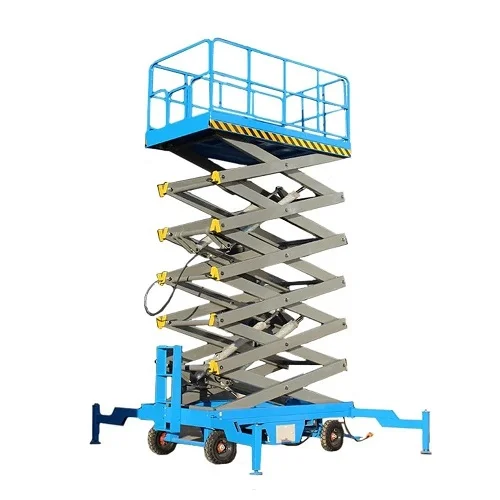
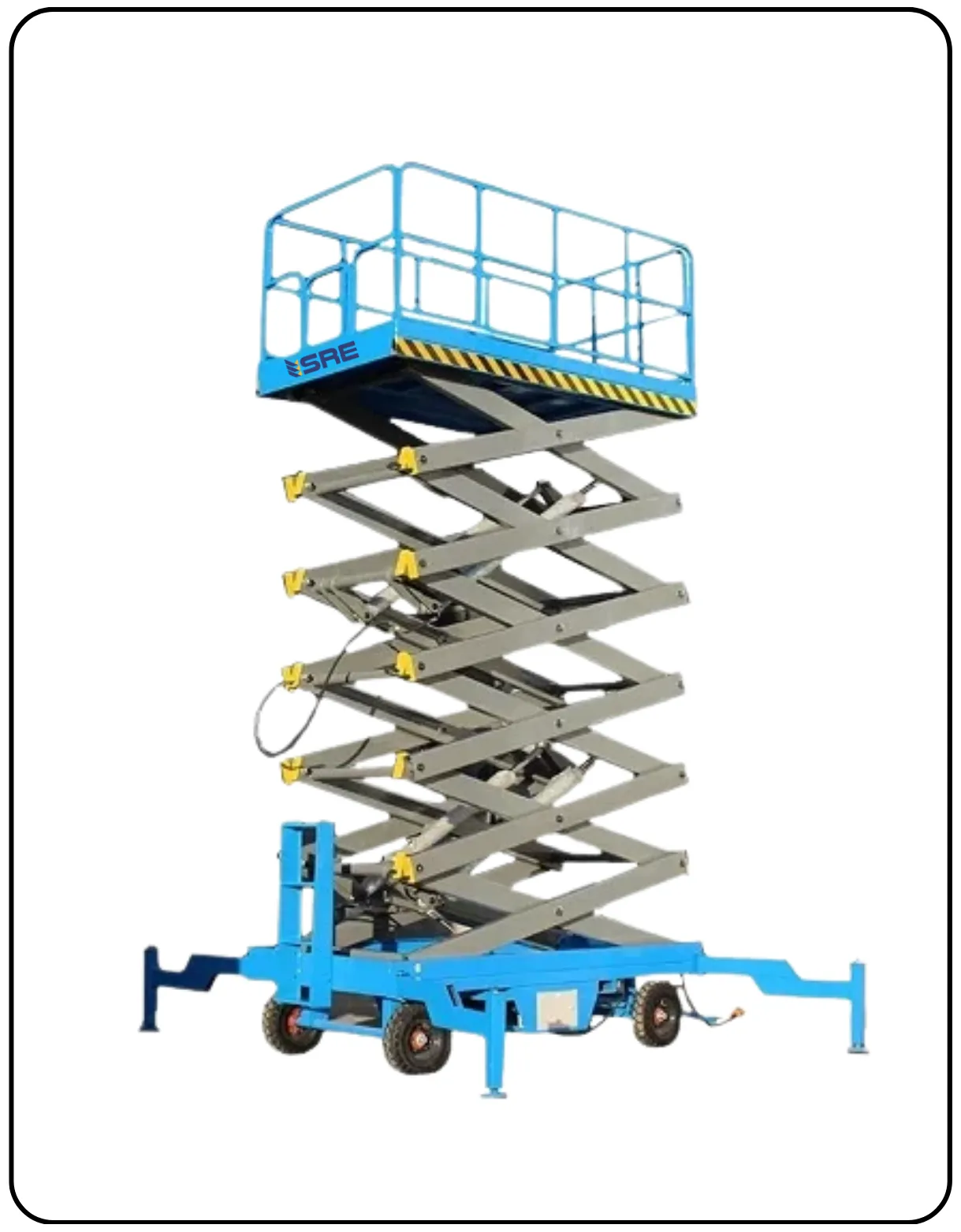
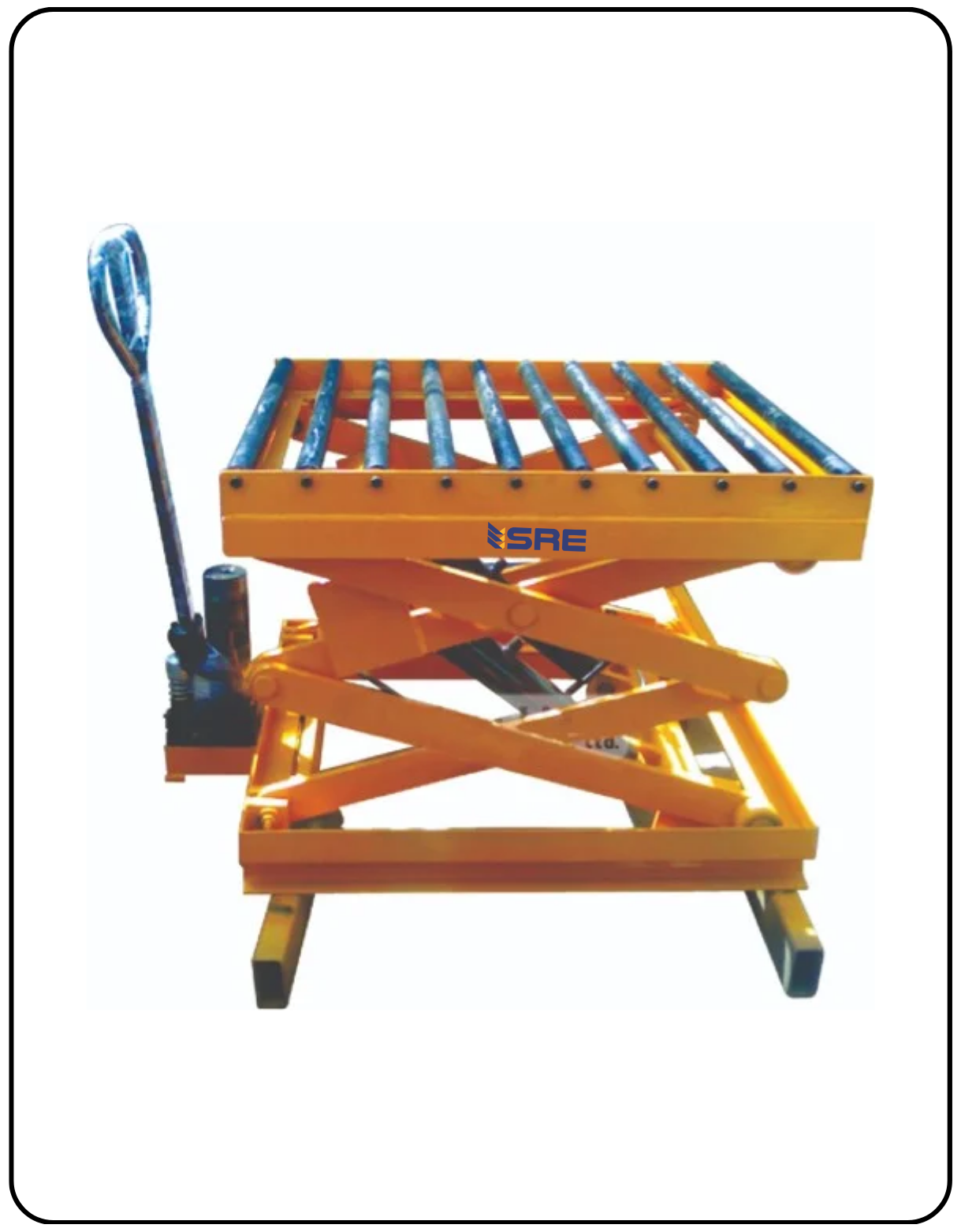
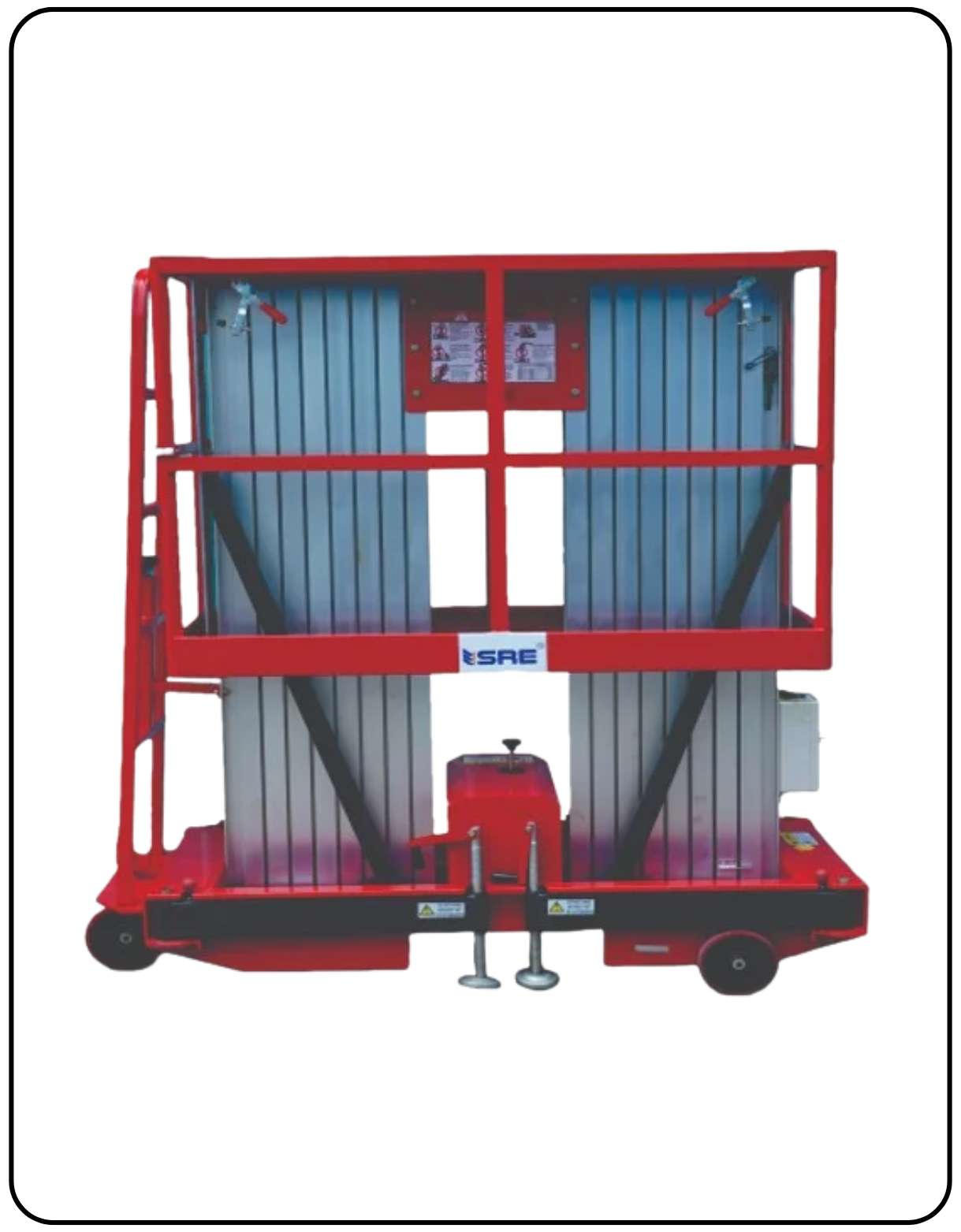
SRE Material Handling Equipment Pvt. Ltd.: Manufacturer, Supplier, And Exporter Of Mobile Scissor Lift Table in India.
SRE Material Handling Equipment Pvt. Ltd., Manufacturer And Supplier Of Mobile Scissor Lift Table in Nashik.
Our Manufacturing Unit is in Ahmedabad, Vadodara, and Rajkot, Gujarat, India.
Mobile Scissor Lift Table in Nashik: A Practical Solution for Modern Industrial Operations
In regular warehouse tasks and factory settings, change isn’t on the horizon—it’s already present. The pressures on warehousing, manufacturing facilities, and internal transport teams have significantly increased in the last decade. Speed, volume capacity, safety standards, and uniform operational performance are no longer optional benefits; they are crucial metrics determining whether a site excels or merely endures.
Within this transforming context, industrial leaders are increasingly looking past conventional methods for moving materials. One solution gaining traction among warehouse proprietors, plant supervisors, operations executives, supply chain managers, and purchasing departments in Nashik and elsewhere is the Wheeled Scissor Lift Platform.
The Evolving Requirements of Current Warehouses and Industrial Processes
In today’s industrial atmosphere, operational strain is constant. Warehouses are managing greater output, tighter delivery schedules, and more diverse product ranges than ever before.
Consider a few typical situations in many distribution centers and production areas:
- Increasing Item Volume: Periods of high demand and swift fulfillment strategies lead to unpredictable workload surges.
- Staffing Difficulties: Recruiting and keeping skilled machine operators and material movers is becoming harder.
- Safety Standards: Workplace injuries resulting from physical lifting remain a primary worry for HR and EHS departments.
- Process Intricacies: Multi-step manufacturing sequences and complex assembly operations leave minimal margin for error.
These difficulties affect everyday duties such as loading and unloading pallets, shifting heavy components, or preparing goods for dispatch. Older, conventional methods—relying on hand trucks, forklifts for lighter items, or basic pallet jacks—often fall short. They can contribute to operator strain, slow down process cycles, and heighten the risk of accidents.
What Exactly Is a Mobile Scissor Lift Table?
In practical industrial terms, a Mobile Scissor Lift Table is a transportable platform powered by a scissor-style elevating mechanism. It facilitates the smooth and exact raising or lowering of cargo between varied elevations—from floor level to a suitable working height, or across different production steps—without necessitating manual lifting.
Unlike built-in conveyor systems or fixed lifting platforms, portable versions are engineered for adaptability within a facility:
- They can be relocated across various areas as work demands change.
- They accommodate different load dimensions and heights.
- They fit into operational flows where workstations or tasks are not always static.
Fundamentally, they serve as a link between human effort and heavy machinery: enabling controlled movement of goods without overwhelming workers or complicating operational sequences.
Why Mobile Scissor Lift Tables Are Superseding Older/Manual Approaches
Reducing Weariness and Promoting Staff Health
Handling items manually, even with well-trained staff, leads to worker fatigue. Across a full shift, recurring bending, hoisting, and positioning tasks deplete energy levels and diminish performance uniformity.
With a Mobile Scissor Lift Table:
- Operators function at optimized working heights.
- Heavy lifting is mechanically supported, not manually driven.
- Physical stress is considerably lessened over repeated actions.
This is not just sales talk; it’s a functional improvement seen in warehouses where these lift tables become integral components in order fulfillment stations, assembly lines, and transfer zones.
Improving Efficiency and Predictability
Manual pushing and pulling, makeshift height adjustments, or improvised stacking and unstacking all introduce inconsistency:
- The duration for each activity can vary significantly between individuals.
- Positioning loads at different levels often requires improvised tools or setups.
Conversely, a Mobile Scissor Lift Table allows for consistent, repeatable motion—a significant benefit when operational continuity and output volume are key performance indicators.
Productivity Benefits in Day-to-Day Activities
In actual warehouse settings, saved time directly equates to increased output. Here’s how Mobile Scissor Lift Tables affect routine workflows:
Decreased Time Spent on Ancillary Tasks
Raising and lowering loads by hand consumes time—time that operators could dedicate to core productive work. A Mobile Scissor Lift Table minimizes this non-value-added time by handling vertical adjustments quickly and smoothly.
Streamlined Workstations
In areas for assembly, component pre-packaging (kitting), or final packaging, lift tables assist in maintaining a steady work rate without physical interruptions. This results in:
- Higher unit processing per shift.
- Greater consistency across different employees and shifts.
- Fewer bottlenecks at transfer or staging locations.
These advancements are not abstract; they become visible in measurable metrics like average process time, output units per hour, and operator utilization rates.
Better Workplace Safety
Safety remains a constant top priority in any industrial context—Mobile Scissor Lift Tables aid in minimizing hazards in tangible, practical ways.
Accident Reduction Via Ergonomics
Injuries affecting muscles and the skeleton frequently stem from poor lifting postures and repeated strain. Each instance a worker bends to retrieve a heavy item or hoists an unwieldy load, the cumulative risk increases.
A Mobile Scissor Lift Table:
- Bring items up to a comfortable working elevation.
- Minimizes the need for stooping and excessive reaching.
- Offers steady support during transfer steps.
These straightforward ergonomic upgrades lead to fewer sprains, a reduction in reported incidents, and lower associated workers’ compensation expenses over the long term.
Controlled Movement and Stability
Unlike temporary platforms or improvised height aids, professionally engineered lift tables deliver managed, fluid vertical movement. Sudden jolts or unsteady surfaces—frequent causes of workplace falls or overexertion—are reduced.
Effortless Handling of Heavier Shipments
Modern warehouses manage a diverse inventory: from lightweight components to substantial assemblies weighing hundreds of kilograms. Each category presents its own handling challenge.
A current Mobile Scissor Lift Table is built to manage heavier cargo dependably:
- The scissor mechanism ensures uniform force distribution across the platform surface.
- Contact points remain steady throughout the lift and lower cycles.
- Precise height adjustment lessens jarring and improves placement accuracy.
In comparison, manual handling methods introduce risks:
- Higher probability of dropped cargo.
- Increased requirement for additional personnel.
- Greater stress on ancillary equipment like trolleys or pallets.
For facilities where load handling requirements fluctuate significantly throughout the day, lift tables introduce a level of control that conventional manual methods cannot provide.
Technology and Efficient Operations
Keeping operations running without interruption is vital in fast-moving sectors. Mobile Scissor Lift Tables aid this in numerous practical ways:
Mechanical Dependability
These units are built with sturdy mechanical connections and appropriately rated parts. In day-to-day application:
- They sustain effectiveness over numerous cycles.
- They endure repeated raising and lowering without wear.
- They call for straightforward, foreseeable maintenance intervals.
This trustworthiness translates to less inactivity and fewer unexpected fixes: a real gain when factory output is linked to equipment availability.
Power Provision
Numerous portable versions feature battery support for lifting or electric movement systems:
- Steady lifting strength irrespective of operator exertion.
- Removal of manual turning or laborious setup procedures.
- Predictable usage periods that match production requirements.
For tasks under tight schedules, this dependability removes one source of unpredictability.
Maximizing Space and Adaptability
Current storage facilities face demands on two fronts: greater output and more efficient use of available space. Every available square unit matters.
A Mobile Scissor Lift Table provides genuine operational benefits here:
- Small Footprint: Lift tables are designed to fit into narrow passages and crowded work areas.
- Simple Movement: Their portable design lets teams quickly reposition equipment, adapting to workflow shifts without needing heavy lifting gear.
- Versatile Zone Application: Instead of being tied to one spot, mobile units can support several work areas throughout a shift.
This flexibility lessens the need for numerous fixed units and enables agile operations: a growing necessity in evolving warehouse and factory layouts.
Long-Term Cost Effectiveness
One of the less obvious aspects of equipment, such as Mobile Scissor Lift Tables, is how expenses accumulate over time.
Lowered Injury Expenses
Fewer strain-related incidents result in:
- Decreased insurance outlays.
- Reduced days away from work.
- Less reliance on extra shift coverage.
These are tangible financial positives that affect total cost of ownership (TCO) figures.
Labor Streamlining
By lessening manual strain and variability in tasks, lift tables help teams work at steady paces, boosting overall labour output without increasing staff numbers.
Minimizing Stoppages
Reliability means fewer breaks, and every moment a station is idle, orders are delayed, and costs rise. Lean processes value consistency, which lift tables provide in material handling.
Environmental Responsibility and Adherence
Beyond direct expenses and output, modern operations increasingly focus on sustainability and meeting regulations:
Cleaner, Safer Workplaces
Mobile Scissor Lift Tables support cleaner procedures by cutting down on makeshift fixes that can cause spills, dropped items, or ruined stock. A well-organized floor is inherently safer and more compliant.
Regulatory Conformity
Standards for ergonomics and workplace safety are becoming stricter worldwide. Mobile lift tables help operations align with top practices for:
- OSHA ergonomic guidelines.
- ISO safety norms.
- Internal safety assessments.
This commitment to compliance not only secures employees: it also shields the business from penalties and image damage.
Fitting into Warehouse and Factory Procedures
A frequent query from operations managers is: “How will this integrate with our current systems?”
The brief response: smoothly.
Mobile Scissor Lift Tables serve as modular elements within broader processes. They can:
- Assist at receiving and inspection points.
- Support flow-through dock activities.
- Act as transfer points between conveyor systems or specialized work cells.
- Enable adaptable staging for shipping and packing groups.
Due to their portability and height adjustability, they naturally fit with conveyors, trolleys, packaging lines, and assembly stations without demanding major procedural overhauls.
Instruction, Usability, and Upkeep
Another practical consideration for purchasing teams is the required learning period and ongoing care.
Simple Operation
Training for using Mobile Scissor Lift Tables is uncomplicated. Most functions are intuitive:
- Raising and lowering using basic controls.
- Moving via built-in wheels or powered drives.
- Securing in place for safe loading.
Operators of all skill levels can adopt them rapidly with minimal oversight.
Foreseeable Maintenance
Care routines involve:
- Applying lubricant to moving components.
- Checking load-bearing elements.
- Recharging or servicing power sources where applicable.
These actions are typical for most industrial gear and fit within existing upkeep schedules. The Electric Stacker, Good Lift guarantees smooth functioning while limiting non-operational time.
The Value of Selecting an Established Producer
Choosing the correct Mobile Scissor Lift Table involves more than just looking at technical specifications: it hinges on supplier expertise, quality control, and service availability.
A reputable manufacturer or distributor will:
- Furnish clear weight limits and usage advice.
- Aid with setup and operator instruction.
- Provide spare parts and service options that support uptime objectives.
- Guide you through adherence to safety and compliance benchmarks.
Concentrating on quality and support—not solely on the lowest price—helps prevent acquiring equipment that doesn’t meet expectations or demands frequent fixes.
For dependable solutions, look into offerings from SRE MATERIAL HANDLING EQUIPMENT PRIVATE LIMITED, a supplier focused on practical material handling tools for industrial settings. Their product line is created to support real operational flows and key priorities.
Find out more at https://www.sremhepvtltd.com/
Final Summary
In routine warehouse and factory work, tools that promote ergonomics, output, safety, and consistent processes are not optional: they are fundamental for competitive performance.
The Mobile Scissor Lift Table addresses genuine operational hurdles:
- It lessens manual lifting and associated strain.
- It boosts consistency and speed of output.
- It improves workplace safety and ergonomic compliance.
- It supports heavier loads and flexible work methods.
- It blends into existing systems without disruption.
For industrial selectors in Nashik, investing in practical gear like a Mobile Scissor Lift Table signifies an investment in dependable performance, safer workspaces, and sustainable functions: all crucial for long-term achievement.
Main Points to Note
- Productivity: Enhances flow and repeatability in material-moving tasks.
- Safety: Lowers ergonomic stress and the chance of operator injury.
- Load Management: Provides solid support for heavier and varied loads.
- Financial Sense: Delivers lasting value through decreased downtime and injury-related costs.
- Industry Direction: Portable, adaptable tools are becoming central to modern storage area refinement.
Trending FAQs
Q: What capacity should I choose in a Mobile Scissor Lift Table?
- A: Match the load capacity to your heaviest expected everyday loads: oversizing slightly helps ensure longevity and reliability.
Q: Can lift tables operate on uneven floors?
- A: Mobile lift tables generally include levelling mechanisms or caster designs that accommodate typical warehouse flooring variances.
Q: How do Mobile Scissor Lift Tables fit with automated systems?
- A: They function well as interfacing elements between conveyors, workstations, and production cells without disrupting automated sequences.
Q: Is special training required?
- A: Basic operational training is sufficient for most teams, and experienced suppliers often provide on‑site walkthroughs.
Get in touch with us today for assistance. Call +91 9316 2088798 or sremhepvtltd2025@gmail.com for assistance now.
#MobileScissorLiftTable #WarehouseEfficiency #IndustrialEquipment #MaterialHandling #SafetyAndProductivity #SREMaterialHandlingEquipmentPrivateLimited #WarehouseSolutions #FactoryOperations #SupplyChainEquipment