
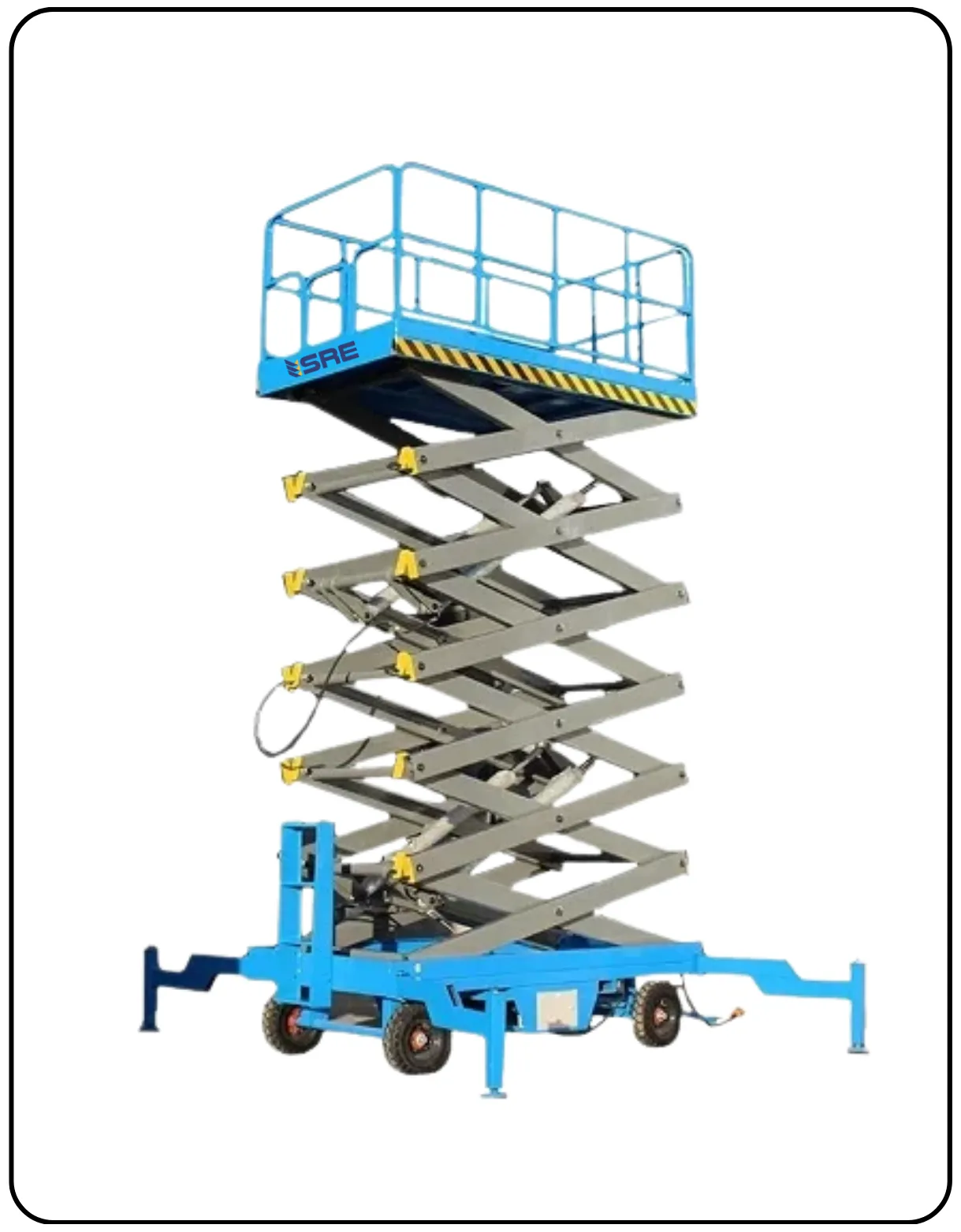
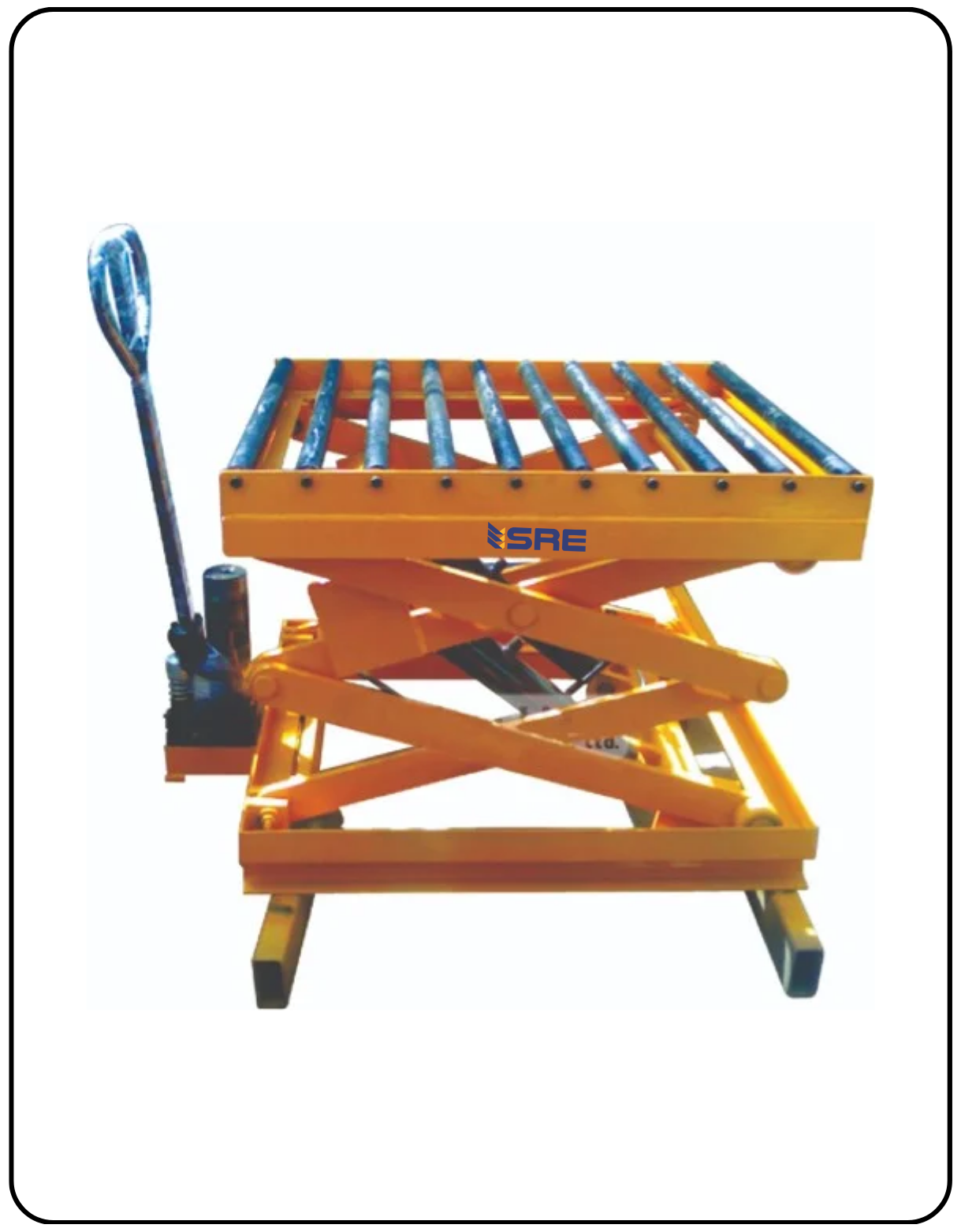
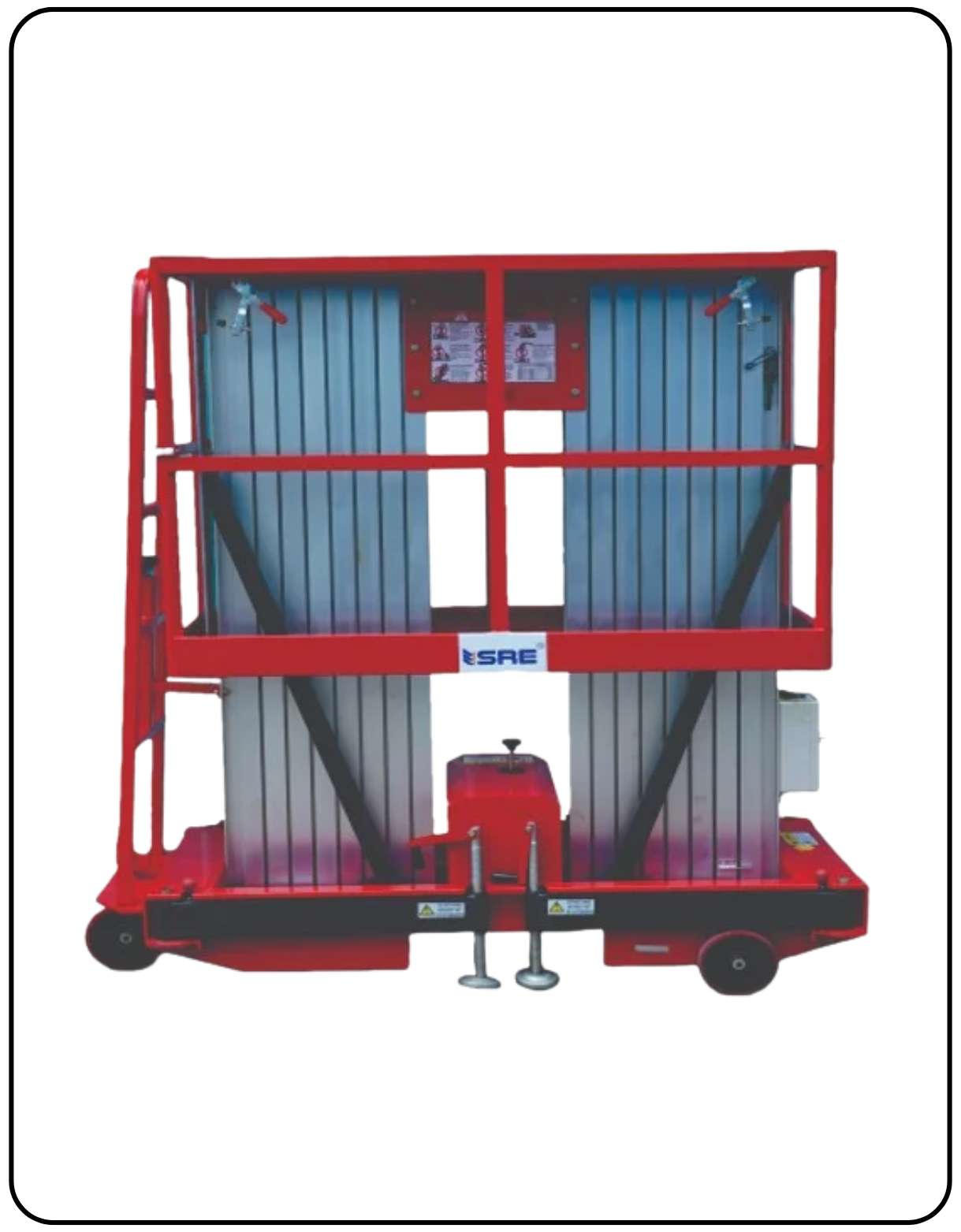
SRE Material Handling Equipment Pvt. Ltd.: Manufacturer, Supplier, And Exporter Of Pit Mounted Scissor Lift Table in India.
SRE Material Handling Equipment Pvt. Ltd., Manufacturer And Supplier Of Pit Mounted Scissor Lift Table in Mumbai.
Our Manufacturing Unit is in Ahmedabad, Vadodara, and Rajkot, Gujarat, India.
Pit-Mounted Scissor Lift Table in Mumbai: A Practical Solution for Modern Industrial Operations
In daily warehouse operations and industrial settings across Mumbai and the broader Maharashtra region, the pace of work has accelerated. Businesses are handling higher volumes, shipping with tighter deadlines, and juggling staffing challenges. In this environment, even seemingly small inefficiencies can ripple into significant delays, rising costs, and mounting safety concerns.
One piece of equipment that is quietly solving real operational problems — without fanfare — is the Pit Mounted Scissor Lift Table. For warehouse owners, factory managers, operations heads, supply-chain professionals, and procurement teams, understanding how this tool fits into your workflow can unlock measurable improvements in safety, productivity, and cost efficiency.
In this article, we explore how Pit Mounted Scissor Lift Tables support modern industrial demands — with grounded, experience‑based insights that focus squarely on practical value.
The Changing Needs of Modern Warehouses and Industries
Warehouse operations are no longer static storage spaces with intermittent handling tasks. Today, they function as dynamic distribution hubs that must:
- Handle greater throughput with fewer errors.
- Meet stringent delivery schedules set by e-commerce and just‑in‑time models.
- Operate safely under continuous workflows.
- Balance labour availability with fluctuating demand.
In real life, this means materials are constantly in motion — from unloading trucks and pallet transfers to assembly lines and shipping docks. Traditional manual methods of lifting or positioning inventory not only slow down throughput but also raise the risk of workplace injuries and errors.
Warehouse decision‑makers we speak with routinely highlight the same friction points:
- Material staging bottlenecks at the docks
- Inconsistent load positioning for packing or processing workstations
- Fatigue‑related slowdowns on repetitive lifting tasks
For many teams, addressing these challenges isn’t about “nice to have” improvements — it’s about keeping operations running without unplanned delays or costs.
What Is a Pit-Mounted Scissor Lift Table?
Put simply, a Pit Mounted Scissor Lift Table is a material‑handling platform installed flush with the floor surface, usually within a recessed pit. It raises and lowers loads vertically between set heights using a scissor‑style lifting mechanism.
Unlike mobile or surface‑mounted lifts, pit mounting means the table top aligns with your floor level, creating a seamless transition between dock, conveyor, or workstation height.
This design might sound straightforward — and it is. But that simplicity translates into reliable performance in tough industrial conditions where robustness and repeatability matter more than marketing claims.
Why is the Pit-Mounted Scissor Lift Table Replacing Traditional / Manual Equipment?
Across daily operational workflows, the limitations of manual methods become clear quickly:
- Workers strain to lift or position heavy goods repeatedly.
- Consistency varies depending on skill, fatigue, or pace.
- Manual lifts introduce unplanned pauses in workflows.
By contrast, a Pit Mounted Scissor Lift Table provides:
- Mechanical assistance for vertical movement, reducing physical strain.
- Stable, predictable movement, so product positioning is consistent, shift after shift.
- Hands‑free lowering and raising, allowing operators to focus on quality and speed.
In daily operations, this means you’re no longer dependent on muscle memory or individual strength. Tasks that once required a team of workers can often be handled by fewer people with better safety outcomes.
Productivity Gains in Daily Operations
In warehouses handling large volumes of goods — whether cartons, drums, pallets, or machinery parts — time savings compound quickly.
Think about these common scenarios:
- Unloading a pallet at dock height, then lowering it to ground level for processing.
- Elevating components to worker height on an assembly line.
- Synchronising heights between conveyors to reduce manual transfers.
With a Pit Mounted Scissor Lift Table, teams can:
- Reduce cycle time for loading/unloading activities.
- Minimise awkward lifting postures, which slow down tasks.
- Standardise pick‑and‑place levels across multiple shifts.
Operational leads often tell us that consistency is one of the biggest benefits — especially when training new staff. When everyone sees the same ergonomic setup and Magnetic Lifter And Mobile floore Crane equipment behaviour, process variability drops, and throughput stabilises.
Improved Workplace Safety
One of the most frequent concerns in industrial settings is lifting‑related injuries. According to safety professionals, back strains, slips, and repetitive motion injuries often originate from simple material handling tasks.
In daily practice, a Pit Mounted Scissor Lift Table helps:
- Reduce manual lifting, especially at non‑ideal heights.
- Maintain stable movement paths, which lowers the risk of slips or misalignment.
- Support ergonomic work positions, minimising bending, reaching, and awkward postures.
Because the lift table moves vertically within a defined range, operators can predict how materials will travel. This reduces sudden shifts or unstable loads that otherwise cause accidents.
Safety officers we’ve worked with appreciate the tangible impact this has on their incident logs — especially in facilities running multiple shifts where consistent safety behaviour matters most.
Handling Heavier Loads with Ease
Modern warehouses increasingly deal with heavier loads due to bulk shipments, consolidated handling, or the need to store larger equipment.
Manual handling of these loads introduces two problems:
- Physical strain, even with mechanical aids like hand trucks.
- Inconsistent handling outcomes, which may damage goods or cause rework.
Pit-mounted scissor lift tables are engineered to manage heavier weights — often well over 1,000 kg — while maintaining stable lifting and lowering.
This stability delivers:
- Confidence in positioning heavy items without risk of slippage.
- Reduced dependency on auxiliary lifting devices, such as forklifts, for short lifts.
- Better control over product orientation, which is critical in packaging or assembly stages.
In practical terms, this means fewer interruptions for repositioning loads, fewer goods damaged in handling, and smoother coordination between workstations.
Technology and Operational Efficiency
While the design principles of a Pit Mounted Scissor Lift Table may appear mechanical, the real technology lies in reliable operation and uptime:
- Hydraulic or electric actuation systems provide controlled lifting cycles.
- Integrated safety limits and sensors ensure smooth travel without abrupt stops.
- Responsive controls allow operators to match movement with workflow demands.
From an operations view, what matters most isn’t flashy tech but predictable performance:
- A lift that responds quickly without overshoot.
- A control panel that’s intuitive for operators.
- Minimal downtime due to calibration or service interruptions.
For teams focused on throughput and reliability, these factors can mean the difference between meeting daily quotas and falling short.
Space Optimisation and Maneuverability
In tightly packed warehouses or factories with narrow aisles, floor space is a premium resource.
Because Pit Mounted Scissor Lift Tables sit flush with the floor when lowered, they reclaim valuable vertical clearance and eliminate obstructions. This design enables:
- Uninterrupted pathways for forklifts or pallet jacks when the platform is down.
- Better flow in narrow aisles, without surface‑mounted equipment protruding into traffic lanes.
- Cleaner floor layouts are easier to organise within 5S or lean programs.
Warehouse leads tell us that a common frustration with surface‑mounted equipment is visual clutter and floor inefficiency. Pit mounting addresses this by preserving a flat floor when the table is not in active use.
Cost Efficiency Over Time
When procurement teams evaluate equipment investments, evaluating the total cost of ownership matters more than just the upfront price.
Pit-mounted scissor lift tables deliver long‑term cost benefits by:
- Reducing injury‑related downtime and compensation costs.
- Lowering labour fatigue and turnover, since repetitive straining decreases worker dissatisfaction.
- Minimising product damage during lifting and positioning.
- Boosting uptime, as these tables are engineered for continuous industrial use.
In many facilities, this translates into measurable improvements in throughput without expanding headcount — a significant advantage when skilled labour is scarce or costly.
Sustainability and Compliance
Environmental and regulatory compliance are increasingly non‑negotiable in industrial operations.
Though a material lift table may not appear central to sustainability, it contributes in tangible ways:
- Electric or efficient hydraulic systems reduce energy waste during daily cycles.
- Safer operations reduce waste from damaged goods.
- Cleaner floor layouts support environmental audits.
Additionally, compliance with local safety regulations — such as those guided by industrial safety bodies in India — is easier when equipment supports ergonomic and controlled handling practices.
Sustainability professionals appreciate this kind of “silent efficiency,” where everyday tools contribute to broader compliance goals.
Integration with Warehouse and Factory Workflow
A Pit Mounted Scissor Lift Table isn’t an isolated island in your operations. It integrates into the wider workflow:
- Aligns with dock levellers and conveyors.
- Interfaces with operator stations for packing or sorting.
- Supports handoff points between departments.
Experienced operations managers know that tool interoperability — not just tool capability — makes a system work smoothly. When lift tables play nicely with other equipment and processes, throughput variability drops and workflow predictability rises.
Training, Ease of Use, and Maintenance
One concern procurement teams often voice is whether new equipment will require extensive training or complex maintenance.
With Pit-Mounted Scissor Lift Tables:
- Controls are straightforward, allowing operators to adopt them with minimal instruction.
- Maintenance is predictable, usually involving scheduled checks rather than reactive repairs.
- Training focuses on safe operation rather than great technical skill, which accelerates workforce readiness.
From a practical standpoint, this means your team spends less time “learning” and more time operating productively and safely.
Why Choosing a Reliable Manufacturer Matters?
Not all lift tables are created equal.
When evaluating suppliers for Pit Mounted Scissor Lift Tables, look beyond price:
- Engineering expertise and field experience matter when you’re specifying load capacity or duty cycles.
- Service support and parts availability affect uptime.
- Compliance with industrial standards ensures predictable safety behaviour.
Make supplier evaluation part of your process — ask for references, site visits, and documented performance outcomes. A reliable manufacturer will help you match the right solution to your specific workflow, not just sell you a model off the shelf.
Conclusion:
In Mumbai’s evolving industrial landscape, equipment that delivers durability, safety, and practicality isn’t a luxury — it’s a foundation for operational success. The Pit Mounted Scissor Lift Table is one such solution that supports real, day‑to‑day challenges:
- Reducing manual strain and workplace injuries
- Improving load handling and throughput
- Integrating smoothly into complex workflows
- Saving costs over long‑term use
If your facility is evaluating material handling upgrades or seeking ways to standardise safety and productivity, consider how a Pit Mounted Scissor Lift Table fits into your broader strategy.
For practical guidance and equipment specifications, visit SRE MATERIAL HANDLING EQUIPMENT PRIVATE LIMITED at:
🔗 https://www.sremhepvtltd.com/
Key Takeaways
- Productivity: Reduces cycle time and stabilises throughput.
- Safety: Minimises manual lifting‑related injuries.
- Load Handling: Enhances control for heavy or awkward goods.
- Cost Efficiency: Lowers long‑term operational and labour costs.
- Industry Trend: Supports modern warehouse demands with a reliable, ergonomic design.
FAQS
1. Do Pit-Mounted Scissor Lift Tables require specialised flooring?
- They necessitate a recessed pit with proper levelling, but that preparation supports seamless floor integration — improving workflow.
2. Can these tables handle irregular or oversized loads?
- Yes, when matched with the correct capacity and platform size. Consultation with your supplier ensures the right fit.
3. How often do they need servicing?
- Routine inspections and preventive maintenance at scheduled intervals keep them operating reliably.
#PitMountedScissorLiftTable #IndustrialEquipment #WarehouseEfficiency #MaterialHandling #WorkplaceSafety #SREMaterialHandlingEquipmentPrivateLimited #OperationsManagement #LogisticsSolutions #MumbaiIndustry #SupplyChainTools