
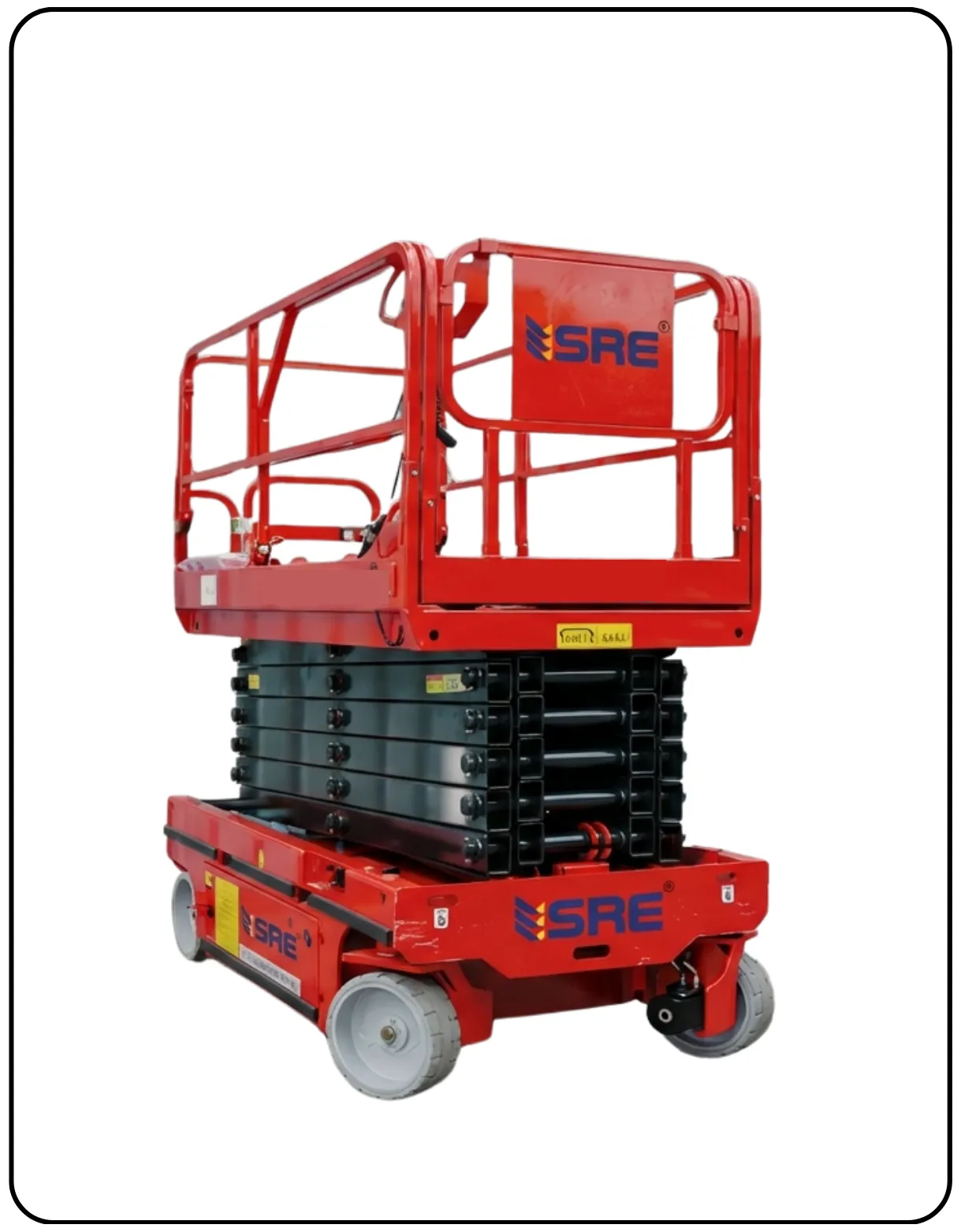
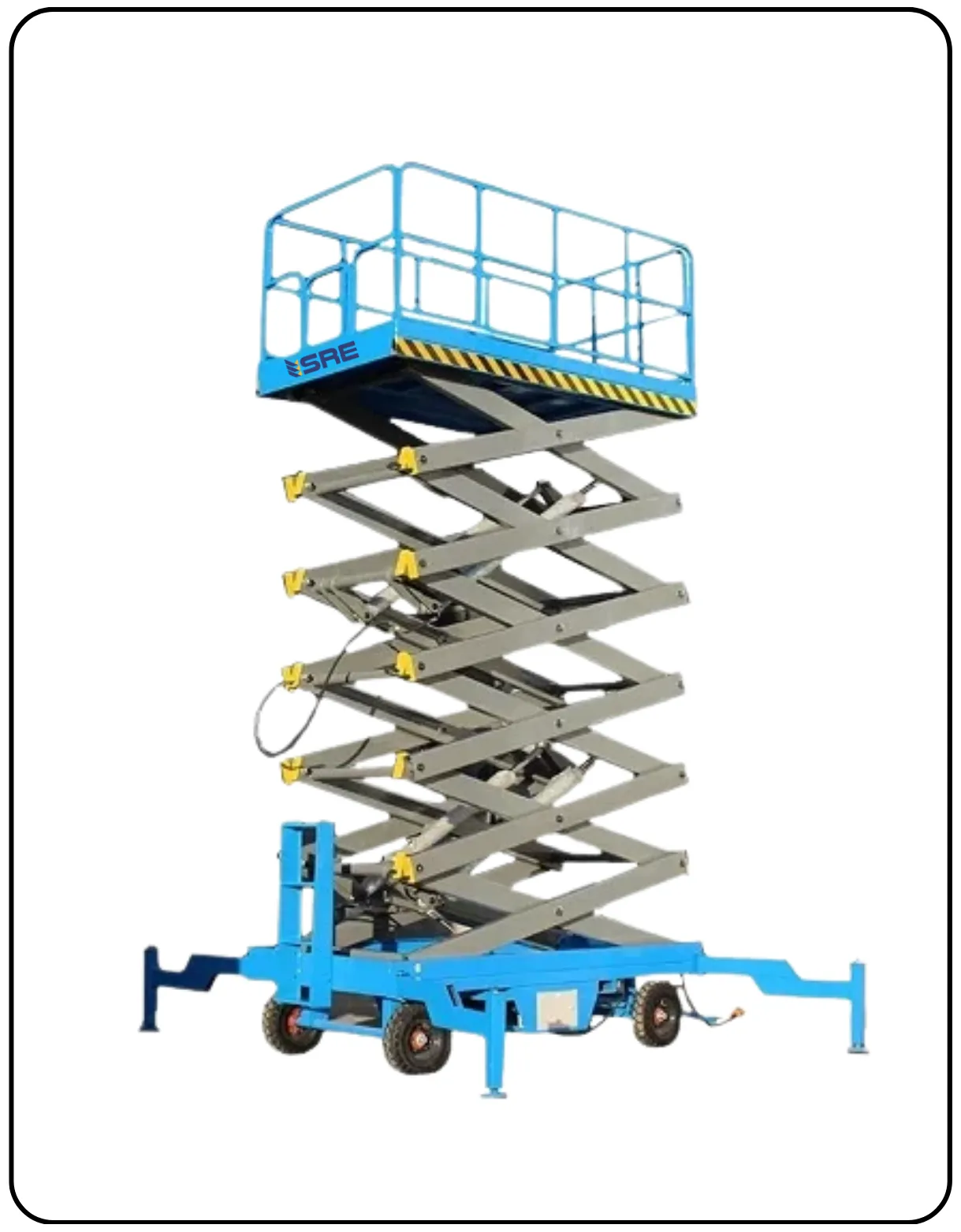
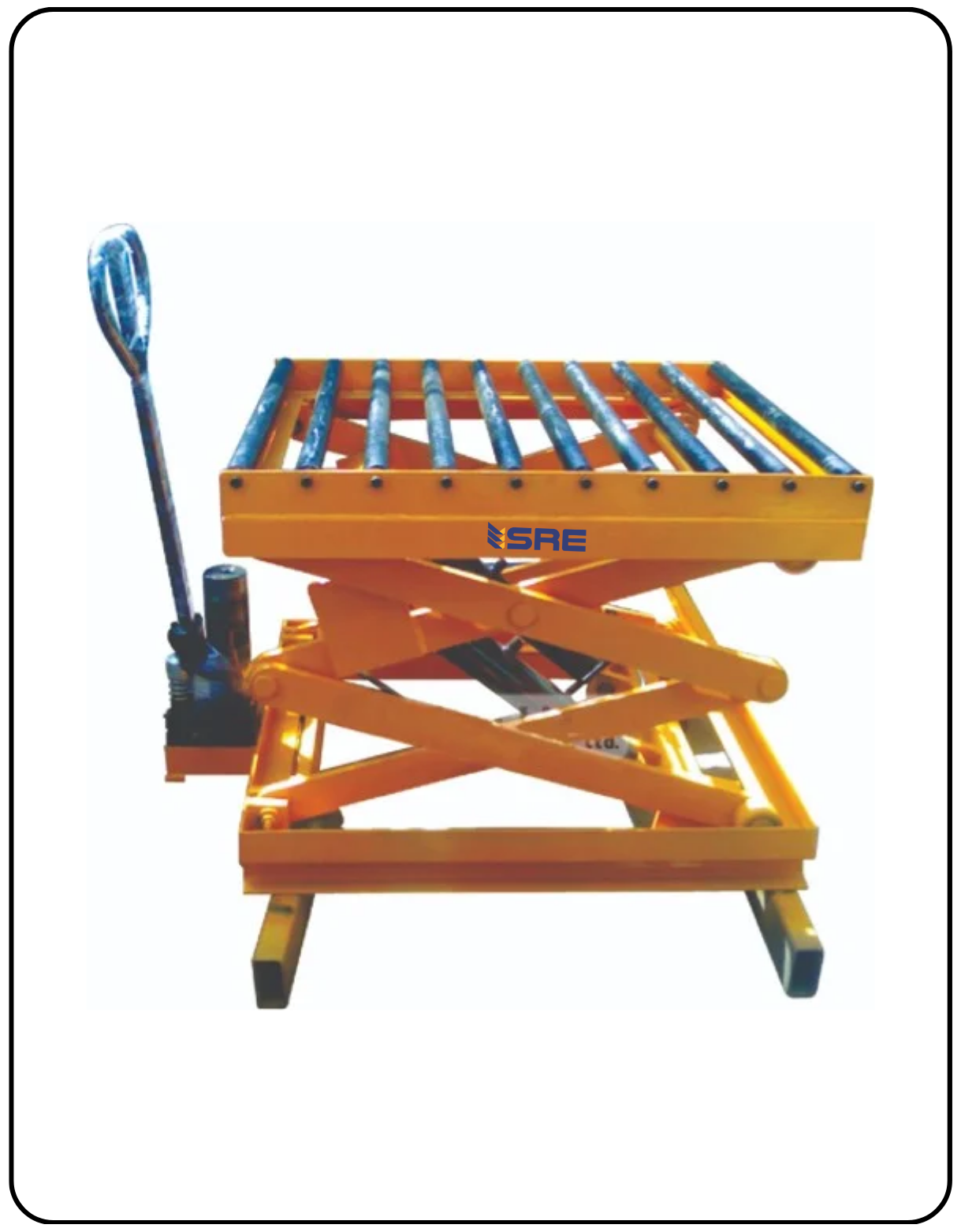
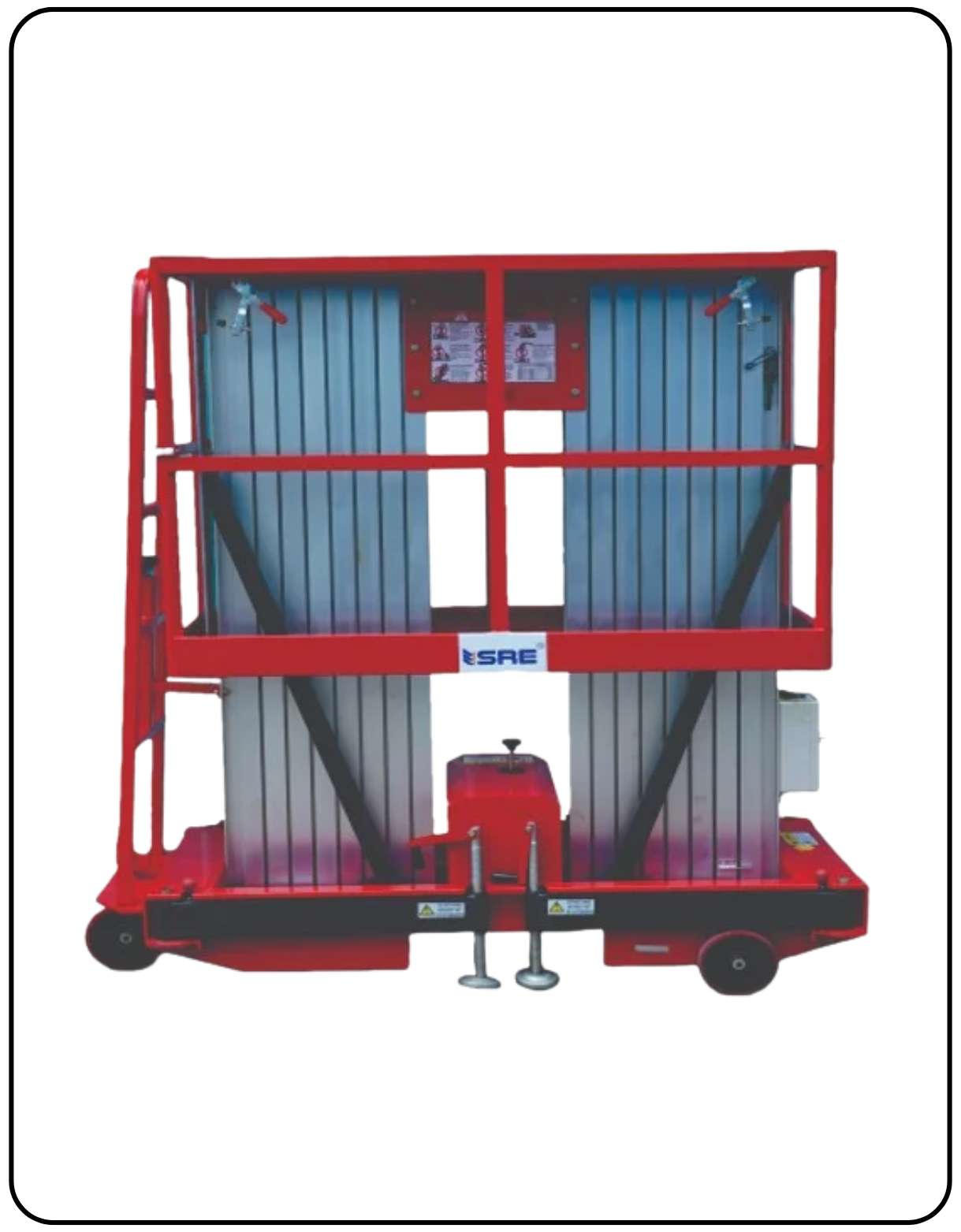
SRE Material Handling Equipment Pvt. Ltd.: Manufacturer, Supplier, And Exporter Of Self Proppiled Scissor Lift Table in India.
SRE Material Handling Equipment Pvt. Ltd., Manufacturer And Supplier Of Self Proppiled Scissor Lift Table in Nashik.
Our Manufacturing Unit is in Ahmedabad, Vadodara, and Rajkot, Gujarat, India.
Self Proppiled Scissor Lift Table in Nashik: A Practical Guide for Industrial Operations
In everyday warehouse tasks and factory settings, the demand to move items more quickly, in greater quantity, and more securely is more intense than ever. Increased order volume, stricter delivery deadlines, and a growing emphasis on employee safety are transforming internal material conveyance. Older ways like physically lifting, using set-height platforms, or basic carts are increasingly struggling to meet modern requirements without causing significant worker tiredness or safety hazards.
This is where the Self-Propelled Scissor Lift Table becomes relevant. It’s more than just equipment; it’s a functional solution that supports productivity targets, ergonomic safety standards, and precise material flow. In places like Nashik and other industrial centers, management is currently examining this technology to tackle genuine operational difficulties.
The Shifting Requirements of Contemporary Warehouses and Industrial Sites
Industrial and storage facilities have changed significantly over the past decade. The rise of online retail, just-in-time inventory methods, and varied product lines results in:
- Higher output demands for both incoming and outgoing goods.
- More intricate internal travel paths as products move through receiving, preparation, packing, and shipping.
- Tighter safety guidelines, driven by regulatory adherence and workforce well-being.
In daily activities, teams manage numerous jobs against a constant backdrop of timelines. Manual lifting and handling, particularly repetitive actions, directly contribute to exhaustion, inconsistencies, and injuries. Floor supervisors often observe this as slower task completion rates, unscheduled rests due to strain, and variation in handling quality across different teams and shifts.
What Exactly is a Self-Propelled Scissor Lift Table?
A Self-Propelled Scissor Lift Table is a movable platform with adjustable height, powered by its integrated drive system. Unlike standard scissor lifts or tables moved manually, this model possesses its own motive force, usually electric, enabling one worker to transport heavy loads and place them at exact elevations without external pushing.
In simple operational terms:
- It raises loads vertically to the necessary working height.
- It travels independently, without manual shoving or a separate vehicle.
- It promotes handling that is easier on the body, lessening worker strain.
For property owners, factory overseers, and logistics staff, this addresses immediate workflow challenges rather than focusing solely on advanced features.
Grounds for Replacing Older and Manual Equipment with Self-Propelled Scissor Lift Tables
Many facilities start material movement with basic tools: hand trucks, pallet jacks, fixed work surfaces, or conveyor sections. These have limitations when work involves:
- Frequent changes in elevation
- Handling heavy or awkward items
- Covering long distances inside the facility
- Repetitive lifting or lowering motions
Conversely, Self-Propelled Scissor Lift Tables offer several operational benefits:
Reduced Strain and Uniform Performance
A major source of inefficiency in daily warehouse work comes from physical exertion. Staff use energy pushing carts, raising materials, or maneuvering loads from awkward positions. Over a full shift, this tiredness builds up, slowing output and increasing mistakes.
Since a self-propelled table moves via its own power, it removes the physical labour of guiding or shoving heavy cargo, leading to more uniform results from the initial pallet onward.
Smoother Workflow Integration
Conventional devices often disrupt the flow of work. A pallet is lifted, then moved by another device, then lowered by hand, adding steps and increasing time spent handling. A self-propelled table combines lifting and travel, cutting down on cycle times and reducing handling stages.
Productivity Gains in Routine Operations
Time Savings
In a typical storage setting, tasks involving lifting and placement consume small amounts of time that accumulate rapidly across multiple shifts. A Self-Propelled Scissor Lift Table assists teams in:
- Cutting down on cart switching
- Minimizing downtime waiting for lift trucks
- Boosting efficiency on preparation and packing lines
Operators can retrieve a load at one elevation, raise it, and move it straight to its next location—all without leaving their current task.
Consistent Output Across Shifts
With manual methods, productivity differs based on an individual’s power, technique, and fatigue level. Powered equipment standardizes this variation. Based on our experience with warehouse crews, adopting power-assisted handling tools often results in more predictable daily results with fewer holdups, especially during busy times.
Enhanced Workplace Security
Safety is not merely a concept; it’s a quantifiable operational result. In sites where manual lifting is common, back tension, slipped vertebrae, and repetitive stress injuries are frequent occurrences. A Self-Propelled Scissor Lift Table contributes by:
Lowering the Risk of Injury
Elevating loads to positions that fit the human body reduces the need for staff to bend, twist, or carry heavy items by hand—major factors in musculoskeletal harm.
Managed Movement
Motorized drive systems usually feature braking, stability regulation, and slow-speed navigation capabilities. This ensures operators handle heavy goods with predictable motion, decreasing the chance of striking objects or sudden instability.
Both employees and safety supervisors find that these types of units better align with internal security standards, particularly those related to the assessment of manual handling risks.
Managing Greater Weights Effortlessly
As storage facilities expand, batch sizes increase, and individual loads tend toward heavier weights. Standard manual equipment, even when operated by two or three people, can struggle with:
- Shifting centers of gravity in loads
- Pallets stacked very high
- Items with irregular shapes
A Self-Propelled Scissor Lift Table resolves these issues by providing:
- A steady platform base
- Controlled lifting force
- Less reliance on the team carrying
This is not about handling the absolute heaviest items imaginable, but about managing typical weight ranges with a greater safety buffer and less strain on personnel.
Technology and Operational Effectiveness
A key concern for operations teams is equipment availability. When machinery sits idle due to charging issues or malfunctions, work piles up fast.
Modern self-propelled lift tables are engineered with this situation in mind:
- Efficient battery and drive components that sustain full workday use
- Power parts requiring minimal upkeep
- Built-in safety features for controlled lowering
For purchasing and operations managers, this translates into more dependable availability and fewer unexpected repair interruptions.
Space Conservation and Agility
Industrial floor space is highly valuable, especially in areas like Nashik, where numerous distribution centers and light manufacturing sites employ tight layouts. The design of self-propelled lift tables reflects these constraints:
- Small physical profile for navigating tight corridors
- Full 360-degree movement capability in confined areas
- Tailorable platform dimensions to align with current shelving setups
In settings where every square foot is essential, the capacity to relocate heavy stock without needing extensive turning radii or extra room significantly boosts internal logistics effectiveness.
Value Over the Long Run
It is crucial to differentiate initial expenditure from enduring worth. Self Propelled Scissor Lift Tables should be assessed based on their overall ownership expense, not just the purchase price.
Key financial benefits encompass:
- Decreased Lost Productivity
- Lower physical strain and fewer accidents result in fewer unexpected pauses and absences.
- Diminished Injury-Related Expenditures
Expenses like worker compensation claims, medical time off, and lowered output from strain injuries can accumulate rapidly. Equipment that lessens these hazards yields subsequent savings.
Extended Equipment Lifespan
Manual implements burdened with significant weight tend to degrade quickly. Self-propelled units engineered for rigorous use boast superior durability, lengthening asset service life.
Environmental Responsibility and Adherence
Sustainability concerns and regulatory compliance are evolving from optional extras to core operational requirements. Teams are increasingly scrutinized on energy utilization, emissions output, and adherence to safety regulations.
A battery-powered Self Propelled Scissor Lift Table contributes to:
- Cleaner site operations compared to fuel-powered lift machinery
- A smaller environmental impact within buildings
- Closer alignment with mandated safety benchmarks
For supply chains prioritizing green initiatives, these elements are vital during audits and client assessments.
Seamless Fit within Facility Processes
A frequent query from management concerns: “How will this mesh with our established methods?”
Since these tables combine vertical movement with horizontal transport, they integrate smoothly with:
- Packing departments
- Order consolidation sequences
- Inbound receiving docks
- Quality assurance stations
In our observations, personnel adopt them fastest where repetitive raising and positioning tasks occur, such as feeding materials to conveyors or providing ergonomic access to assembly benches.
Operator Familiarization, Simplicity, and Servicing
A significant benefit of these setups is how quickly personnel can learn to operate them. Basic user instruction frequently requires just a few hours:
- Mastering the lifting controls
- Understanding safe transit protocols
- Managing battery charging and minor checks
Regarding upkeep, uncomplicated mechanical architectures and modular components facilitate predictable servicing schedules and easy fault diagnosis.
The Importance of Selecting a Reputable Producer
The operational reliability and service duration of a Self Propelled Scissor Lift Table are heavily reliant on design excellence, construction quality, and post-sale assistance.
When examining suppliers, operational teams ought to consider:
- Documented history serving industrial clientele
- Accessibility of replacement components
- Speed and quality of after-sales support
- Conformity with industry safety standards
- Capacity to tailor solutions for site-specific demands
A vendor with genuine installation background offers valuable expertise, setup assistance, and load-handling advice beyond mere product literature.
For entities exploring options in the Nashik vicinity, SRE MATERIAL HANDLING EQUIPMENT PRIVATE LIMITED represents a valuable reference point, with comprehensive product details accessible on their official site: 👉 https://www.sremhepvtltd.com/
Summary
In the quick-moving landscape of modern storage and manufacturing settings, tools that streamline material flow, mitigate physical stress, and enhance workplace security are essential. The Self-Propelled Scissor Lift Table directly addresses these common hurdles through practical power, user-friendly design, and flexible workflow adaptation.
Instead of being merely an optional addition, this equipment type signifies a thoughtful response to daily operational pressures—from managing increasing throughput to ensuring safety and economic viability.
If your operation is assessing material movement upgrades, assess how a self-propelled lift table could yield quantifiable improvements and consult trusted sources with proven industrial track records.
Key Takeaways
- Efficiency: Merges lifting and transport tasks to shorten process cycles.
- Well-being: Enhances ergonomic handling and lowers the likelihood of injury.
- Load Capacity: Provides stable support for heavier or unwieldy materials.
- Economic Benefit: Delivers long-term returns through reduced stoppages and fewer accidents.
Trending FAQs
Q1. What makes a Self-Propelled Scissor Lift Table different from a regular pallet jack?
- A self‑propelled table combines powered movement with adjustable lifting heights, reducing manual force and ergonomic strain.
Q2. Are these tables suitable for narrow warehouse aisles?
- Yes, many models are designed for tight spaces with compact bases and smooth maneuverability.
Q3. How quickly can operators learn to use this equipment?
- Basic operation training typically takes a few hours and can be handled internally with manufacturer support.
Q4. Is maintenance complicated or costly?
- Routine maintenance is straightforward; modular designs allow quick part replacement and predictable servicing.
Get in touch with us today for assistance. Call +91 9316 2088798 or sremhepvtltd2025@gmail.com for assistance now.
#SelfProppiledScissorLiftTable #MaterialHandling #WarehouseEfficiency #IndustrialOperations #SREMaterialHandlingEquipmentPrivateLimited #WorkplaceSafety #NashikIndustrySolutions