SRE Material Handling Equipment Pvt. Ltd.: Manufacturer, Supplier, And Exporter Of Ware House Dock Leveler in India.
SRE Material Handling Equipment Pvt. Ltd., Manufacturer And Supplier Of Ware House Dock Leveler in Mumbai.
Our Manufacturing Unit is in Ahmedabad, Vadodara, and Rajkot, Gujarat, India.
Warehouse Dock Leveler in Mumbai: A Practical Guide for Industrial Leaders
In daily warehouse operations, speed and safety are not luxuries — they’re necessities. Over the last decade, warehousing and industrial logistics have evolved rapidly. Customer expectations are sharper, shipment volumes are growing, and labour costs are rising. In this context, equipment that once seemed optional now plays a fundamental role in operational continuity. One such solution that we see reliably reducing bottlenecks and improving safety is the Warehouse Dock Leveller in Mumbai. This device bridges the gap between dock and trailer with precision, consistency, and control.
For warehouse owners, factory managers, heads of operations, supply-chain commanders, and procurement professionals, evaluating the practical impact of dock-levelling solutions is essential. This discussion isn’t about marketing hype: it’s about real operational challenges and the tangible outcomes experienced by teams that depend on loading docks every shift.
The Changing Needs of Modern Warehouses / Industries
Warehouses today are under pressure from several angles:
- Increasing throughput demands: Seasonal spikes and omnichannel order fulfilment require faster turnaround times.
- Space constraints: Urban logistics hubs — including those in and around Mumbai — must handle large volumes within limited footprints.
- Workforce considerations: Labour fatigue and turnover amplify risks and slowdowns.
- Safety expectations: Regulatory compliance and insurance liabilities demand safer handling zones.
In many operations, loading zones are the crossroads of activity. Trucks arrive within tight windows, pallets are staged for outgoing shipments, and inbound returns must be unloaded with minimal disruption. It’s in this high cadence environment that inefficiencies — even small ones — ripple into measurable delays and higher operating costs.
What Is a Warehouse Dock Leveler?
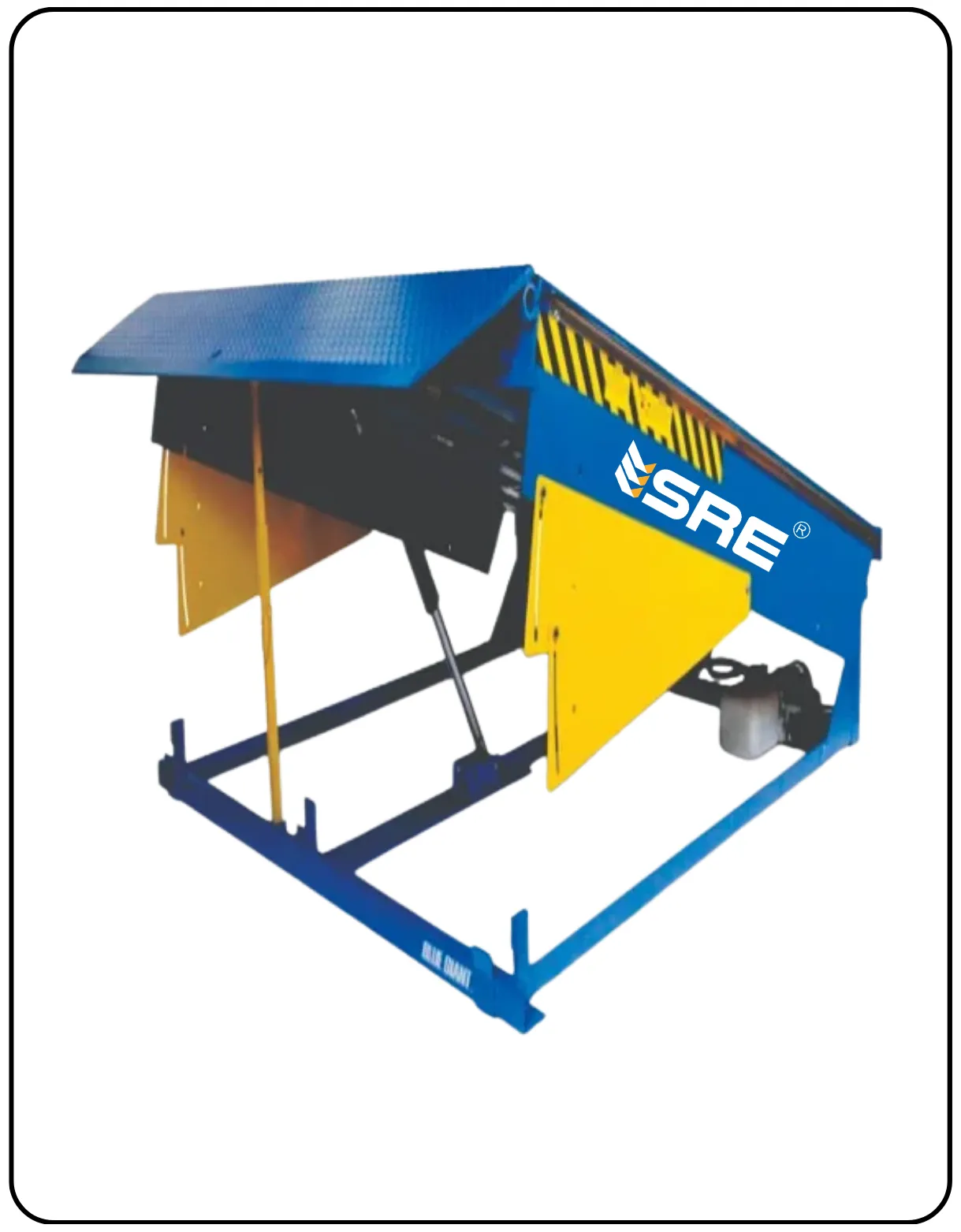
In practical industry terms, a Warehouse Dock Leveler is a mechanical platform installed at the edge of a dock. Its purpose is straightforward: align the warehouse floor with the height of a truck or trailer bed so forklifts and pallet jacks can move loads smoothly. Think of it as the bridging surface that eliminates the “step” between two work surfaces.
Unlike rigid steel plates that require manual adjustment, modern dock levellers can adjust up and down to match trailer heights. The result is a safer and more controlled transition for material handling equipment.
Why Warehouse Dock Leveler Is Replacing Traditional / Manual Equipment?
In many warehouses, older loading docks still rely on manual steel plates, wooden planks, or makeshift ramps. These approaches come with inherent limitations:
- Physical strain: Workers have to lift, move, and secure heavy plates multiple times per day.
- Inconsistency: Plates can shift, deform, or sit unevenly — introducing safety hazards.
- Slow response: Changes in truck bed heights are frequent. Manually adjusting equipment wastes minutes that add up over time.
In contrast, modern warehouse dock levellers (mechanical or hydraulic) provide consistent control with minimal physical effort from staff. Instead of wrestling with plates, employees can focus on safe material movement. This shift in responsibility reduces fatigue, accelerates docking processes, and improves consistency across shifts and teams.
Productivity Gains in Daily Operations
In an industry where one minute per truck can translate to thousands of units over a month, time matters. In daily warehouse operations:
- Consistent bridge alignment reduces idle time between truck arrival and loading start.
- Operators retain forward momentum as forklifts traverse loading transitions more smoothly.
- Shift handovers become more predictable with standardised dock behaviour.
Whether it’s peak season surges or day-to-day dispatch cycles, having warehouse dock levelers ensures the loading dock doesn’t become a bottleneck. Electric Stacker And Good Lift One logistics manager we spoke with noted, “We saw measurable reductions in turnaround times because our teams spend less time worrying about dock gaps and more time moving goods.”
Improved Workplace Safety
Safety is not a checklist item — it’s a lived experience in daily operations. Loading zones are among the highest-risk areas in a warehouse:
- Workers manually installing plates expose themselves to back strain and pinch hazards.
- Unlevel transitions increase the risk of forklift tipping or load shifts.
- Unsecured plates can shift under load, creating unpredictable surfaces for operators.
With a properly installed warehouse dock leveller, these risk scenarios are minimised. Levellers maintain control over surface alignment, reduce the reliance on manual intervention, and provide a stable operating surface. This directly contributes to:
- Fewer worker injuries
- Reduced forklift accidents
- Better compliance with internal and external safety audits
In environments where safety metrics are tied to insurance premiums and customer confidence, these improvements have real operational value.
Handling Heavier Loads with Ease
Modern warehouses are handling larger pallets and heavier consolidated loads than ever before. These loads demand stability and control from the moment they leave storage racks until they’re placed on a truck.
Traditional approaches — relying on manual ramps or plates — struggle with heavier loads. They may flex, shift, or degrade prematurely under repeated stress.
A robust warehouse dock leveler is engineered to:
- Sustain heavier load cycles
- Distribute weight evenly across the transition surface
- Elevate and lower in sync with trailer beds without structural strain
For operations that run multi-shift schedules and manage high pallet volumes, this translates to less maintenance downtime and more predictable throughput.
Technology & Operational Efficiency
Today’s dock levellers come in various configurations — mechanical, hydraulic, or air-powered systems. While each has its merits, the focus for high-volume facilities is uptime and reliability.
Key considerations include:
- Reliable actuation systems: Hydraulic or air-powered docks reduce manual intervention and provide smooth, controlled motion.
- Durability in high-use contexts: Components designed for industrial duty resist wear and support continuous duty cycles.
- Low maintenance footprints: Accessible service points and modular assemblies simplify upkeep.
From an operations perspective, a well-designed dock leveller becomes “invisible” in its daily function — it simply works, shift after shift, with minimal supervision.
Space Optimisation & Maneuverability
Warehouses — especially in dense industrial zones like Mumbai — face real spatial constraints. Narrow aisles and tight dock areas leave little room for error.
Modern warehouse dock levellers are designed with compact dimensions and efficient profiles. This ensures:
- Clear staging areas around docks
- Better forklift maneuverability
- Reduced dock clutter
- Easier coordination with traffic control systems (lights, dock locks, bumpers)
The result is not just better throughput, but a more orderly and navigable dock environment.
Cost Efficiency Over Time
A common concern among procurement teams is upfront cost. However, when evaluating equipment like a dock leveller, it’s important to adopt a long-term lens.
Practical cost factors include:
- Reduced labour costs: Less time spent setting bridges, fewer injuries, less overtime.
- Lower maintenance: Mechanically sound dock levellers have predictable upkeep cycles.
- Minimised downtime: Equipment that supports consistent throughput enhances overall warehouse output.
- Safer operations: Fewer accidents mean lower insurance claims and better workforce retention.
When these factors are calculated over typical asset lifecycles, the cost efficiency of a quality dock leveller becomes clear.
Sustainability & Compliance
Sustainability and compliance are increasingly integral to industrial operations.
A modern warehouse dock leveller can contribute to both:
- Cleaner operations: Reduced spills and leak points from damaged manual ramps.
- Energy efficiency: Hydraulic systems that operate only when needed lower power waste.
- Regulatory alignment: Safer loading docks support compliance with workplace safety standards and audits.
In environments where compliance frameworks are evolving, having equipment that aligns with modern expectations adds value beyond immediate productivity.
Integration with Warehouse / Factory Workflow
A dock leveller does not operate in isolation. It must integrate with:
- Dock locks and restraints
- Traffic lights and signalling systems
- Warehouse management systems (WMS)
- Material movement plans
In practice, this means selecting solutions that are compatible with your broader operational ecosystem. An interoperable dock levelling platform supports:
- Better communication between teams
- Consistent workflow adherence
- Fewer manual overrides
- Integration reinforces reliability across your logistics chain.
Training, Ease of Use & Maintenance
For equipment to be effective, teams must feel confident using it.
Key practical factors include:
- Simple operation: Clear controls that operators can learn quickly.
- Basic training: Skills that can be conveyed in short sessions with measurable retention.
- Predictable maintenance: Clear schedules and accessible components for routine checks.
These elements mean your workforce spends less time managing equipment and more time driving operational outcomes.
Why Choosing a Reliable Manufacturer Matters?
Not all dock levellers are created equal. Experience matters, and so does support infrastructure.
When evaluating manufacturers, look for:
- Documented industrial experience
- Local service and installation expertise
- Spare parts availability
- Compliance with safety and manufacturing standards
These factors support ongoing performance and reduce risks associated with downtime or warranty gaps.
For industrial decision-makers in Mumbai and beyond, partnering with an experienced supplier makes implementation smoother and outcomes more predictable.
Conclusion:
In daily warehouse and industrial logistics, equipment choices have real operational impacts. A Warehouse Dock Leveller in Mumbai is more than a piece of metal — it’s an enabler of productivity, safety, and reliability. By addressing real workflow challenges — from load transitions to crew fatigue — modern dock levellers help warehouses operate at pace without compromise.
If you are evaluating solutions for your facility, consider not just upfront costs but long-term performance, safety, and integration. Reliable dock levelling equipment should adapt to your operation, not require you to adjust to it.
For trusted industrial material-handling solutions and expert guidance, explore options from SRE MATERIAL HANDLING EQUIPMENT PRIVATE LIMITED — a partner with deep experience serving operational needs across facilities.
👉 Visit: https://www.sremhepvtltd.com/
Key Takeaways
- Warehouse dock levellers bridge the dock-to-trailer gap safely and efficiently.
- They reduce labour fatigue and improve consistency in loading operations.
- Modern systems support heavier loads with controlled movement.
- Over time, they deliver cost savings through safety improvements and reduced downtime.
Proper selection and integration with warehouse systems enhances workflow reliability. #WareHouseDockLeveler #WarehouseSafety #MaterialHandling #LogisticsEfficiency #SMEHP #SREMaterialHandling #IndustrialEquipment