
SRE Material Handling Equipment Pvt. Ltd.: Manufacturer, Supplier, And Exporter Of Wire Rope Hoist in India.
SRE Material Handling Equipment Pvt. Ltd., Manufacturer And Supplier Of Wire Rope Hoist in Nashik.
Our Manufacturing Unit is in Ahmedabad, Vadodara, and Rajkot, Gujarat, India.
Wire Rope Hoist in Nashik: Practical Insights for Industrial Operations
In modern industrial and warehouse environments, the pace of operations has fundamentally shifted. Warehouses are processing greater volumes of goods, factories are moving heavier and more complex assemblies, and supply-chain cycles operate on tighter timelines than ever before. With these evolving demands come real challenges in meeting speed targets, managing labour fatigue, ensuring safety, and keeping internal logistics flowing without unnecessary delays.
In this context, equipment that once felt like a luxury, such as a Wire Rope Hoist, is now central to operational efficiency. Not as a theoretical upgrade, but as a practical solution to everyday workflow challenges. For warehouse owners, factory managers, operations heads, supply-chain leaders, and procurement teams in Nashik and beyond, understanding how the right hoisting system fits into your operations is a decision that affects throughput, safety, and cost over the long term.
The Changing Needs of Modern Warehouses & Industrial Sites
In daily warehouse and manufacturing operations, a few themes come up repeatedly when leaders talk about their biggest constraints:
- Rising Volumes and Speed Expectations: Clients demand faster fulfilment, shorter lead times, and more frequent cycles of inbound/outbound shipments.
- Internal Workflow Bottlenecks: Even if inventory tracking and IT systems are optimized, the physical movement of goods within the facility becomes a limiting factor.
- Labour Fatigue and Workforce Limitations: Manual lifting, repositioning, and repetitive material handling increase the risk of injuries and reduce sustainable throughput over shifts.
In operations where every minute counts, the tools you deploy directly affect how smoothly work flows from receiving through final dispatch. Manual methods and outdated lifting tools create invisible costs in delays, rework, and downtime, and these costs scale with operational size.
What Is a Wire Rope Hoist?
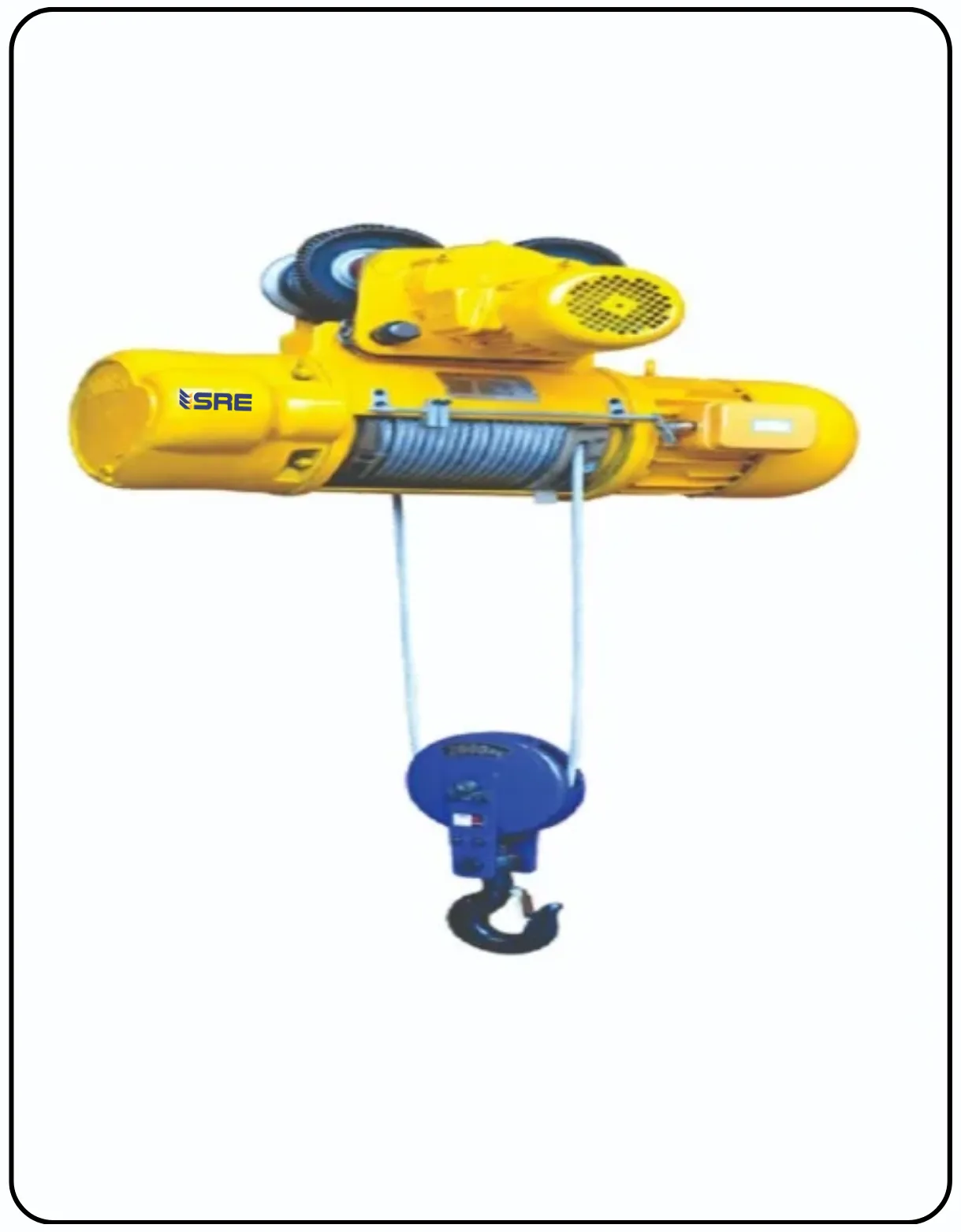
In simple operational terms, a Wire Rope Hoist is a mechanical lifting device that uses a steel wire rope looped over sheaves to raise, lower, and position heavy loads. Unlike improvised rigging or manual chain blocks, a wire rope hoist provides controlled movement, consistent handling, and rated load performance.
To put it plainly:
- It lifts heavy loads with precision rather than brute force.
- It maintains consistent performance across shifts and operators.
- It reduces human strain and dependence on the raw workforce.
This isn’t a textbook definition; it’s rooted in everyday warehouse language. A wire rope hoist in Mobile Floor Crane, Mobile Ramp is essentially the piece of equipment that takes the variability out of lifting tasks, replacing guesswork with predictable motion.
Why a Wire Rope Hoist Is Replacing Manual Equipment
In many facilities still using manual chain blocks, lever hoists, or improvised lifting methods, there are subtle but real drag points:
Fatigue and Human Variability
Manual lifting drains energy and limits how much throughput a team can sustain. Two operators might perform the same task with different consistency, leading to variable cycle times and unpredictable output.
Inconsistency in Handling
Human-driven lifting lacks controls for smooth start/stop motion, leading to swinging loads, alignment issues, and increased injury risk.
Limited Scale
When loads get heavier or more awkward, manual hoisting doesn’t scale. You can add workforce, but you can’t change human physiology.
A Wire Rope Hoist replaces these limitations with:
- Controlled, repeatable motion
- Ability to handle heavy loads safely
- Reduced reliance on brute strength
- Better ergonomics for operators
This shift isn’t about replacing labour; it’s about enabling labour to perform at higher levels and with fewer physical risks.
Productivity Gains in Daily Operations
In day-to-day operations, every second counts. A typical warehouse sees multiple cycles of lift, move, position, and secure on each pallet, crate, or component. When these cycles involve manual handling, productivity variances emerge:
- Operator A is faster than Operator B
- Breaks and fatigue slow cycles over time
- Rework due to misplacement or dropped loads adds time
With a Wire Rope Hoist, the story changes:
Time Savings
The controlled lifting and lowering speeds mean tasks that once took minutes now take seconds. Over the course of multiple operations per hour, this adds up to substantial throughput gains.
Workflow Smoothness
With predictable motion and consistent handling, upstream and downstream processes (like staging, packing, or assembly) are synchronized more effectively.
Shift Consistency
Whether it’s the first cycle in the morning or the last at night, a wire rope hoist performs steadily, reducing variation tied to operator fatigue or experience.
In warehouses where even small time savings per task are multiplied across thousands of movements per week, the impact on productivity becomes visible in weekly output, on-time fulfilment, and reduced overtime pressure.
Improved Workplace Safety
Safety isn’t just a compliance checkbox; it’s a tangible factor in workforce availability, insurance costs, and morale.
Reduced Injury Risk
Manual lifting and awkward positioning contribute to strains, sprains, and cumulative trauma injuries. Wire rope hoists take the physical strain out of lifting.
Controlled Movement Reduces Accidents
With manual methods, loads can swing, slip, or drop unexpectedly. Wire rope hoists provide stability and controlled motion, especially when equipped with braking and limit switch systems.
Ergonomic Advantage
Operators can focus on guiding rather than lifting. This reduces fatigue and cumulative injuries and helps maintain alertness across long shifts.
From a risk management perspective, these safety improvements have downstream effects on staffing, downtime due to injuries, and worker retention.
Handling Heavier Loads with Ease
Today’s warehouses and factories are not just moving more, they’re moving bigger and heavier items:
- Machine parts
- Bulk raw materials
- Skids with dense loads
- Finished assemblies
Manual methods may cope with lighter weights but falter as loads exceed safe human thresholds. A wire rope hoist is built for these modern needs:
- High load ratings that match warehouse demand
- Stable lifting even at maximum capacity
- Precision positioning for complex or tight placements
In facilities where weight classes span from 500 kg to multiple tonnes, a wire rope hoist provides scalability without adding risk or unwieldy procedures.
Technology & Operational Efficiency
Not all hoists are created equal, and technology matters.
Power and Control
Whether electric, pneumatic, or hybrid drive systems, modern wire rope hoists offer:
- Smooth acceleration/deceleration
- Speed regulation for safe positioning
- Integration with remote controls or automation systems
Uptime and Reliability
Heavy-duty gearing, load-rated components, and engineered wire ropes mean longer service intervals and predictable maintenance windows, a real operational advantage compared to improvised tools.
For operations that run multiple shifts, downtime isn’t just inconvenient; it affects delivery commitments and throughput.
Space Optimization & Maneuverability
Warehouses today are also challenged by space constraints:
- Narrow aisles
- High racks
- Dense racking layouts
A well-designed wire rope hoist:
- Integrates cleanly with overhead cranes or gantry systems
- Operates in restricted vertical space
- Moves loads with minimal sideways swing
This matters when every square meter of floor space is operationally valuable.
Cost Efficiency Over Time
In procurement conversations, price often comes up first. But experienced operations leaders push the discussion toward total cost of ownership:
- Equipment lifecycle value
- Reduced labour strain and associated costs
- Lower insurance or claims from injuries
- Less downtime and predictable maintenance
A wire rope hoist may cost more upfront than manual gear, but the operational savings across maintenance cycles, reduced injuries, and higher throughput tend to outweigh the initial investment.
Sustainability & Compliance
Warehouses and factories facing modern compliance frameworks are thinking about energy efficiency, emissions, and workplace standards.
Wire rope hoists contribute to:
Cleaner operations vs. makeshift hoisting workarounds
- Energy-efficient motion control
- Compliance with load-handling and machinery safety standards
This aligns with broader environmental and safety governance, an area of increasing focus for auditors, insurers, and corporate compliance teams.
Integration with Warehouse / Factory Workflow
A hoist doesn’t work in isolation; it forms part of a larger material-handling ecosystem:
- Conveyor feeds
- Picking and staging zones
- Automated storage and retrieval systems (AS/RS)
- Inter-shift handovers
Wire rope hoists that are designed with interface points such as remote control, programmable stops, and scalable drive systems fit more naturally into these workflows.
Training, Ease of Use & Maintenance
An often-overlooked part of industrial equipment adoption is how quickly the team can use and maintain it:
- Standardized controls reduce training time
- Basic inspection regimes fit into daily operational checklists
- Predictable maintenance intervals simplify planning
- Local service support keeps uptime high
Experienced operations teams know that equipment which feels complicated on day one often becomes neglected with predictable consequences on reliability.
Why Choosing a Reliable Manufacturer Matters
When you invest in a Wire Rope Hoist, the manufacturer you choose affects:
- Component quality
- Compliance with safety standards
- Availability of parts
- Service and field support
Look for manufacturers with a track record of industrial deployments, documented safety standards, and accessible support channels. Avoid generic or commodity products without backing documentation or service options.
When you evaluate suppliers, focus on:
- Technical documentation (load charts, safety standards)
- Field support capabilities
- Warranty and after-sales service
- Proven installations in similar environments
This ensures the equipment remains reliable and safe over its lifecycle.
Conclusion
In today’s fast-moving industrial and warehouse environments, the choice of material handling equipment matters not just for productivity, but for safety, cost management, and operational predictability.
A Wire Rope Hoist represents more than a mechanical tool: it’s a solution shaped by real operational needs, heavier loads, tighter timelines, safer workplaces, and workflows that don’t tolerate variability.
For warehouse owners, factory managers, and procurement teams in Nashik evaluating lifting solutions, focusing on practical operational gains first and cost second leads to better long-term outcomes.
Key Takeaways
- Productivity: Controlled motion and consistent cycles improve throughput.
- Safety: Reduced physical strain and controlled loads lower injury risk.
- Load Handling: Heavy and varied loads are handled with stability and precision.
- Cost Efficiency: Long-term value outweighs upfront costs with reduced downtime and injuries.
- Industry Trend: Modern warehouses increasingly adopt hoisting tech to stay competitive.
Trending FAQs
Q: What load capacities do wire rope hoists typically support?
- A: Capacities range from a few hundred kilograms to several tonnes. Match the rating to your operational needs.
Q: How often should maintenance be scheduled?
- A: Daily inspections with periodic detailed checks based on usage intensity, consult manufacturer guidelines.
Q: Can a wire rope hoist integrate with automated systems?
- A: Yes, many modern designs support controls that interface with warehouse automation.
Q: What safety standards matter?
- A: Look for compliance with regional and international standards related to load-handling and mechanical safety.
Talk to our team for practical material handling solutions. Call +91 9316 2088798 or sremhepvtltd2025@gmail.com for assistance now.
#WireRopeHoist #MaterialHandling #WarehouseEfficiency #IndustrialSafety #SREMaterialHandling #NashikIndustry #FactoryOperations #LogisticsSolutions