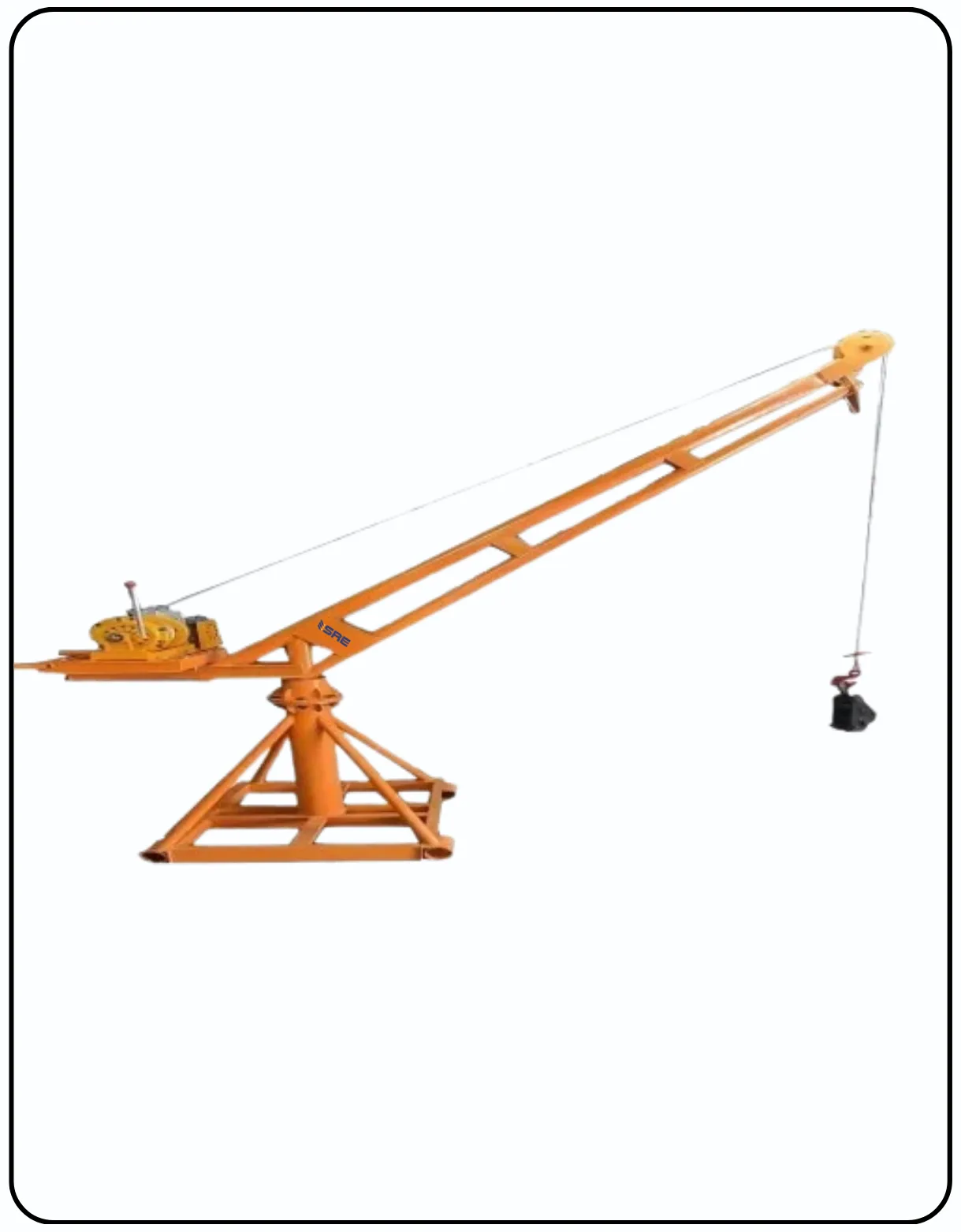
Over the past decade, industrial worksites and construction zones have evolved rapidly, with tighter project timelines, heavier load demands, and minimal room for error in both safety and scheduling. Traditional manual lifting methods, once common, have now become a liability — slowing down operations, increasing the risk of injuries, and reducing efficiency in precision-driven environments. This is why partnering with a reliable
Construction Crane Manufacturer and Supplier is essential to ensure safe, efficient, and consistent material handling on modern job sites. For
operations heads,
procurement managers, and
site supervisors dealing with these daily pressures, a
construction crane is not just equipment — it is an operational backbone. At
SRE Material Handling Equipment Private Limited, we build cranes that address exactly these challenges, not with marketing language, but with engineering that site professionals can rely on.
The Changing Needs of Modern Industrial Operations
Today’s construction and industrial sites are managing more complexity than ever before. Project scopes have expanded. Deadlines have shortened.
Labor availability fluctuates. And regulatory standards around
workplace safety have grown stricter.In this environment,
internal logistics — how materials move from one point to another within a site — directly affects project delivery. A delayed lift means delayed progress. A
workplace injury means downtime, legal exposure, and workforce disruption.
Operations managers are increasingly expected to do more with tighter budgets and leaner teams. The
material handling equipment they choose must perform consistently, reduce dependence on
manual labor for heavy tasks, and integrate into existing
site workflows without excessive disruption.💡 Explore our full range of
material handling equipment at SRE designed for demanding industrial environments.
What Is a Construction Crane?
A
construction crane is a mechanical
lifting device engineered to raise, lower, and move
heavy loads horizontally across a defined working radius. Unlike general-purpose
lifting tools,
construction cranes are designed for repetitive,
high-load applications in demanding site environments.In practical terms, it is the piece of
industrial lifting equipment that allows a five-person team to do what would otherwise require twenty workers — and do it more safely, more consistently, and faster.Looking for a powered variant? Explore our
Electric Construction Crane — engineered for
high-frequency industrial lifting with lower operating costs.
Why Construction Cranes Are Replacing Traditional Lifting Methods?
Manual material handling on construction sites carries a well-documented cost:
worker fatigue,
repetitive strain injuries, inconsistent
load placement, and slower
cycle times. These are not hypothetical risks — they appear in accident reports, insurance claims, and project delay logs across the industry.A
heavy-duty construction crane for industrial material handling addresses these problems directly. It removes the physical burden from workers for
heavy lifts, standardizes the
lifting process, and allows the same team to maintain consistent output across an entire shift — not just the first two hours.The shift away from
manual lifting methods is not a trend driven by technology for its own sake. It is driven by
operations teams that have lived through the cost of injuries and delays and made the practical decision to invest in
heavy lifting solutions that work.
Product Description: Construction Crane by SRE Material Handling Equipment Private Limited
SRE’s construction cranes are purpose-built for the demands of active
industrial and construction environments. Each unit is designed with
structural rigidity,
operational reliability, and ease of maintenance as foundational priorities — not afterthoughts.Whether the application involves lifting
precast concrete elements,
steel fabrications,
heavy machinery components, or
bulk construction materials,
SRE cranes are engineered to handle the load safely and repeatedly throughout the working day.The cranes are available in multiple configurations — including
overhead crane,
jib crane,
tower crane, and
gantry crane variants — allowing
procurement teams to select the appropriate design based on
site layout,
load specification, and
operational frequency.🔗 For electrically operated variants with
variable frequency control, see our
Electric Construction Crane product page.
Technology & Operational Efficiency
Downtime is expensive on any construction site.
SRE’s construction cranes are built around reliability: robust
drive systems,
high-grade structural steel fabrication, and
control mechanisms designed for consistent performance in dusty, high-vibration environments.
Electrical and mechanical systems are selected for serviceability. Components are standardized where possible to simplify
spare parts management and reduce
maintenance lead times.
Variable frequency drives (VFDs) allow smoother
load control, reducing wear on mechanical components and improving
operator precision during placement.
Battery-assisted and hybrid power options are available for sites with restricted
grid access or where
emissions requirements apply.🔗 Our
Electric Construction Crane is specifically designed with
VFD technology for smooth,
energy-efficient operation across extended working cycles.
Cost Efficiency Over Time
The upfront cost of a
construction crane is only one part of the financial equation. The more relevant numbers — the ones that matter to
operations heads and
finance teams — are the ones that accumulate over months and years of operation.Reduced
workplace injuries mean lower
medical costs, fewer
insurance claims, and less time lost to incident investigation and recovery. Fewer
manual handling requirements mean less
worker fatigue and lower
absenteeism. Consistent
lifting cycles mean predictable
project timelines and fewer costly delays.In most industrial settings, a well-specified
heavy-duty construction crane pays back its investment within a defined operating period — not through speculative efficiency gains, but through measurable reductions in
labor costs,
injury incidents, and
project overruns.💡 Want to understand
total cost of ownership for your specific application?
Contact our technical team for an honest, specification-based assessment.
Key Features of SRE Construction Cranes
- High load capacity ratings across standard and custom configurations
- Heavy-duty structural steel fabrication for long-term structural integrity
- Variable frequency drive (VFD) controls for smooth, precise load movement
- Overload protection systems with automatic safety cut-offs
- Modular design for easier on-site assembly and future reconfiguration
- IS and international compliance-ready builds for regulated project environments
- Weatherproof and dust-resistant components for outdoor and semi-outdoor sites
- Remote pendant and wireless control options for operator flexibility
- Low-maintenance drive and braking systems to reduce service intervals
- Custom span, height, and capacity specifications on request
🔗 Need a specific configuration?
Reach out to SRE’s engineering team to discuss
custom crane specifications for your site.
Applications of Construction Cranes
- Construction & Infrastructure Projects Lifting precast panels, structural steel, formwork systems, and heavy building materials at multi-story and civil construction sites.
- Manufacturing & Fabrication Plants Moving large machinery components, raw material stocks, and finished assemblies within production floors and storage areas.
- Shipbuilding & Heavy Engineering Handling oversized assemblies and structural sections where precision placement is critical and load weights are substantial.
- Power & Energy Projects Positioning turbine components, transformer units, and large electrical assemblies during plant construction and maintenance.
- Logistics & Port Operations Supporting container handling, heavy goods transfer, and loading operations where consistent cycle performance is required.
- Mining & Extractive Industries Moving equipment, drill assemblies, and extracted materials across sites where terrain and load conditions are consistently challenging.
🔗 Not sure which
crane type suits your application? Browse
SRE’s complete product range or
contact our team directly for
application-specific guidance.
Training, Ease of Use & Maintenance
One of the practical concerns
operations managers raise about
crane adoption is the learning curve. In reality, well-designed
construction cranes are operator-friendly.
Pendant and remote controls use standardized layouts that most experienced
site operators can familiarise themselves with in a short
on-site training period.
SRE Material Handling Equipment Private Limited provides
operator orientation support and
maintenance documentation with every unit. Routine
maintenance schedules are designed to be predictable: scheduled
inspection intervals, defined
lubrication points, and standardized
replacement components mean
site maintenance teams can manage upkeep without extended
crane downtime.
Maintenance planning is straightforward when the manufacturer has designed for it from the outset.
Why Choosing a Reliable Manufacturer Matters?
A
construction crane is not a commodity purchase. It is a
long-term operational asset. The manufacturer behind it determines not just the quality of what you receive on day one, but how well it performs over years of daily use — and how quickly any issues are resolved when they arise.Manufacturers with genuine
industrial experience understand what
site environments actually demand:
structural loads that exceed
rated capacity in practice,
operating conditions that are harsher than specifications suggest, and
maintenance teams that need parts and support without waiting weeks.
Compliance matters too. Cranes operating on regulated
construction sites must meet applicable
IS standards and, where required,
international certifications.
Procurement teams need documentation,
testing records, and clear
technical specifications — not promises.At
SRE Material Handling Equipment Private Limited, these are not selling points. They are baseline requirements we build to.💡 Have questions about
compliance documentation or
certification requirements for your project?
Get in touch with our team — we are happy to assist.
Conclusion
For
industrial decision-makers evaluating
lifting equipment, a
construction crane represents one of the most operationally significant investments a site or facility can make. The case for it is not built on efficiency statistics in a brochure — it is built on the daily operational reality that
manual lifting is a bottleneck, an
injury risk, and a
cost centre that scales with project size.
SRE Material Handling Equipment Private Limited designs and manufactures cranes for
operations teams that need reliability, not reassurance. If you are in the early stages of
crane specification or need technical input on the right configuration for your application,
our team is available to support that process.
Key Takeaways
- Productivity: Construction cranes significantly reduce lifting cycle times, allowing smaller teams to sustain consistent output across full working shifts
- Safety: Mechanical lifting eliminates the primary causes of musculoskeletal injury and load-related accidents on site
- Load Handling: Engineered load ratings and overload protection ensure safe, precise handling of heavy and oversized materials
- Cost Efficiency: Reduced injury incidents, lower labor dependency, and predictable maintenance schedules translate into measurable long-term savings
- Industry Trend: Industrial operations across construction, manufacturing, and logistics are systematically replacing manual methods with mechanised lifting — not as a preference, but as an operational necessity
Frequently Asked Questions (FAQs)
Q1. What is the typical load capacity range for a construction crane?
- Construction cranes are available across a wide range of capacities — from 1 tonne for light industrial applications to 100+ tonnes for heavy civil and infrastructure projects. The right load specification depends on your maximum anticipated load, lift height, and operational frequency. Contact SRE to discuss the right capacity for your site.
Q2. How long does installation of a construction crane typically take?
- Installation timelines vary by crane type and site conditions. Overhead cranes and gantry cranes in prepared structures can typically be commissioned within a few days. Tower cranes for large construction sites require more extensive preparation and erection time.
Q3. What safety certifications should a construction crane carry?
- In India, cranes should comply with relevant IS standards (such as IS 3177, IS 807). For export or international projects, CE marking and other applicable certifications may be required. Always verify compliance documentation before procurement. SRE’s team can provide full documentation on request.
Q4. Can construction cranes be customised for specific site requirements?
- Yes. Span, hook height, capacity, control type, and power configuration can typically be customized. SRE Material Handling Equipment Private Limited works from site drawings and load specifications to design appropriate solutions for each application.
Q5. What maintenance does a construction crane require?
- Routine maintenance includes periodic lubrication, inspection of structural components and wire ropes, brake system checks, and electrical system review. Frequency depends on operational hours and site conditions. Reach out to SRE for maintenance schedule guidance specific to your crane model.
#ConstructionCrane #SREMaterialHandling #HeavyLiftingSolutions #IndustrialCranes #MaterialHandlingEquipment #CraneManufacturer #ConstructionEquipment #HeavyDutyCrane #IndustrialLifting #WarehouseSolutions #FactoryEquipment #ConstructionSafety #LiftingEquipment #GantryCrane #OverheadCrane #TowerCrane #JibCrane #SRECranes #MadeInIndia #IndustrialEngineering #OperationalEfficiency #SupplyChainSolutions #ProcurementDecisions #SafetyFirst #WorkplaceSafety