
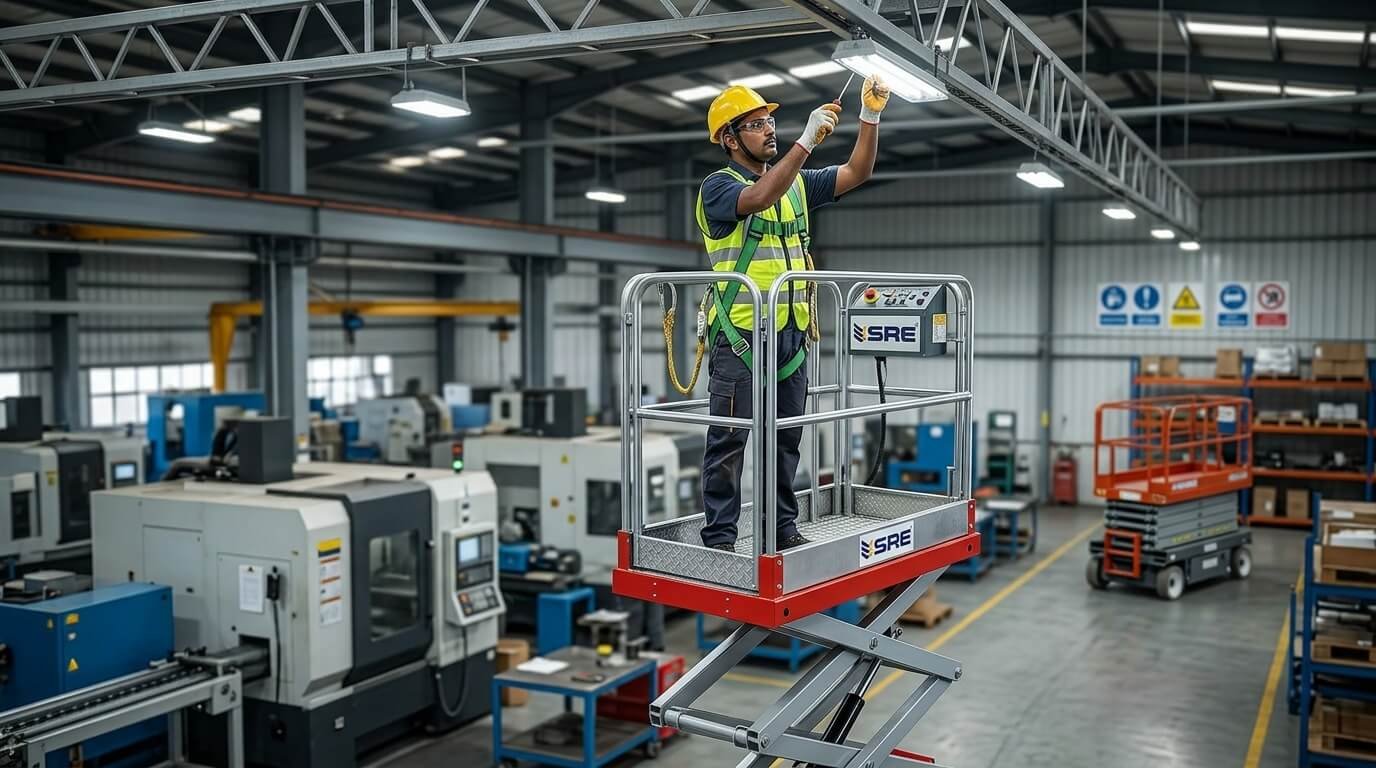
Industrial movement is rarely just about lifting or shifting goods. It affects floor safety, dispatch speed, labour fatigue, aisle flow, inventory accuracy, and machine uptime. In real factory and warehouse conditions across Ahmedabad, Mumbai, Pune, Delhi, Hyderabad, Chennai, and Bangalore, I have seen one simple truth: the right industrial material handling setup reduces avoidable delays and creates a smoother daily rhythm on the shop floor. That is why many buyers now look beyond one standalone machine and instead ask for integrated solutions covering pallet movement, stacking, lifting, drum transfer, loading bay flow, and custom attachments designed around actual work cycles.
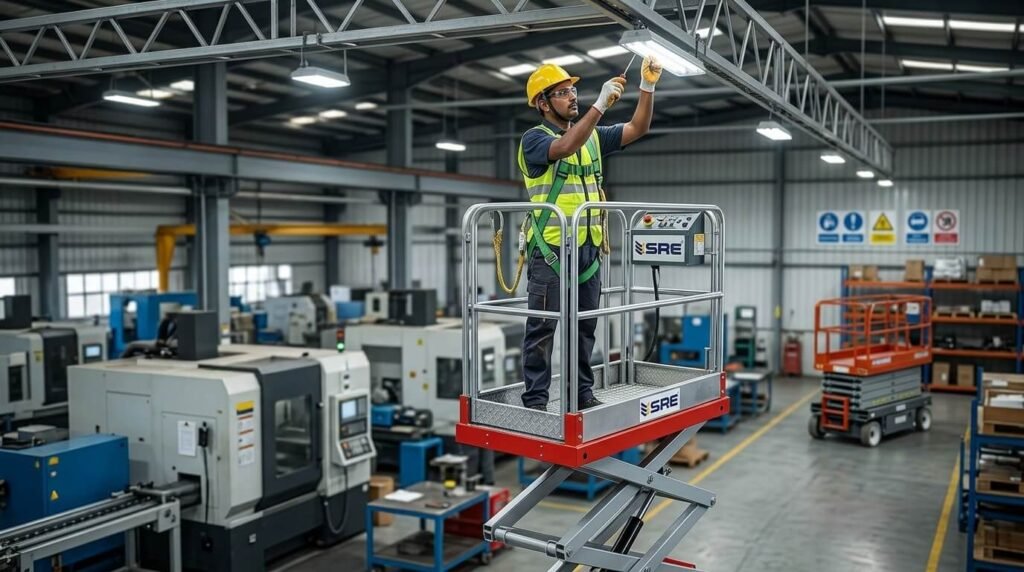
Why Choose SRE Material Handling Equipment for Industrial Material Handling Solutions
The practical answer is experience linked to application knowledge. SRE Material Handling Equipment Private Limited, formerly Shree Ram Enterprise, was established in 2011 and operates from Ground Floor, A-12, Pushp Business Campus, Ring Road Circle, Vastral, Ahmedabad – 382418, Gujarat, India. Founded by Mr. Gaurang Patel, the company brings 10+ years of focused work in Indian warehouse and factory environments, with 15K+ solutions delivered, a 95% client satisfaction rate, and 13 industry awards. That kind of track record matters when a buyer is comparing catalog specifications with actual site performance.
Yes, buyers searching for material handling equipment manufacturers near me usually want three things first: reliability, service clarity, and equipment that suits Indian operating conditions. In many plants, the challenge is not just lifting capacity. It is uneven flooring, mixed pallet sizes, battery care discipline, limited operator training time, and the need to keep throughput steady even during peak dispatch windows.
Here’s how SRE Material Handling Equipment is usually evaluated by serious purchase teams: product range depth, customization ability, response speed, and practical understanding of sector needs. Whether a facility needs pallet movement support, a hydraulic stacker for mid-level racking, a dock leveler for loading bays, a mobile floor crane for maintenance work, or drum handling equipment for chemical or paint operations, the value comes from system fit, not brochure language.
For buyers who want to review the company profile first, the main website gives a clear starting point: industrial equipment overview.
A small but telling example: one packaging unit in Surat had frequent manual delays because material was being shifted in two steps instead of one. After replacing that process with a better-matched transfer setup, the plant cut internal movement time per batch by a noticeable margin. Nothing dramatic, just sensible engineering. On most shop floors, that is what really improves productivity.
Our Industrial Material Handling Solutions Manufacturing Capabilities
The best industrial handling setups are built around load type, travel distance, floor condition, stacking height, shift intensity, and operator use pattern. That is why capable suppliers do not treat every requirement as a standard machine sale. They study the movement path first.
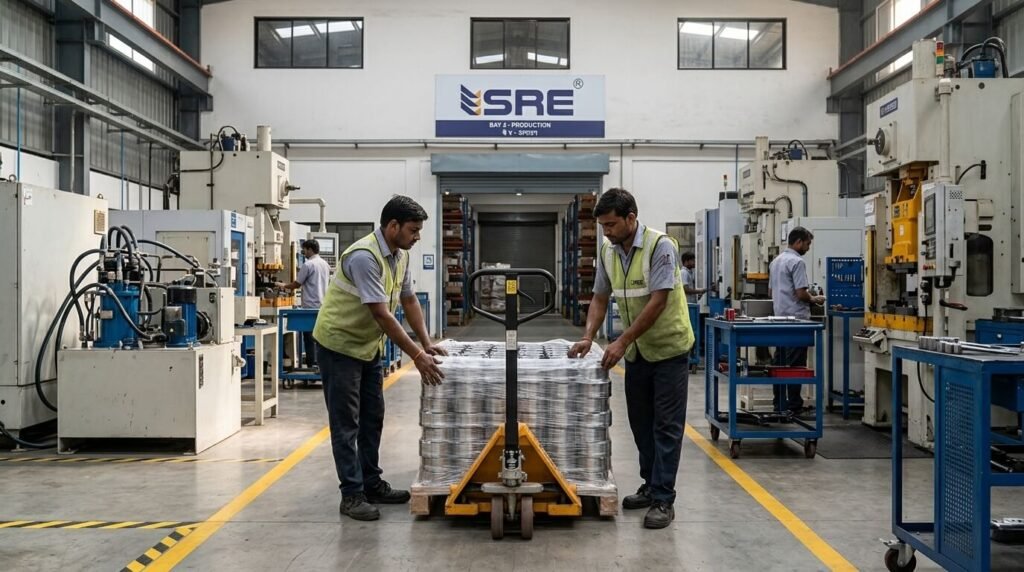
Yes, we can naturally classify the core solution categories into pallet movement, vertical stacking, platform lifting, loading dock transfer, drum handling, and custom-built movement aids. For pallet movement, many buyers begin with pallet truck systems when they need dependable low-level transport inside warehouses and production zones. This is especially common in FMCG, pharma packaging, auto ancillaries, and e-commerce hubs around Ahmedabad and Vadodara.
For specialized barrel and chemical handling, drum transfer equipment becomes important where spill control and operator safety are non-negotiable. I have seen this need often in plants near Vapi, Ankleshwar, and industrial belts serving Hyderabad and Chennai, where one unsafe drum movement can disturb an entire shift.
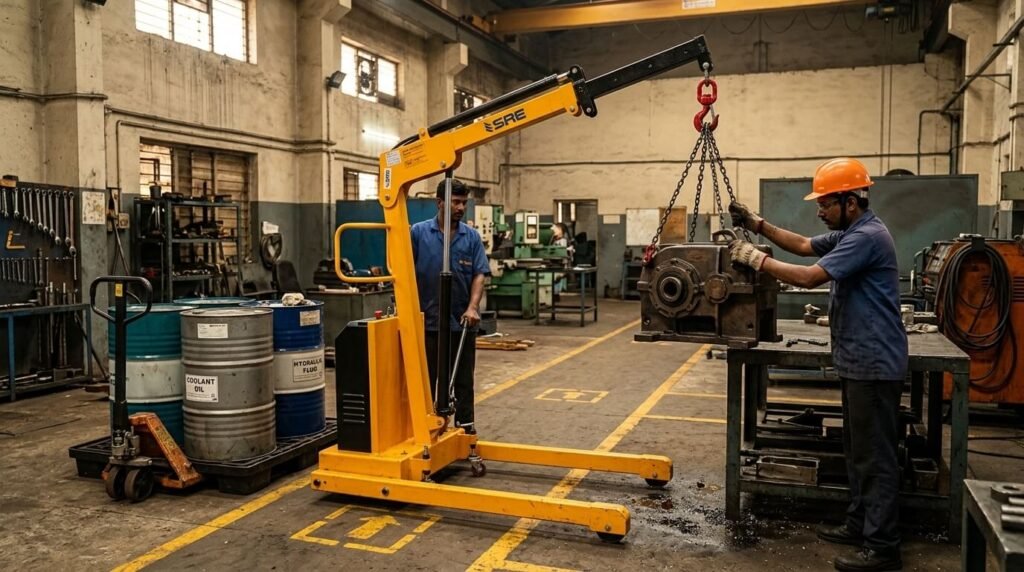
For maintenance, fabrication support, and heavy component shifting, mobile floor crane solutions are useful in workshops that need controlled lifting without a fixed overhead setup. This works well for engineering units in Jaipur, Indore, and Chandigarh, where floor flexibility matters.
The wider capability set also includes electric stacker manufacturers support, hydraulic stacker options, goods lift manufacturers requirements, scissor lift manufacturers applications, aerial work platform access needs, dock leveler installations, and custom material handling solutions India buyers ask for when off-the-shelf specifications do not match the process. In practice, this means one client may need compact pallet movement for narrow aisles, while another may need an industrial goods lift Ahmedabad configuration for vertical movement between floors.
A related buying question comes up often: what is the difference between choosing a standard unit and a custom solution? The answer is simple. Standard equipment works when your pallets, floor, height, and duty cycle are predictable. Custom engineering becomes necessary when there are space constraints, unusual load dimensions, fragile goods, or mixed-use operations. Buyers researching local application trends in Ahmedabad usually find this distinction helpful before finalizing technical discussions.
Get a Quote for Industrial Material Handling Solutions
Navigating Quality Standards & ISO 9001-2015 Certification
The right quality conversation should go beyond “certificate available” and move into process discipline. SRE Material Handling Equipment is ISO 9001-2015 Certified, which matters because the standard is tied to documented quality systems, process consistency, corrective action, and continual improvement. For industrial buyers, that does not guarantee perfection by itself, but it is a strong signal that manufacturing and inspection are being handled with repeatable controls.
Here’s what smart procurement teams usually ask: Are materials appropriate for the duty cycle? Are welds and structural members checked properly? Is load-bearing design aligned to use conditions? Are finishing, testing, and pre-dispatch checks documented? Those are the questions that separate casual sourcing from careful capital purchasing.
Another common question is whether certification matters for smaller equipment like pallet trucks or stackers. The answer is yes, because even a relatively simple handling unit affects worker safety and daily throughput. One damaged fork, one unstable wheel assembly, or one poorly matched hydraulic component can create downtime far beyond the machine cost. Buyers comparing pallet truck manufacturers in Ahmedabad should always weigh process quality, spare support, and application guidance together.
For regional comparison, buyers often also read location-focused pages such as material handling supplier insights in Rajkot and manufacturer-focused market context in Rajkot. These are useful when businesses are benchmarking suppliers across Gujarat before making a final decision.
Local Manufacturers vs SRE Material Handling Equipment
| Evaluation Factor | Typical Local Supplier | SRE Material Handling Equipment |
|---|---|---|
| Application understanding | Often product-first | Process and site-use focused |
| Range coverage | Limited categories | Pallet trucks, stackers, lifts, cranes, dock and drum solutions |
| Customization | Basic or outsourced | Structured custom solution capability |
| Quality framework | May vary by batch | ISO 9001-2015 aligned processes |
| Credibility signals | Limited documentation | Founded by Mr. Gaurang Patel, 15K+ solutions, 95% satisfaction, 13 awards |
Step-by-Step Process – How We Deliver Industrial Material Handling Solutions
The most effective process starts with the actual movement problem, not the machine name. First, the team studies load details, dimensions, weight, travel distance, lift height, frequency, and site limitations. Second, equipment type is matched to use case: pallet truck manufacturers options for horizontal movement, electric stacker manufacturers input for repetitive stacking, hydraulic stacker for lower-budget applications, goods lift manufacturers for floor-to-floor transfer, or scissor lift manufacturers support for platform elevation.
Third comes layout and safety review. This is where many mistakes are prevented. Narrow aisles, ramp gradients, turning radius, floor finish, loading dock levels, and operator comfort all shape final selection. A warehouse in Kolkata handling cartons is very different from a fabrication unit in Pune moving heavy metal parts. A pharma warehouse in Bangalore has different hygiene and handling priorities from an engineering store in Delhi.
Fourth, the solution is finalized with any customization required. Fifth, manufacturing, inspection, and testing are completed. Sixth, installation or dispatch support is arranged, followed by basic operator familiarization. This is also where buyers often ask: how long does an industrial solution take to deploy? The honest answer depends on complexity, but planning early helps avoid rushed procurement.
A quick mini success story illustrates this well. A mid-sized logistics operator in Ahmedabad was facing dispatch congestion during evening loading because one dock point was creating a bottleneck. After introducing a better-suited dock leveler and improving internal pallet flow, truck turnaround became smoother and manual strain reduced. It was not about adding more manpower. It was about removing friction from the process.
If you want a technical discussion, site review, or Free Equipment Consultation, use the contact page here. Buyers who are still budgeting can also ask to Download Material Handling Cost Guide and connect on WhatsApp for faster coordination.
Real Client Case Study
Here’s how SRE Material Handling Equipment typically adds value in real operating conditions. An anonymized client, “M.K. Auto Components,” based near Vadodara, approached with a mixed requirement: pallet transfer between machining and assembly, safe lifting of parts during maintenance, and occasional movement of oil drums. Earlier, the plant was using manual methods and borrowed lifting arrangements, which caused delays, minor safety concerns, and avoidable operator fatigue.
The solution combined pallet movement equipment, a mobile floor crane, and a drum handling arrangement aligned to the client’s workflow. During the review, the team noticed that aisle width and storage sequence were as much a problem as the equipment gap. So the recommendation covered process flow too, not just machinery selection.
Within a practical operating period, the client reported smoother material movement, less waiting between departments, and better control during maintenance tasks. More importantly, supervisors said the shift felt less chaotic because operators were no longer improvising. That is often the real measure of success in industrial handling: fewer workarounds, fewer stoppages, and safer routine movement.
Another frequent buyer question is whether electric stacker manufacturers India offerings are suitable for medium-scale operations or only larger warehouses. The answer is that electric stackers are highly useful even in mid-sized units when stacking frequency is regular and operator fatigue from manual alternatives is becoming visible.
FAQs
1. What are industrial material handling solutions?
- Industrial material handling solutions include equipment and systems used to move, lift, stack, store, load, and transfer goods safely inside factories, warehouses, and logistics facilities.
2. How do I choose between a pallet truck and a stacker?
- Choose a pallet truck for horizontal movement at floor level. Choose a stacker when you also need vertical lifting or rack placement.
3. When do I need custom material handling solutions?
- You need custom solutions when load sizes are unusual, space is tight, duty cycles are high, or standard equipment does not fit your process safely.
4. Does ISO 9001-2015 matter when buying handling equipment?
- Yes. It signals documented quality control processes, which can improve consistency, inspection discipline, and buyer confidence.
5. Which industries commonly use these solutions?
- Warehousing, logistics, engineering, pharmaceuticals, food processing, chemicals, packaging, textiles, and automotive units all use them.
6. Can one supplier handle pallet trucks, lifts, cranes, and drum equipment together?
- Yes, many buyers prefer a single capable supplier because it simplifies technical coordination, service communication, and solution compatibility.
7. How can I get pricing for my requirement?
- You can request a quote after sharing load details, lift height, floor conditions, application type, and quantity requirement. WhatsApp sharing often speeds this up.