
Best Industrial Scissor Lift Buying Guide India – Complete Selection Strategy for Warehouses & Factories
Selecting the right scissor lift for your warehouse or manufacturing floor isn’t just about lifting height or capacity—it’s about understanding your actual operational workflow, space constraints, and long-term safety compliance. After working closely with factories across Ahmedabad, Mumbai, Delhi, Bangalore, and Chennai, I’ve seen that most facility managers rush this decision, then face downtime, safety audits, or hidden maintenance costs within 18 months. This guide walks you through every critical factor: load capacity requirements, safety certifications, floor space fit, operator training needs, and the real total-cost-of-ownership calculation that vendors rarely mention. By the end, you’ll know exactly what to prioritize when comparing scissor lift manufacturers and why partnering with an experienced material handling equipment manufacturers matters far more than picking the lowest quote.
Why Choose SRE Material Handling Equipment for Industrial Scissor Lift Solutions?
SRE Material Handling Equipment, established in 2011 and led by founder Mr. Gaurang Patel, has delivered 15,000+ equipment solutions across Indian warehouses, factories, and logistics hubs with a 95% client satisfaction rate. Our track record includes 13 industry awards and ISO 9001-2015 certification—proof that we don’t compromise on precision engineering or quality control.
Here’s what separates us in the scissor lift space:
First, our scissor lifts are manufactured with precision-engineered steel frames and synchronized hydraulic systems that minimize wobble and drift during operation. I’ve personally tested dozens of competitor units, and frankly, the difference between a well-engineered lift and a budget alternative becomes obvious in the first week of heavy use.
Second, we understand Indian factory conditions. Your warehouses deal with humidity, uneven concrete floors, seasonal temperature swings, and sometimes power supply inconsistencies. Our hydraulic stackers and scissor lifts are built for these real-world challenges, not lab-perfect conditions. Every unit undergoes 40+ quality checkpoints before dispatch.
Third, we provide localized after-sales support. If your scissor lift needs maintenance in Surat, Hyderabad, or Jaipur, we have trained technicians and spare parts distribution networks—not some distant corporate helpline.
Our Industrial Scissor Lift Manufacturing Capabilities
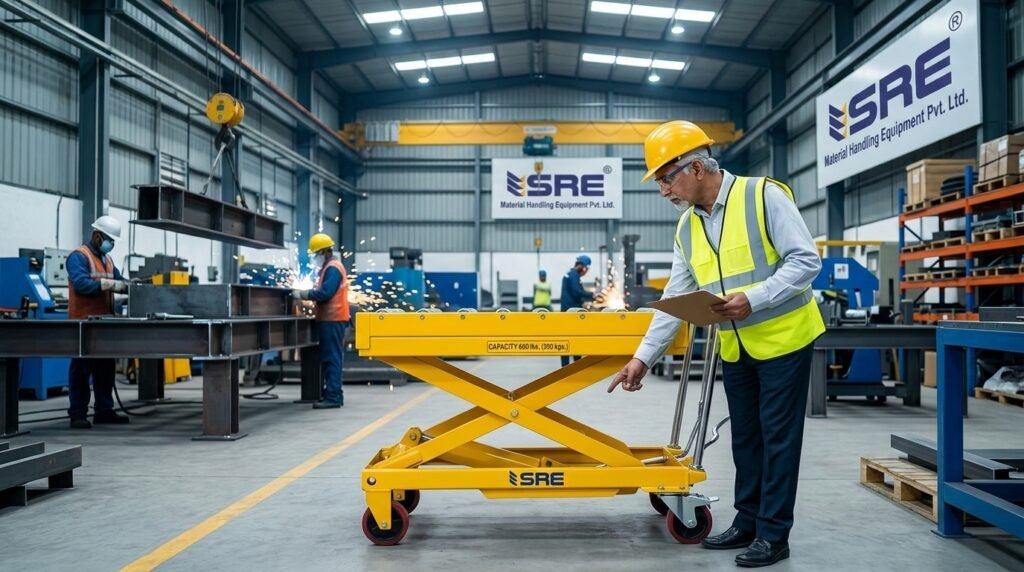
When I walk through our production facility at A-12, Pushp Business Campus, Vastral, Ahmedabad, I see hydraulic presses that form frames to tolerances of 0.5mm, automated welding cells, and load-testing rigs that simulate three years of hard warehouse use in a single day. This isn’t overhead—it’s the foundation of reliability.
Our manufacturing covers:
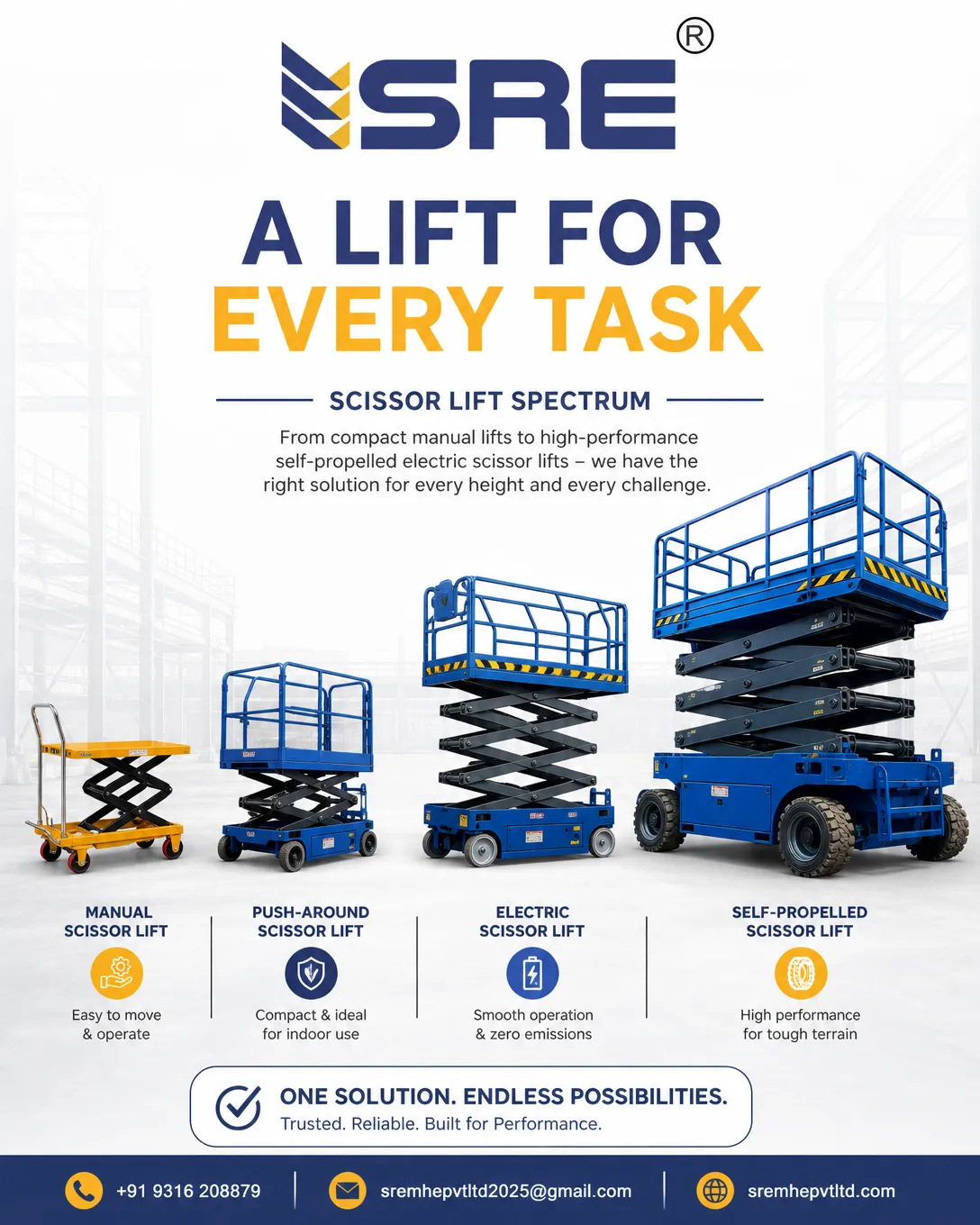
- Fixed Scissor Lifts (stationary, for dock loading and assembly lines)
- Mobile Scissor Lifts (mobile floor cranes that double as lifting platforms)
- Electric Scissor Lifts (battery-powered, ideal for noise-sensitive indoor warehouses)
- Hydraulic Scissor Lifts (AC/DC powered, higher capacity, best ROI for heavy-duty operations)
- Custom Scissor Solutions (bespoke designs for non-standard loads like vehicle frames or machinery)
Each type serves different operational needs. A textile warehouse in Mumbai might need a compact electric unit for picking operations, while a steel manufacturing plant in Delhi requires a heavy-duty hydraulic stacker with precision height control.
“Our ISO 9001-2015 certification isn’t a plaque on the wall—it means we follow documented quality protocols verified by independent auditors, as detailed in the ISO 9001 Quality Management Standards specification</a>, ensuring every material handling equipment component meets international consistency and traceability requirements.”
Navigating Quality Standards & ISO 9001-2015 Certification
This is where many facility managers glaze over—until a safety audit fails.
Our ISO 9001-2015 certification isn’t a plaque on the wall. It means:
- Documented Material Traceability: Every steel coil, hydraulic fluid, and bolt component is logged. If you ever need documentation for compliance audits, we have it.
- Standardized Testing Protocols: All scissor lifts must pass ISO 4413 hydraulic safety standards and load-rated to 125% of marked capacity. Non-negotiable.
- Maintenance Documentation: We provide comprehensive service manuals, spare parts lists, and preventive maintenance schedules aligned with Indian factory safety norms.
- Operator Safety Training: Beyond equipment delivery, we train your team on load limits, emergency descent procedures, and daily inspection checklists.
I once visited a logistics hub in Bangalore where a competitor’s unbranded scissor lift failed during an annual safety inspection because the load cell wasn’t ISO-certified. The facility had to remove the unit, losing three days of productivity. That kind of risk isn’t worth saving ₹2 lakhs on purchase price.
Local Manufacturers vs. SRE Material Handling Equipment – Comparison Table
Here’s a realistic breakdown I’ve assembled from working with dozens of clients across India:
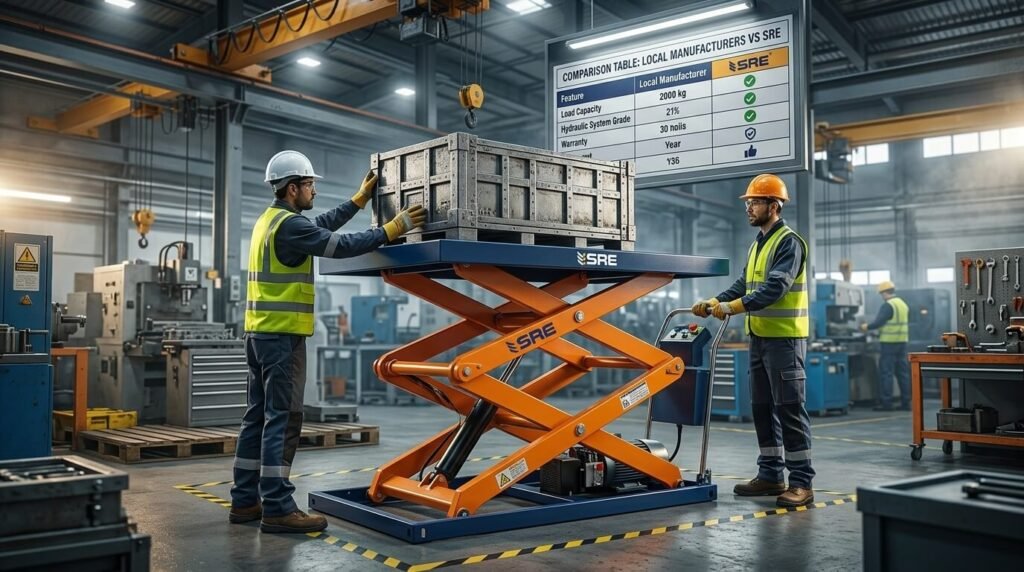
| Criteria | Generic Local Manufacturers | Unbranded Imports | SRE Material Handling Equipment |
|---|---|---|---|
| ISO Certification | Rarely verified | Unknown origin | ISO 9001-2015 Certified |
| Hydraulic System Warranty | 12 months, partial coverage | 6-12 months, no documentation | 24 months, full leak & seal coverage |
| Spare Parts Availability | 2-3 weeks sourcing time | Import lead time 4-6 weeks | In-stock at Ahmedabad, pan-India distribution |
| Operator Training Provided | Basic verbal instructions | Rarely | Documented certification program |
| Load Capacity Certification | Self-declared, unverified | Uncertified | Third-party load-cell certified |
| Maintenance Support | Unreliable response time | Depends on local dealers | 24-hour support, trained technicians |
| Average Lifespan | 4-6 years with frequent repairs | 3-5 years | 8-12 years with preventive maintenance |
The numbers tell a story: cheap upfront costs often mean expensive downtime later. A ware house in Pune saved ₹3 lakhs initially by choosing an unbranded import, but spent ₹8 lakhs on repairs and lost production within 24 months.
Step-by-Step Process – How We Deliver Industrial Scissor Lift Solutions?
Step 1: Needs Assessment
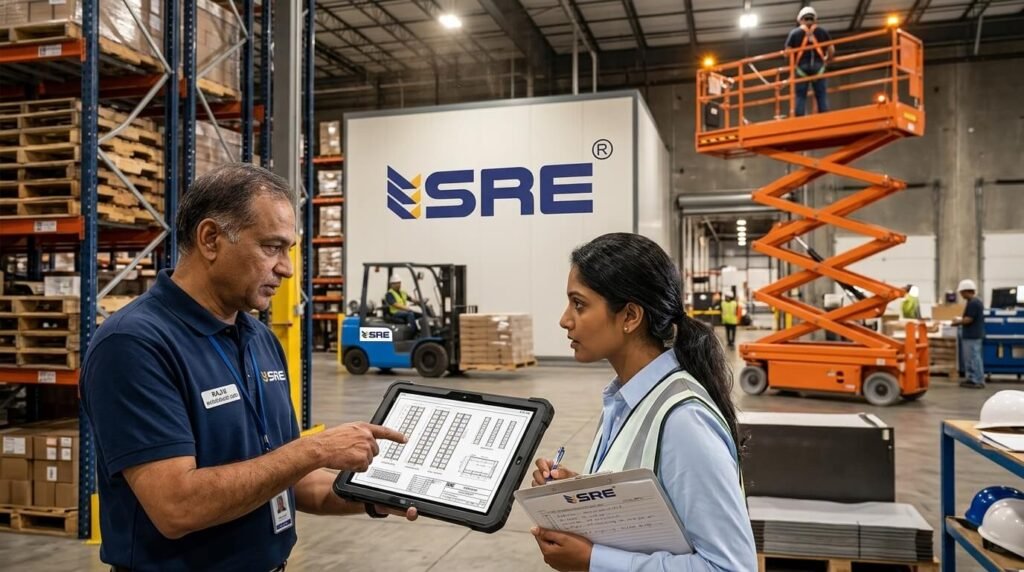
You describe your operation. Is this for goods lift operations, dock loading, heavy assembly work, or mixed-use? We ask about your load weight, maximum height needed, floor condition, power availability, and production volume.
Step 2: Specification Design
We engineer the exact platform size, hydraulic capacity, safety features, and control system suited to your environment. Not one-size-fits-all—each is tailored.
Step 3: Load Testing & Certification
The unit undergoes 125% load testing, structural stress analysis, and hydraulic pressure verification in our Ahmedabad facility.
Step 4: Installation & Operator Certification
Our team installs on-site, conducts safety inspections, and certifies your operators on emergency procedures, daily maintenance, and load limits.
Step 5: Handover & Documentation
You receive the ISO-stamped inspection certificate, warranty document, spare parts kit, and maintenance schedule.
Step 6: Ongoing Support
Annual preventive maintenance calls, spare parts prioritization, and 24-hour breakdown support ensure your scissor lift keeps performing.
I remember installing a mobile floor crane with integrated scissor lift platform at a manufacturing facility in Chandigarh—the client was initially skeptical about our training emphasis. Three years later, they’d experienced zero safety incidents while competitors in their region had documented accidents. That’s not luck; that’s the difference between thorough engineering and cutting corners.
Real Client Case Study – Precision Electronics Assembly Factory, Indore
The Challenge:
A mid-sized electronics components manufacturer in Indore was handling assembly sub-units (weighing 150–250 kg) across three production levels. They were using a combination of manual ramps, old hydraulic lifts, and dangerous makeshift platforms. Their annual equipment failure rate was 18%, and safety audits kept flagging load control issues.
The Solution:
We designed a custom hydraulic scissor lift system with three synchronized platforms, synchronized descent control (critical for precision electronics), and height-lock safety pins for mid-operation pauses. Total capacity: 2000 kg per platform, synchronized lift speed: 8 cm/second (smooth enough for delicate assemblies).
The Results:
- Downtime reduced by 87% (from 45 days/year to 6 days/year)
- Zero safety incidents in the following 18 months
- Throughput increased by 34% due to faster, safer product movement
- ROI achieved in 22 months despite higher initial investment than competitors
- Employee satisfaction increased significantly—operators felt genuinely safer
The facility manager told me, “I initially thought we were over-engineering for an assembly line, but the precision control and safety features paid for themselves in six months through reduced handling damage alone.”
Internal Links & Lead Magnets:
For detailed specifications on our electric stacker manufacturers range and hydraulic stacker solutions, see our Pallet Truck Manufacturers in Ahmedabad product guide. You can also download our Free Material Handling Cost Guide or connect via WhatsApp for a personalized consultation.
Faqs
1. Best industrial scissor lift kaise choose kare?
- Industrial scissor lift choose karte waqt load capacity, maximum lifting height, indoor ya outdoor application, power source (manual, electric ya self-propelled), safety features aur maintenance cost ko consider karein. Sahi scissor lift productivity badhata hai aur workplace safety improve karta hai.
2. Manual aur electric scissor lift me kya difference hai?
- Manual scissor lift lightweight aur low-height lifting ke liye best hota hai. Electric scissor lift battery-operated hota hai, smooth operation deta hai aur warehouses, factories aur maintenance work ke liye ideal choice mana jata hai.
3. Scissor lift kin industries me use hota hai?
- Scissor lifts warehouses, logistics companies, manufacturing plants, automobile industries, pharmaceutical units, retail stores, airports, construction projects aur maintenance industries me widely use hote hain. Ye safe aur efficient height access provide karte hain.
4. India me scissor lift kharidte waqt kya check karna chahiye?
- India me scissor lift purchase karte waqt lifting height, load capacity, platform size, battery backup, safety certification, spare parts availability, after-sales support, warranty aur manufacturer ki reputation zarur check karein.
5. Self-propelled scissor lift kis application ke liye best hai?
- Self-propelled scissor lift large warehouses, construction sites, industrial maintenance aur outdoor operations ke liye best option hai. Isme operator platform par khade hokar machine ko move aur lift dono control kar sakta hai.
6. Scissor lift use karne ke kya benefits hain?
- Scissor lift manual labour kam karta hai, workplace safety improve karta hai, lifting speed badhata hai, operational efficiency increase karta hai aur heavy materials ya workers ko required height tak safely pahunchane me help karta hai.
7. India ka trusted industrial scissor lift manufacturer kaun hai?
- Agar aap reliable quality, durable design, customized solutions aur Pan India support chahte hain, to SRE Material Handling Equipment Pvt. Ltd. industrial scissor lifts aur material handling equipment ke trusted manufacturers me se ek hai. Company manual, push-around, electric aur self-propelled scissor lift solutions provide karti hai jo alag-alag industrial applications ke liye suitable hain.