
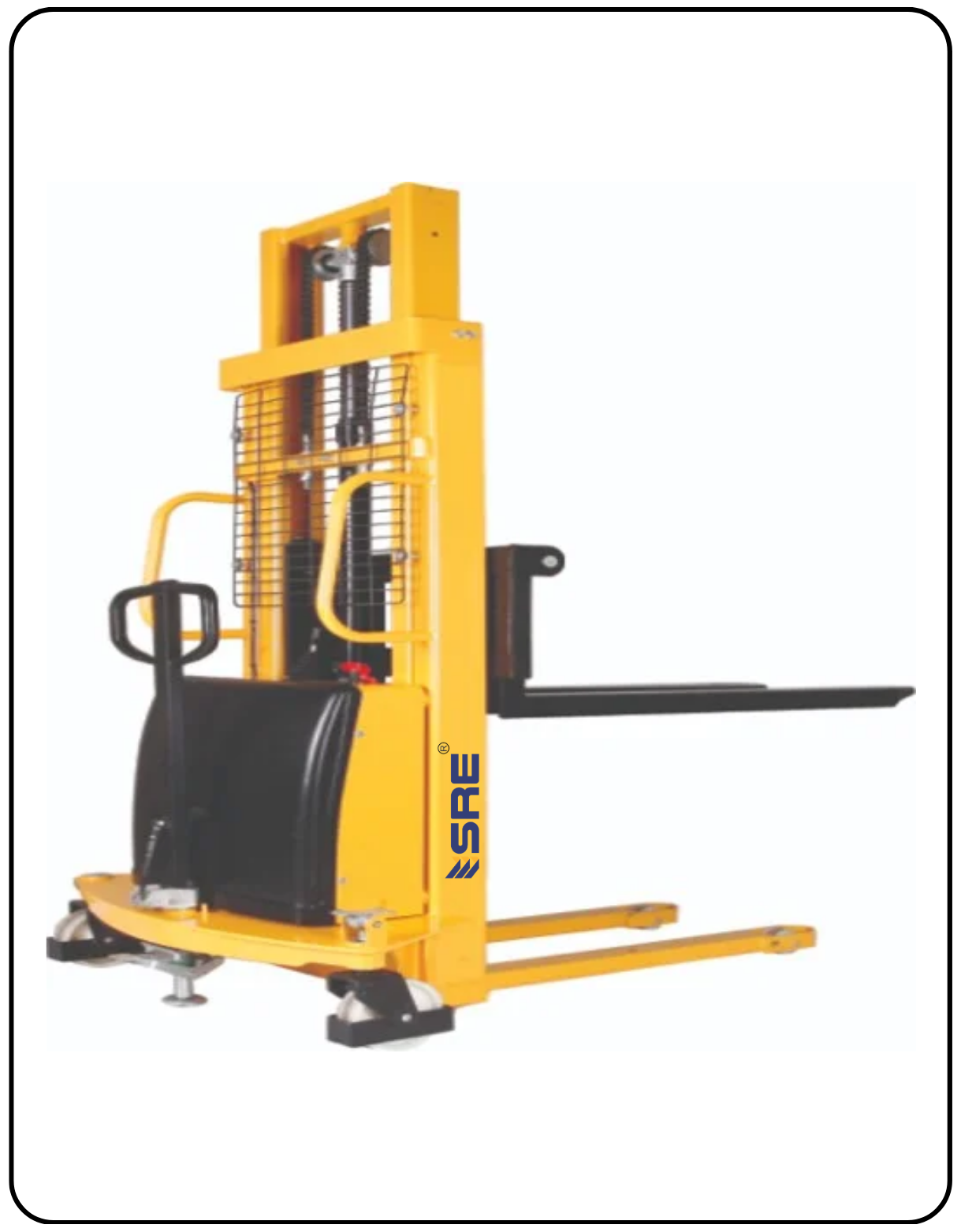
Semi Electric Stacker in Pune for Efficient Warehouse Lifting
What Is a Semi Electric Stacker?
Many warehouses outgrow manual lifting tools but still do not need a full electric forklift for every task. A semi electric stacker bridges that gap by using an electric lifting system with manual movement for short-distance travel. This setup helps operators raise pallets and goods with less physical effort while keeping equipment cost under control. The result is better lifting efficiency for routine warehouse and factory handling.Industrial teams often use semi electric stackers where goods must be lifted to racks, transferred near workstations, or positioned at dispatch points. Because the lifting function is powered, operators spend less time pumping or forcing loads upward by hand. This improves cycle time and reduces strain during repeated operations across a shift. The result is more consistent stacking speed and safer day-to-day load handling.Buyers comparing different stacker options also want access to proven product categories before finalizing procurement. SRE supports that process through its electric stacker manufacturer and supplier range and broader industrial handling lineup. This helps warehouse managers review equipment based on duty cycle, lifting height, and application fit. The result is a better buying decision with less risk of specification mismatch.Why Pune Industries Choose Semi Electric Stackers
Pune industries face rising pressure to move material faster while using space, manpower, and capital more carefully. Manual lifting methods slow storage turnover and create avoidable fatigue in units handling pallets, bins, cartons, drums, and components. A semi electric stacker reduces these problems by improving lifting speed and supporting safer placement at required heights. The result is better inventory flow and more stable warehouse performance.In many plants, forklifts are not the right fit for every aisle, every budget, or every application. Semi electric stackers are more compact, easier to place in narrower work zones, and often more suitable for moderate-duty stacking tasks. This makes them useful for manufacturing stores, spare parts warehouses, engineering workshops, pharmaceutical units, auto component plants, and logistics hubs. The result is equipment flexibility without the full cost and footprint of larger powered vehicles.Buyers also prefer vendors that show regional supply reach and category depth. SRE supports such evaluation with relevant pages like semi battery stacker manufacturer solutions in Gujarat and semi battery stacker supply in Ahmedabad. This gives procurement teams broader confidence in product availability and technical support. The result is stronger trust during vendor shortlisting.Applications of Semi Electric Stacker in Pune
Industrial buyers need equipment that solves more than one handling problem across a facility. A semi electric stacker works well in operations where lifting is frequent, travel distance is short, and controlled placement matters. That makes it useful across warehousing, production, packaging, and dispatch functions. The result is better asset utilization and a stronger return on equipment investment.- Rack loading and unloading in warehouses
- Pallet stacking in narrow aisles
- Finished goods movement near dispatch areas
- Raw material transfer inside factories
- Line-side feeding in assembly units
- Packaging area pallet handling
- Inventory movement in pharma and FMCG stores
- Component lifting in engineering workshops
- Support work in logistics and distribution centers
- Material handling in small and medium industrial units
Key Features of SRE Semi Electric Stacker
Buyers often make the mistake of comparing stackers only on price while ignoring build quality, lift performance, and site usability. That can lead to downtime, poor handling accuracy, and shorter equipment life. SRE addresses these concerns with a product approach focused on practical industrial use and stable day-to-day operation. The result is better value for industrial buyers looking for dependable stacker performance.Electric Lifting Mechanism
Repeated manual pumping slows operations and increases fatigue during long shifts. The electric lifting function reduces physical effort and helps operators raise loads more quickly to the desired height. This improves consistency in rack placement and pallet handling. The result is faster work cycles and lower strain on operators.Manual Travel for Controlled Movement
Some facilities do not need fully powered travel for short internal movement. Manual travel keeps the machine simpler while still giving teams the benefit of powered lifting. This balance supports cost control and easier handling in compact spaces. The result is a practical fit for many warehouses and production stores.Compact Design for Industrial Aisles
Larger machines can be difficult to manage in narrow storage lanes or smaller plant layouts. A compact semi electric stacker allows easier turning, positioning, and approach near racks or pallets. This improves space use without major changes to the layout. The result is better maneuverability and smoother storage operations.Strong Mast and Fork Construction
Weak structural parts can affect load stability and service life under regular industrial use. A strong mast and fork assembly support more reliable lifting and safer placement of palletized goods. This becomes important in repetitive warehouse duty where load control matters. The result is improved confidence during everyday operation.Rechargeable Battery Support
Frequent lifting needs a dependable power source to avoid work interruptions. A rechargeable battery system supports repeated use through the shift when maintained correctly. This helps reduce lifting delays in warehouses and dispatch sections. The result is more dependable throughput and easier planning for daily operations.Lower Maintenance Than Larger Powered Equipment
Buyers often worry that battery-based lifting will automatically mean high service cost. In many moderate-duty applications, a semi electric stacker remains simpler and easier to maintain than larger powered alternatives. This supports lower ownership cost while preserving useful lifting capability. The result is better lifecycle value for budget-conscious facilities.Technical Specifications of Semi Electric Stacker
Procurement delays often happen because selected equipment does not match the actual pallet size, load weight, or rack height used on site. A technical review solves that by helping teams compare equipment based on practical operating needs. The result is better specification alignment and fewer post-purchase problems.| Specification | Details |
|---|---|
| Product Name | Semi Electric Stacker in Pune |
| Brand | SRE |
| Operation Type | Electric lifting with manual movement |
| Application | Pallet lifting, rack stacking, warehouse transfer, factory stores handling |
| Capacity Range | Available in multiple industrial capacities |
| Lifting Height | Available in multiple lift height options |
| Power Source | Battery-operated lifting system |
| Structure | Heavy-duty steel frame and mast |
| Fork Type | Industrial pallet handling forks |
| Wheel Type | Industrial-grade wheels/casters |
| Use Area | Warehouses, factories, logistics centers, engineering units |
| Location Focus | Pune, Maharashtra |
Benefits of Buying a Semi Electric Stacker in Pune
Warehouse managers are expected to improve speed, reduce product damage, and control labor fatigue without overspending on equipment. Manual systems alone often fail to meet these goals in modern storage environments. A semi electric stacker provides a balanced solution by improving lifting productivity while keeping operations manageable and cost-conscious. The result is stronger handling performance with practical investment control.Reduced Operator Fatigue
Repeated manual lifting creates physical stress and slows work by the end of the shift. Electric lifting reduces the effort needed to raise goods to racks or working height. This supports more consistent handling over long operating hours. The result is better operator comfort and more stable output.Improved Productivity
Slow stacking affects dispatch readiness, replenishment cycles, and rack space utilization. A semi electric stacker helps teams lift and position loads faster than manual alternatives in many applications. This reduces handling time in daily warehouse routines. The result is stronger productivity and better stock movement.Better Safety During Load Handling
Unsafe lifting practices can lead to damaged goods, unstable placement, and avoidable workplace incidents. A semi electric stacker improves lifting control and helps operators place pallets with more stability. When used within rated limits, it supports safer warehouse behavior. The result is fewer handling errors and better operational safety.Cost-Effective Upgrade from Manual Equipment
Some facilities are not ready for a fully electric fleet but still need a major step up from manual tools. A semi electric stacker delivers that middle path by improving lift efficiency without moving into a higher equipment class unnecessarily. This makes it attractive for buyers looking for cost-effective semi electric stackers in Pune. The result is better return on investment for moderate-duty operations.Space Efficiency
Warehouses with tight layouts need machines that can work without disrupting aisle movement. Semi electric stackers are often compact enough for these environments while still offering vertical lift support. This helps improve storage density and pallet access. The result is smarter use of floor and rack space.Practical Maintenance Profile
Complex equipment can raise service dependency and increase downtime. A semi electric stacker is often easier to maintain than larger powered alternatives when used for the right application. This makes upkeep more predictable for maintenance teams. The result is better uptime and lower lifecycle uncertainty.Buyer Comparison: Semi Electric Stacker vs Other Options
Buyers often compare stackers, pallet trucks, and forklifts without separating lifting need from travel need. That confusion can lead to overspending or underbuying. A side-by-side comparison helps procurement teams choose equipment that matches real operating conditions. The result is a smarter and more defendable purchase decision.| Equipment | Best Use | Main Advantage | Main Limitation |
|---|---|---|---|
| Semi Electric Stacker | Frequent lifting with short-distance movement | Powered lifting with lower cost than full electric systems | Manual travel may not suit long internal transport |
| Manual Hydraulic Stacker | Low-frequency lifting and stacking | Lower initial cost | Higher operator effort and slower cycle time |
| Fully Electric Stacker | High-frequency lift and travel operations | Higher productivity and reduced manual effort | Higher purchase cost |
| Hand Pallet Truck | Ground-level pallet movement | Simple and economical | No rack stacking capability |
| Forklift | Heavy-duty movement and high-throughput handling | Fast and powerful | Needs more space, budget, and operator management |
Why Choose SRE Material Handling Equipment Pvt. Ltd.
Industrial procurement teams need more than just a product listing. They need equipment guidance, practical specifications, and a supplier that understands daily warehouse pressure. SRE Material Handling Equipment Pvt. Ltd. addresses this need with a material handling range built around real industrial applications. The result is a more reliable sourcing experience for buyers in India.- Focused range for warehouse and factory handling needs
- Solutions suitable for moderate-duty industrial stacking
- Support for comparing stackers across applications
- Product options relevant to Indian industrial environments
- Useful for warehouses in Pune and other major manufacturing cities
- Practical fit for procurement heads, warehouse managers, and engineers
Maintenance Tips for Longer Service Life
Even good equipment can lose efficiency when routine checks are ignored. Battery health, lifting response, wheels, mast condition, and fork alignment all affect performance over time. A simple preventive maintenance plan helps avoid sudden downtime in busy warehouses. The result is more reliable lifting and lower repair disruption.- Charge the battery as recommended and avoid deep discharge
- Inspect lifting controls before each shift
- Check forks and mast for wear or misalignment
- Inspect wheels and casters for smooth travel
- Lubricate moving parts on schedule
- Never exceed rated capacity
- Train operators on proper pallet placement and safe lifting
Industrial Buying Checklist
Procurement teams often need a quick checklist before asking for approval or quotation. A structured review helps confirm whether a semi electric stacker is the right fit for current site conditions. This prevents late-stage changes and reduces the chance of ordering the wrong model. The result is faster buying decisions and better technical alignment.- Confirm required load capacity with a safety margin
- Check maximum rack height and lift requirement
- Review aisle width and turning space
- Match fork dimensions to pallet size
- Assess daily duty cycle and shift usage
- Check battery charging access
- Compare with manual and fully electric alternatives
- Confirm supplier support and inquiry response speed