Scissor Lift Table in Rajkot — Applications, Key Features & Ergonomic Workstation Guide
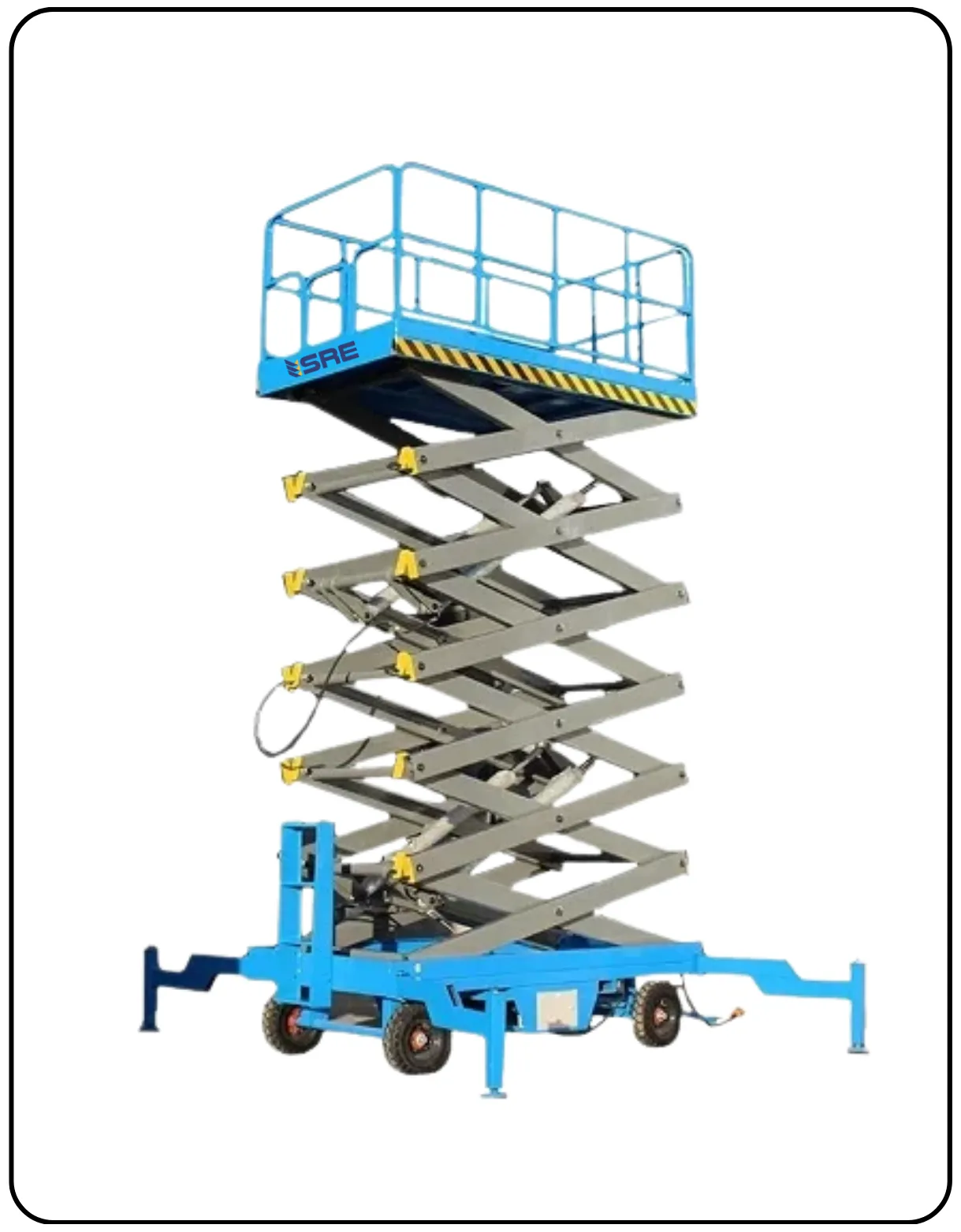
Assembly supervisors and production engineers across Rajkot’s ceramic, engineering, and textile manufacturing sector consistently identify fixed-height workstations as one of the most correctable sources of operator fatigue and assembly error on the production floor. When every operator — regardless of height — works at a bench set for an average dimension that fits nobody precisely, posture-related strain accumulates through the shift and precision work quality declines measurably in the final 2–3 hours. The cost-effective solution that converts any fixed-height station into a height-adjustable ergonomic workstation at Rs. 26,000 is the Scissor Lift Table in Rajkot. SRE Material Handling Equipment Pvt. Ltd., an ISO 9001:2015 certified manufacturer in Ahmedabad, Gujarat, supplies hydraulic scissor lift tables with 500 kg rated capacity and 900 mm maximum lift height for ergonomic and loading applications across Rajkot, Gujarat, and PAN India.
Why Scissor Lift Tables Are the Ergonomic Standard for Rajkot, Gujarat, and Maharashtra Assembly and Inspection Operations
The ergonomic case for scissor lift tables in Rajkot’s precision assembly, inspection, and packing operations is well-established in industrial ergonomics research: working at a height deviating by more than ±5 cm from individual neutral wrist height measurably increases upper body fatigue and reduces fine motor precision. The SRE scissor lift table allows each operator to set their specific working height by adjusting from 250 mm collapsed to 900 mm maximum in approximately 20–30 seconds using the foot-pedal hydraulic pump — setting height once at shift start and working in optimum posture for the full shift. The IS 2062 MS steel scissor frame with 8 mm base plate carries 500 kg rated load at any height without deflection, and the 5 mm chequered plate platform prevents work-piece slipping across the full height range.
The specific safety features of the SRE scissor lift table distinguish it from budget alternatives available in Rajkot’s local market: a mechanical safety lock pin that can be engaged at any height for secure maintenance holds — critical in machine shop settings where the table might be used as a component support during servicing; and a spring-loaded descent safety valve that prevents uncontrolled sudden lowering in case of hydraulic pressure loss. Both safety features are standard on every unit, not optional upgrades. Load tested at 125% rated capacity before dispatch from Ahmedabad — a verification that budget import variants rarely perform on anything more than a batch sample basis.
Scissor Lift Table vs. Fixed Workbench — The Productivity and Safety Case for Rajkot Operations
Plant managers in Rajkot, Bhavnagar, Kutch, and Mahesana evaluating whether a scissor lift table investment at Rs. 26,000 is justified over a fixed workbench at Rs. 8,000–15,000 should apply one simple calculation: multiply the number of operators using the station by the average hours per shift they work in a posture that deviates from neutral by more than 5 cm. In most Rajkot manufacturing environments with mixed operator heights, that number is close to 100% of the shift time for some operators. The productivity and error-rate improvement from bringing those operators to neutral working posture represents a return that exceeds the Rs. 11,000–18,000 price premium within weeks.
| Parameter | Scissor Lift Table (SRE) | Fixed-Height Workbench | Electric Scissor Lift Table |
|---|---|---|---|
| Load Capacity | 500 kg | Fixed | 500–1000 kg |
| Height Range | 250–900 mm | Fixed — one height | 200–1500 mm |
| Height Adjustment | Foot-pump (20–30 sec) | None | Push button (10 sec) |
| Power Required | None — manual hydraulic | None | 220V electric |
| Ergonomic Benefit | Full — any operator height | None — fixed only | Full — any operator height |
| Starting Price (SRE) | Rs. 26,000 | Rs. 8,000–15,000 | Rs. 1,50,000+ |
Get a Quote for Scissor Lift Tables — Rajkot, Gujarat & PAN India
Get a Bulk Quote NowCall: +91 9316 208879Key Applications of Scissor Lift Tables Across Rajkot, Gujarat, and PAN India Operations
SRE Material Handling Equipment Pvt. Ltd., MSME and Make in India certified, has supplied scissor lift tables to precision engineering, ceramic, textile, pharma, FMCG, and automotive operations in Rajkot, Ahmedabad, Pune, Noida, and Bangalore.
- Precision Assembly Stations (Rajkot Engineering): Height-adjustable assembly for machined component fitting — neutral working posture reduces assembly errors and operator fatigue.
- Quality Inspection Tables (Rajkot, Ahmedabad): Adjustable inspection height for different component sizes — inspector maintains neutral posture across component variety.
- Ceramic Finishing Stations (Rajkot): Raising ceramic products to grinding and polishing height — reduces back strain on heavy ceramic component handling.
- Packing Stations (Ahmedabad, Gujarat): Adjustable box packing height — packing operators set to neutral wrist height for consistent shift performance.
- Die Setting (Rajkot Press Shops): Raising die or tooling to press bed height — eliminates manual lifting of heavy tooling components during machine setup.
- Pharma Dispensing (Hyderabad, Pune): SS 304 platform variant — height-adjustable dispensing station for GMP pharma environments.
- Machine Maintenance (Rajkot Workshop): Raising components to correct working height during scheduled machine maintenance — lock pin secures at maintenance position.
- Loading Dock Height Adjustment (Gujarat Warehouses): Raising pallet loads to truck bed height for manual transfer — eliminates manual lift at loading bay height transition.
Custom Specifications and Fleet Orders for Rajkot and Gujarat Industrial Buyers
Procurement managers in Rajkot, Vatva, Kathwada, Kalol, Himmatnagar, and Chattral ordering scissor lift tables in fleet quantities need confirmed specifications before purchase order commitment. Standard SRE scissor lift table: 500 kg capacity, 900 mm maximum height, 820 mm × 500 mm platform (standard) with custom sizes to 2000 mm × 3000 mm. Frame: IS 2062 MS steel, 8 mm base plate. Hydraulic oil: ISO VG 46. Seals: nitrile 60°C. Load tested at 125%. Finish: 2-coat epoxy powder coat. Delivery: 7–10 working days standard from Ahmedabad. Bulk orders 5+ units: 15–21 working days. Complementary products: Pallet Truck for loading dock integration, Dock Leveler for truck bay height bridging, and Mobile Scissor Lift for elevated personnel access. Blog references: Pit Mounted Scissor Lift Table Mumbai, Hydraulic Stacker Pune, and Self Propelled Scissor Lift Table Pune.
Convert fixed-height stations to ergonomic workstations — contact SRE today.
Request a Fleet QuoteCall: +91 97247 22404Frequently Asked Questions — Scissor Lift Table in Rajkot
What is the capacity, height range, and price of the SRE Scissor Lift Table for Rajkot and Gujarat assembly operations?
The SRE scissor lift table in Rajkot has 500 kg rated capacity, height range 250–900 mm, platform 820 mm × 500 mm standard (custom to 2000 mm × 3000 mm). Frame: IS 2062 MS steel, 8 mm. Seals: nitrile 60°C. Platform: 5 mm chequered plate. Load tested at 125%. Safety: mechanical lock pin + spring-loaded descent valve. Starting price: Rs. 26,000 (taxes extra). SRE Material Handling Equipment Pvt. Ltd., ISO 9001:2015. Delivery to Rajkot: 7–10 working days.
How does a Scissor Lift Table improve assembly quality and reduce ergonomic injuries at Rajkot and Gujarat precision manufacturing plants?
At Rajkot precision manufacturing plants, the scissor lift table allows operators to adjust working height to within ±5 cm of individual neutral wrist height — the ergonomic threshold where upper body fatigue and fine motor precision are optimised. Height set in 20–30 seconds via foot-pedal pump. Plants report 10–20% reduction in posture-related assembly errors and measurable RSI complaint reduction in Gujarat and Maharashtra operations within the first month of deployment.
What safety features are included in SRE Scissor Lift Tables for industrial workshop use across Rajkot and Gujarat?
Every SRE scissor lift table in Rajkot includes: a mechanical safety lock pin for secure hold at any height during maintenance or die setting operations; a spring-loaded descent safety valve preventing uncontrolled lowering on hydraulic pressure loss; and a 5 mm chequered plate non-slip platform. All units are load-tested at 125% rated capacity before dispatch from Ahmedabad. Optional safety rails and toe guards available for elevated configurations used in Gujarat and Maharashtra facilities.
Can OEM buyers in Rajkot and Gujarat order fleet quantities of Scissor Lift Tables with custom platform sizes and SS 304 surfaces?
SRE Material Handling Equipment Pvt. Ltd. accepts OEM fleet orders with custom platform sizes up to 2000 mm × 3000 mm, SS 304 stainless surfaces for pharma GMP environments, and load ratings up to 3000 kg. Fleet delivery: 15–21 working days for 5+ unit orders in Rajkot and across Gujarat. MSME and Make in India certified — qualifies for government procurement. Turntable top and roller top configurations also available. Contact for project quotation.
Rajkot ke engineering workshop aur ceramic plant ke liye Scissor Lift Table ki price aur delivery kya hai?
Rajkot ke engineering aur ceramic plants ke liye SRE scissor lift table ki starting price Rs. 26,000 (taxes extra) hai 500 kg / 900 mm standard model ke liye. Delivery 7–10 working days mein hoti hai. Custom platform sizes ya SS 304 variant ke liye 15–21 working days. SRE Material Handling Equipment Pvt. Ltd. direct dispatch Ahmedabad se karta hai with 125% load test documentation. Fleet orders of 5+ units ke liye preferential pricing available hai.
Rajkot aur Gujarat ke pharmaceutical plant ke liye Scissor Lift Table ka kaunsa variant suitable hai?
Rajkot aur Gujarat ke pharmaceutical plants ke liye SS 304 stainless steel platform variant suitable hai — carbon steel platforms GMP formulation areas mein contamination risk create karte hain. SRE Material Handling Equipment Pvt. Ltd. SS 304 platform variant supply karta hai 10–15 working days mein Ahmedabad se. Hydraulic seals nitrile 60°C rated hain Gujarat summer temperatures ke liye. Bhavnagar, Kutch, aur Mahesana ke pharma units ke liye bhi available hai.
Kya Scissor Lift Table ke spare parts aur hydraulic seal service Rajkot aur Gujarat mein available hai?
Haan — SRE Material Handling Equipment Pvt. Ltd. ke scissor lift tables ke liye hydraulic seal kits, safety lock assemblies, platform surface plates, aur foot pump assemblies spare parts Ahmedabad warehouse se available hain. Rajkot aur Gujarat ke buyers ke liye next-day dispatch hota hai. Seal inspection har 6 mahine recommended hai. AMC (Annual Maintenance Contract) bhi available hai fleet installations ke liye across Gujarat aur Maharashtra.
Standards References
Quality: ISO 9001:2015. Steel: BIS — IS 2062. Factory safety: Factories Act, 1948.