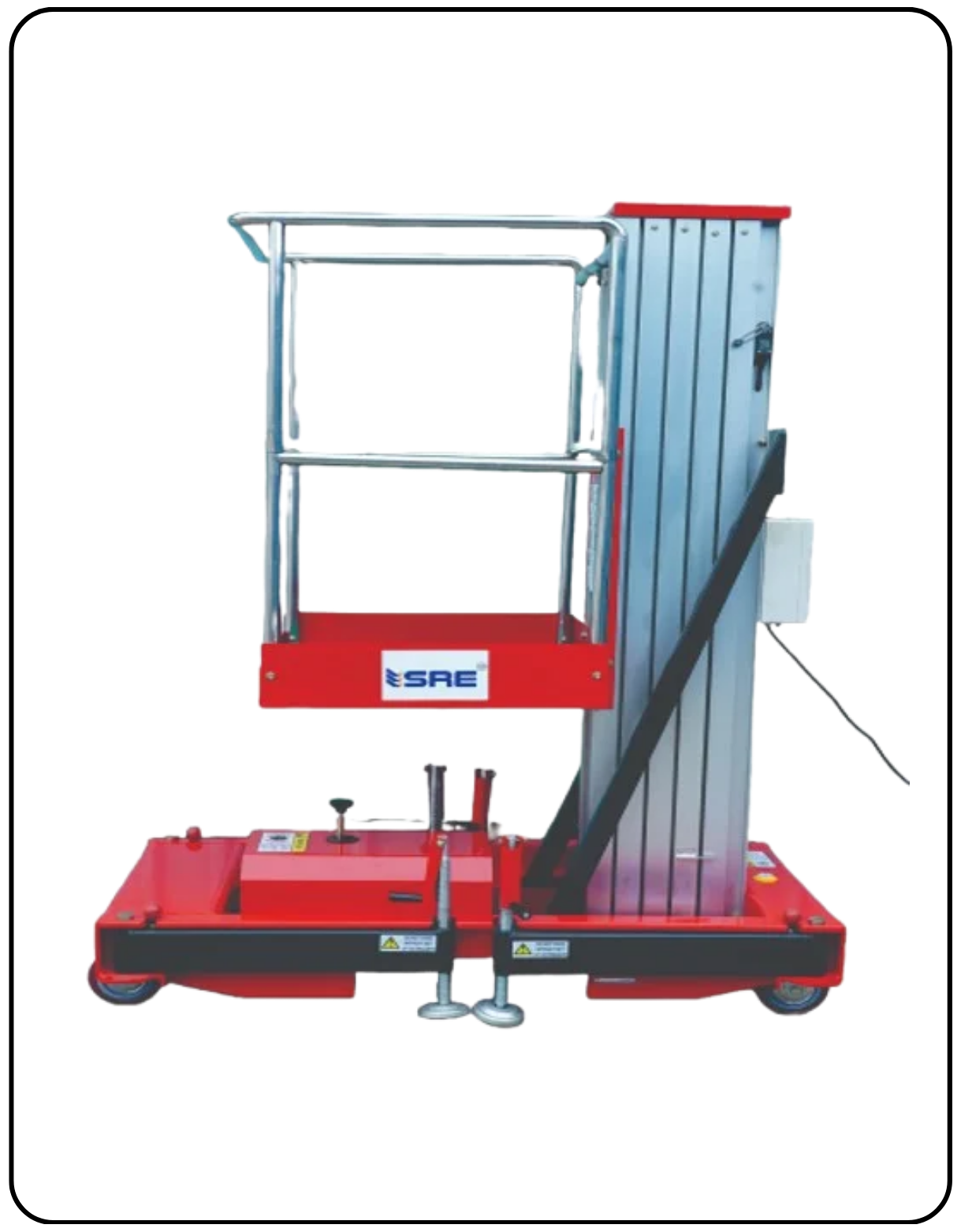
130 Kg-6 Meter (All Size Available)
Rs. 175000
(Taxes to be paid extra)
Brand: SRE
SKU: SRE 151
Min Order Qty: 1
Introduction: Why Industrial Facilities Need an Aerial Work Platform
Industrial overhead tasks are routine in manufacturing and warehousing, yet many facilities still handle them with outdated access methods. That creates avoidable delays during electrical maintenance, lighting replacement, HVAC service, and rack inspection, especially in busy hubs like Pune, Ahmedabad, Vadodara, Chennai, Hyderabad, Bangalore, Jaipur, and Noida. An Aerial Work Platform in Chakan gives plants a practical solution by offering safe elevation, stable positioning, and better operator control in compact industrial spaces. The result is faster task completion, better worker confidence, and a more professional maintenance process.
Procurement teams also face a real challenge when they compare price without giving equal importance to safety, service life, and long-term operating cost. Low-grade machines may reduce purchase cost on paper, but they often increase downtime, repair frequency, and safety concerns over time. SRE addresses this with an industrial-grade access solution designed for Indian usage conditions and recurring factory demands. Buyers evaluating related access equipment can review the aerial work platform product page to compare application fit and equipment purpose. The result is a more informed purchase decision with stronger lifecycle value.
A well-selected aerial work platform supports more than height access. It improves maintenance planning, reduces dependence on risky manual methods, and helps teams finish repetitive elevated work with more consistency. For factory owners and plant heads, that means fewer disruptions and better use of labor across departments. The result is an equipment investment that supports safety, productivity, and long-term plant efficiency rather than solving only one short-term problem.
Applications of Aerial Work Platform in Chakan
Industrial facilities handle many overhead jobs every week, but poor access equipment makes these tasks slower and more dangerous than they should be. That problem is common in plants where lighting lines, ducting, piping, cable trays, and high storage systems need regular inspection. An aerial work platform solves this by giving operators controlled vertical movement and a stable working position at height. The result is safer maintenance and smoother plant operations across different departments.
Common Industrial Applications
- Electrical maintenance and cable tray inspection
- Factory lighting installation and replacement
- HVAC duct servicing and overhead utility checks
- Warehouse rack inspection and facility upkeep
- Production line overhead maintenance
- Painting, signage fixing, and installation work
- Equipment inspection in engineering workshops
- Preventive maintenance in automotive plants
Automotive and engineering facilities in Chakan and Pune often work under strict maintenance windows where each minute matters. Traditional access tools waste setup time and increase worker fatigue during repeated elevated work. SRE’s aerial work platform reduces that issue by offering faster deployment and safer access for essential maintenance jobs. Buyers who need to compare product families can also explore the dual mast aerial work platform category for broader industrial options. The result is better task planning and lower disruption to production schedules.
Warehouses and logistics centers in Noida, Bangalore, and Hyderabad also need safe access for high-bay inspection and infrastructure maintenance. Manual climbing methods are not ideal in these active work zones because they reduce stability and increase risk around inventory and moving equipment. Aerial work platforms help solve this with controlled lifting and better positioning in tight industrial spaces. The result is improved safety and more reliable upkeep of warehouse systems.
Key Features of SRE Aerial Work Platform in Chakan
Buyers often face equipment problems because machines are selected on basic specifications alone, without checking how they perform during daily industrial use. That leads to issues such as unstable lifting, difficult movement, and poor maintenance support. SRE solves this by offering an aerial work platform built for industrial reliability, practical control, and repeat use inside factories and warehouses. The result is dependable performance for **commercial buyers** who need a **safe aerial work platform** with real operating value.
- 130 Kg load capacity for standard elevated work applications
- 6 meter lifting height for routine industrial access
- Compact structure for easy movement in plant areas
- Stable platform design for safer operator positioning
- Industrial-grade build quality for long service life
- All sizes available for different application needs
- User-friendly controls for easier handling
- Designed for low maintenance and regular use
Maintenance heads need equipment that supports repeated work without creating extra handling problems for operators. Oversized or poorly designed units can become hard to move, hard to store, and inefficient during urgent tasks. SRE’s design focuses on ease of use and controlled height access in real industrial environments. The result is better utilization and fewer workflow interruptions during routine plant maintenance.
Some facilities may need a narrower access solution depending on aisle width, task type, or floor layout. To support that comparison, buyers can review the single mast aerial work platform category and evaluate what suits their application best. The result is a better match between machine footprint, height access need, and plant operating conditions.
Technical Specifications of Aerial Work Platform in Chakan
Procurement approval often slows down when technical information is incomplete or scattered across documents. That creates confusion for engineering teams, budget reviewers, and purchase managers who need clear data before moving ahead. A simple technical table solves that issue by presenting the key details in one place. The result is faster comparison and easier decision-making for serious industrial buyers.
| Parameter | Specification |
|---|---|
| Product Name | Aerial Work Platform in Chakan |
| Brand | SRE |
| SKU | SRE 151 |
| Load Capacity | 130 Kg |
| Lifting Height | 6 Meter |
| Size Availability | All Size Available |
| Price | Rs. 175000 |
| Taxes | Extra as applicable |
| Minimum Order Quantity | 1 Unit |
| Usage | Industrial Height Access |
Technical comparison becomes more meaningful when buyers look beyond height alone and review load handling, platform stability, dimensions, and maintenance practicality together. A low-cost unit that does not suit actual plant conditions often creates higher cost later through breakdowns and poor usability. Teams comparing similar equipment applications can refer to dual mast aerial work platform manufacturer in India for related product context. The result is a more balanced technical review and a lower-risk buying decision.
Benefits of Choosing an Aerial Work Platform
Elevated industrial work becomes expensive when every task needs extra manpower, repeated repositioning, or long setup time. That problem reduces productivity and often pushes maintenance teams to delay important tasks until shutdown periods. An aerial work platform solves this by giving faster, safer, and more controlled access to overhead areas. The result is better work quality and stronger plant efficiency across regular maintenance cycles.
1. Better Safety for Workers
Unsafe access remains one of the biggest concerns in plants, especially when teams work near electrical systems, piping, or storage racks. A stable aerial work platform reduces that risk by offering a proper work platform built for height access rather than temporary balance-based methods. The result is safer execution and better support for internal safety systems.
2. Higher Maintenance Productivity
Plants lose valuable hours when teams spend more time arranging access than solving the actual maintenance issue. Aerial work platforms cut that waste by allowing quick lifting and better operator reach during inspection and repair work. Buyers wanting to understand how similar machines serve other industrial zones can review mobile aerial work platform in Mumbai. The result is quicker turnaround on routine maintenance jobs.
3. Reduced Downtime in Production Areas
Overhead maintenance delays often affect nearby lines, storage movement, and work scheduling. Faster and safer access helps maintenance teams complete jobs without holding up operations longer than needed. The result is improved uptime and more stable production planning in busy facilities.
4. Better Long-Term Cost Control
Frequent rental dependency or repeated use of unsuitable access tools can increase operating cost over time. Buying a durable platform from a specialist manufacturer helps solve that issue with stronger service life and more consistent use. The result is better return on investment for **industrial procurement teams** and **high-intent buyers** who want long-term value.
5. Flexible Use Across Departments
Many plants need one machine that can support electrical, utility, maintenance, and facility teams without complication. An aerial work platform fits this need because it can be used for many routine height-access tasks across one site. The result is higher equipment utilization and better asset value across departments.
Buyer-Focused Comparison Table
Purchase decisions often focus too much on upfront price and too little on repeat use, worker safety, and operating efficiency. That creates short-term savings but weak long-term performance in demanding plant conditions. A direct comparison helps buyers understand why an industrial aerial work platform is often the smarter option. The result is clearer procurement logic and better capital planning.
| Criteria | Aerial Work Platform | Ladder / Temporary Platform |
|---|---|---|
| Worker Safety | High with stable platform support | Lower stability and greater fall risk |
| Access Speed | Fast and controlled | Slow and manual |
| Operator Comfort | Better working position | More tiring over long tasks |
| Suitability for Daily Use | Strong for repeated industrial work | Weak for regular overhead maintenance |
| Productivity | High | Moderate to low |
| Compliance Support | Better for professional plant operations | Often unsuitable for repeated industrial use |
Procurement heads in Ahmedabad, Vadodara, Jaipur, and Chennai often need strong comparison points before capital approval is granted. Temporary setups may look cheaper at first, but they create hidden costs through slower work, higher risk, and weak repeat-use value. Buyers reviewing practical application examples can also see mobile aerial work platform in Nashik for related industrial use insight. The result is better buying justification and stronger confidence in the final equipment selection.
Why Choose SRE Material Handling Equipment Pvt. Ltd.
Industrial buyers do not only choose a product. They choose a supplier who understands uptime pressure, maintenance needs, and the operating realities of Indian plants. A poor supplier decision can lead to weak service support, lower build quality, and equipment that fails to match factory conditions. SRE solves this by providing practical material handling and height access solutions designed for industrial applications across India. The result is stronger trust for **buyers looking for aerial work platform manufacturers**, **procurement managers**, and **factory owners** who need a dependable supply partner.
- Industrial-focused product design
- Equipment suited to Indian plant conditions
- Reliable support for warehouses and factories
- Options across multiple categories and configurations
- Competitive pricing for **commercial purchase decisions**
- Focus on safety, productivity, and maintenance ease
Facilities across Pune, Ahmedabad, Bangalore, Hyderabad, and Noida often require equipment that works hard without constant service issues. Generic machines may not match floor space, lifting needs, or the pace of industrial work. Buyers can explore the SRE Material Handling Equipment home page to review the broader product range and understand the company’s industrial focus. The result is a more confident buying process backed by a specialist manufacturer.
Call to Action
If your facility is still relying on ladders or temporary access systems for elevated maintenance, the cost is already showing up in slower work, higher risk, and reduced operational control. SRE offers a practical solution with an Aerial Work Platform in Chakan designed for safe lifting, reliable use, and better plant productivity. That gives **serious buyers** a clear path toward safer height access and stronger long-term asset value. The result is better maintenance performance and a smarter equipment investment for industrial operations.
Buyers who want product guidance, pricing support, or application-based recommendations can connect through the SRE contact page for aerial work platform inquiry. Teams ready to move faster can also use the direct Get Quote option for immediate purchase discussion. The result is faster action and easier coordination for plants that need dependable height-access equipment without delay.
Frequently Asked Questions
1. What is the load capacity of the Aerial Work Platform in Chakan?
The SRE Aerial Work Platform in Chakan comes with a load capacity of 130 Kg. This capacity is suitable for standard elevated maintenance, inspection, and service tasks in factories and warehouses.
2. What is the lifting height of this aerial work platform?
This model offers a lifting height of 6 meters. SRE also provides all size options based on application, facility layout, and access requirement.
3. What is the price of the Aerial Work Platform in Chakan?
The listed base price is Rs. 1,75,000. Taxes are extra as applicable.
4. Who should buy this aerial work platform?
This product is ideal for buyers, procurement heads, warehouse managers, plant managers, factory owners, and industrial engineers who need safe and efficient height-access equipment.
5. Where can this aerial work platform be used?
It can be used in automotive plants, engineering workshops, warehouses, logistics centers, fabrication units, and maintenance departments in cities such as Chakan, Pune, Ahmedabad, Vadodara, Chennai, Hyderabad, Bangalore, Jaipur, and Noida.
6. Why is an aerial work platform better than ladders or scaffolding?
An aerial work platform provides better safety, more stable access, quicker setup, and stronger productivity than ladders or temporary platforms for repeated industrial work.
7. How can I contact SRE for a quote or inquiry?
You can connect directly with SRE through the official inquiry page here: Get Quote.