Customized Material Handling Equipment for Safer, Faster, Smarter Operations
When your warehouse or plant uses standard equipment for a non-standard job, the cost shows up quickly. You see extra handling time, operator fatigue, blocked aisles, damaged goods, and avoidable downtime. Customized material flow systems solve these practical issues by fitting your load, floor, height, shift pattern, and safety needs. That is why many purchase teams now compare standard units with tailored solutions before finalizing capex. For companies evaluating Material Handling Equipment Manufacturers, the real question is simple: can the equipment match your process without forcing your team to work around machine limits?
Founded in 2011, SRE Material Handling Equipment has worked with warehouses, factories, and logistics operations across Ahmedabad, Mumbai, Delhi, Bangalore, Hyderabad, Chennai, and Surat. Led by Mr. Gaurang Patel, the company brings 10+ years of experience, 15K+ delivered solutions, 95% client satisfaction, and 13 industry awards. You can review the company background on the official website.
Why Choose SRE Material Handling Equipment for Customized Material Handling Equipment
The practical reason to choose a customization-focused manufacturer is fit. A drum plant in Vadodara does not need the same handling setup as an e-commerce warehouse in Pune or a fabrication shop in Jaipur. SRE Material Handling Equipment starts with operating conditions such as aisle width, load center, stacking height, floor condition, duty cycle, and operator safety. This helps avoid a common mistake I have seen on shop floors for years: buying a machine first, then redesigning the process around it.
Yes, buyers often ask whether customization only means bigger dimensions or higher capacity. It does not. In real projects, it may involve fork length changes, platform redesign, counterweight adjustment, special wheels, battery-backed movement, corrosion-resistant coating, safety interlocks, or ergonomic controls. If your handling need involves pallets, reels, drums, dies, cages, or odd-shaped fabricated parts, a custom build can reduce travel time and manual touchpoints. For teams searching material handling equipment manufacturers near me, the smarter approach is to ask for an application review, not just a catalog.
Here is one small example. A packaging client in Kolkata was using a standard trolley for narrow passages between machine lines. The unit was strong enough, but turning radius was poor, and operators had to stop, reposition, and push manually. After redesigning wheel layout and platform geometry, cycle time improved and minor handling damage dropped. Similar application-based upgrades are also relevant for a pallet truck setup where load balance and fork dimensions directly affect productivity.
Our Customized Material Handling Equipment Manufacturing Capabilities
The core strength of a good custom builder is range plus engineering discipline. SRE manufactures and adapts equipment such as pallet trucks, electric stackers, hydraulic stacker systems, goods lifts, mobile floor cranes, scissor lifts, aerial work platforms, dock levelers, and drum handling units. That matters because most plants do not need one isolated product. They need linked movement across receiving, storage, production, dispatch, and maintenance zones. For buyers comparing Pallet Truck Manufacturers in Ahmedabad, the difference often comes down to whether the supplier can modify the product around the application.
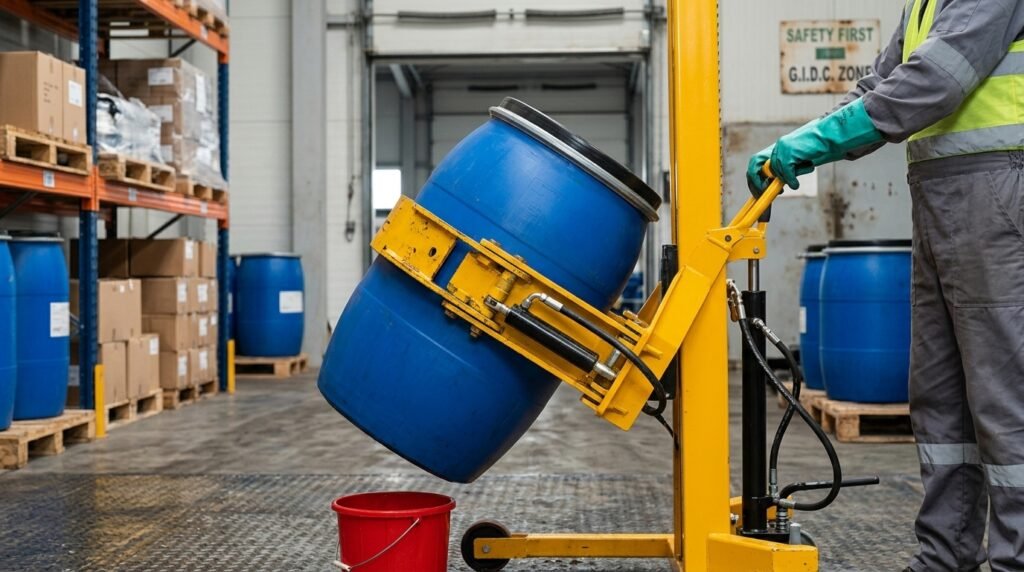
A custom solution may start from a standard base and then evolve. For example, a chemical handler may need a drum handling equipment configuration with secure clamping, controlled tilt, and corrosion-aware finishing. A fabrication unit may need a mobile floor crane with a different boom reach and wheel arrangement for tight shop-floor movement. A distribution center may require an aerial work platform for maintenance access, while a loading bay may depend on a properly matched dock leveler to cut loading delays.
Here’s how experienced manufacturers approach custom builds in India. First, they study the load itself, not just the rated capacity. Second, they review usage frequency across shifts. Third, they examine floor conditions, operator skill level, and maintenance capacity. This is especially important in mixed-use facilities in Indore, Chandigarh, or Ahmedabad, where one machine may be expected to serve multiple departments. Teams exploring electric stacker manufacturers India usually benefit from understanding battery duty cycle, turning radius, mast height, and safety braking before making a decision. For hydraulic lifting needs, this hydraulic stacker guide gives a useful reference point.
Get a Quote for Customized Material Handling Equipment
Navigating Quality Standards and ISO 9001-2015 Certification
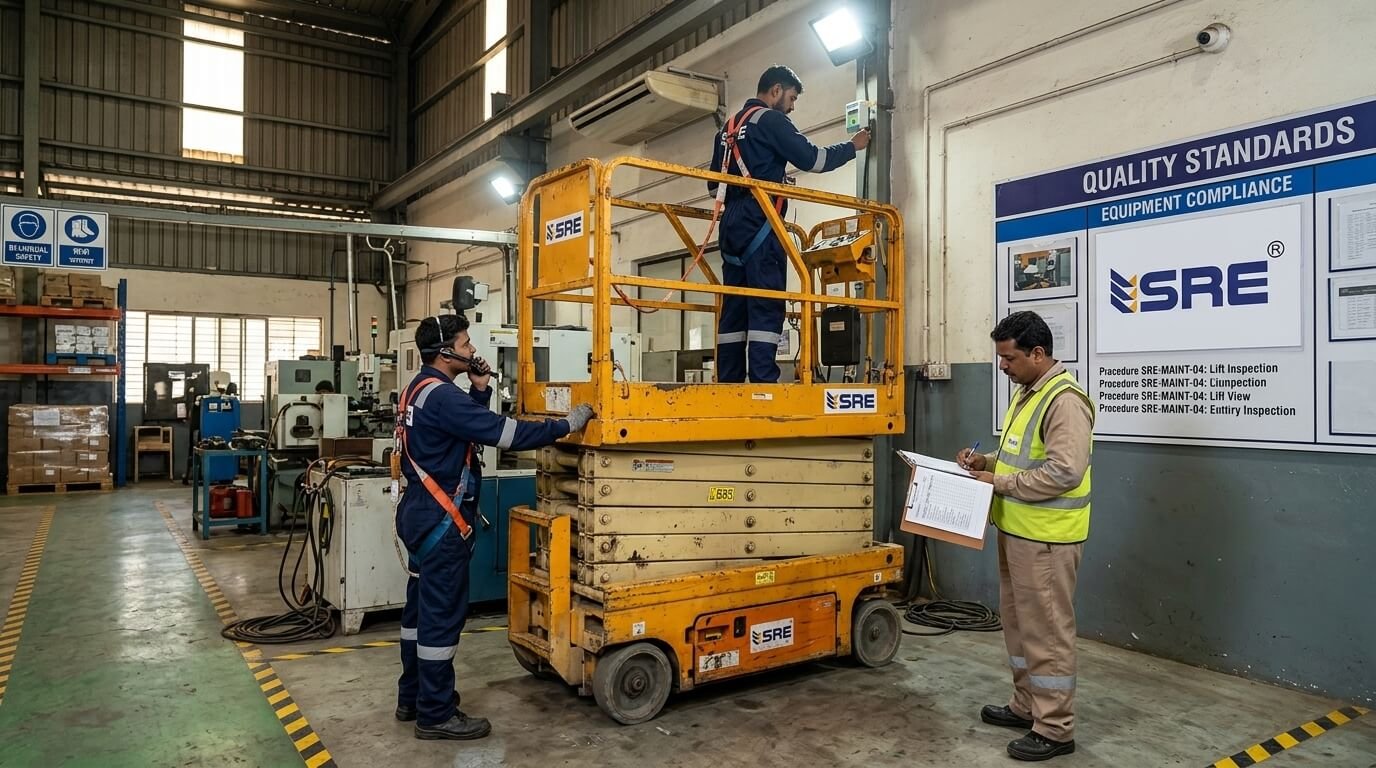
Quality in material handling equipment is not only about weld finish or paint appearance. The better measure is repeatable performance under real operating conditions. That includes lifting stability, control response, structural integrity, safe load distribution, and serviceability. SRE Material Handling Equipment is ISO 9001-2015 Certified, which matters because documented quality processes improve consistency from design review to dispatch. In buyer discussions, I often explain that ISO 9001-2015 does not replace technical evaluation, but it does support process control, traceability, and corrective action discipline.
Yes, buyers also ask how to verify quality before ordering a custom system. Start with design discussion, dimensional validation, material selection, safety features, testing method, and after-sales support. If your project includes elevated access, the same caution applies to a scissor lift application, where platform stability and operating safety must be reviewed carefully. If it includes vertical movement in warehouses, many teams also compare goods lift manufacturers and check how the system will behave under repeated daily cycles.
A mini success story shows why this matters. A logistics customer in Mumbai needed a custom handling arrangement for bulky cartons moving from staging to dispatch. Standard equipment created jams during peak loads. After process mapping and equipment modification, the site reduced manual touches and improved movement flow during evening dispatch windows. It was not a flashy change. It was a measured engineering correction, and that is usually what creates lasting value.
Local Manufacturers vs Customized Engineering-Focused Supplier
The best comparison is not price alone. It is total operational fit over time. Many local workshops can build basic frames or modify existing units, but custom material handling systems need design logic, testing discipline, and service support. Buyers evaluating Industrial Stackers Manufacturers India should compare engineering depth, documentation, and support responsiveness, not just initial quote value.
| Comparison Factor | Typical Local Manufacturer | SRE Material Handling Equipment |
|---|---|---|
| Application Study | Often limited to basic size and load discussion | Reviews load type, aisle space, duty cycle, floor, and operator use |
| Product Range | Usually narrow | Supports pallet trucks, stackers, lifts, cranes, drum handling, and access equipment |
| Quality Process | Inconsistent documentation | ISO 9001-2015 aligned process discipline |
| Customization Depth | Basic fabrication changes | Functional engineering changes based on use case |
| Support | May depend on local availability | Structured support and consultation |
Step-by-Step Process: How We Deliver Customized Material Handling Equipment
Here’s the process serious buyers should expect from a customization project. First comes a site and requirement review. Second is application mapping with dimensions, load details, and movement pattern. Third is design recommendation. Fourth is fabrication and testing. Fifth is delivery, installation support where relevant, and operating guidance. For elevated handling jobs, many teams also compare a dual mast aerial work platform when planning maintenance-safe access.
A simple framework helps during evaluation:
- Define the load: size, weight, center of gravity, and fragility
- Define the movement: horizontal, vertical, loading dock, or maintenance access
- Define the environment: aisle width, floor condition, humidity, and usage hours
- Define the operator reality: skill level, safety needs, and shift pattern
- Define service expectations: spare access, preventive checks, and response time
This framework is useful whether you operate in Delhi, Bangalore, or Hyderabad. It also helps when purchase, maintenance, and operations teams have different priorities. If you want a practical starting point, ask for a Free Equipment Consultation, review the use case with photos and dimensions, and then shortlist options. You can also Download Material Handling Cost Guide to compare lifetime value, not just purchase price.
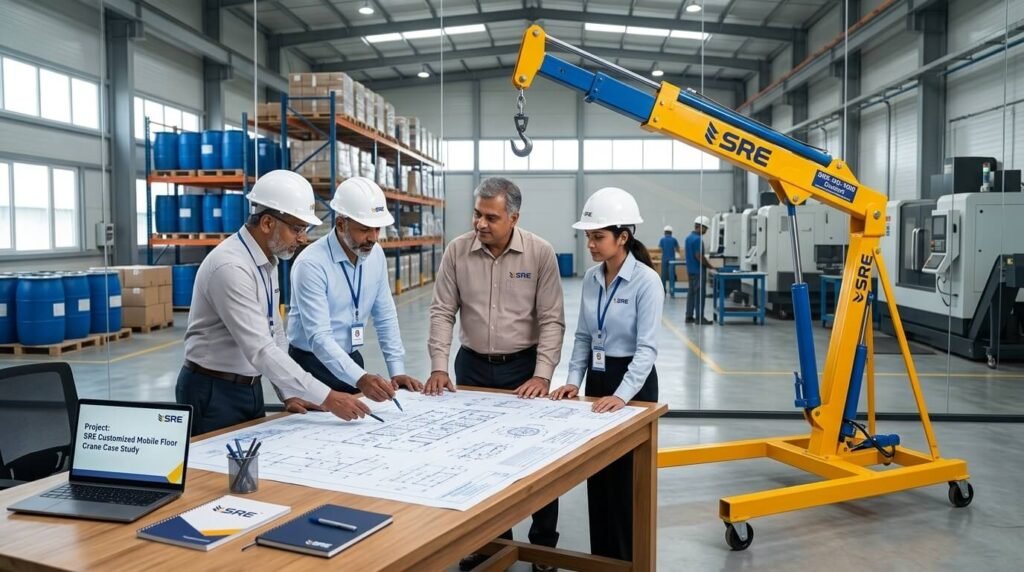
Real Client Case Study
Here’s a realistic case from western India. An anonymized client, “R.K. Plastics,” based near Surat, handled mixed pallet loads and oversized packaging rolls in one facility. Their standard equipment fleet forced operators to use makeshift methods during shift peaks, especially when aisle congestion increased. The result was slower dispatch, more manual effort, and recurring minor product damage.
The solution was a custom handling setup built around actual site movement. That included revised fork dimensions for selected loads, better wheel selection for floor conditions, and workflow alignment between staging and dispatch. The same study also identified a need for a mobile floor crane in the maintenance area, so lifting jobs no longer interrupted pallet movement. Within weeks, the client reported smoother movement, fewer handling bottlenecks, and better operator comfort. This is the practical value of custom material handling solutions India teams are now prioritizing.
FAQs
1. What is customized material handling equipment?
It is equipment designed or modified to suit your exact load, movement pattern, space, and safety need.
2. When should I choose custom equipment over standard models?
Choose custom equipment when standard units create delays, safety issues, excess manual effort, or poor fit.
3. Can customized systems work for small warehouses?
Yes. Small sites often benefit the most because space constraints demand better turning radius and layout fit.
4. Do custom solutions increase cost too much?
Not always. A slightly higher purchase cost can reduce downtime, labor effort, and product damage over time.
5. Which industries commonly need customized handling systems?
Warehousing, engineering, packaging, chemicals, pharmaceuticals, logistics, fabrication, and FMCG units often need them.
6. How do I assess a supplier properly?
Check application understanding, quality process, engineering depth, testing method, and service support.
7. Can I request a consultation before finalizing specifications?
Yes. A consultation helps you avoid under-sizing, over-sizing, or buying the wrong configuration.
Customized handling equipment works best when it solves a real operating problem, not when it is chosen only on brochure specifications. If your team is facing slow movement, awkward loads, narrow aisles, or repetitive manual handling, a custom review can uncover a safer and more productive approach. To discuss your requirement, call +91 9316 208879, connect on WhatsApp, ask for a Free Equipment Consultation, or Download Material Handling Cost Guide before finalizing your project.