
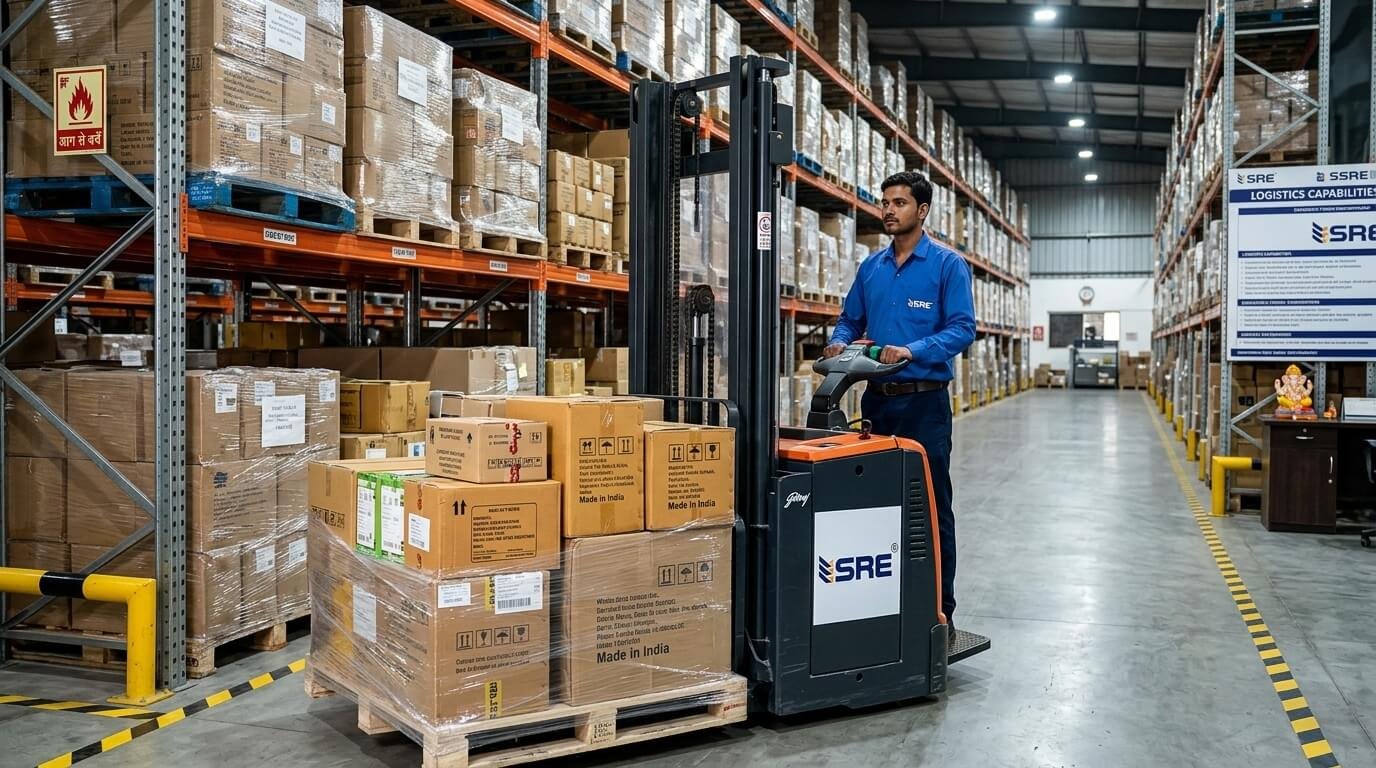
Heavy Duty Material Handling Equipment: Practical Buying Guide for Safer, Faster Industrial Movement
Heavy-duty movement inside a plant is not just about lifting more weight. It is about reducing damage, keeping operators safe, cutting loading time, and making sure production does not stop because one trolley, stacker, or lift failed at the wrong moment. In Indian factories and warehouses, I have seen this again and again—from Ahmedabad textile units to auto ancillaries in Pune, pharma warehouses in Hyderabad, and fast-moving distribution hubs in Mumbai. When you choose the right equipment size, duty cycle, mast height, wheel type, and safety features, the impact shows quickly in uptime, labour efficiency, and floor discipline. That is why buyers searching for material handling equipment manufacturers near me usually need more than a catalog; they need application-level guidance.

Why Choose SRE Material Handling Equipment for Heavy Duty Material Handling Equipment
The first thing buyers should check is whether the manufacturer understands real operating conditions, not only product specifications. SRE Material Handling Equipment has been active since 2011 and works from Ahmedabad with a practical engineering mindset shaped by Indian shop-floor needs. Founded by Mr. Gaurang Patel, the company has delivered 15K+ material handling equipment solutions, reported a 95% client satisfaction rate, and earned 13 industry awards. You can review the company background here: SRE Material Handling Equipment Private Limited.
Yes, buyers in Delhi, Bangalore, Chennai, and Surat often ask the same question: what matters more, price or lifecycle value? In my experience, lifecycle value wins every time. A lower-cost unit that bends under load, wears wheels too fast, or creates operator fatigue becomes expensive within months. This is where experienced material handling equipment manufacturers stand apart: they assess load pattern, aisle width, floor condition, stacking height, and shift intensity before recommending a solution.
Here is the practical difference. A warehouse moving packed chemicals may need drum handling equipment and a dock leveler. A fabrication unit may need a hydraulic stacker, mobile floor crane, and goods lift. An e-commerce hub may prefer electric movement for repetitive indoor travel. Buyers looking for pallet truck manufacturers in Ahmedabad or electric stacker manufacturers India are usually solving one of these operational bottlenecks, not buying a machine in isolation.
A short example: one client in Vadodara was using undersized manual equipment for cast component movement. Small delays at dispatch were adding up to almost 90 minutes per shift. After resizing the handling setup and improving route flow, loading time dropped and damaged pallets reduced noticeably. That is the kind of result plant teams remember.
Our Heavy Duty Material Handling Equipment Manufacturing Capabilities
The best heavy-duty equipment range is one that covers multiple movement needs without forcing the buyer to deal with five different vendors. SRE Material Handling Equipment manufactures and supplies practical systems across pallet movement, lifting, stacking, dock access, and elevated work support. For buyers with vertical picking needs in warehouse aisles, the electric order picker is relevant where safe access and repetitive order handling matter.
Yes, we provide equipment support across common industrial categories such as pallet trucks, electric and hydraulic stackers, goods lifts, scissor lift manufacturers’ applications, aerial work platform requirements, dock leveler systems, drum handling equipment, and custom builds. The engineering value lies in matching capacity with use frequency. A 1-ton intermittent job and a 2-ton round-the-clock dispatch line cannot be treated the same way.
For stacking and compact warehouse use, many buyers compare manual vs semi-electric vs powered options. A detailed product reference for this category is the hydraulic stacker manufacturer and supplier page. In practice, a hydraulic stacker works well for moderate lifting cycles, while electric variants make more sense where operator fatigue and daily repetition are high. This is why searches around electric stacker manufacturers and Industrial Stackers Manufacturers India often come from facilities trying to move beyond purely manual handling.
Loading bay conditions also deserve attention. In Kolkata and Jaipur, I have seen warehouses lose time simply because truck-bed height and floor level were not aligned. A proper mobile ramp solution can improve forklift or pallet access where permanent dock infrastructure is not available. Likewise, for bulk inbound and outbound movement, a dock leveler reduces unsafe bridging methods that still exist in many plants.
If you want a quick mid-project discussion on capacity, travel height, or floor suitability, use this page: Get a Quote for Heavy Duty Material Handling Equipment
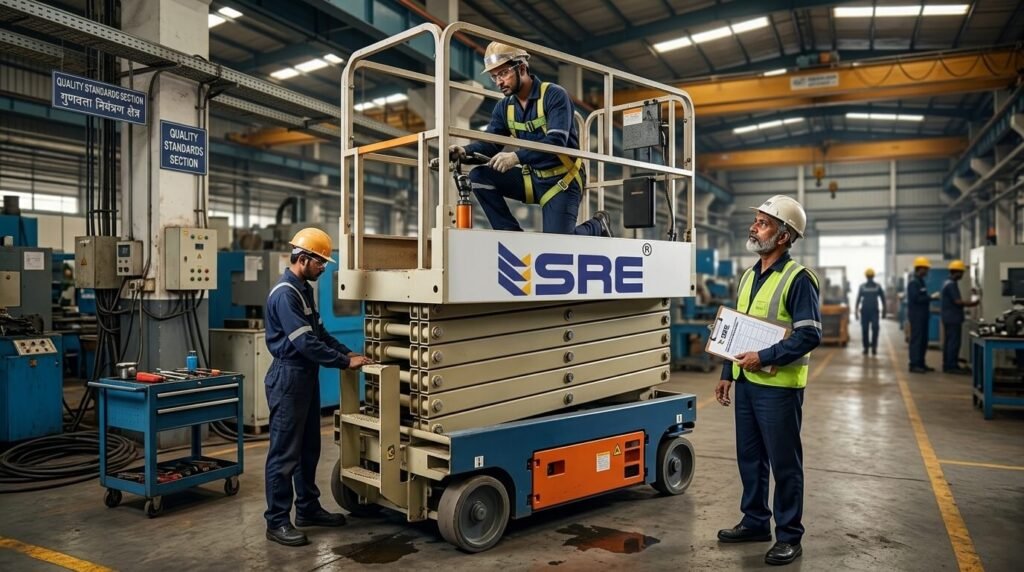
Navigating Quality Standards & ISO 9001-2015 Certification
Here’s what serious buyers should ask: is the equipment built under a controlled quality process, and is there consistency in fabrication, inspection, and documentation? SRE Material Handling Equipment Private Limited is ISO 9001-2015 Certified, which matters because this standard supports process discipline, traceability, corrective action, and continual improvement. It does not replace technical evaluation, but it is a strong indicator that quality is handled systematically rather than casually.
In real terms, quality for heavy-duty handling equipment means weld integrity, steel section selection, wheel and bearing durability, hydraulic stability, braking response, dimensional accuracy, and safe load behavior over time. Buyers researching hydraulic stacker applications in India often focus on lifting capacity only. That is incomplete. Mast rigidity, fork alignment, and serviceability matter just as much if you want stable lifting in daily use.
A small success story from Indore illustrates this well. An engineering stores team had repeated trouble with manual movement of die sets. The immediate thought was to buy a higher-capacity unit. After review, the actual issue turned out to be uneven flooring and wrong wheel material. Correcting equipment configuration solved the handling issue without overbuying. That is why experienced guidance is often more useful than flashy product claims.
Local Manufacturers vs SRE Material Handling Equipment
The best comparison is not local versus non-local. It is generic supply versus application-fit supply. Buyers in Ahmedabad, Chandigarh, and Bangalore usually compare response time, customization, engineering clarity, and after-sales practicality.
| Comparison Point | Typical Local Supplier | SRE Material Handling Equipment |
|---|---|---|
| Application Study | Often limited to basic capacity discussion | Focus on load, height, shift pattern, floor, and workflow |
| Product Range | May offer only standard units | Pallet trucks, stackers, lifts, cranes, ramps, platforms, and custom solutions |
| Quality Process | Varies by vendor | ISO 9001-2015 aligned process discipline |
| Customization | Limited modifications | Supports custom material handling solutions India-wide |
| Operational Advice | Mostly product-led | Use-case-led recommendations for warehouses and factories |
For buyers comparing pallet movement systems, this background article is useful: pallet truck manufacturer in India. It helps frame the difference between simple unit purchase and proper warehouse flow planning.
Step-by-Step Process – How We Deliver Heavy Duty Material Handling Equipment
Here’s how SRE Material Handling Equipment usually approaches a project. Step one is requirement capture: load weight, center of gravity, lift height, operating frequency, available aisle space, floor condition, operator skill level, and safety expectations. This stage is where many procurement mistakes can still be prevented.
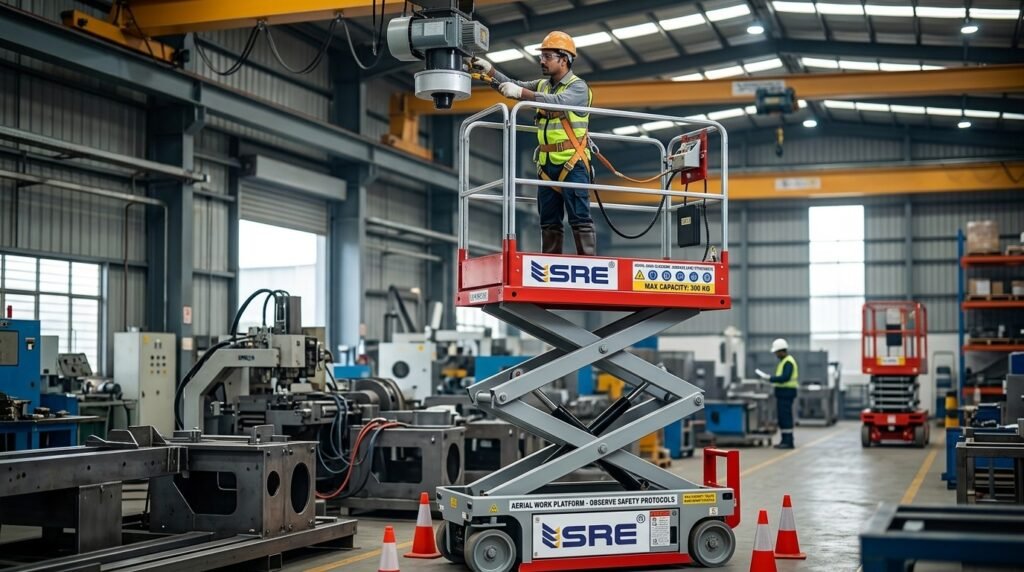
Step two is solution mapping. If the application is repetitive warehouse stacking, the team may recommend stacker options. If the challenge is truck loading in a semi-developed yard, mobile ramps or dock interfaces become more important. If elevated maintenance access is needed, an aerial work platform or scissor lift may be the practical direction. For powered warehouse movement context, see self-propelled stacker insights from Gujarat.
Step three is engineering and build planning. This includes material selection, fabrication checks, fitment review, hydraulic or electrical integration where needed, and inspection against expected working conditions. In Indian plants, this step is critical because actual use often becomes tougher than the initial purchase brief.
Step four is delivery, installation guidance, and operator familiarization. Yes, this matters. Many equipment issues blamed on manufacturing are actually caused by overload, wrong fork entry, poor turning practice, or neglect of routine checks. A warehouse equipment supplier should help the client avoid those mistakes from day one.
Step five is post-dispatch support and improvement feedback. Smart buyers also ask for a Free Equipment Consultation, request to Download Material Handling Cost Guide, and use WhatsApp for faster technical discussion, especially when comparing options across units in Mumbai, Delhi, or Chennai.
Real Client Case Study
A realistic case from Surat helps explain what good heavy-duty planning looks like. An anonymized textile processing client—let us call them Client R—was handling dye chemical pallets, packed rolls, and maintenance spares through one mixed-traffic zone. Manual pallet movement was slow, stacking was inconsistent, and loading point congestion was affecting dispatch timing. The team initially planned to buy only additional pallet trucks.
After site review, the recommendation was broader: improve pallet flow, assign the right hydraulic stacker for internal lift jobs, add a better loading interface, and separate manual from high-frequency movement routes. Within weeks of implementation, internal travel delays reduced, operator strain came down, and dispatch handling became more predictable. This is why the right answer is not always “buy more equipment.” Sometimes it is “buy the right mix.”
FAQs
1. What is heavy duty material handling equipment used for?
- It is used for moving, lifting, stacking, loading, and positioning heavy materials in factories, warehouses, logistics parks, and industrial stores.
2. How do I choose between a pallet truck and a stacker?
- Choose a pallet truck for horizontal pallet movement. Choose a stacker when you also need vertical lifting and stacking.
3. Is a hydraulic stacker enough for daily industrial use?
- Yes, for moderate-duty applications. For high-frequency repetitive use, electric options may be more efficient.
4. Why is ISO 9001-2015 relevant when buying equipment?
- It shows the manufacturer follows structured quality processes, documentation, and continual improvement practices.
5. Can heavy-duty equipment be customized for my plant layout?
- Yes, custom sizing, lifting range, wheel type, and use-case modifications are often possible.
6. Which industries commonly need this equipment in India?
- Textiles, pharmaceuticals, engineering, automotive, chemicals, FMCG, logistics, warehousing, and packaging.
7. How can I get technical guidance before buying?
- You can request a consultation, discuss the application on WhatsApp, and compare operating conditions before finalizing capacity.