
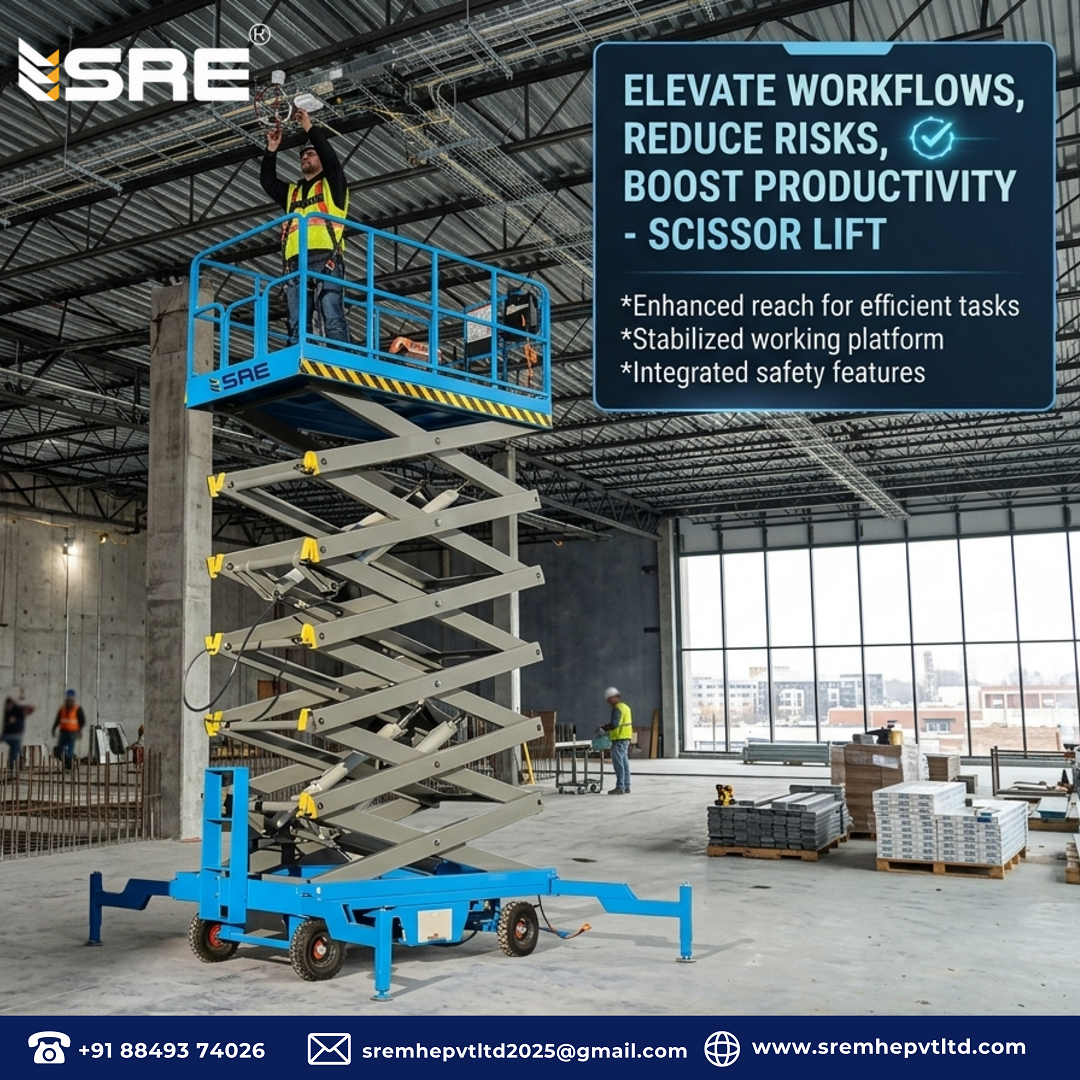
500 Kg Capacity – 900 mm Height (All Size Available)
Rs. 26000
(Taxes to be paid extra)
Brand: SRE
SKU: SRE 149
Min Order Qty: 1
Boost Output Instantly with Smart Scissor Lifts by SRE Material Handling Equipment Pvt. Ltd.
Warehouse and industrial operations have evolved dramatically over the past decade. Maximize Output with Smart Scissor Lift Solutions has become a key focus as businesses move beyond manual labor and basic tools toward faster processes, higher volumes, and stricter safety standards.
In today’s fast-paced warehouse environments, teams are expected to handle tasks more efficiently without compromising accuracy or worker safety. Despite these advancements, challenges such as labor fatigue, inefficient material handling, and inconsistent performance across shifts continue to affect overall productivity.
This is where scissor lifts are proving to be a game-changing solution. No longer just simple lifting equipment, they now play a crucial role in streamlining workflows, reducing physical strain on workers, and ensuring smoother, more reliable operations across various industries.
The Changing Needs of Modern Warehouses / Industries
Today’s warehouses and manufacturing units are under constant pressure to deliver more in less time. The rise of e-commerce, just-in-time inventory systems, and global supply chains has increased operational complexity.
Common challenges include:
- Faster loading and unloading cycles
- Handling higher volumes of goods
- Managing limited manpower
- Maintaining safety compliance
- Reducing operational bottlenecks
In real-life workflows, delays often occur during repetitive lifting, stacking, or positioning of materials. These small inefficiencies add up over time, affecting overall throughput.
As a result, businesses are now focusing on smarter material handling solutions that support both speed and safety without overburdening the workforce.
What Is a Scissor Lifts?
A Scissor Lifts is a mechanical platform designed to raise or lower loads vertically using a crisscross (scissor-like) mechanism. It is commonly used in warehouses, factories, and logistics hubs to position materials at a convenient working height.
Unlike traditional lifting tools, it provides:
- Controlled vertical movement
- Stable platform support
- Adjustable working height
In simple terms, it helps bring the work to the worker instead of forcing the worker to adapt to uncomfortable positions.
Why Scissor Lifts Is Replacing Traditional / Manual Equipment?
Manual lifting methods and basic tools like pallets or fixed-height tables have limitations. They often require workers to bend, stretch, or lift repeatedly, which leads to fatigue and inefficiency.
Key differences include:
- High physical strain
- Inconsistent performance
- Increased risk of injury
- Slower operations
Productivity Gains in Daily Operations
One of the most noticeable benefits of using Scissor Lifts is the improvement in day-to-day productivity.
In practical scenarios:
- Workers spend less time adjusting positions
- Loading and unloading becomes faster
- Repetitive tasks are handled more efficiently
For example, in packaging or assembly lines, maintaining a constant working height allows workers to perform tasks without interruption. This leads to more consistent output across shifts.
Let’s help you maximize productivity and minimize risks—get in touch with our team now for the right material handling solution.
Improved Workplace Safety
Safety is a major concern in industrial environments, especially when it comes to manual handling of heavy materials.
Scissor Lifts help reduce risks by:
- Minimizing bending and lifting strain
- Providing stable load support
- Allowing controlled movement of materials
- Reducing chances of sudden slips or drops
In many cases, workplace injuries are linked to repetitive strain or improper lifting techniques. By improving ergonomics, Scissor Lifts contribute to a safer working environment.
For global industry insights and the latest business trends, you can also refer to trusted sources like India Wire News.
Handling Heavier Loads with Ease
Modern warehouses deal with heavier and bulkier materials than ever before. Manual handling is not only inefficient but also unsafe in such cases.
Scissor Lifts are designed to handle these challenges by offering:
- Strong load-bearing capacity
- Stable lifting platforms
- Smooth vertical movement
This ensures that even heavy loads can be positioned accurately without compromising safety or efficiency.
Technology & Operational Efficiency
Today’s Scissor Lifts are built with advanced features that support long-term operational efficiency.
Depending on the model, they may include:
- Hydraulic or electric lifting systems
- Battery-powered operation
- Smooth and controlled lifting mechanisms
For expert marketing strategies and business growth insights, you can also explore informative blogs on Insightful News.
Space Optimization & Maneuverability
Space constraints are a common challenge in warehouses, especially those operating in urban or high-density environments.
Scissor Lifts are designed to be:
- Compact in structure
- Suitable for narrow aisles
- Easy to position in tight spaces
This makes them ideal for facilities where efficient space utilization is critical. By optimizing vertical movement, they also help reduce the need for additional floor space.
Cost Efficiency Over Time
While initial investment is always a consideration, the real value of Scissor Lifts lies in long-term cost efficiency.
Key factors include:
- Reduced labor fatigue and turnover
- Lower risk of workplace injuries
- Improved operational speed
- Decreased downtime
Over time, these benefits contribute to better overall cost management, making Scissor Lifts a practical investment rather than an expense.
Sustainability & Compliance
Sustainability and compliance are becoming increasingly important in industrial operations.
Modern Scissor Lifts support these goals by:
- Reducing manual strain and workplace injuries
- Improving energy efficiency (especially in electric models)
- Supporting safer and cleaner operations
Additionally, using proper lifting equipment helps organizations align with workplace safety regulations and compliance standards.
Integration with Warehouse / Factory Workflow
One of the advantages of Scissor Lifts is their ability to integrate seamlessly into existing workflows.
They can be used in:
- Loading and unloading stations
- Assembly lines
- Packaging areas
- Storage and retrieval systems
Instead of disrupting operations, they enhance existing processes by making them more efficient and consistent.
For more insights into the latest trends and business developments in the Indian equipment industry, you can explore online news platforms. Visit India News Connect to stay updated with the news that impacts the manufacturing world.
Training, Ease of Use & Maintenance
Ease of use is an important factor when introducing new equipment into operations.
Scissor Lifts are generally:
- Simple to operate
- Easy to learn with basic training
- Designed for predictable performance
Maintenance requirements are also straightforward, especially when regular inspections and basic servicing are followed. This ensures long-term reliability without complex upkeep.
Why Choosing a Reliable Manufacturer Matters?
The performance of any equipment depends heavily on its build quality and support system.
When selecting a Scissor Lift, it is important to consider:
- Manufacturing quality standards
- Availability of service support
- Spare parts accessibility
- Industry experience
Working with an experienced manufacturer like SRE MATERIAL HANDLING EQUIPMENT PRIVATE LIMITED can help ensure that the equipment meets operational requirements and compliance expectations.
For more details, you can explore: 👉 https://www.sremhepvtltd.com/
Conclusion:
As warehouse and industrial operations continue to evolve, the need for efficient, safe, and reliable material handling solutions becomes more critical.
Scissor Lifts are no longer just an optional tool—they are becoming an essential part of modern workflows. From improving productivity to enhancing safety and reducing operational strain, they offer practical benefits that align with real industry needs.
For businesses looking to optimize output without overcomplicating operations, adopting the right lifting solutions is a step in the right direction.
Ready to upgrade your workflow with smarter, safer lifting solutions? Contact us today for expert guidance and customized scissor lift options.
Key Takeaways
- Productivity: Faster workflows and consistent output across shifts
- Safety: Reduced risk of injuries and improved ergonomics
- Load Handling: Efficient handling of heavy and bulky materials
- Cost Efficiency: Long-term savings through reduced downtime and labor strain
- Industry Trend: Growing adoption of smart material handling solutions
FAQs
Q1. Where are Scissor Lifts commonly used?
- They are widely used in warehouses, manufacturing units, logistics hubs, and assembly lines where vertical lifting is required.
Q2. Are Scissor Lifts safe for daily industrial use?
- Yes, when used correctly, they improve safety by reducing manual lifting and providing controlled movement.
Q3. Do Scissor Lifts require special training?
- Basic operational training is usually sufficient for safe and effective use.
Q4. Can Scissor Lifts handle heavy loads?
- Yes, they are designed to handle various load capacities depending on the model and application. Scissor Lifts from SRE Material Handling Equipment Pvt. Ltd. are built for strong lifting performance, making them suitable for safely handling heavy loads in warehouse and industrial operations.
Q5. How do Scissor Lifts improve productivity?
- By reducing manual effort, maintaining consistent working height, and speeding up material handling processes.
#ScissorLifts #MaterialHandling #WarehouseEfficiency #IndustrialSafety #LogisticsSolutions #FactoryOperations #SupplyChainOptimization #SREMHEquipment #IndustrialGrowth #SmartWarehousing