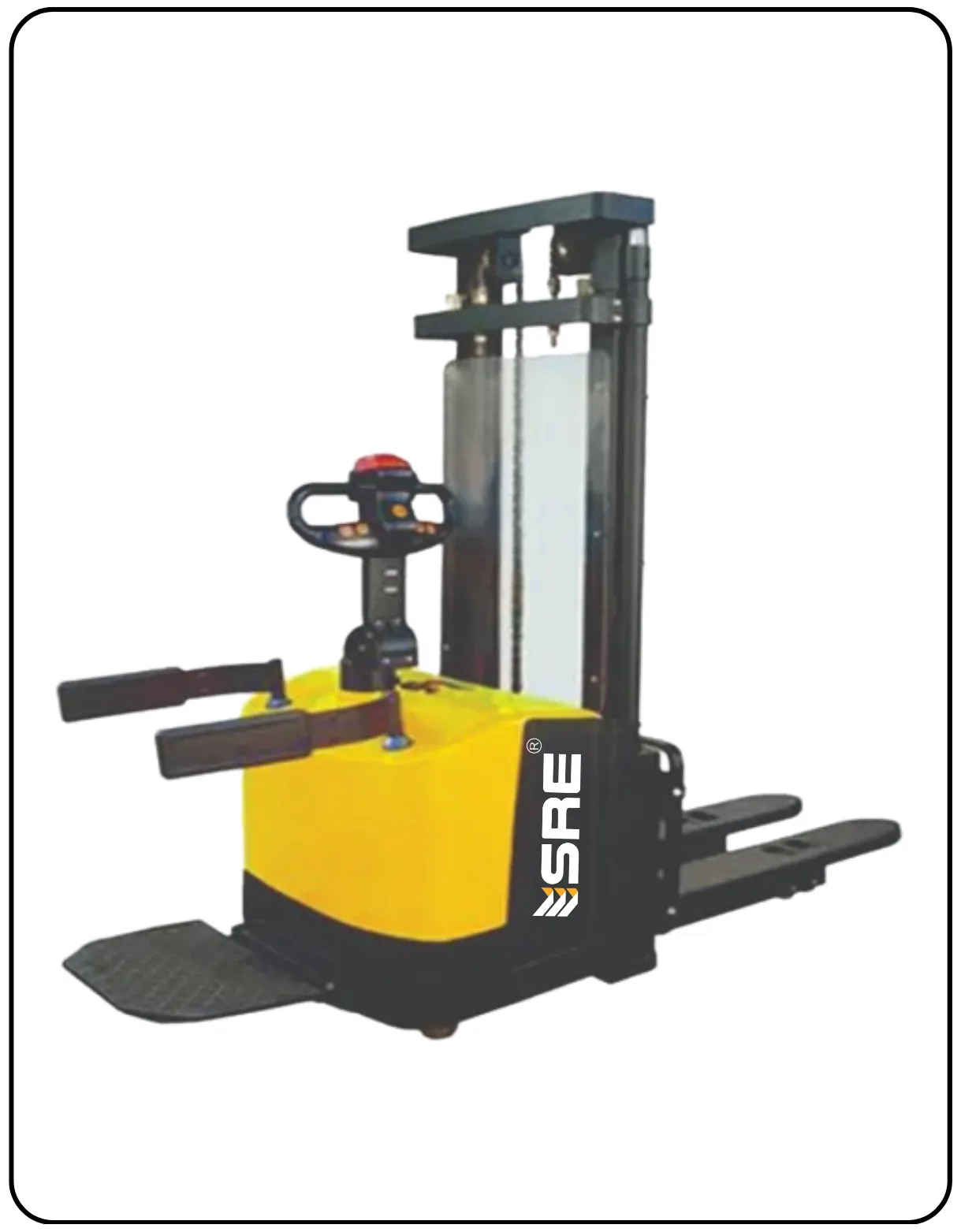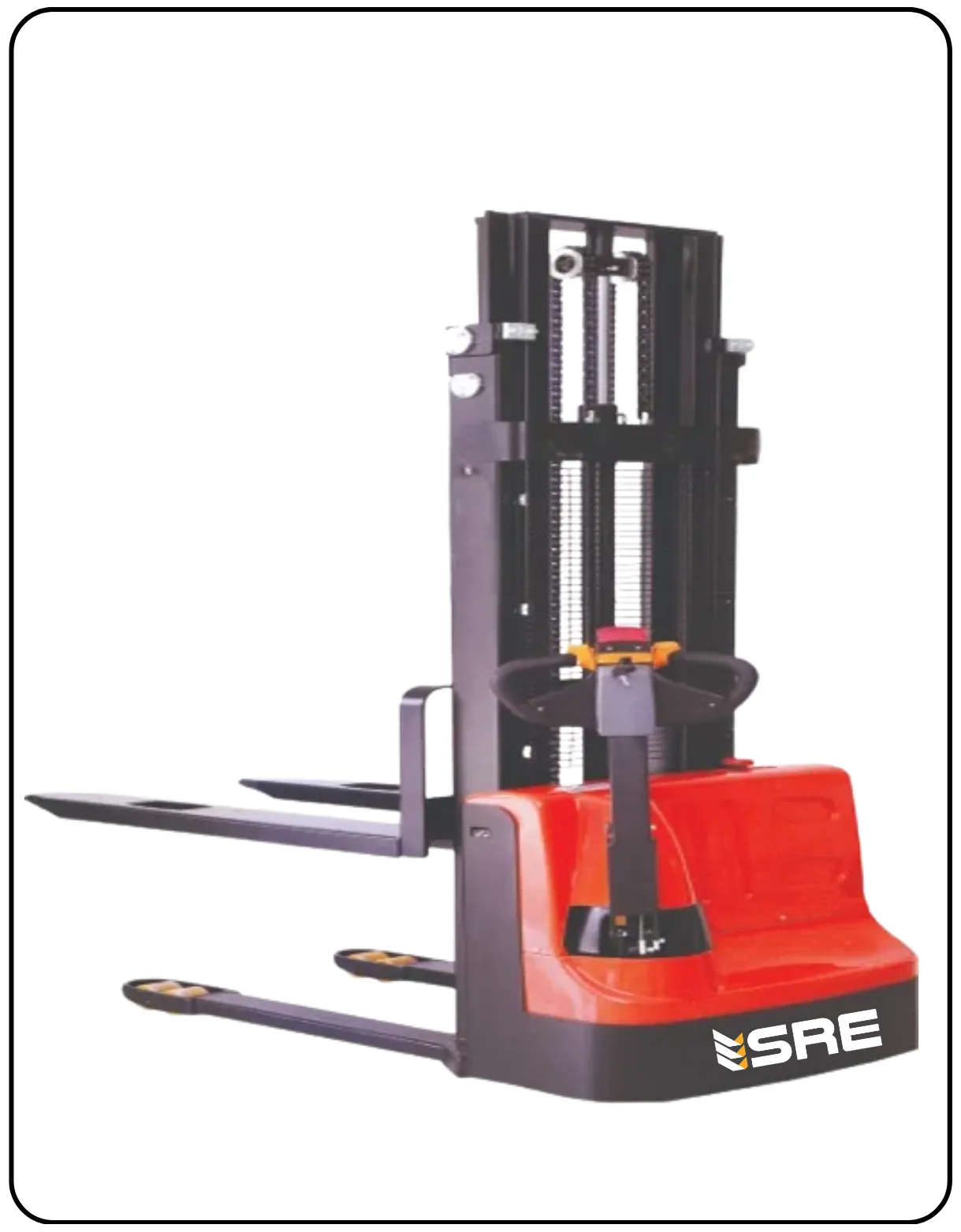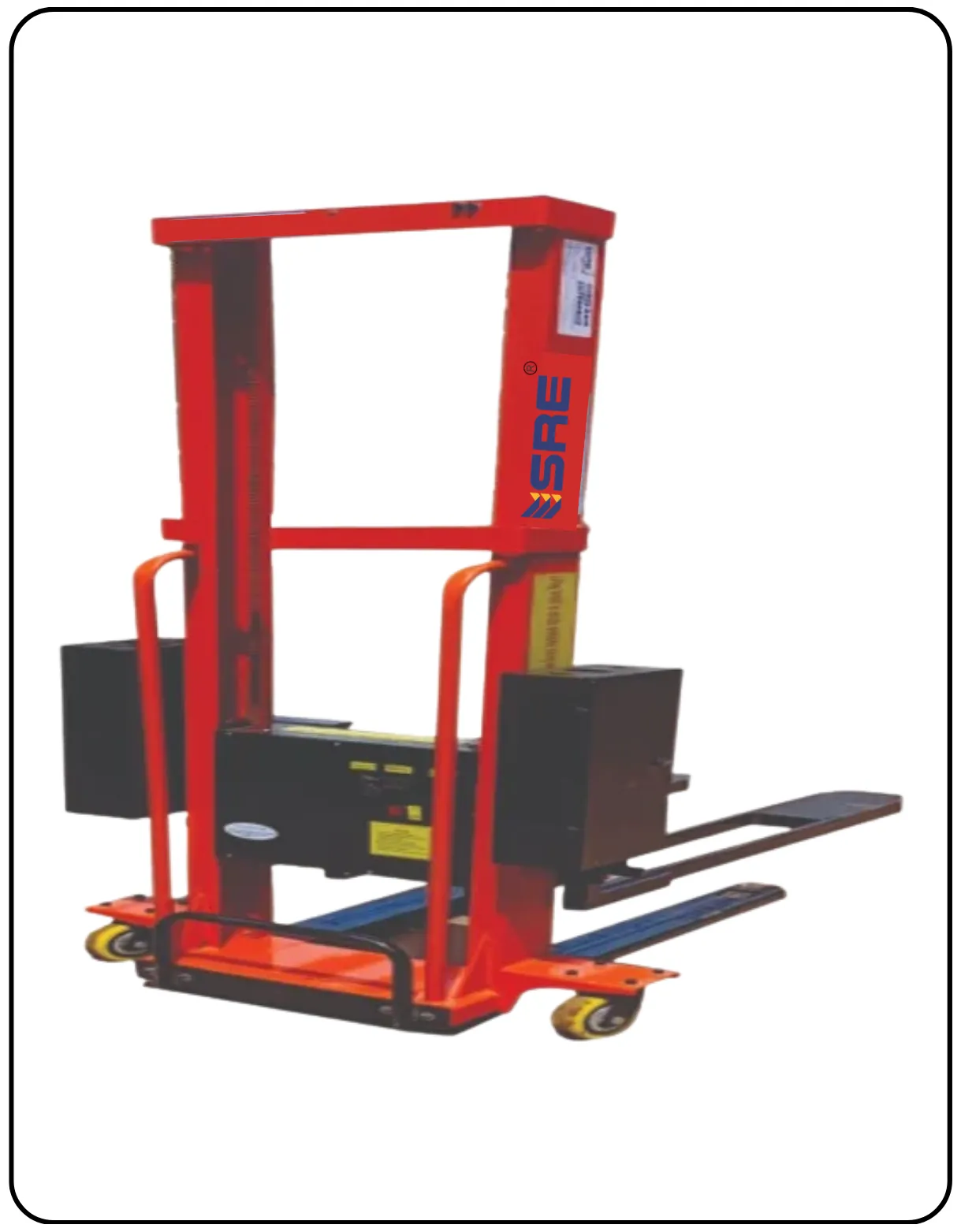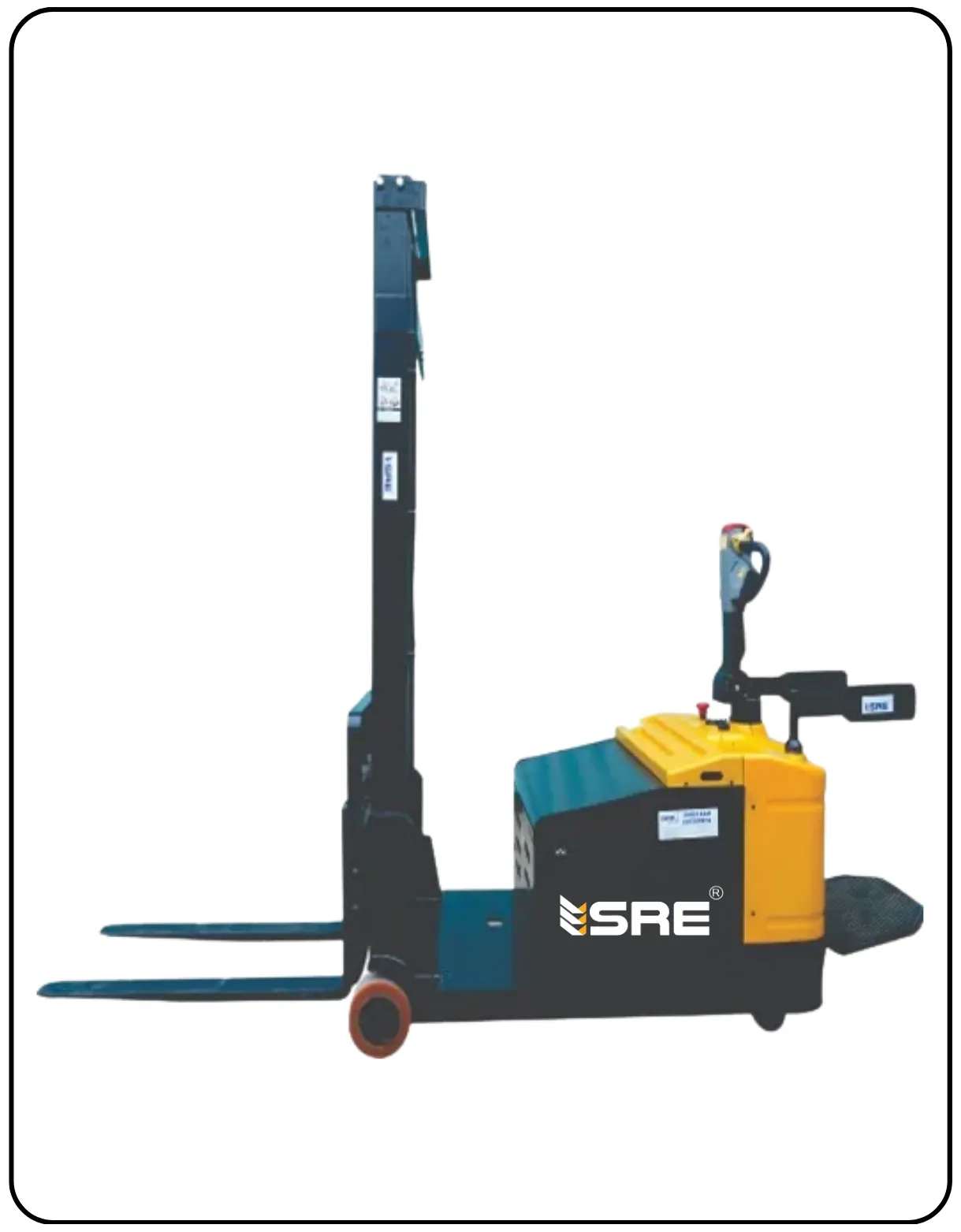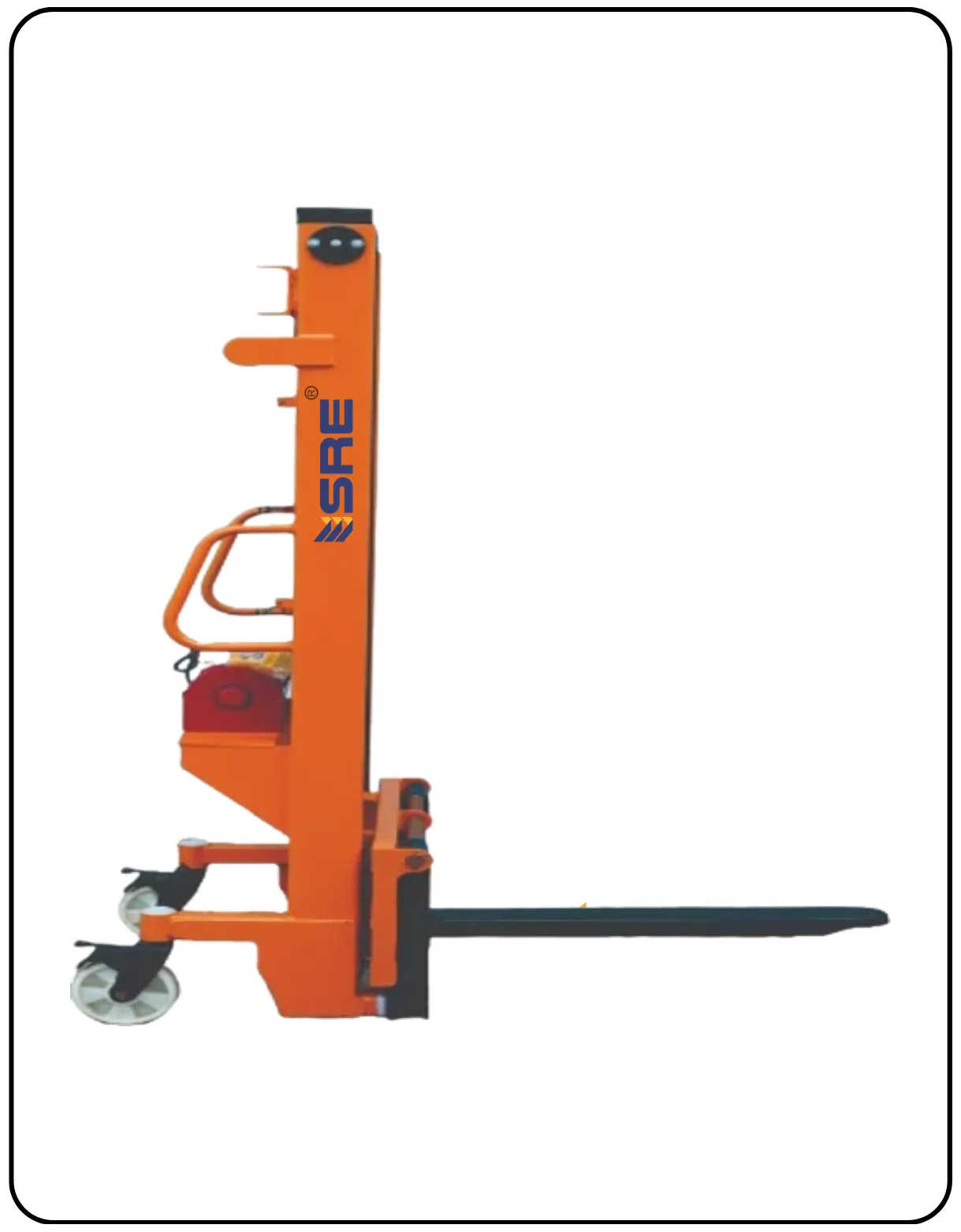
Warehouse and factory operations have transformed significantly over the past decade. Order volumes have increased, turnaround times have become shorter, and workers face greater physical and operational pressure than ever before. A single shift in a busy warehouse can involve hundreds of pallet movements, and when this workload depends on manual handling or outdated equipment, the impact is clear—slower productivity, inconsistent stacking, increased fatigue-related errors, and a higher risk of workplace injuries. This is why choosing a reliable Electric Stacker Manufacturer and Supplier has become essential for improving efficiency, safety, and overall material handling performance.
This is precisely where the electric stacker has earned its place on the floor — not as a luxury upgrade, but as a practical operational necessity.
At SRE Material Handling Equipment Private Limited, we have seen this shift firsthand, working closely with warehouse operators, factory managers, and procurement teams who needed dependable, cost-effective vertical lifting solutions without the complexity of a full forklift fleet.
Operational pressure in logistics and manufacturing has not eased — it has compounded. E-commerce growth, just-in-time manufacturing, and multi-SKU inventory systems have turned internal logistics into a high-stakes function.
Warehouses today are asked to do more with the same floor space, often stacking higher, processing faster, and managing tighter safety compliance. Floor teams are expected to move loads efficiently without causing downtime between shifts. In this environment, equipment reliability is not a convenience — it is a business continuity issue.
A slow or unreliable stacker at the wrong moment can hold up an entire dispatch cycle. An injury from manual lifting can take a worker off the floor for weeks. These are not hypothetical concerns — they happen every day in facilities that have delayed modernizing their internal material handling.
An electric stacker is a powered, rider or walkie-type material handling machine designed to lift, move, and stack pallets or loads at height — without requiring the physical effort of manual hydraulic stackers or the infrastructure demand of counterbalance forklifts.
In practical terms, it sits between a manual hand pallet truck and a full sit-down forklift. It handles stacking duties in racking systems, storage aisles, and loading areas — and it does so efficiently, repeatedly, across full shifts.
These machines run on rechargeable batteries, have a compact footprint, and require only basic operator training. For warehouses with racking heights between 3.5 and 6.5 meters, they are often the most sensible and economical choice.
Manual hydraulic stackers were an acceptable solution when volumes were manageable. Today, asking a warehouse worker to pump-lift half a ton of goods to 3.5 meters — dozens of times a day — is both inefficient and dangerous.
The shift to electric walkie stackers and rider stackers is driven by three clear operational advantages:
If your operation involves lighter loads or budget constraints, you may also want to explore our Semi Electric Stacker options available in Pune and Semi Battery Stackers in Mumbai as entry-level alternatives.
SRE offers a wide range of electric stacker models for warehouse, factory, and industrial applications, covering varied load capacities and lift heights. Below is a practical overview of each model:
Capacity: 1500 kg | Lift Height: 3500 mm
The entry-level option for facilities that need reliable, powered stacking without premium pricing. Suited for standard racking systems and light-to-medium-duty warehouse operations. Ideal for smaller warehouses making their first transition from manual to electric lifting.
👉 View Walkie Electric Stacker
Capacity: 1500 kg | Lift Height: 3500 mm | Fork Width Options: 550 mm / 685 mm
This is SRE’s most widely deployed standard electric stacker model. The fork width variants allow compatibility with different pallet sizes — a practical flexibility that matters in multi-client or mixed-SKU storage environments. Reliable for daily multi-shift use.
👉 View Walkie Electric Stacker
Capacity: 2000 kg | Lift Height: 1600 mm | Fork Width: 550 mm
Designed for heavy load handling at lower heights — ideal for ground-level to low-rack stacking in production zones, staging areas, or dispatch bays. The 2-ton capacity makes it suitable for manufacturing floor use where component loads tend to be heavier.
Capacity: 2000 kg | Lift Height: 2000 mm | Fork Width: 550 mm
A mid-range lift height electric stacker for facilities that stack at mezzanine level or double-deep low racks. Combines the heavy-duty 2-ton capacity with enough vertical reach for second-level storage without the footprint of a full forklift.
Capacity: 2000 kg | Lift Height: 3500 mm | Fork Width: 550 mm
One of SRE’s most in-demand configurations. The combination of 2-ton capacity and 3.5-meter lift height covers the majority of standard warehouse racking requirements. Well-suited for FMCG distribution centers, auto ancillary warehouses, and manufacturing storage.
👉 View Counter Balance Stacker
Capacity: 1500 kg base | Lift Height: 4500 mm | Capacity at Full Height: 700 kg
For facilities with tall racking systems, this high-reach electric stacker reaches 4.5 meters while maintaining a safe rated capacity of 700 kg at maximum elevation. Load de-rating at height is standard engineering practice. Suited for pharmaceutical storage, paper roll warehouses, and general high-bay storage.
👉 View Fully Automatic Stacker
Capacity: 1500 kg | Lift Height: 4500 mm
SRE’s updated high-reach 1.5-ton stacker incorporates revised mast engineering for improved stability at elevation. An upgrade over the older configuration in terms of upright rigidity and smoother lift chain performance — meaningful improvements in daily high-frequency use.
👉 View Fully Automatic Stacker
Capacity: 1500 kg base | Lift Height: 5600 mm | Capacity at Full Height: 400 kg
This is a specialized model for very high racking — cold storage facilities, tall narrow-aisle warehouses, and high-density storage systems. At 5.6 meters, this electric stacker reaches heights few compact machines can manage. Operators typically use this model for lighter goods stored in the upper rack tier.
👉 View Fully Automatic Stacker
Capacity: 2000 kg base | Lift Height: 6500 mm | Capacity at Full Height: 600 kg
SRE’s highest-reach standard electric stacker. At 6.5 meters, this stacker is built for large-footprint warehouses with high-bay racking infrastructure. Applications include industrial storage, steel and metal goods storage, and large-format distribution centers. Operator training and floor surface quality are critical at this lift height.
👉 View Counter Balance Stacker
Not every warehouse is standard. SRE’s engineering team works with clients who have non-standard pallet dimensions, unusual aisle widths, specialized fork configurations, or specific load requirements. Customised electric stackers are developed through direct consultation, ensuring the machine fits the operation rather than the other way around.
👉 Contact Our Team for Customised Requirements
All SRE electric stackers operate on maintenance-friendly lead-acid or lithium-ion battery systems, depending on the model and application. Battery-powered operation means:
No fuel costs or exhaust emissions, making them suitable for indoor warehouse use in enclosed spaces without ventilation concerns.
Consistent power delivery throughout the shift, unlike fuel-driven alternatives that can fluctuate in performance.
Regenerative lowering systems on select models recover energy during mast descent, extending operational time between charges — a detail that matters in high-cycle environments.
Charging infrastructure is simple — standard industrial socket connections — and most facilities integrate charging into shift-changeover periods without needing dedicated charging bays.
The conversation about electric stacker cost efficiency should not begin with the purchase price — it should begin with the total cost of operation over three to five years.
Manual handling injuries in warehouse environments are among the most common causes of worker compensation claims and productivity loss. A single serious back injury can cost a business far more in downtime, replacement training, and insurance implications than the capital cost of an electric stacker.
Beyond injury prevention, the throughput gain from powered equipment means fewer hours to complete the same volume of work. Over a year, that translates to measurable labor cost savings and potentially reduced overtime requirements.
Maintenance on electric stackers is predictable: battery servicing, mast lubrication, and periodic inspection of forks and chains. There are no combustion components to service — no oil changes, no fuel injectors, no exhaust systems. This simplicity keeps maintenance costs lower and more foreseeable than engine-driven alternatives.
One practical advantage of electric stackers over counterbalance forklifts is the significantly shorter operator onboarding time. Most walkie and rider stacker models can be operated competently after a one-to-two day structured training session.
Controls are intuitive — forward/reverse drive, lift/lower via thumb or finger levers, and basic speed control. The learning curve is manageable for most warehouse operators, including those with no prior powered equipment experience.
Maintenance scheduling is predictable. Battery checks, electrolyte top-ups (for lead-acid systems), mast chain lubrication, and fork inspections are standard periodic tasks. Most facilities find that internal maintenance teams can handle routine servicing without specialist callouts.
Material handling equipment operates in demanding conditions — daily, across multiple shifts, often in environments with dust, moisture, or temperature variation. The quality of components, the accuracy of load ratings, and the availability of post-sale service are not secondary considerations — they directly affect operational uptime and safety compliance.
When evaluating any electric stacker manufacturer, procurement teams should examine track record, engineering transparency, and service infrastructure. A machine that breaks down during peak operations and has no accessible service support is a liability regardless of its initial cost.
Also read: Electric Stacker in Pune – What You Need to Know — a practical guide for facilities in and around Pune evaluating powered stacking solutions.
At SRE Material Handling Equipment Private Limited, our approach is built on engineering reliability, honest load ratings, and support for clients after the equipment is installed — not just during the sale.
The electric stacker is not a new concept, but its relevance to modern warehouse and industrial operations has never been higher. As volumes grow, margins tighten, and workforce safety standards become more strictly enforced, the case for powered material handling equipment becomes straightforward.
Whether you are managing a compact distribution center, a large manufacturing facility, or a specialized storage operation, there is an electric stacker configuration suited to your requirements. The right choice depends on your load, lift height, aisle dimensions, and operating hours — and getting that specification right matters.
If you are evaluating options or want a straightforward conversation about which model fits your operation, get in touch with our team at SRE Material Handling Equipment Private Limited — without pressure and without assumptions.
#ElectricStacker #WarehouseSolutions #MaterialHandling #SREMaterialHandling #IndustrialEquipment #WarehouseEfficiency #PalletStacker #ElectricWalkieStacker #ColdStorageSolutions #WarehouseAutomation #IndustrialSafety #LoadHandling #ManufacturingLogistics #SupplyChainIndia #FMCGWarehouse #HighBayStorage #EcommerceLogistics #OperationsManagement #ProcurementTeam #LiftingEquipment #SREmhe #MadeForWarehouses #ElectricMaterialHandling #IndustrialIndia #WarehouseManagement

WhatsApp us