
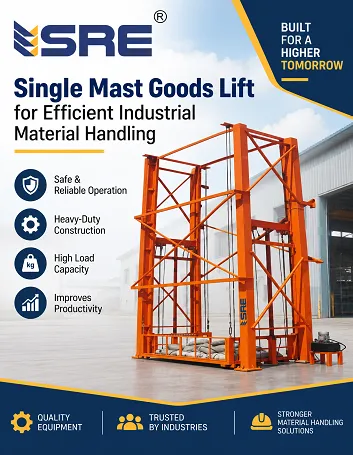
Walk into almost any mid-sized factory floor in Ahmedabad and you will hear the same line: “Electric goods lifts demand too much maintenance, manual equipment is safer and cheaper.” That belief costs plants real money every single day. In fact, a well-built Single Mast Goods Lift from a dependable Single Mast Goods Lift Manufacturer in India like SRE Material Handling Equipment Private Limited typically runs for years with only basic preventive checks. Manual lifting, on the other hand, quietly drains productivity through fatigue, injuries, and slow cycle times. This blog breaks down the most common myths around single mast goods lifts, from load capacity to maintenance and safety. By the end, you will know exactly what to look for before your next material handling upgrade.
Key Takeaways
- Electric beats manual: A single mast goods lift reduces downtime, human error, and operator fatigue compared to manual lifting.
- Compact but strong: Single mast design handles 500 kg to 5000 kg loads efficiently in narrow aisles and tight floor spaces.
- Low maintenance reality: Quality components from a reliable Single Mast Goods Lift Manufacturer in India mean fewer breakdowns, not more.
- Built-in safety: Limit switches, overload protection, and emergency stops cut injury risk dramatically.
- ROI is real: Faster cycle times and lower labour costs deliver payback within months, not years.
The Truth About Electric vs Manual Lifts in Industrial Material Handling
Manual equipment is not safer or cheaper in repetitive industrial material handling. That is the first myth worth dismantling. A single mast goods lift uses an electric motor and hydraulic system to lift loads smoothly, which removes the physical strain that causes most workplace injuries. Meanwhile, manual lifting depends entirely on operator strength and attention, both of which fade after a few hours.
Consider a warehouse moving 80 palletised loads per shift between floor levels. With manual handling, each lift takes longer, and the risk of a dropped load rises as fatigue sets in. An electric single mast goods lift keeps cycle times consistent from the first hour to the last. As a result, your team moves more goods with fewer errors and less downtime.
Here is a quick comparison that most procurement teams find useful:
| Factor | Manual Lifting | Single Mast Goods Lift |
|---|---|---|
| Cycle time consistency | Drops with fatigue | Stable throughout shift |
| Operator injury risk | High (back, shoulder) | Low (no manual strain) |
| Load control | Depends on skill | Precise via hydraulic system |
| Long-term cost | Rises with injuries, delays | Lower via efficiency, fewer incidents |
So when someone says manual is cheaper, ask them to add up the hidden costs: lost time, medical claims, and inconsistent output. The numbers rarely favour manual handling.
Why Single Mast Design Isn’t Weak — Space and Load Efficiency Explained
A single mast goods lift is not a compromise on strength. It is a deliberate design choice for facilities where space is tight and vertical movement is frequent. The single mast structure allows a smaller footprint, which means it fits into narrow aisles, mezzanine corners, and compact factory floors where a double mast lift simply cannot go.
What about load capacity? Standard single mast goods lifts handle anywhere from 500 kg to 5000 kg, with platform heights from 3 meters up to 12 meters. That range covers most inter-floor material movement needs in warehouses, textile mills, and pharmaceutical units. For example, a Rajkot-based engineering SME moving machine parts between two floors does not need a heavy double mast crane. A single mast lift does the job efficiently and at lower cost.
Here is the thing: single mast lifts are not meant for every load. If you are moving 10-tonne steel coils, you need a different machine. But for palletised goods, cartons, fabric rolls, and component bins, the single mast design delivers an excellent balance of capacity, speed, and space efficiency.
Maintenance Myth — Do Electric Goods Lifts Really Need More Servicing?
Electric goods lifts do not inherently demand more maintenance. Poorly built ones do. The difference comes down to component quality and manufacturing discipline. A reputable Single Mast Goods Lift Manufacturer in India uses high-tensile structural steel, quality motors, and simple hydraulic mechanisms that require only routine checks.
In practice, a well-maintained single mast goods lift needs periodic inspection of hydraulic fluid, limit switches, and mast guide rails. That is it. There are no complex electronics or fragile parts that fail every few months. In fact, many units run for years with just quarterly preventive maintenance.
Compare that to manual handling equipment, which may seem low-maintenance but often hides costs in replacement parts, operator downtime, and safety incidents. The truth is simple: maintenance cost depends on build quality, not on whether the lift is electric or manual.
If you want to see how a properly engineered lift performs over time, explore our industrial material handling equipment range and check the build standards yourself.
Safety Features That Make Single Mast Goods Lifts Safer Than Manual Handling
Manual lifting is often assumed to be safer because it is “simple.” That assumption is wrong. Manual handling causes a large share of workplace injuries in warehouses and factories, especially back and shoulder strains. A single mast goods lift removes that risk by design.
Key safety features include limit switches that prevent over-travel, overload protection that stops the lift if the load exceeds capacity, and emergency stop buttons for instant shutdown. These are not optional extras; they are standard on any serious industrial lift. As a result, both operator injury and load damage drop significantly.
Consider a scenario where an operator accidentally tries to lift a 1200 kg load on a 1000 kg rated lift. With overload protection, the machine simply will not move. With manual handling, that same mistake could lead to a dropped load and a serious injury. That is the real difference.
For more on safe lifting practices, this OSHA guidance on material handling is worth a read.
Real Industrial Use Cases and ROI of Single Mast Goods Lifts
Where do single mast goods lifts actually pay off? Warehouses, factory floors, mezzanine loading, and multi-floor material movement are the most common applications. In each case, the ROI comes from faster cycle times, lower labour costs, and reduced downtime.
Take a Pune-based automotive component plant. They moved from manual lifting to a single mast goods lift for inter-floor movement of machine parts. Within six months, their material handling time per batch dropped by nearly 30%. Labour costs fell because fewer workers were needed for each move. And downtime from injuries almost disappeared.
Similarly, a Jaipur garment export house uses single mast lifts to move fabric rolls and packed cartons across three floors. During peak season, when order volume jumps by 40%, the lift keeps goods flowing without extra manpower. That is the kind of operational resilience you cannot get from manual handling.
If you are evaluating options, our crane scale solutions and electric chain hoist range can complement your lifting setup.
Choosing the Right Single Mast Goods Lift Manufacturer in India
Not all manufacturers are equal. The right partner matters as much as the product itself. A manufacturer with real industry experience understands your floor constraints, load patterns, and safety requirements. They also provide installation, training, and after-sales support that keeps your lift running.
SRE Material Handling Equipment Private Limited, based in Ahmedabad, has been manufacturing single mast goods lifts for over a decade. Every unit is built with IS 2062 Grade high-tensile steel and tested under ISO 9001:2015 certified processes. Load capacities range from 500 kg to 5000 kg, with platform heights up to 12 meters, all custom-built to client specifications.
What sets a good manufacturer apart is not just the product but the service. Quick spare parts availability, responsive maintenance, and customization for specific floor layouts make a huge difference in long-term performance. That is why thousands of industrial buyers across Gujarat, Maharashtra, and Rajasthan trust SRE.
For a deeper look at safe lifting practices, check our guide on hydraulic scissor lift safety.
Key Specifications to Compare Before Buying a Single Mast Goods Lift
Before you finalize any purchase, compare these specifications across suppliers. The right numbers ensure your lift performs as expected without overpaying for capacity you will never use.
| Specification | Typical Range | Why It Matters |
|---|---|---|
| Load Capacity | 500 kg – 5000 kg | Match to your heaviest regular load |
| Platform Height | 3 m – 12 m | Must cover your highest floor level |
| Steel Grade | IS 2062 | Ensures structural durability |
| Safety Features | Limit switch, overload protection, emergency stop | Prevents accidents and load damage |
| Certification | ISO 9001:2015 | Confirms quality control standards |
Use this table as a checklist when talking to suppliers. A manufacturer who cannot provide clear answers on these points is not the right partner.
Why Choose Us
With over 10 years of industry experience, SRE Material Handling Equipment Private Limited has delivered more than 15,000 products and maintains a 95% client satisfaction rate. We have won 13 awards for manufacturing excellence and are trusted by industrial clients across Gujarat, Maharashtra, Tamil Nadu, Karnataka, and other regions. Our single mast goods lifts are built for real-world performance, with customization, installation, and after-sales support included.
Conclusion
Electric and single mast goods lifts are not the maintenance-heavy, weak alternatives that many believe them to be. When sourced from a reliable Single Mast Goods Lift Manufacturer in India, they deliver better safety, lower long-term costs, and higher productivity than manual handling. The myths are just that — myths. If you are ready to upgrade your material handling, SRE is here to help you choose the right lift for your facility.
Want to know more about Single Mast Goods Lift Manufacturer in India? Contact SRE Material Handling Equipment Private Limited for professional support.
FAQs
Q. What is a single mast goods lift used for?
A single mast goods lift is used for vertical transportation of goods between floors in factories, warehouses, and multi-level storage facilities. It handles palletised loads, cartons, and heavy components efficiently in tight spaces.
Q. How much load can a single mast goods lift handle?
Standard single mast goods lifts handle loads from 500 kg to 5000 kg, with platform heights from 3 to 12 meters. The exact capacity depends on your specific requirements and manufacturer specifications.
Q. Are electric goods lifts high maintenance?
No, electric goods lifts are not inherently high maintenance. A well-built lift from a quality manufacturer requires only routine checks on hydraulic fluid, limit switches, and guide rails, typically on a quarterly basis.
Q. What safety features should I look for in a goods lift?
Look for limit switches to prevent over-travel, overload protection to stop unsafe loads, and emergency stop buttons. These features are standard on reputable single mast goods lifts and significantly reduce injury risk.
Q. How do I choose the right single mast goods lift manufacturer?
Choose a manufacturer with proven industry experience, ISO certification, and after-sales support. Check their build quality, customization options, and client feedback. SRE Material Handling Equipment Private Limited in Ahmedabad meets all these criteria.
Q. What is the ROI of installing a single mast goods lift?
Most facilities see ROI within months through faster cycle times, reduced labour costs, and fewer injuries. For example, a Pune plant reduced material handling time by 30% within six months of installation.
Q. Can a single mast goods lift be customized for my facility?
Yes, reputable manufacturers offer customization for load capacity, platform height, and control systems. SRE builds lifts to client specifications, ensuring a perfect fit for your floor layout and operational needs.