Warehouse and factory floors have transformed significantly over the last decade, with rising order volumes, tighter delivery schedules, and almost no margin for error in internal logistics. Teams that once handled 200 pallets a day are now expected to manage 600 within the same workforce and shift hours, making efficiency more critical than ever. In this demanding environment, partnering with a reliable
Pallet Truck Manufacturer and Supplier is essential to ensure faster material movement, improved productivity, and smooth warehouse operations. In this environment, every minute of
downtime and every instance of
worker fatigue has a direct cost.
Operations heads and
supply-chain managers know this better than anyone.This is exactly where a
pallet truck earns its place — not as a luxury piece of equipment, but as a daily
operational necessity. As one of India’s focused
pallet truck manufacturers,
SRE Material Handling Equipment Private Limited builds equipment for real floor conditions — not showroom demonstrations.
The Changing Needs of Modern Warehouses and Industries
Industrial operations today face pressure from multiple directions simultaneously: faster
fulfillment cycles, tighter floor space, rising
labor costs, and increased
safety compliance expectations.Manual movement of heavy loads creates bottlenecks at
receiving docks,
staging areas, and
production lines. Workers get fatigued within a few hours, slowing
throughput and increasing the risk of
musculoskeletal injuries.
Procurement teams are increasingly being asked to justify equipment choices not just on purchase price, but on
operational continuity and
long-term ROI.The question is no longer
whether to mechanize
internal material movement — it’s
which equipment handles your specific
load dimensions,
floor conditions, and
throughput targets most reliably.
What Is a Pallet Truck?
In practical terms, a
pallet truck — also known as a
pallet jack or
hand truck — is a ground-level
material handling device designed to lift, support, and move
palletized loads horizontally across a facility floor.Unlike
forklifts,
pallet trucks operate at floor level and require no elevated mast, no special
operator licensing in most cases, and far less
aisle clearance. They are built for the repetitive, high-frequency movement of goods between
docking bays,
storage racks,
staging zones, and
production lines.Depending on the type —
manual pallet truck,
semi-electric pallet truck, or
fully electric pallet truck — they range from simple
hydraulic lever-operated units to
battery-powered models capable of sustained
multi-shift operation.
Why Pallet Trucks Are Replacing Manual and Traditional Equipment?
Traditional manual movement of pallets using rollers, trolleys, or brute labor is no longer practical at scale. The core issues are
consistency and
operational sustainability.A worker manually pushing a 1,000 kg load across a concrete floor can do it for the first two hours of a shift. By hour six, speed drops, accuracy drops, and
injury risk climbs. A
hydraulic pallet truck or
electric pallet truck maintains the same performance across the entire
shift cycle.Beyond fatigue, manual methods lack
load stability control, create uneven
floor wear, and introduce a much higher probability of
product damage during
internal transit — particularly for fragile goods on
wooden pallets.For operations moving to powered solutions, the
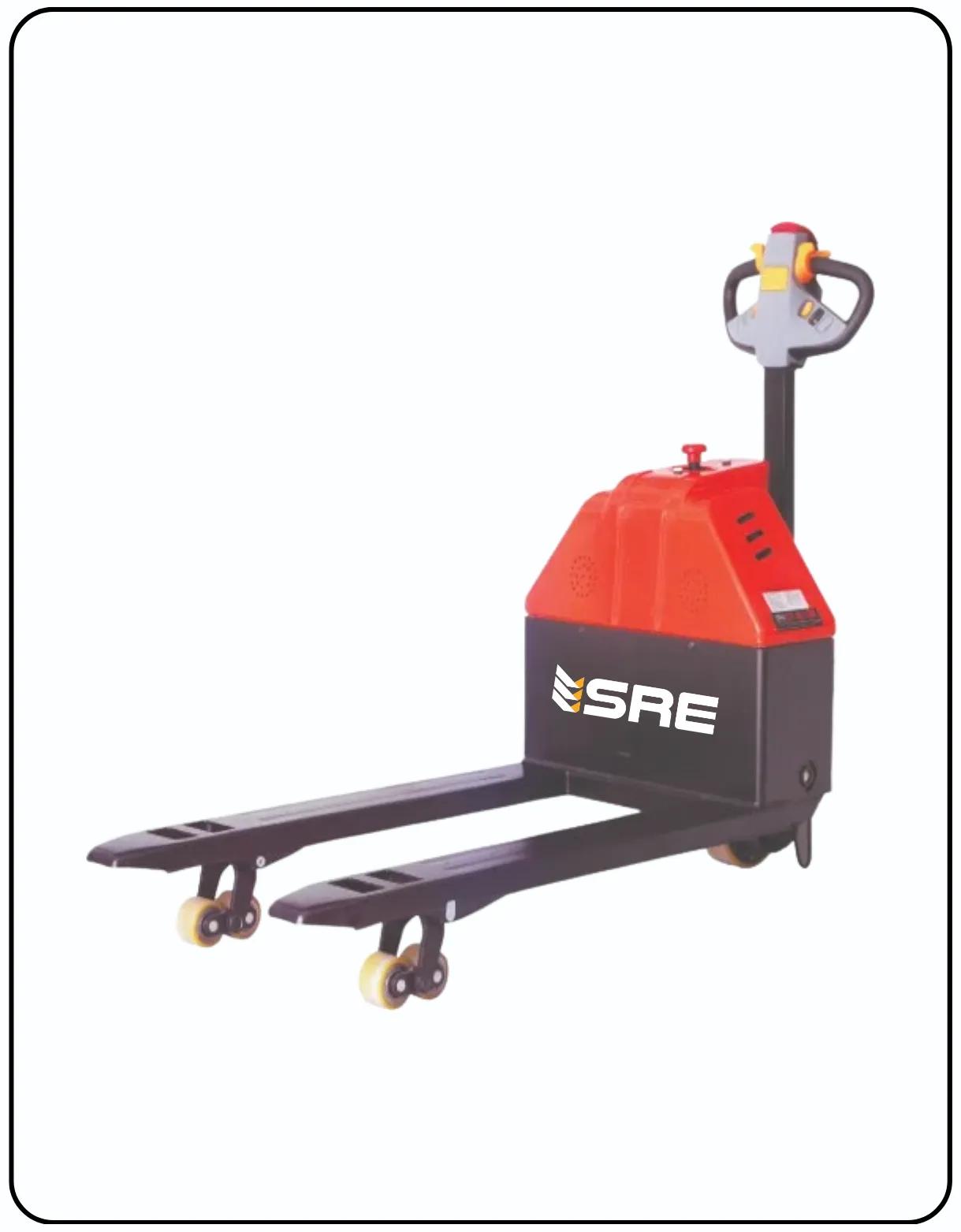
electric pallet truck is today the most practical first step — combining operator comfort with sustained
shift-level performance.
Product Description: Pallet Truck Range
SRE Material Handling Equipment Private Limited offers a comprehensive range of
pallet trucks engineered to address varied
industrial load dimensions and
floor conditions. Each variant is built around a
2.5-ton load capacity with
fork dimensions tailored to specific
pallet standards and operational requirements.
2.5 Ton Pallet Truck | 600 × 550 mm Fork
Designed for
compact pallet sizes and
tight aisle widths. Ideal for
pharmaceutical storage,
small parts manufacturing, and
narrow-aisle warehouses where
maneuverability is the primary concern. The reduced
fork width allows entry into non-standard pallets without modification.
2.5 Ton Pallet Truck | 800 × 550 mm Fork
One of the most commonly deployed configurations across Indian
industrial facilities. Suits
standard wooden pallets used in
FMCG,
food processing, and
general warehousing. The 800 mm
fork length provides stable
load entry without overextension. A reliable
long-fork pallet truck for heavy industrial loads in
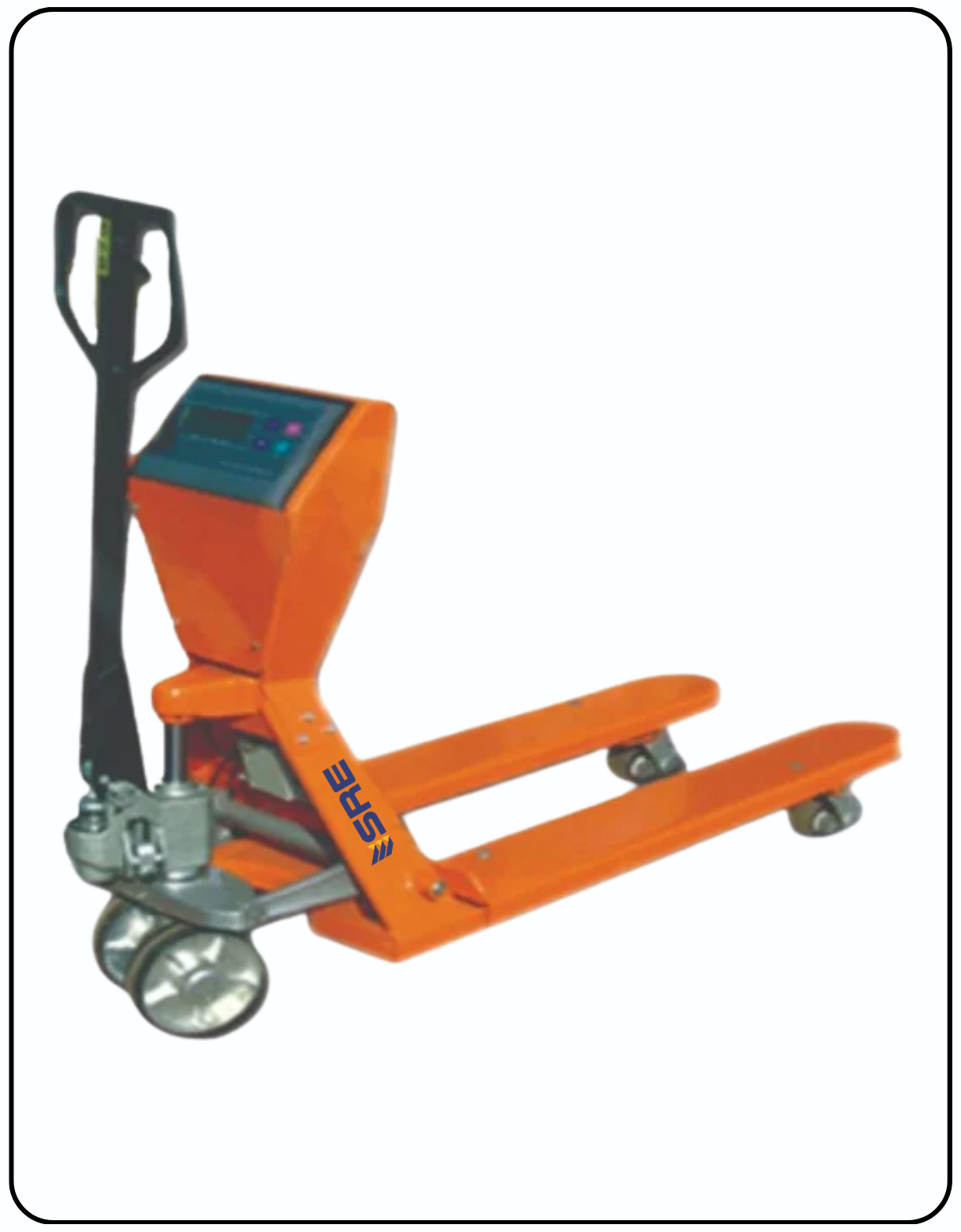
medium-floor-area operations.For facilities requiring integrated weighing during movement, the
weight scale pallet truck variant eliminates the need for a separate weighing station entirely.
2.5 Ton Pallet Truck | 900 × 550 mm Fork
Extended fork length for deeper
pallet entry. Frequently used in
cold storage environments and
chemical warehouses where
pallet construction varies. The additional fork length improves
load balance for heavier or unevenly distributed goods.
2.5 Ton Pallet Truck | 1150 × 550 mm Fork
Purpose-built for
long pallets used in
steel handling,
timber handling, and
building materials handling. This configuration handles goods that extend beyond standard pallet boundaries, ensuring full
load support during transit. A common choice in
manufacturing plants and
building material depots.
2.5 Ton Pallet Truck | 1220 × 685 mm Fork
A wider, longer configuration suited to
heavy engineering goods, large
automotive components, and
oversized industrial containers. The 685 mm
fork spacing improves
lateral stability for wide-base loads. Frequently specified in
heavy-duty pallet truck applications for automotive and engineering industries.Explore our dedicated range of
heavy duty hand pallet trucks for demanding load environments.
2.5 Ton Pallet Truck | 1500 × 550 mm Fork
One of the longer
fork variants in this range. Designed for
pallet systems used in
paper industry,
textile industry, and
roll-goods industries where
load length is a critical variable. Suitable for
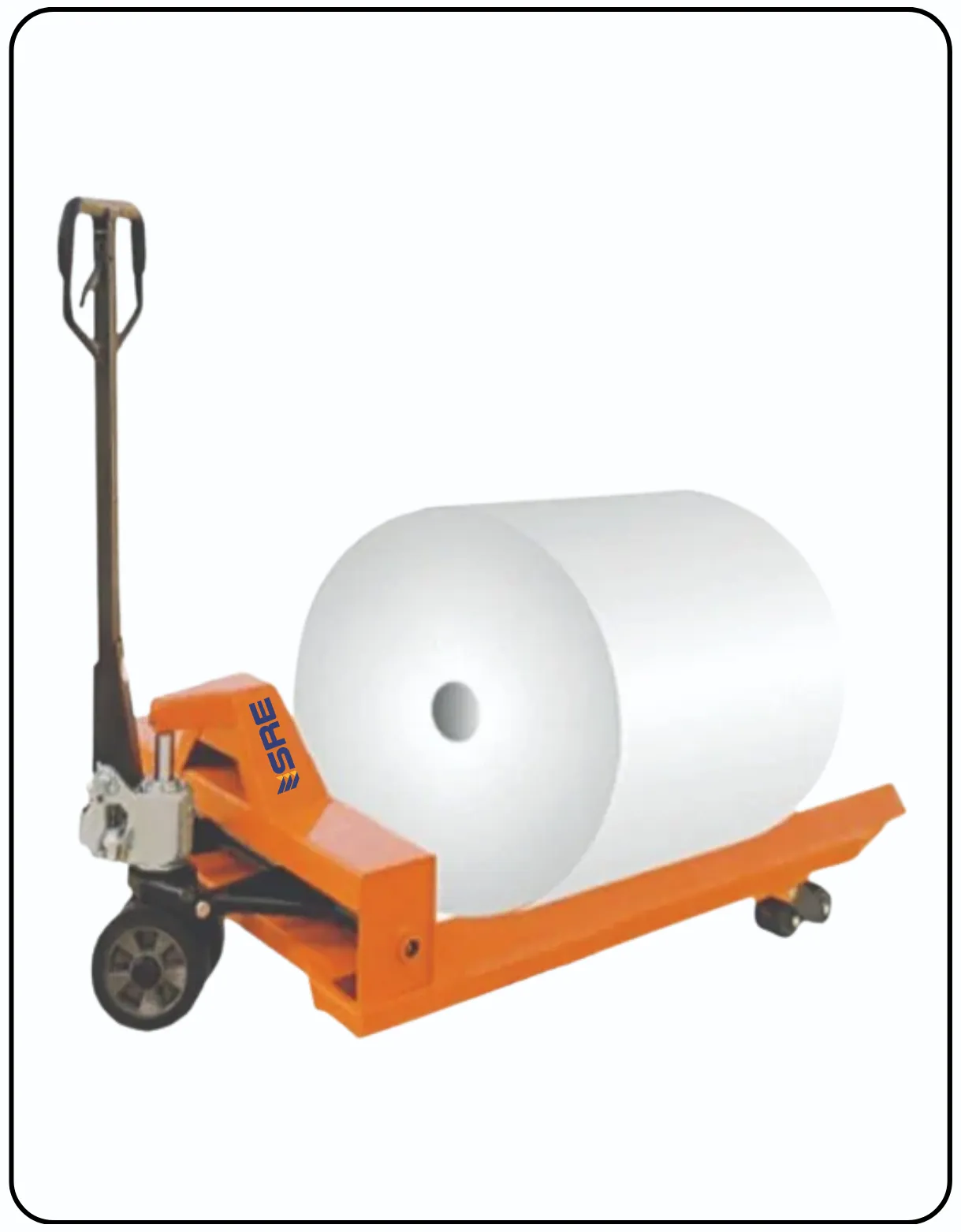
dock-to-floor movement of extended pallets without requiring repositioning.Operations handling cylindrical goods — paper rolls, cable drums, or similar — may also benefit from the purpose-built
reel pallet truck designed for round-base load stability.
2.5 Ton Pallet Truck | 1500 × 685 mm Fork
Combines
maximum fork length with the
wider fork gap — the go-to specification for operations handling extremely
wide and long unit loads. Common in
export packaging yards and
logistics hubs handling mixed
containerized cargo.
2.5 Ton Pallet Truck | 1800 × 550 mm Fork
The longest standard configuration in the range. Used in specialized applications such as
marble slab handling,
long structural steel sections, and
oversized manufacturing components. At 1800 mm, this
fork variant provides full
undersupport for loads that would otherwise require custom
cradle equipment.
Customised Pallet Truck — Custom Fork Dimensions
Not every
industrial operation fits a standard pallet size.
SRE Material Handling Equipment Private Limited offers
customised pallet truck configurations for operations with
non-standard pallet dimensions, unusual
load footprints, or specific
aisle clearance constraints. Custom
fork widths,
fork lengths, and
frame reinforcements are available based on
application assessment.
Contact our team to discuss your specific load dimensions and get a customised configuration recommendation.
Technology & Operational Efficiency
Most
pallet trucks in industrial use today fall into three functional categories:
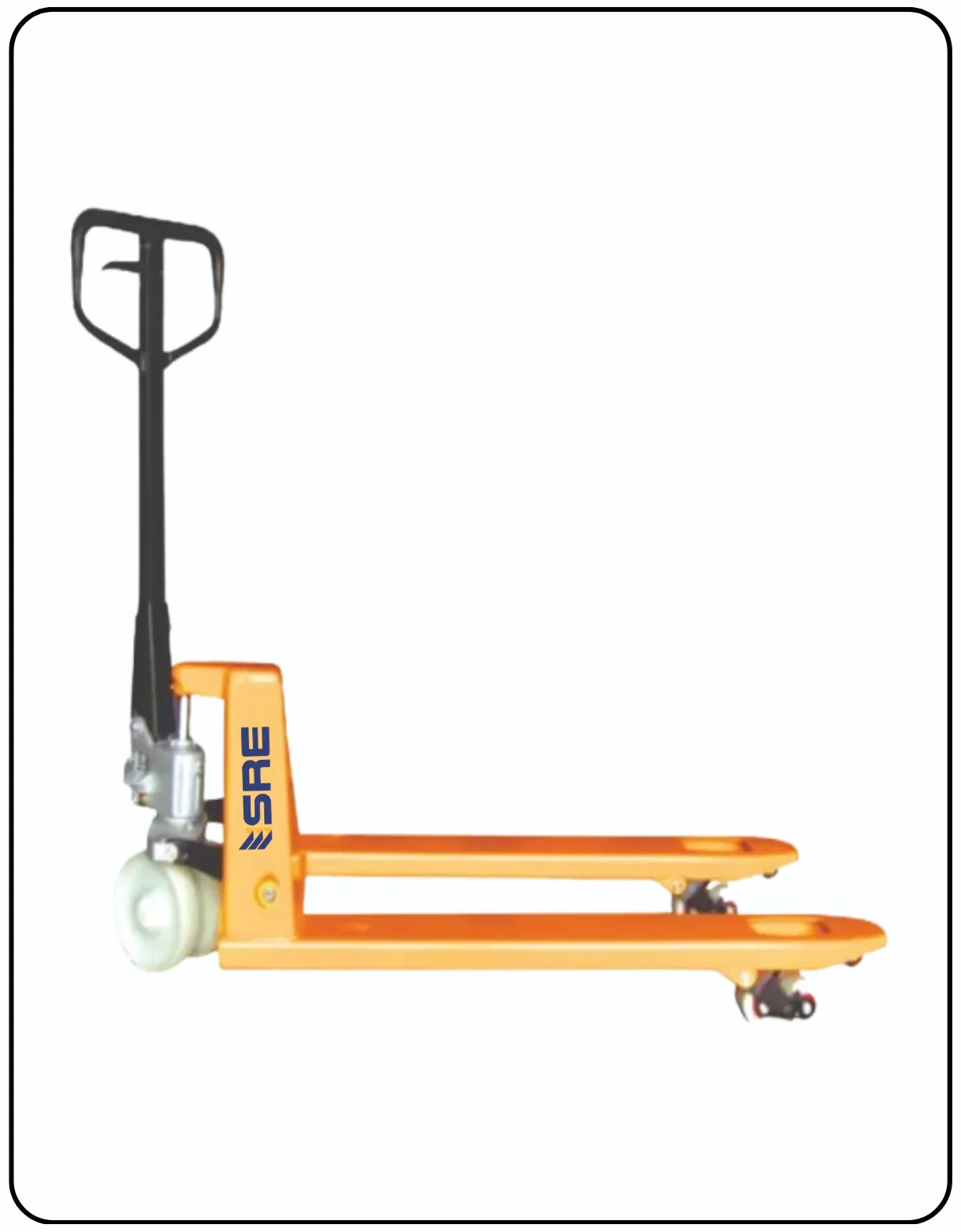
Manual Hydraulic Pallet Truck: Operated entirely by the
pump handle — no battery, no power source. Reliable for
light-to-medium frequency operations. Almost zero maintenance beyond periodic
hydraulic fluid checks and
wheel inspections. Learn more about our
hand pallet truck range in Gujarat.
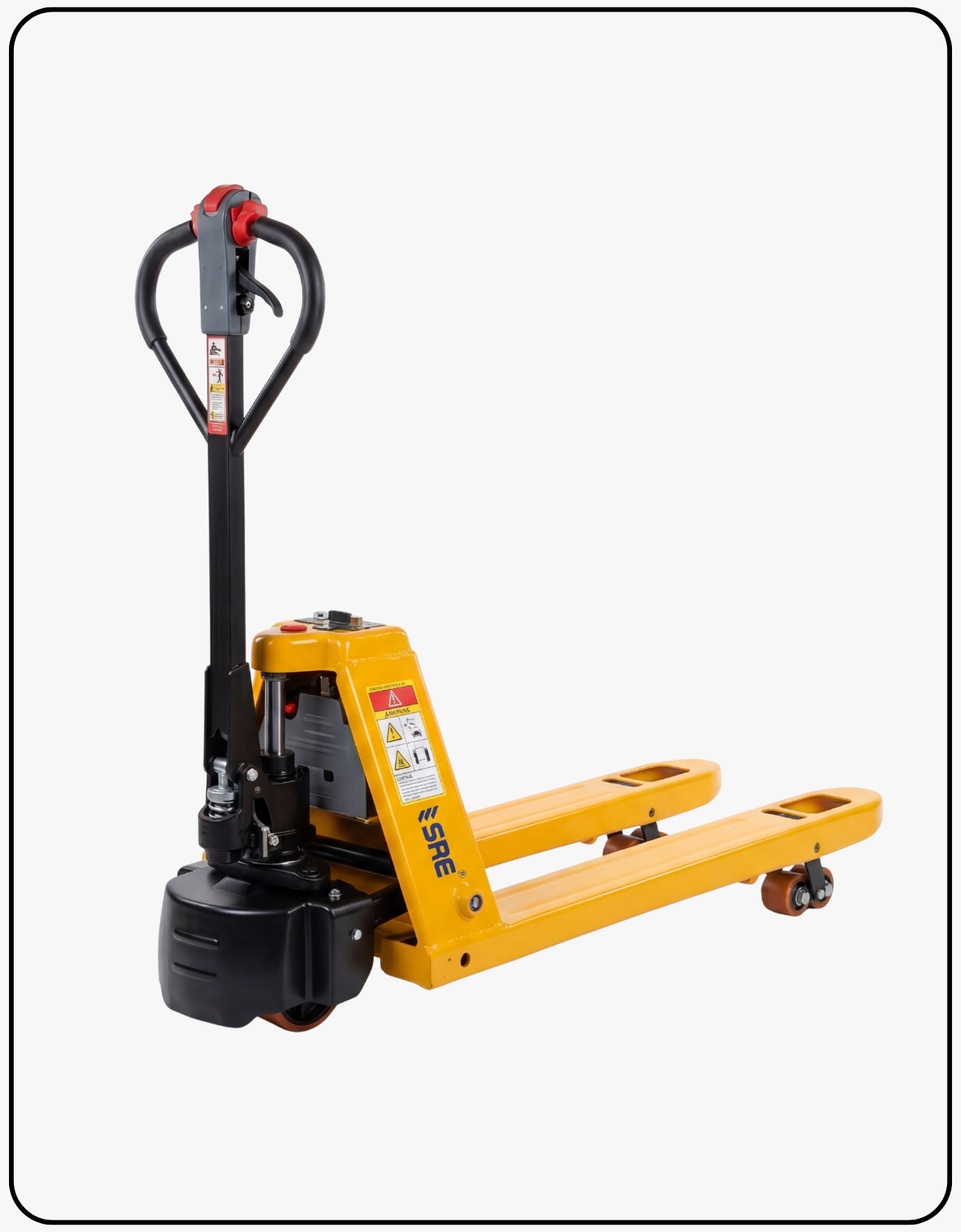
Semi-Electric Pallet Truck (Electric Lift, Manual Drive): The
hydraulic lift is powered by a
battery-driven pump. The operator still steers and propels manually. Best suited for facilities where workers lift loads frequently but
distances traveled per trip are short. View our
walkie type battery operated pallet truck for this category.
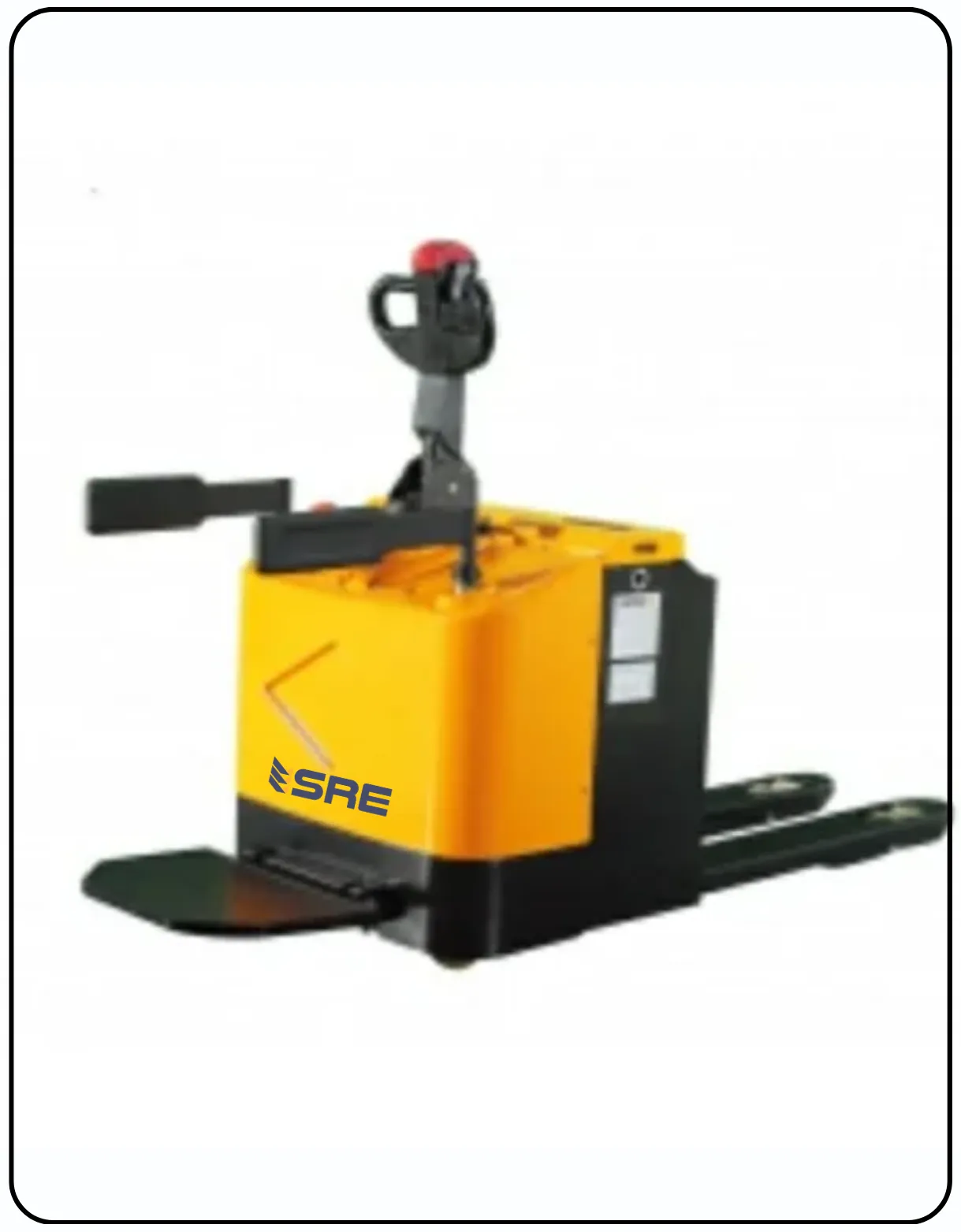
Fully Electric Pallet Truck (Powered Drive + Lift): Both movement and lifting are
motor-driven. Designed for
high-frequency,
long-distance internal logistics.
Battery life typically supports one full shift (8–10 hours) under continuous moderate use.
Regenerative braking on some models extends run time further. Explore our
fully battery operated pallet truck for complete powered operation.For most
warehousing and
manufacturing environments, the
semi-electric pallet truck delivers the best balance between
operational efficiency and
maintenance simplicity.
Cost Efficiency Over Time
The
purchase price of a
pallet truck is rarely the right metric for
procurement decisions. The more accurate frame is
total cost of ownership across 3–5 years of operation.Consider the following in that calculation: reduction in
workplace injury claims (
back injuries alone are among the top three
warehouse injury categories globally), lower
labor hours per pallet moved, reduced
product damage during
internal transit, and near-zero
unplanned downtime compared to complex powered equipment.A mid-range
electric pallet truck for warehouse and factory use typically delivers full
ROI within 12–18 months in a
medium-volume operation, and substantially sooner in
high-throughput environments.
Key Features
- 2.5-ton rated load capacity across all standard variants
- Fork dimensions from 600 mm to 1800 mm in length, with widths of 550 mm and 685 mm
- Forged steel fork construction for long service life under daily industrial use
- Precision hydraulic pump mechanism for controlled, smooth lift
- Low-profile entry design to accommodate standard wooden and plastic pallets
- Ergonomic tiller/handle design to reduce operator wrist and shoulder strain
- Polyurethane or nylon wheel options depending on floor surface and load requirements
- Available in manual, semi-electric, and fully electric configurations
- Customised fork and frame options available on request
Applications of Pallet Trucks
- Warehousing & Distribution: Dock unloading, put-away operations, order picking staging, and dispatch preparation.
- Manufacturing Plants: Movement of raw material pallets to production lines; finished goods transfer to packaging zones.
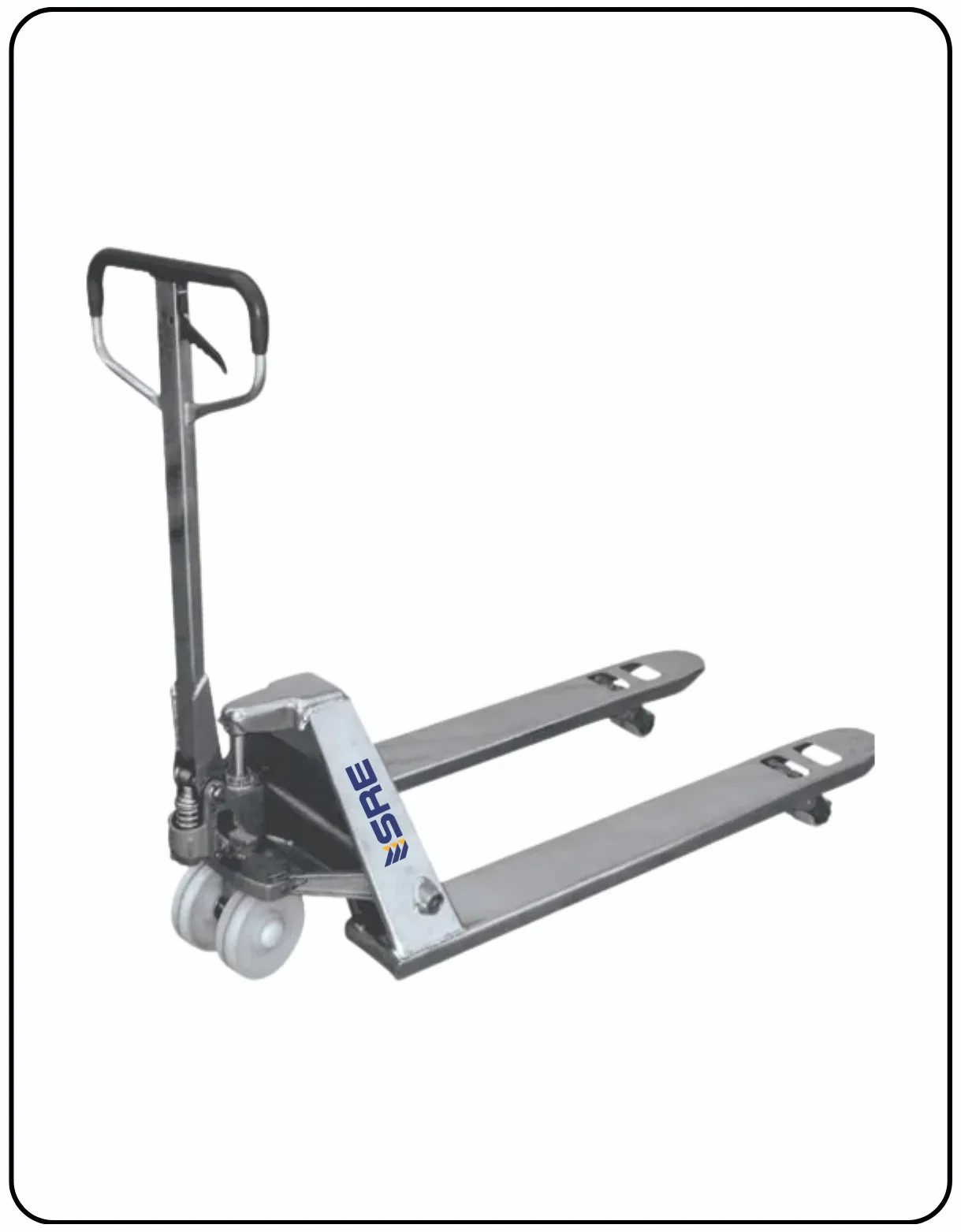
- Cold Storage & Food Processing: Low-clearance movement in temperature-controlled environments; compatible with wet floor conditions. For food-grade or hygiene-sensitive environments, the SS pallet truck (stainless steel) is the recommended specification.
- Pharmaceuticals: Precise, low-vibration load movement for sensitive products; clean-room compatible variants available.
- Retail & FMCG Distribution: High-frequency daily use in regional distribution centers and retail back-of-store operations.
- Automotive & Engineering: Wide-fork variants for oversized components; reinforced models for dense metal loads.
- Building Materials & Timber: Long-fork configurations for slab, board, and structural section handling.
Training, Ease of Use, and Maintenance
One of the practical advantages of
pallet trucks over heavier powered equipment is the
minimal training requirement. A new operator can be made functionally competent on a
manual or
semi-electric pallet truck within a few hours of supervised
floor use.There is no
elevated operation, no
mast control complexity, and no
specialized license requirement in most Indian industrial contexts (though
site-specific safety inductions remain the operator’s and employer’s responsibility).
Maintenance is predictable and low-cost:
hydraulic fluid levels,
wheel condition,
battery state (for electric models), and
frame inspection for cracks or
weld fatigue.
Annual preventive maintenance schedules are typically sufficient for units operating in
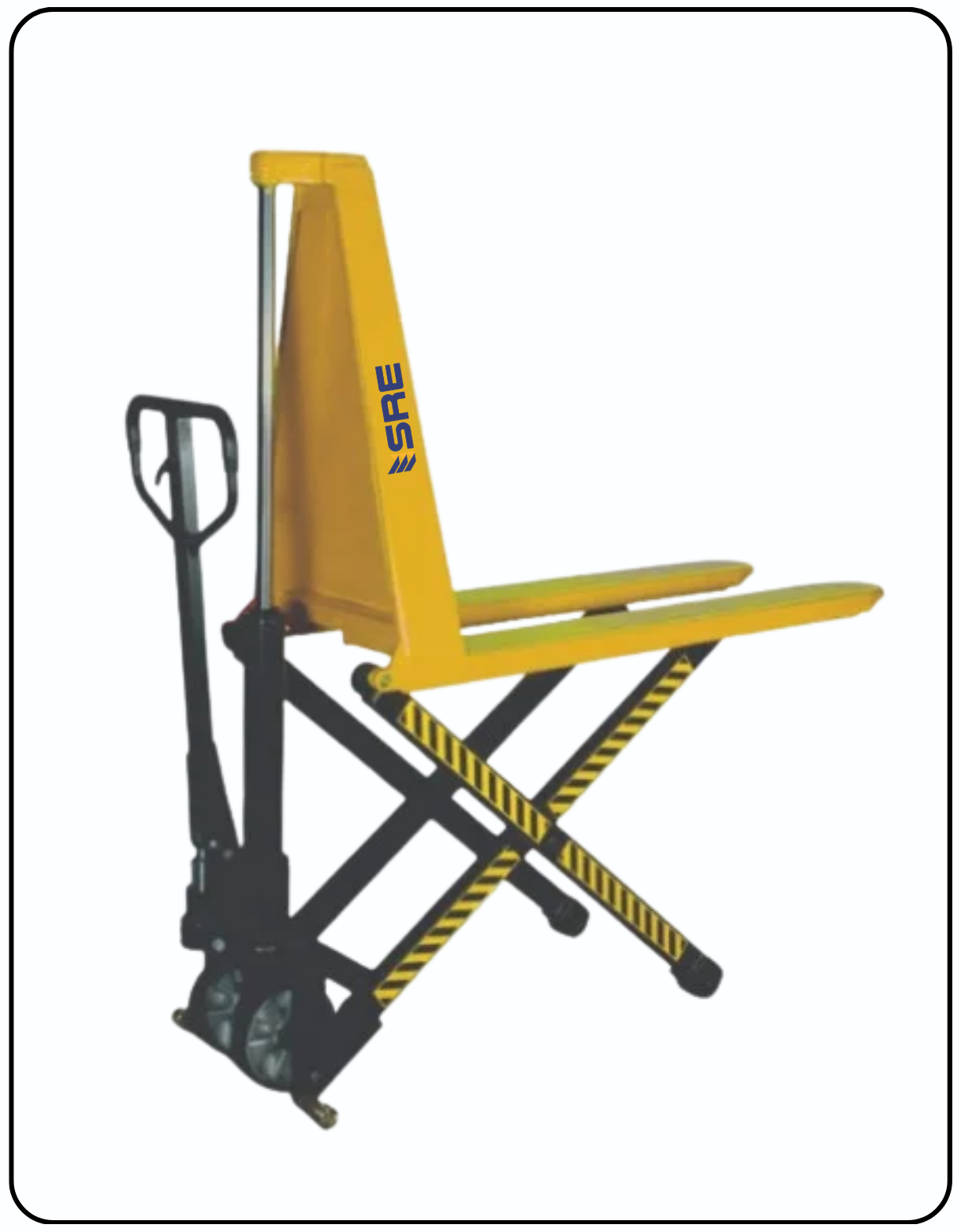
one-shift environments.For operations requiring vertical lift capability alongside horizontal movement, the
high lift pallet truck and
electric high lift pallet truck extend functionality without requiring a full forklift investment.
Why Choosing a Reliable Pallet Truck Manufacturer Matters?
Material handling equipment runs in demanding conditions —
wet floors,
heavy loads,
continuous cycling, and
shift-after-shift use. Equipment that looks similar on paper can vary significantly in the quality of
hydraulic seals,
steel grade,
wheel durometer, and
weld integrity.A manufacturer with documented
production standards,
after-sales service capability, and the ability to supply
spare parts on short notice makes a measurable difference to
operational uptime. For
procurement teams, this means assessing not just price, but
service reach,
warranty terms, and the manufacturer’s ability to respond to
customization requirements.
SRE Material Handling Equipment Private Limited brings focused expertise in
industrial material handling to every product specification — with an understanding that
downtime on the warehouse floor is not an abstract risk, but a real daily cost.
Conclusion
A
pallet truck does not transform a
warehouse operation overnight. What it does — reliably, every shift — is reduce the
physical strain on your team, bring
consistency to your
internal logistics, and lower the
operational friction that quietly erodes
throughput and morale.For
operations managers evaluating
equipment investments, the right
pallet truck selection comes down to honest
load analysis,
floor condition assessment, and
frequency-of-use projections — not marketing specifications.If you’re working through that assessment,
contact SRE Material Handling Equipment Private Limited — we’re available to discuss your specific
application requirements and help identify the right configuration for your facility.
Key Takeaways
- Productivity: Pallet trucks reduce the time-per-pallet-move significantly compared to manual methods, enabling higher throughput with the same headcount.
- Safety: Eliminates heavy manual pushing and lifting — one of the leading causes of warehouse musculoskeletal injuries.
- Load Handling: Available in fork lengths from 600 mm to 1800 mm and widths of 550–685 mm to match standard and non-standard pallet formats.
- Cost Efficiency: Low total cost of ownership with predictable maintenance and minimal downtime compared to complex powered equipment.
- Industry Trend: Growing adoption of semi-electric and electric pallet trucks for industrial and warehousing operations as labor costs rise and throughput expectations increase.
- Customisation: Non-standard load requirements can be addressed through custom fork and frame specifications. Get in touch to discuss your requirements.
Trending FAQs
Q1. What is the load capacity of a standard pallet truck?
- Most industrial pallet trucks are rated between 1.5 tons and 3 tons. The SRE range operates at a 2.5-ton rated capacity across all fork size variants.
Q2. What is the difference between a manual and electric pallet truck?
- A manual pallet truck uses a pump handle for hydraulic lift and operator effort for movement. An electric pallet truck uses battery-powered motors for both lift and drive, reducing operator fatigue in high-frequency or long-distance applications.
Q3. Which pallet truck fork size is right for my operation?
- Fork selection depends on your pallet dimensions and load footprint. Standard Indian warehouse pallets typically use 800×550 mm or 1150×550 mm fork configurations. Oversized or custom loads may require 1500 mm or 1800 mm fork lengths. Contact us for a free application assessment.
Q4. How long does a battery last on an electric pallet truck?
- Under moderate continuous use, most electric pallet trucks deliver 8–10 hours of operation per charge — sufficient for a single shift. High-frequency use may require opportunity charging during breaks. View our fully battery operated pallet truck for full-shift battery specifications.
Q5. Can pallet trucks be used on uneven or outdoor surfaces?
- Standard pallet trucks are designed for smooth, level indoor floors. For semi-outdoor or textured surfaces, pneumatic wheel or heavy-duty nylon wheel options are available. Consult the manufacturer for surface-specific recommendations.
#PalletTruck #MaterialHandling #WarehouseSolutions #IndustrialEquipment #PalletJack #WarehouseEfficiency #SREMaterialHandling #ElectricPalletTruck #HeavyDutyPalletTruck #LogisticsSolutions #SupplyChainManagement #WarehouseOperations #FactoryEquipment #LoadHandling #IndustrialLogistics #MadeInIndia #PalletTruckIndia #SREMaterialHandlingEquipmentPrivateLimited #OperationalEfficiency #ProcurementDecisions