Aerial Lift in Rajkot — Applications, Key Features & Elevated Access Buyer’s Guide
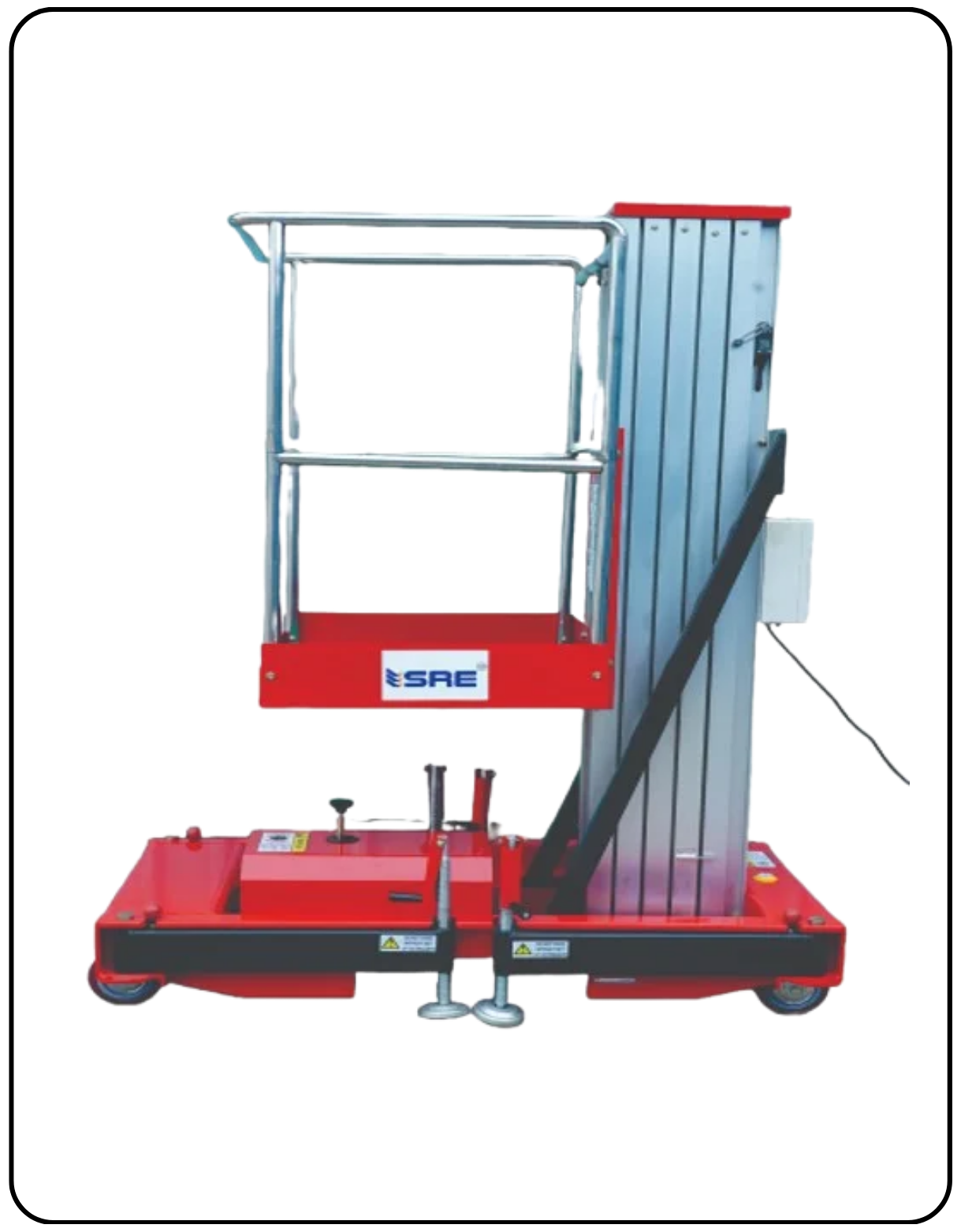
Maintenance engineers and facility managers in Rajkot’s engineering and manufacturing belt face a recurring challenge that ladders and scaffolding consistently fail to solve efficiently: reaching elevated positions at 4–6 metres for lighting work, duct servicing, racking installation, or overhead equipment maintenance in narrow aisles and tight plant areas — without the erection delay, safety risk, or labour overhead of traditional scaffolding. The compact, battery-powered solution that fits within standard factory aisles and deploys in under 90 seconds is the Aerial Lift in Rajkot. SRE Material Handling Equipment Pvt. Ltd., an ISO 9001:2015 certified manufacturer in Ahmedabad, Gujarat, supplies the SRE 151 aerial lift at Rs. 1,75,000 with 130 kg platform capacity and 6 metre maximum working height — built for factory maintenance, warehouse racking operations, and elevated inspection tasks across Rajkot, Gujarat, and PAN India.
How the Aerial Lift Solves Elevated Access Problems at Rajkot, Ahmedabad, and Gujarat Manufacturing and Warehouse Facilities
The operational case for an aerial lift over scaffolding in Rajkot’s manufacturing plants is fundamentally about time and safety. Scaffolding erection for a 5–6 m access task typically requires 2–3 workers and 35–60 minutes of setup time — time during which the production or maintenance area is partially blocked. The SRE 151 aerial lift requires one operator, 90 seconds of setup (position unit, extend outriggers, press raise button), and a 900 mm base width that fits within standard 1.2–1.5 metre factory aisles. The single mast electric drive raises the platform from ground to 6 metres in approximately 60–90 seconds via the 24V DC electric mast motor. When the task is done, lower in 60 seconds and reposition. This cycle time advantage — compared to scaffold erect-use-dismantle — becomes highly significant for facilities in Rajkot running 3–8 elevated tasks per day.
The SRE 151 frame is fabricated from IS 2062 MS steel with a 2-coat epoxy powder coat finish suited to the semi-outdoor and humid conditions of Rajkot’s industrial belt during monsoon season. The base rides on 4 polyurethane wheels — two fixed, two 360° swivel — providing full floor maneuverability in the lowered position. When raised, 4 adjustable outrigger legs extend to an 1.8 m × 1.8 m footprint, providing the stability base mandated by standard industrial elevated work platform specifications. The 24V sealed lead-acid battery pack provides 6–8 hours of operation per charge — adequate for a full single-shift maintenance operation without mid-shift recharging.
Why Rajkot Engineers Choose the Single Mast Aerial Lift Over a Step Ladder or Fixed Scaffold
Factory owners and EHS managers in Rajkot, Ahmedabad, Vadodara, and Bhavnagar still operating with step ladders for overhead tasks above 3 metres face two documented risks: fall incidents from unsecured ladders on smooth workshop floors, and operator over-reach injuries from working at the top of a ladder without a stable standing platform. The SRE 151 aerial lift eliminates both — the operator stands on a perimeter-guarded platform with 1.1 m fall guard rails on three sides with a lockable access gate, and the outrigger-stabilised base prevents any tipping risk even when the operator applies moderate lateral force during a fastening or installation task at height. The overload cutout sensor prevents mast extension beyond 130 kg platform weight, and the tilt sensor cuts mast drive power if the base exceeds 1.5° slope.
| Access Method | SRE 151 Aerial Lift | Step Ladder | Mobile Scaffolding | Double Mast AWP (SRE 152) |
|---|---|---|---|---|
| Max Working Height | 6 m | 3–4 m | 4–8 m | 10 m |
| Platform Capacity | 130 kg (1 operator) | N/A — steps only | 150–300 kg | 220 kg (2 operators) |
| Setup Time | 90 seconds | Instant | 35–60 minutes | 120 seconds |
| Fall Protection | 1.1 m guard rail | None | Guard rail (if fitted) | 1.1 m guard rail |
| Aisle Width Needed | 1.2–1.5 m | 0.5 m | 1.5–2.5 m | 1.5–1.8 m |
| Price | Rs. 1,75,000 | Rs. 3,000–8,000 | Hire: Rs. 3,000–6,000/day | Rs. 3,10,000 |
Get a Quote for Aerial Lifts — Rajkot, Ahmedabad, Gujarat & PAN India
Get a Bulk Quote Now Call: +91 9316 208879Key Applications of Aerial Lifts Across Rajkot, Gujarat, Maharashtra, and PAN India Industrial Facilities
Plant managers and procurement heads in Rajkot, Kutch, Bhavnagar, Ghandhidham, and Mahesana deploy aerial lifts across a consistent set of elevated access needs where the unit’s narrow profile, battery independence, and rapid deployment make it clearly superior to scaffolding alternatives. SRE Material Handling Equipment Pvt. Ltd., MSME and Make in India certified, has supplied SRE 151 aerial lift units to engineering, logistics, pharma, retail, and manufacturing facilities across Gujarat, Maharashtra, Rajasthan, and South India.
- Overhead Machinery Maintenance (Rajkot Engineering): Accessing CNC gantry drives, overhead robot systems, and crane rail lubrication points at 5–6 m — no scaffold required, one operator handles the task independently.
- Lighting and Electrical Maintenance (Ahmedabad, Gujarat): LED fixture replacement, wiring junction access, and conduit inspection at factory ceiling heights of 5–6 m.
- Racking Installation and Inspection (Vadodara, Rajkot): Installing high-bay racking uprights and beams at 4–6 m — narrow base fits within standard aisle widths without moving racking.
- HVAC and Duct Access (Pune, Maharashtra): Reaching overhead ducts, dampers, and fan coil units for inspection and servicing — no trailing cable from battery operation.
- Fire Suppression System Inspection (Bangalore, Chennai): Nozzle inspection and pipe servicing at 5–6 m ceiling — guard rail compliance meets facility safety regulations.
- Warehouse Signage and Camera Installation (Noida, Gurugram): Installing overhead directional signs, CCTV mounts, and PA speakers at warehouse ceiling level.
- Cold Store Maintenance (Jaipur, Rajasthan): Servicing refrigeration evaporator units in cold stores — compact footprint navigates cold store aisle layouts.
- Textile Mill Maintenance (Surat, Rajkot): Accessing overhead loom machinery drives and ceiling-mounted motor units in textile weaving halls.
Technical Specifications and Safety Systems — SRE 151 Aerial Lift for Rajkot and Gujarat Operations
Engineering procurement managers in Himmatnagar, Kalol, Chattral, Vatva, and Kathwada need verified specifications before raising a purchase order for aerial lifts. The SRE 151: platform capacity 130 kg, maximum working height 6 metres, base width approximately 900 mm. Power: 24V DC sealed lead-acid battery (Li-ion upgrade available), battery life 6–8 hours per charge. Safety systems: 130 kg overload cutout, 1.5° tilt cutoff sensor, outrigger extension interlock (mast will not extend until all 4 outriggers are deployed), manual emergency lowering valve accessible from ground level, 1.1 m perimeter fall guard rail with lockable access gate. All safety functions tested at factory before dispatch from Ahmedabad under ISO 9001:2015 quality system. Operator training guide and daily inspection checklist included with every unit.
SRE Material Handling Equipment Pvt. Ltd. — Aerial Lift Manufacturing, Supply, and After-Sales for Rajkot, Gujarat, and PAN India
SRE Material Handling Equipment Pvt. Ltd. manufactures the SRE 151 aerial lift at its Ahmedabad facility with full in-house steel fabrication, mast assembly, electrical integration, and complete safety function testing before dispatch. Delivery timeline for Rajkot and Gujarat buyers: 10–15 working days for standard units. Bulk orders of 2+ units for multi-facility maintenance fleets across Gujarat, Maharashtra, and Rajasthan are fulfilled within 21–28 working days. Spare parts — 24V battery packs, mast drive motors, outrigger leg assemblies, and control pendant units — are stocked at the Ahmedabad warehouse for 48-hour dispatch to Rajkot and across Gujarat.
The payback calculation for Rajkot facility managers comparing aerial lift purchase versus ongoing scaffolding hire is straightforward. Scaffolding hire in Gujarat’s industrial belt typically runs Rs. 2,500–6,000 per day. The SRE 151 at Rs. 1,75,000 pays back in 30–70 hire days — for a facility with weekly elevated maintenance requirements, payback completes within 7–18 months, after which all elevated access tasks carry zero incremental cost. Complementary equipment: Chain Block and Hoist for overhead lifting alongside elevated access, Mobile Floor Crane for ground-level load positioning before hoist engagement, and Platform Trolley for moving tools and materials to the aerial lift position. Blog guides: Self Propelled Scissor Lift Table Pune, Electric Stacker Pune, and Magnet Lifter Pune.
Replace recurring scaffolding hire costs — get an aerial lift quote from SRE today.
Request a Quote Call: +91 97247 22404Frequently Asked Questions — Aerial Lift in Rajkot
What is the capacity, working height, and price of the SRE 151 Aerial Lift available in Rajkot and Ahmedabad?
The SRE 151 aerial lift in Rajkot has a 130 kg platform capacity, 6 metre maximum working height, and base width approximately 900 mm. Power: 24V DC battery, 6–8 hours per charge. Safety: 1.1 m fall guard rail, overload cutout, tilt sensor, outrigger interlock. Starting price: Rs. 1,75,000 (taxes extra). SRE Material Handling Equipment Pvt. Ltd., ISO 9001:2015 certified, delivers within 10–15 working days to Rajkot and across Gujarat with safety function test documentation.
How does an Aerial Lift reduce elevated access costs and improve safety at Rajkot and Gujarat industrial plants compared to scaffolding?
Scaffolding hire in Rajkot and Gujarat industrial plants costs Rs. 2,500–6,000 per day including erection. The SRE 151 aerial lift at Rs. 1,75,000 pays back in 30–70 uses. Setup time is 90 seconds versus 35–60 minutes for scaffolding. The 1.1 m perimeter fall guard rail and outrigger stability system eliminate the fall risk inherent in step ladders and unsecured scaffolding at 5–6 m. One operator versus 2–3 for scaffold erection.
What safety interlocks are included in the SRE 151 Aerial Lift for factory and warehouse use in Ahmedabad and Gujarat?
The SRE 151 includes four critical interlocks: 130 kg overload cutout preventing mast extension beyond rated platform weight; 1.5° tilt sensor cutting mast drive on uneven surfaces; outrigger interlock preventing mast extension until all four legs are deployed and weight-bearing; and a manual emergency lowering valve accessible from ground level. These systems are factory-tested at Ahmedabad before dispatch to buyers across Gujarat, Maharashtra, and Rajasthan.
Can OEM and institutional buyers in Rajkot and Gujarat order fleet quantities of Aerial Lifts with Li-ion battery upgrades?
SRE Material Handling Equipment Pvt. Ltd. accepts fleet orders of 2+ SRE 151 aerial lifts for multi-facility maintenance operations across Rajkot and Gujarat. Li-ion battery upgrade is available for extended cycle life and faster recharge. Delivery: 21–28 working days for bulk orders. MSME and Make in India certified — qualifies for government and institutional procurement. Custom platform accessories and facility colour coding available. Spare parts stocked at Ahmedabad for next-day dispatch.
Rajkot aur Gujarat ke industrial plant mein Aerial Lift ki delivery time aur safety training kaise milti hai?
Rajkot aur Gujarat ke liye SRE 151 aerial lift ki delivery 10–15 working days mein hoti hai standard units ke liye. Har unit ke saath operator training guide aur daily pre-use inspection checklist provide kiya jata hai. Starting price Rs. 1,75,000 (taxes extra). SRE Material Handling Equipment Pvt. Ltd. direct factory dispatch Ahmedabad se karta hai with full safety function test documentation. Li-ion battery upgrade bhi available hai extended shift requirements ke liye.
Rajkot ke engineering workshop aur Gujarat ke warehouse ke liye Aerial Lift ka payback scaffolding hire se compare mein kitna time lagta hai?
Rajkot aur Gujarat ke engineering workshops mein scaffolding hire Rs. 2,500–6,000 per day padti hai. SRE 151 aerial lift ki purchase price Rs. 1,75,000 hai — 30–70 hire days mein payback complete hota hai. Weekly elevated maintenance tasks wali facilities ke liye payback 7–18 months mein achieve hota hai. Baad mein sab elevated access tasks zero incremental cost par hote hain. Bhavnagar, Kutch, aur Mahesana ke buyers ke liye bhi same calculation applicable hai.
Kya Aerial Lift ki battery aur spare parts service Rajkot aur Gujarat mein available hai?
Haan — SRE Material Handling Equipment Pvt. Ltd. ke SRE 151 ke liye 24V battery packs, mast drive motors, outrigger foot assemblies, aur control pendant units spare parts ke roop mein stocked hain Ahmedabad warehouse mein. Rajkot aur Gujarat ke buyers ke liye 48-hour dispatch hota hai. Battery service har 6 mahine recommended hai — electrolyte check aur terminal cleaning. AMC (Annual Maintenance Contract) bhi available hai fleet installations ke liye.
Standards and Regulatory References
Quality management at SRE Material Handling Equipment Pvt. Ltd. is certified under ISO 9001:2015 — International Organization for Standardization. Steel specifications follow the Bureau of Indian Standards (BIS) — IS 2062. Elevated work platform safety requirements for factory use across Rajkot, Gujarat, and PAN India are governed by the Factories Act, 1948 — Ministry of Labour & Employment, Government of India.