
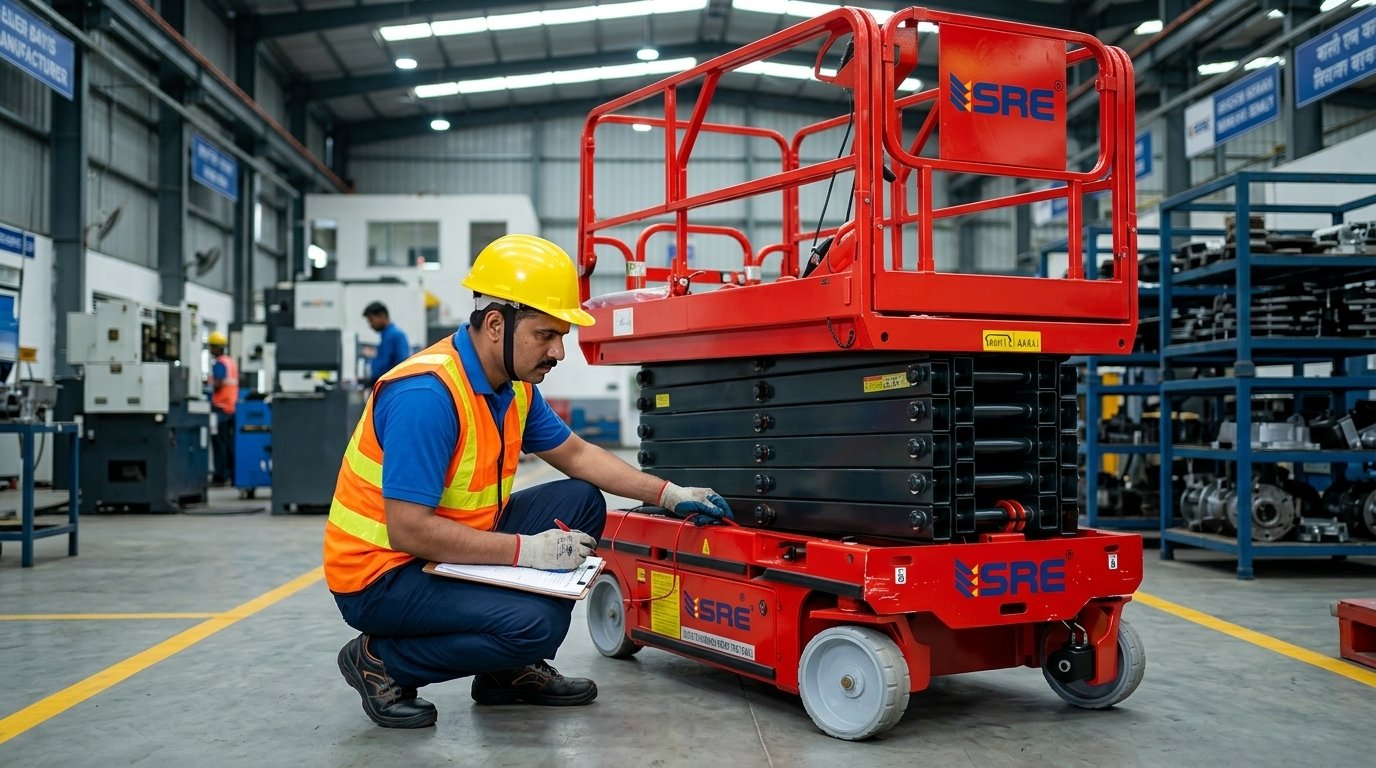
Factory Material Handling Equipment for Safer, Faster, More Reliable Plant Movement
Factory material flow affects almost everything on the shop floor: output, safety, labour fatigue, dispatch speed, and even product damage. When movement between storage, assembly, packing, and loading is not planned well, small delays become daily losses. This is where the right factory material handling setup matters. In this guide, you’ll learn what equipment factories usually need, how to assess fit for your plant, what ISO-focused quality checks actually mean, how delivery works from concept to installation, and what practical results Indian manufacturers look for before they invest.
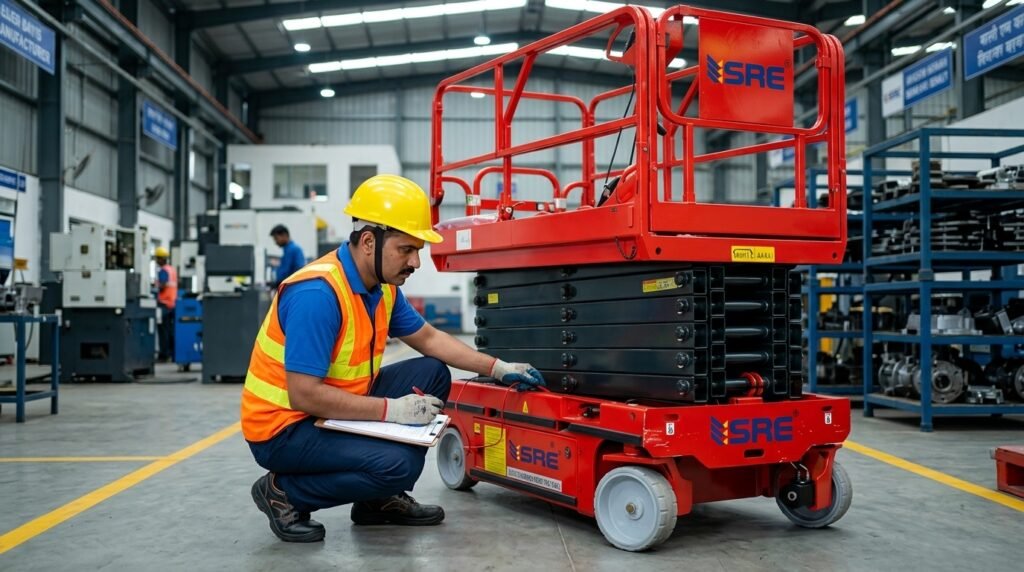
Our Factory Material Handling Equipment Manufacturing Capabilities
Yes, factories rarely need one machine in isolation. Most need a connected handling ecosystem: pallet movement, lifting, stacking, loading, docking, aisle transport, and special handling for drums or irregular loads. At SRE Material Handling Equipment Private Limited, the focus is on practical plant-use conditions such as narrow aisles, uneven floor sections, loading height mismatch, multi-shift usage, and operator comfort.
The product range typically supports warehouse and factory operations that require pallet trucks, stackers, scissor lifts, goods lifts, dock support systems, platform trolleys, and custom movement aids. A unit in Ahmedabad may need compact pallet movement for pharma cartons, while a plant in Surat may need corrosion-aware handling for chemical packaging. In Mumbai and Delhi, space constraints often push buyers toward tighter turning-radius equipment and safer vertical storage movement.
Here’s what buyers usually evaluate first:
- Load capacity and centre of gravity
- Lift height and stacking frequency
- Floor condition and wheel suitability
- Battery or hydraulic preference
- Shift length and operator usage pattern
- Maintenance access and spare support
For vertical pallet movement, a hydraulic stacker remains a common fit for many factories because it is simple to operate, easier to maintain, and useful where electric charging infrastructure is limited. If your team is comparing electric stacker manufacturers India, check battery runtime, mast stability, wheel quality, and brake response instead of only the initial price.
In loading bay applications, plants with frequent truck movement often pair internal handling tools with a mobile ramp so forklifts or pallet movement systems can move between dock and vehicle without delay. This is especially useful for units in Pune, Vadodara, and Indore, where dispatch cycles can change fast during peak order runs. The same logic applies to dock leveler support, goods movement to mezzanine levels, and drum handling equipment in process industries.
For internal carton and component movement, a platform trolley still solves many day-to-day transfer issues at low cost. It is one of those tools plant heads often overlook until they calculate labour time lost in repetitive manual shifting. This matters in electronics units in Bangalore, auto ancillaries in Chennai, and mixed-load warehouses in Hyderabad, where quick short-distance movement affects line continuity.
Navigating Quality Standards and ISO 9001-2015 Certification
The best buying decisions are usually made before production starts, not after dispatch. Quality in factory material handling equipment is not just about finish or paint. It includes steel selection, welding consistency, dimensional accuracy, wheel and bearing quality, hydraulic sealing, load testing, and documentation discipline. That is where process maturity matters more than claims.
ISO 9001-2015 is often mentioned loosely in industrial buying, but its real value is in repeatable process control. For a buyer, this means better traceability, better inspection discipline, and clearer corrective action if a part or assembly issue appears later. At the company website, you can review the broader industrial equipment focus and evaluate whether the range aligns with your plant’s movement profile before you shortlist a supplier.
You might be wondering what practical signs indicate dependable manufacturing quality. Look for these:
- Defined inspection stages during fabrication and assembly
- Load and stability checks before dispatch
- Consistent documentation
- Clear communication on operating limits
- Realistic guidance on preventive maintenance
- Ability to adapt designs for plant conditions
This is also where buyers searching for material handling equipment manufacturers near me should pause and compare support capability, not only distance. A nearby supplier without process discipline can still create downtime. A properly organized manufacturer with sound after-sales support can reduce repeat breakdowns and unexpected stoppage.
For applications involving loading docks and level differences, it helps to understand how dock transfer systems affect safety and movement speed. This overview on industrial dock leveler applications gives useful context if your dispatch area sees frequent truck turnaround. In many factories, safer loading interface design reduces product damage as much as it improves throughput.
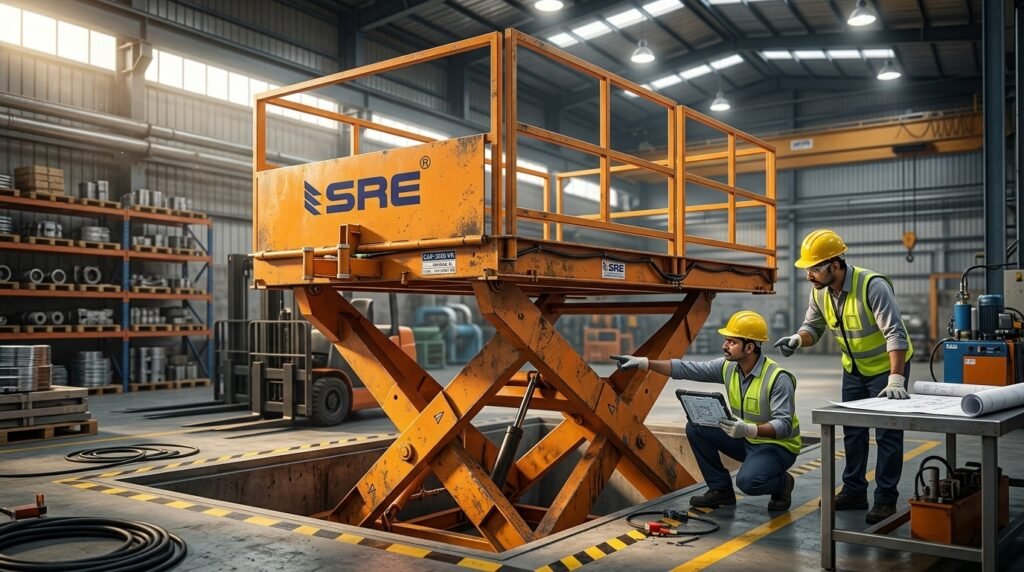
Local Manufacturers vs SRE Material Handling Equipment
Here’s how buyers usually compare local supply options with a structured factory equipment partner. The real difference often comes down to engineering clarity, consistency, and post-sale guidance rather than brochure claims alone.
| Comparison Point | Typical Local Supplier | SRE Material Handling Equipment |
|---|---|---|
| Requirement study | Often basic and price-led | Application-focused discussion based on load, layout, and usage |
| Product range fit | Limited standard models | Coverage across stackers, lifts, dock systems, cranes, and custom solutions |
| Quality process | Varies by batch | Process-led manufacturing with ISO 9001-2015 certified discipline |
| Customization | Often limited | Suitable for many plant-specific handling requirements |
| Operational guidance | Basic handover | Practical usage and maintenance guidance |
If your team is comparing pallet truck manufacturers in Ahmedabad or evaluating broader factory lifting systems, use this simple rule: match equipment to movement pattern, not only load rating. One auto-component client in Jaipur cut internal shift delays after changing from a mismatched trolley setup to a more suitable stack-and-transfer arrangement. The equipment cost was not the only factor; aisle movement and operator ease made the difference.
Step-by-Step Process: How We Deliver Factory Material Handling Equipment
Here’s how SRE Material Handling Equipment usually approaches a factory requirement so buyers do not end up with equipment that looks fine on paper but struggles in real use.
1. Requirement mapping
The first step is to understand load type, shift pattern, storage layout, lift height, floor condition, and dispatch flow. A food processing unit and an engineering unit may both ask for lifting support, but the right specification will differ. If your requirement includes safe elevated access, this guide on mobile scissor lift use cases can help your team think more clearly about working height and duty cycle.
2. Equipment selection
Next comes matching the right equipment type: pallet truck, hydraulic stacker, electric stacker, scissor lift, mobile floor crane, goods lift, aerial work platform, dock leveler, or drum handling equipment. This is also where plants comparing material handling equipment manufacturers should ask whether custom dimensions, wheel choices, and safety features can be adjusted for their line conditions.
3. Engineering and manufacturing
The design is translated into build specifications, fabrication stages, component selection, and testing checkpoints. Mr. Gaurang Patel’s leadership and more than 10 years of sector experience matter here because many plant issues are solved through small engineering decisions made early, not after installation.
4. Inspection, dispatch, and support
Before delivery, stability, operation, and finish checks become important. When elevated access is part of the project, buyers may also benefit from understanding platform design and motion safety through this scissor lift manufacturer guide. For direct discussion, factory teams can use the official contact page to request specifications, a Free Equipment Consultation, or the Download Material Handling Cost Guide.
Get a Quote for Factory Material Handling Equipment
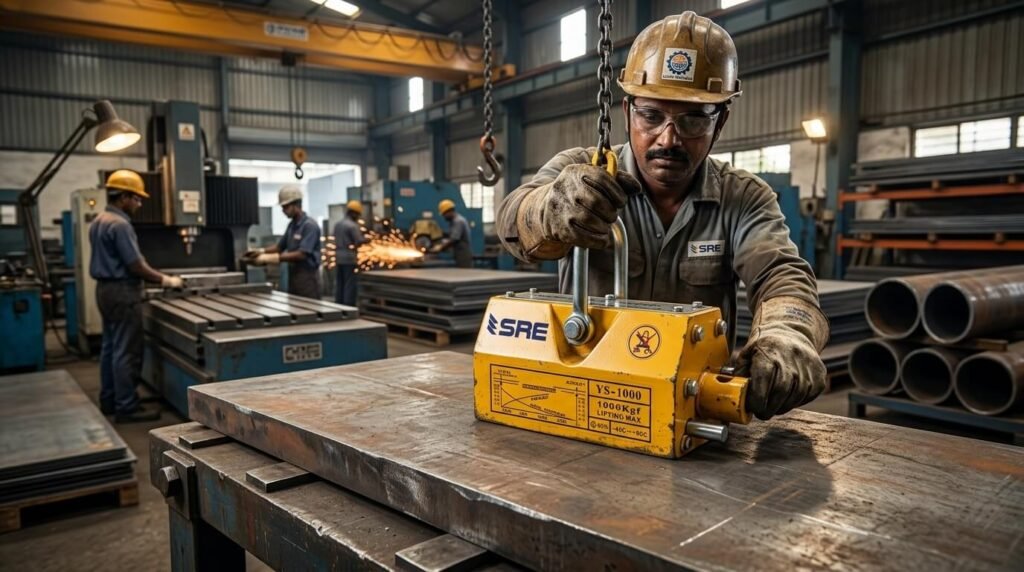
Real Client Case Study
Here’s how SRE Material Handling Equipment supported a realistic factory challenge for an anonymized client. A mid-sized packaging manufacturer in Kolkata was facing daily bottlenecks between production, temporary staging, and truck loading. Operators were manually shifting part loads, pallet alignment was poor, and dispatch teams were losing close to an hour each shift due to avoidable handling delays.
After a requirement review, the solution combined better pallet transfer planning, stacker support, and loading area movement adjustments. The client did not need flashy automation; they needed a stable, practical setup that workers could use with confidence. Within weeks of implementation, internal movement became smoother, labour strain reduced, and loading errors dropped. A smaller but similar result was seen earlier at a unit in Chandigarh, where a basic change in short-distance transfer equipment reduced carton damage during shift changeovers.
This outcome reflects why buyers often shortlist SRE Material Handling Equipment when they need application-led support rather than generic supply. Founded in 2011 as SRE Material Handling Equipment Private Limited, formerly Shree Ram Enterprise, the company operates from Ground Floor, A-12, Pushp Business Campus, Ring Road Circle, Vastral, Ahmedabad – 382418, Gujarat, India. Under Mr. Gaurang Patel, the team has delivered 15K+ material handling equipment solutions, achieved a 95% client satisfaction rate, and earned 13 industry awards while maintaining ISO 9001-2015 certified processes.
Frequently Asked Questions
1. What factory material handling equipment is commonly used in Indian plants?
- The most common equipment includes pallet trucks, hydraulic and electric stackers, goods lifts, scissor lifts, mobile floor cranes, dock levelers, drum handling equipment, and platform trolleys.
2. How do I choose between a hydraulic stacker and an electric stacker?
- Choose based on usage frequency, lift height, operator effort, battery support, and shift duration. Hydraulic units suit moderate use; electric options help in higher-cycle operations.
3. Do factories need custom handling equipment or standard models?
- Many plants can start with standard models, but layout, load shape, aisle width, and floor conditions often make custom adjustments useful.
4. Why is ISO 9001-2015 important for material handling equipment?
- It signals a process-based quality system, which usually improves consistency, inspection control, documentation, and corrective action.
5. Can this equipment improve safety as well as productivity?
- Yes. Proper equipment reduces manual lifting, awkward load movement, unstable stacking, and dispatch-area risk while improving flow speed.
6. Which industries usually buy this equipment?
- Engineering, packaging, pharma, food processing, logistics, chemicals, textiles, automotive ancillaries, and warehouse operations use it regularly.
7. How can I request specifications or pricing?
- You can contact the team on +91 9316 208879 or email sremhepvtltd2025@gmail.com. WhatsApp discussions are useful for sharing plant photos, load details, and layout needs quickly.