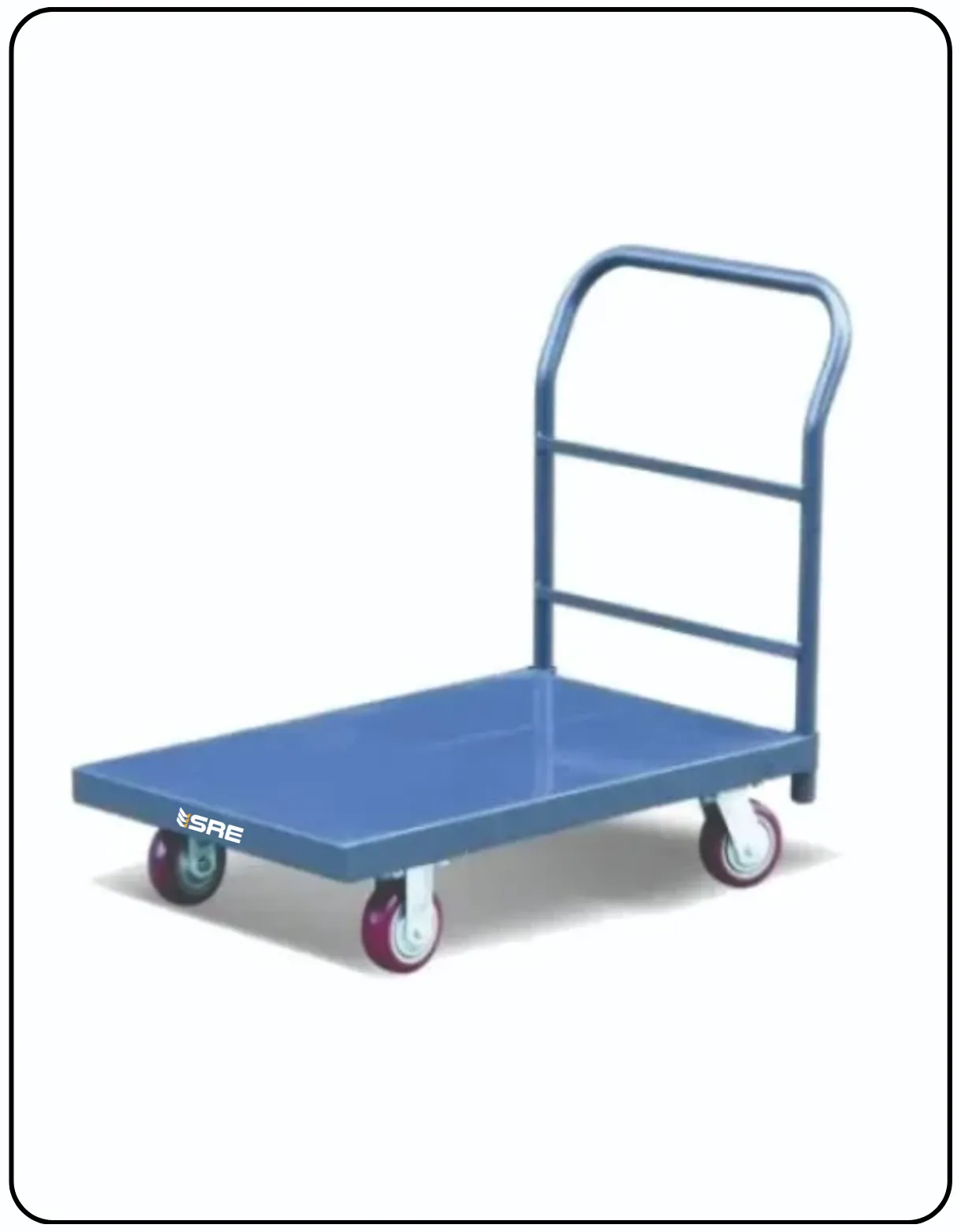
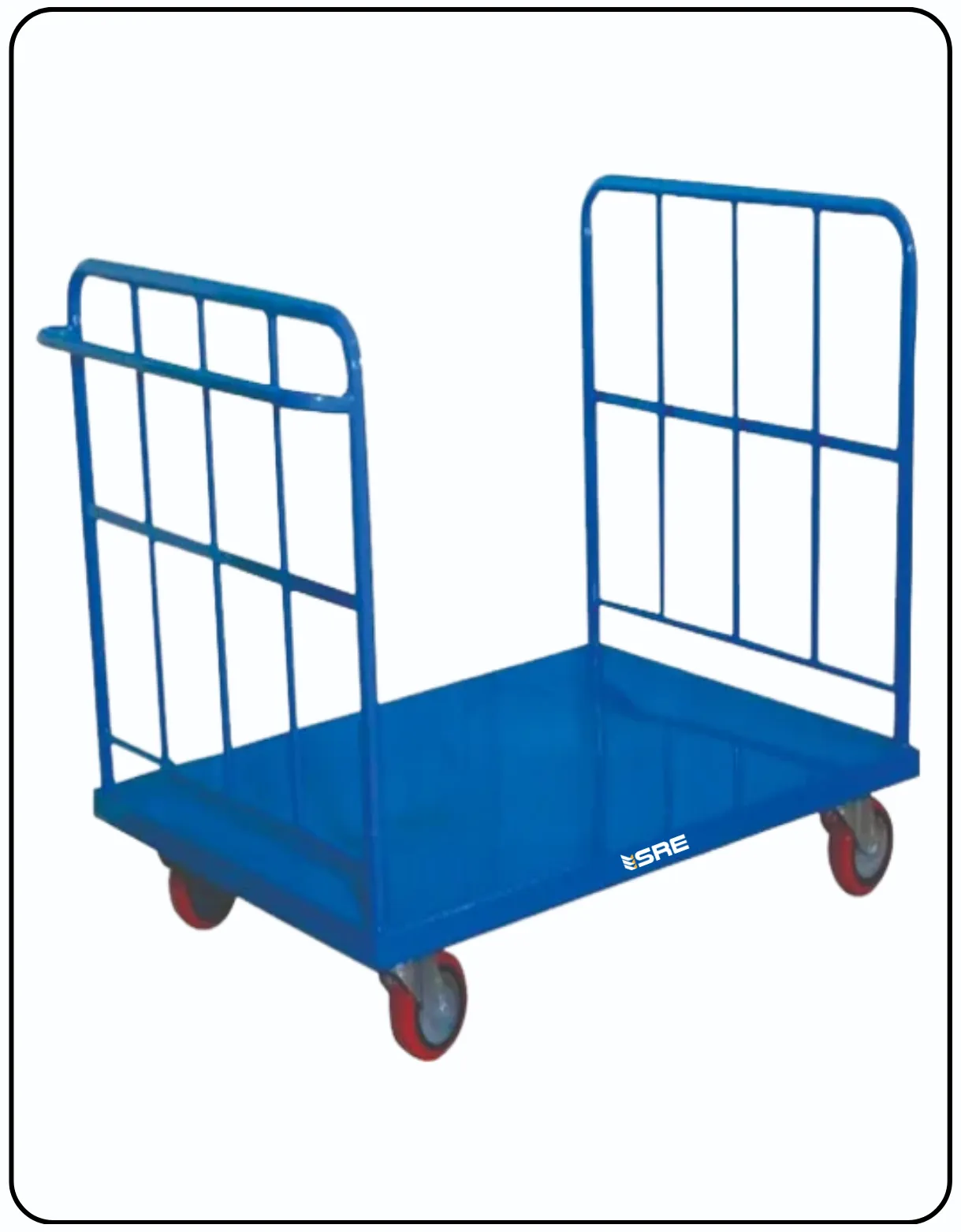
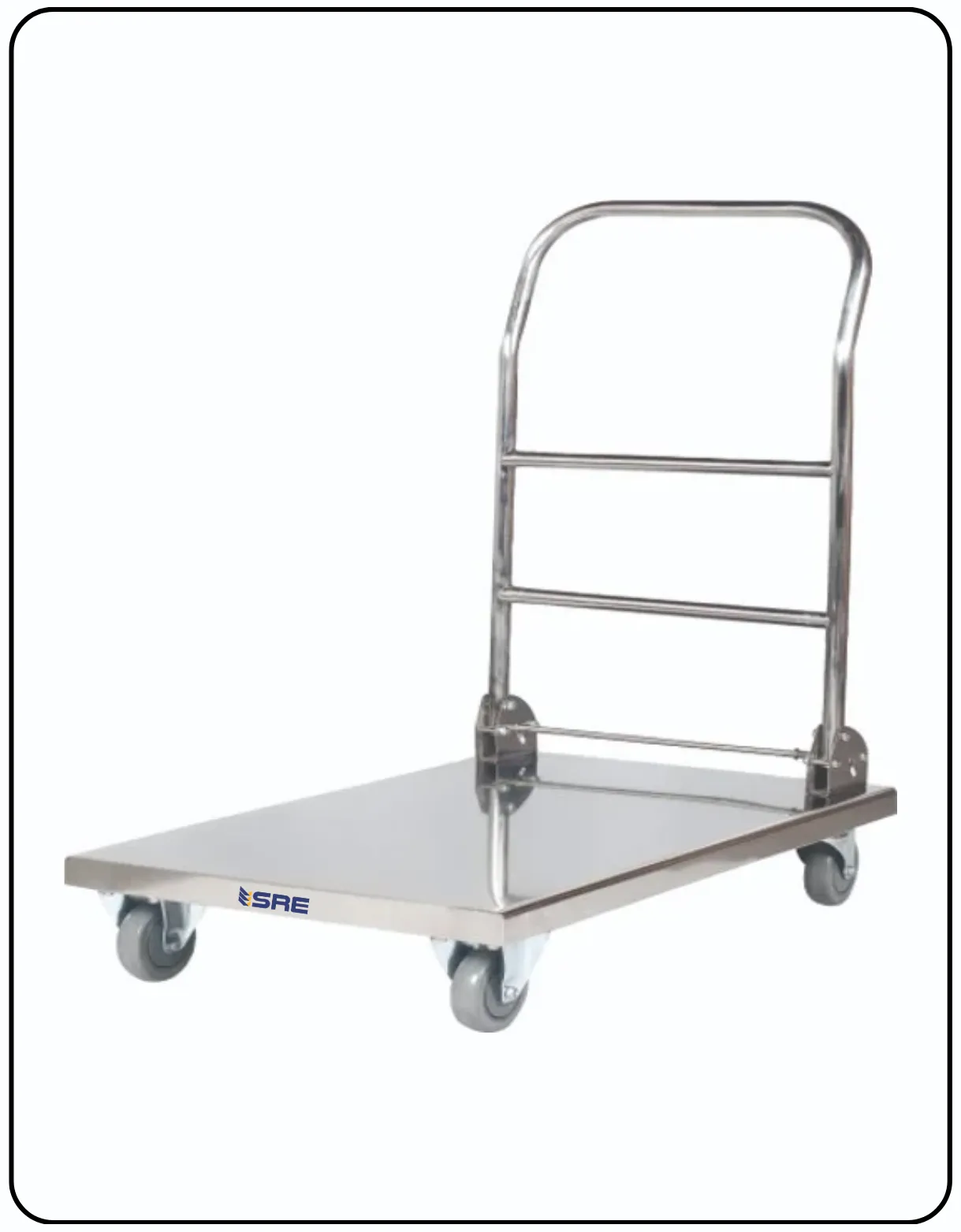
500kg- 2’x3’- Indian blue (All Size Available)
Rs. 5000
(Taxes to be paid extra)
SKU: SRE167
Brand: SRE
Min Order Qty: 1
Warehouse and factory floors have always been busy environments, but the nature of that activity has evolved significantly. A decade ago, most internal material movement relied heavily on manual handling—workers carrying loads by hand, using basic tools, or depending on temporary solutions to move goods. Today, with the rise of efficient handling solutions, businesses are increasingly turning to a
Platform Trolley Manufacturer and Supplier like
SRE Material Handling Equipment Pvt. Ltd. to streamline operations, reduce manual effort, and improve overall productivity.
Today, the same floors handle significantly higher volumes, tighter dispatch schedules, and more SKUs moving simultaneously. The physical toll on workers has not decreased — if anything, it has increased. Repetitive strain injuries, back problems, and general fatigue from manual carrying are among the most consistently reported issues in warehouse health and safety records.
The
Platform Trolley has become a standard response to this problem — not because it is new technology, but because it directly addresses the daily movement challenges that warehouse owners, factory managers, and operations teams deal with shift after shift. To explore the full product range, visit
SRE Material Handling Equipment Private Limited.
The Changing Needs of Modern Warehouses and Industrial Facilities
Operational pressure in warehousing and manufacturing has grown steadily over the last several years. Order fulfilment timelines have compressed. Customers and supply chain partners expect faster turnaround. Inside the facility, that pressure translates into more movement — more trips between storage and dispatch, more transfers between production stations, more loads being shifted in less time.
At the same time, facilities are increasingly held accountable for workforce health and safety.
Manual handling injuries are expensive — not just in compensation and medical terms, but in lost productivity, staff turnover, and the difficulty of replacing experienced workers who are out injured.
The result is a practical need for equipment that reduces the physical burden of
internal material movement without adding complexity to the workflow. A
heavy-duty platform trolley fits that need cleanly — it is simple, reliable, and requires no training beyond basic operator familiarity. It does not replace workers; it allows the same workers to move more, with less physical strain, across a full shift.
What Is a Platform Trolley?
A
Platform Trolley is a flat, wheeled platform used to transport goods, materials, boxes, components, or equipment across flat or gently graded
industrial floors. It typically consists of a steel or structural frame, a flat
load-bearing deck, and four castors — two fixed and two swivel — that allow directional control during movement.
Unlike a hand truck or sack trolley that tilts and balances a load, a
Platform Trolley carries the load flat and stable. The operator pushes or pulls the trolley from one point to another. There is no lifting involved beyond placing the goods on the deck — which itself is typically done with a forklift, pallet jack, or by hand for lighter loads.
In daily warehouse operations, the
industrial platform trolley is used constantly — moving packed boxes from pick zones to dispatch, shifting raw materials between stores and production, transporting components along assembly lines, or carrying equipment between maintenance areas. It is one of those pieces of equipment that, once introduced, becomes hard to imagine working without.
SRE offers a wide range of variants including the
Industrial Steel Platform Trolley, the
SS Platform Trolley, and the
Platform Hand Trolley — each designed for specific load types and working environments.
Why the Platform Trolley Is Replacing Traditional Manual Handling Methods?
The most common alternative to a
Platform Trolley is simply carrying loads by hand — or using basic sack trolleys and hand carts that are not designed for flat, stable
load transport. Both approaches have real operational limitations.
Manual carrying has obvious physical limits. A worker can carry only so much, only so far, only so many times per shift before fatigue sets in and the risk of injury rises. Sack trolleys tilt the load and require the operator to balance it in motion — manageable for light, stable loads, genuinely risky for anything heavy, irregularly shaped, or fragile.
The
flat platform trolley removes both of those constraints. The load sits flat and stable. The operator is not carrying weight — they are directing movement. That difference in physical demand allows a single worker to move significantly more material per shift without the cumulative fatigue that
manual carrying produces.
Consistency is another factor. A worker who is fatigued moves more slowly and less carefully. A
Platform Trolley maintains the same movement capability at the end of a shift as at the start — because the equipment does not tire. In operations where
throughput consistency matters, that reliability has direct value.
For operations that involve bulkier or more varied loads, the
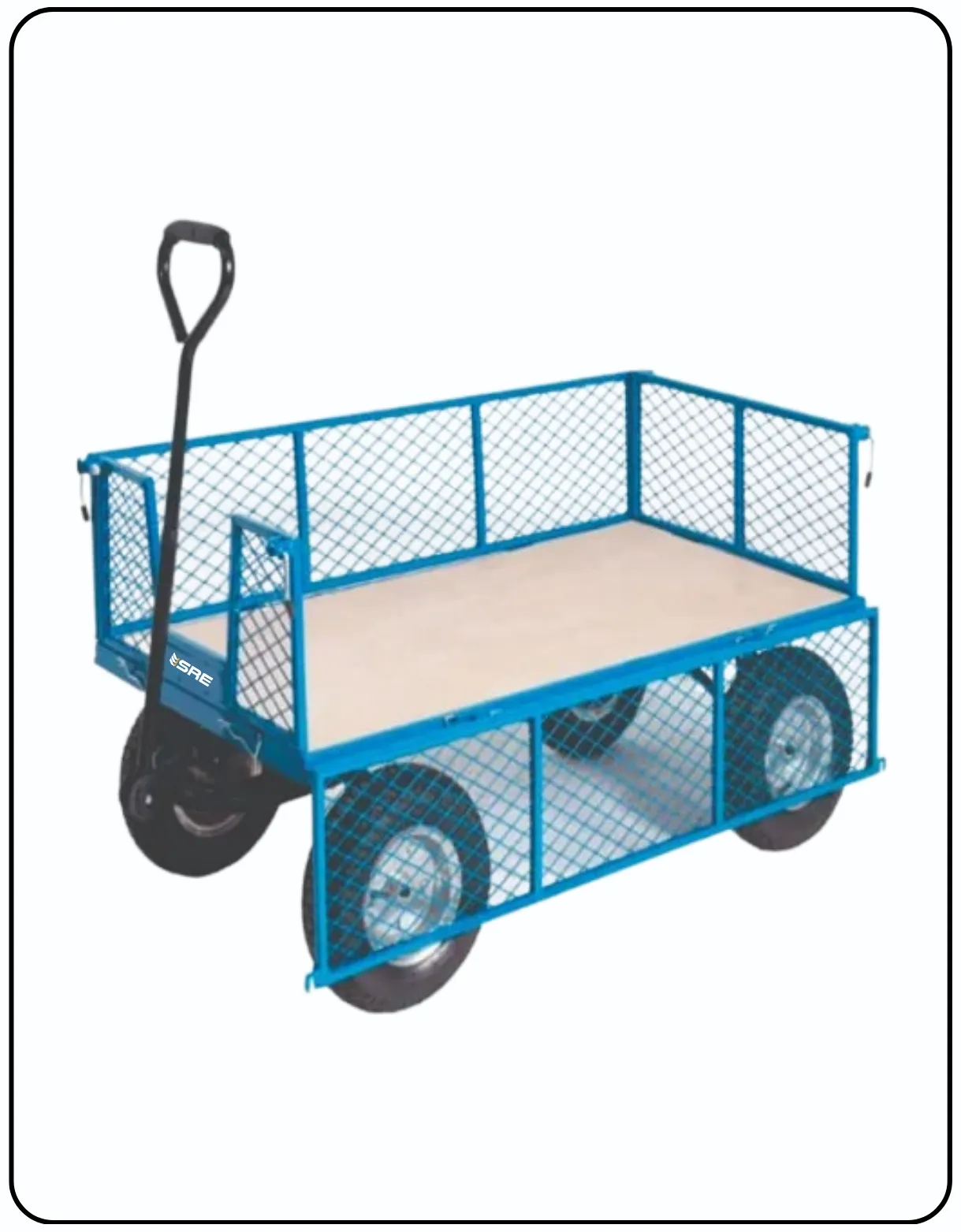
Industrial Trolley and the
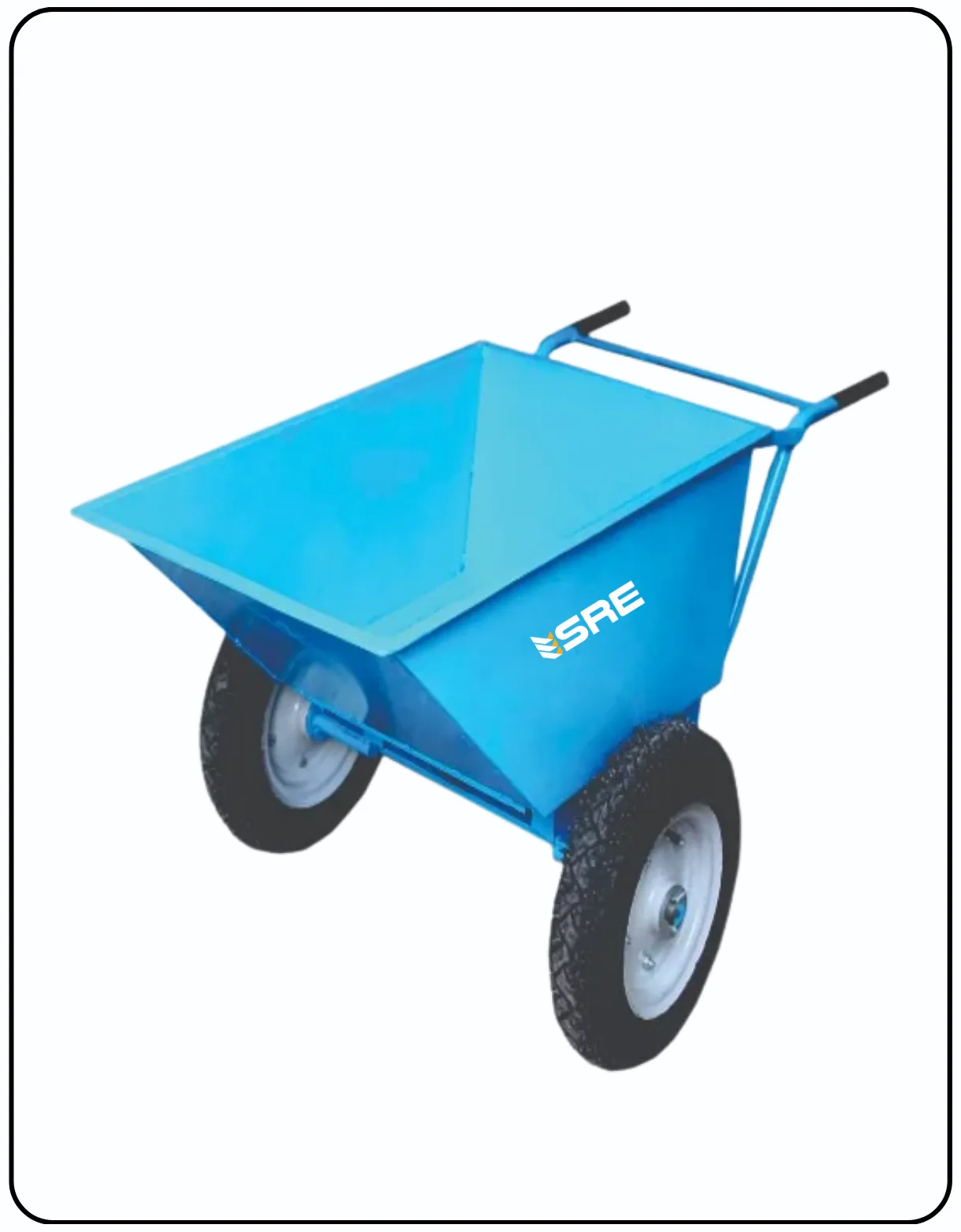
Double Wheel Barrow Trolley offer additional configuration options suited to different handling requirements.
Platform Trolley — Product Description
SRE Material Handling Equipment Private Limited offers the
Platform Trolley in configurations suited to varied
industrial load and floor conditions.
The
500 kg capacity Platform Trolley in 2′ x 3′ size — Import Black is a robust, ready-to-deploy unit built for consistent daily use in warehouses, factories, and
distribution centres. The import-grade black finish reflects a higher-specification surface treatment that provides durability in demanding
industrial environments. At
500 kg rated capacity, it handles the majority of standard
internal material movement requirements without being over-engineered for light-duty use.
The
500 kg capacity Platform Trolley in 2′ x 3′ size — Indian Blue is manufactured domestically to reliable
industrial standards and is available in a
customised configuration to match specific site requirements. Whether that means adjusting deck height, castor specification, handle design, or
load surface treatment, the Indian Blue variant can be specified to operational need rather than accepted as a fixed standard product.
Both variants share the same fundamental design principle — a flat, stable, manoeuvrable platform that allows one operator to move loads that would otherwise require two workers, multiple trips, or
mechanical lifting equipment for short-distance transfers.
The
2′ x 3′ deck size is a practical working dimension — large enough to accommodate standard cartons, components, and equipment, compact enough to navigate standard
warehouse aisle widths without requiring special clearance. The
500 kg rated capacity is a realistic working load for the majority of
industrial internal movement applications — specified conservatively enough that operators are not pushing the equipment to its limits in normal use.
Both units run on
four-castor configurations — two fixed rear castors for straight-line stability and two front
swivel castors for directional control. Castor grade and wheel material can be specified based on
floor type and load requirements — standard polyurethane wheels for smooth floors, harder compounds for rougher surfaces.
Explore the full range including the
Industrial Steel Platform Trolley and SS Platform Trolley for stainless steel and heavy-gauge options suited to specific environments.
Technology and Operational Efficiency
The
Platform Trolley does not rely on batteries, motors, or power systems — and that is a practical advantage, not a limitation. In
industrial environments where charging infrastructure is limited, power availability is inconsistent, or operations run across multiple shifts, equipment that requires no power source has inherent reliability advantages.
A
manual platform trolley is available when you need it. It does not need to be charged, does not have a battery that degrades over time, and does not have electrical components that require specialist servicing. In operations where
uptime is critical and maintenance resources are limited, that simplicity translates directly into
operational reliability.
The mechanical design of a well-built
heavy-duty platform trolley is straightforward — frame, deck, castors, handle. Each of those components is accessible, replaceable, and available as standard
industrial parts. When a castor wears out, it is replaced. When the deck surface requires attention, it is treated or replaced. There are no control systems, no software, no firmware updates.
That simplicity also means that the operator’s time is spent moving material — not managing equipment. In
high-volume operations, that distinction matters more than it might initially appear.
Cost Efficiency Over Time
The long-term value of a
Platform Trolley is most visible when measured against the costs it avoids — not against its purchase price alone.
Manual handling injuries are among the most expensive recurring costs in warehouse and factory operations. A single back injury — treatment, compensation, lost time, and the cost of covering for an absent worker — can easily exceed the cost of several
industrial platform trolleys. Reducing the frequency and severity of
manual handling events directly reduces that exposure.
Labour efficiency is also a measurable factor. When workers are not carrying loads manually, they are moving more material per hour with less physical effort. Over the course of a week, a month, or a year, that efficiency compounds into meaningful
throughput gains without additional headcount.
Equipment maintenance costs for a
manual platform trolley are low and predictable. Castors, deck surfaces, and frame components are standard parts with straightforward replacement. There are no unexpected electrical failures, no specialist callouts, and no extended
equipment downtime waiting for parts that are not in stock.
For
procurement teams evaluating the
total cost of ownership, the
Platform Trolley is one of the most straightforward calculations in
material handling equipment — low initial cost, low running cost, measurable reduction in injury-related costs, and a service life measured in years rather than months.
Key Features of the Platform Trolley
- 500 kg Rated Load Capacity — handles standard industrial internal movement loads with a conservative safety margin
- 2′ x 3′ Deck Size — practical working dimensions for standard cartons, components, and equipment in typical warehouse aisle widths
- Available in Import Black and Indian Blue — two specification levels to match budget, environment, and operational requirement
- Customised Configuration Available — deck height, castor type, handle design, and surface treatment can be specified to site needs
- Four-Castor Design — two fixed rear castors for stability, two swivel front castors for directional control
- Heavy-Duty Steel Frame Construction — structural integrity for consistent daily use under rated load
- Flat Load-Bearing Deck — stable, level surface keeps loads secure during movement without balancing or tilting
- No Power Source Required — fully operational across all shifts without charging or power dependency
- Low Maintenance Design — standard replaceable components with no specialist servicing requirements
- Single-Operator Use — one worker can move loads that would otherwise require two people or mechanical assistance
Applications of the Platform Trolley
The
industrial platform trolley is one of the most versatile pieces of equipment in any warehouse or factory. Its application is not limited to a single task or sector — wherever goods need to move across a floor, a
Platform Trolley is a practical tool.
In
warehousing and distribution, the
Platform Trolley moves packed cartons and loose goods from pick zones to packing stations, from packing to dispatch, and between
storage areas — reducing the number of manual carry trips per shift and the fatigue associated with them.
In
manufacturing plants, it transports raw materials from goods-in to
production stations, moves work-in-progress between assembly stages, and carries finished components to quality control or packaging areas. In
assembly line environments, a dedicated
platform trolley at each station reduces the time workers spend away from their primary tasks collecting materials.
Pharmaceutical and food processing facilities use the
SS Platform Trolley and
flat deck platform trolley to move goods in environments where hygiene and
contamination control are priorities. The flat, cleanable deck surface and the ability to specify appropriate
wheel materials for smooth, cleanable floors makes the
Platform Trolley well suited to these environments.
In
retail distribution centres, the
Platform Trolley handles the movement of
mixed-SKU loads between receiving, storage, and outbound areas — particularly useful in operations where load sizes and configurations vary significantly between trips.
Engineering and maintenance teams across all sectors use the
Platform Hand Trolley for transporting tools, equipment, spare parts, and components between workshops and work areas — reducing the number of trips and the physical effort involved in equipping maintenance jobs.
For heavier or bulkier loads in outdoor or rough-terrain areas, the
Double Wheel Barrow Trolley provides a suitable alternative with added stability and load distribution.
Training, Ease of Use, and Maintenance
The
Platform Trolley requires less formal training than almost any other piece of
material handling equipment. The operation is intuitive — load the deck, push or pull to destination, unload. Most operators are fully comfortable with the equipment within minutes of first use.
That ease of use has real operational value. In facilities with high
staff turnover, temporary workers, or varied
operator skill levels, equipment that requires minimal instruction keeps operations moving without bottlenecks caused by training requirements. A new warehouse operative can use a
Platform Trolley effectively on their first shift.
Maintenance is equally straightforward. The primary wear components are the castors — specifically the wheels and bearings. In normal
industrial use, castor replacement is the most common maintenance task, and it requires basic tools and standard
replacement parts that are available from any industrial supplier.
The
deck surface may require periodic inspection for damage, particularly in operations where loads are placed with mechanical assistance. Frame integrity should be checked as part of routine
equipment inspection — welds, joints, and handle fixings are the areas to monitor. None of these inspections require
specialist knowledge or external service calls.
Why Choosing a Reliable Manufacturer Matters?
Not all
platform trolleys are built to the same standard. At the specification level —
500 kg capacity,
2′ x 3′ deck — the differences between a well-manufactured unit and a lower-quality one are not always visible at the point of purchase. They become visible in
service life, castor durability,
weld quality, and frame deflection under repeated loading.
A reliable manufacturer will be able to provide
load rating documentation and material specifications. They will have a track record of supplying
industrial platform trolleys to warehouses and factories where daily use is genuinely demanding — not just
light-duty applications that would not expose quality differences.
Customisation capability is also a meaningful signal. A manufacturer who can adjust deck height, castor specification, handle design, and
surface treatment to match your operational requirements is one who understands how the equipment is actually used — not one who sells a fixed product and moves on.
Service support and
parts availability are practical considerations that procurement teams sometimes overlook at the point of purchase. When a castor needs replacement or a handle requires attention, the ability to get the right part quickly from a supplier who knows the product keeps
downtime minimal.
Contact SRE Material Handling Equipment Private Limited to discuss specifications, customisation, and service support for your facility.
Conclusion
Internal material movement is one of those operational challenges that gets underestimated until it is measured. When the time spent on
manual carrying, the injuries associated with it, and the
throughput lost to worker fatigue are actually counted, the case for a proper
Platform Trolley becomes straightforward.
The
500 kg platform trolley in
2′ x 3′ configuration — available in
Import Black and
Indian Blue with
customised options — is a practical, durable, and
low-maintenance solution for the
internal movement demands that warehouse, factory, and distribution operations face every day.
It does not require power, specialist operators, or complex maintenance. It reduces physical strain on workers, increases the volume of material that can be moved per shift, and has a
service life and
total cost of ownership that makes it one of the more straightforward procurement decisions in
material handling.
If your operation is still relying on
manual carrying or basic hand carts that are not matched to your load and floor requirements, it is worth having a direct conversation about the right
Platform Trolley configuration for your site.
Contact SRE Material Handling Equipment Private Limited to discuss specifications, customisation options, and delivery.
Key Takeaways
- Productivity — One operator moves more material per shift with less physical effort, across the full working day
- Safety — Reduces manual carrying frequency and the musculoskeletal injury risk associated with repetitive load handling
- Load Handling — 500 kg rated capacity on a 2′ x 3′ flat deck handles the majority of standard internal movement requirements
- Cost Efficiency — Low purchase cost, low maintenance cost, measurable reduction in injury-related operational costs over time
- Industry Trend — Facilities across warehousing, manufacturing, and distribution are standardising on platform trolleys as basic internal logistics infrastructure — not optional equipment
Frequently Asked Questions
Q1: What is the load capacity of the Platform Trolley?
- Both variants are rated at 500 kg capacity — suitable for standard cartons, components, and equipment in warehouse and factory environments. The rating is specified conservatively to provide a working safety margin in normal use.
Q2: What is the difference between the Import Black and Indian Blue Platform Trolley?
- The Import Black platform trolley is a higher-specification imported unit with a durable surface finish suited to demanding industrial environments. The Indian Blue platform trolley is domestically manufactured and available in a customised configuration to match specific site requirements.
Q3: Can the Platform Trolley be customised?
- Yes. The Indian Blue variant is available with customisation across deck height, castor type and material, handle design, and surface treatment. Discuss your specific site requirements with SRE Material Handling Equipment to confirm what is achievable.
Q4: What floor types is the Platform Trolley suitable for?
- Standard polyurethane castor wheels perform well on smooth concrete and warehouse floors. For rougher surfaces or specialised environments, castor material and grade can be specified accordingly.
Q5: How many operators are needed to use a Platform Trolley?
- A Platform Trolley is designed for single-operator use. One worker can load, transport, and unload goods without assistance — which is a key factor in the labour efficiency gains the equipment delivers.
Related Products from SRE Material Handling Equipment Private Limited
#PlatformTrolley #IndustrialPlatformTrolley #HeavyDutyPlatformTrolley #WarehouseTrolley #FlatDeckTrolley #MaterialHandling #WarehouseEquipment #FactoryLogistics #InternalLogistics #ManualHandlingEquipment #SREMaterialHandling #IndustrialSafety #WarehouseOperations #SupplyChainEquipment #LoadHandling #PortableTrolley #WorkplaceEfficiency #MadeInIndia #IndustrialMaterialHandling #ProcurementTeams