
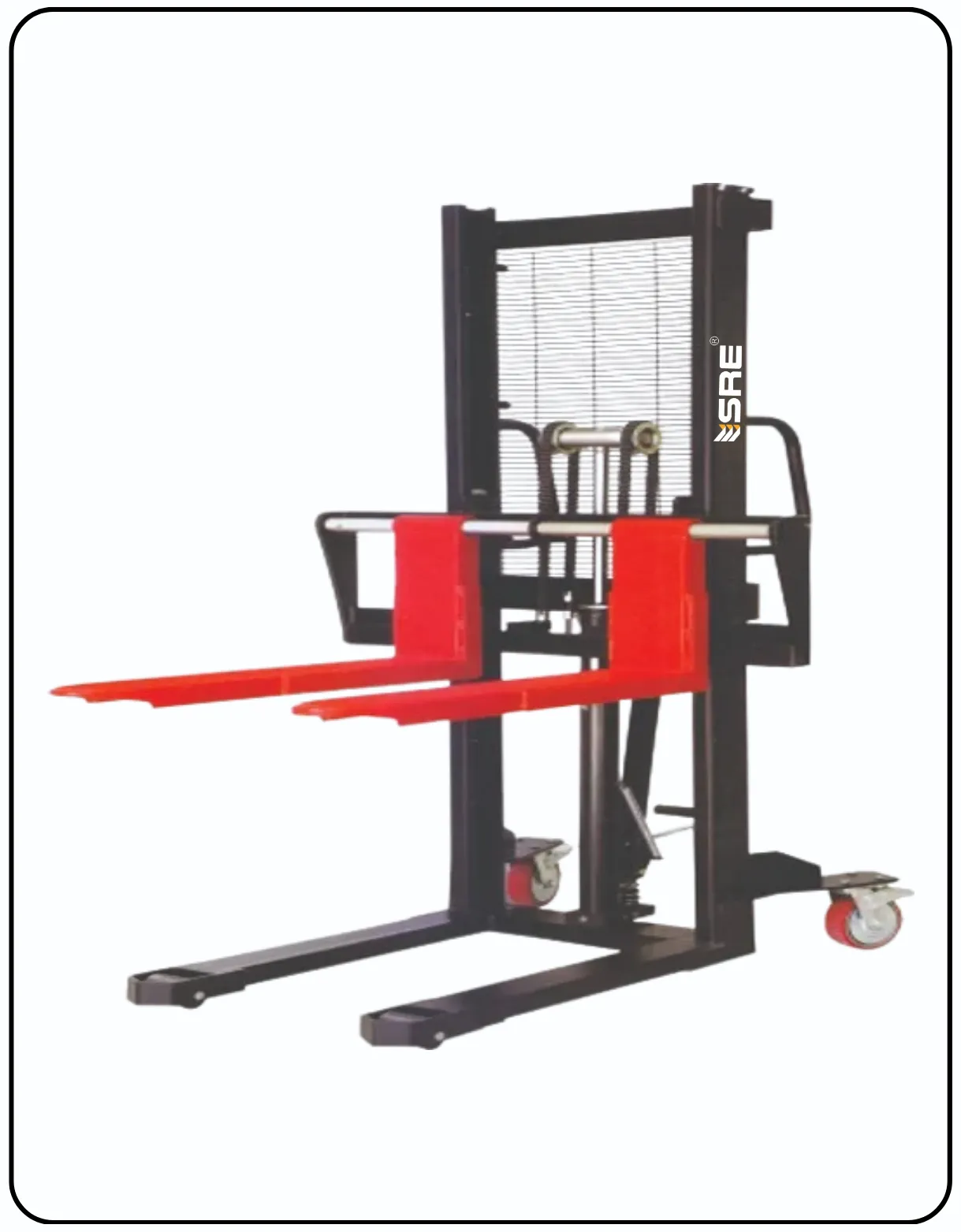
500 Kg x 1.6 Meter H (All Size Available)
Rs.30000
(Taxes to be paid extra)
Brand: SRE
SKU: SRE 111
Min Order Qty: 1
Manual Stacker in Vadodara
Industrial facilities often struggle with slow pallet movement, unsafe manual lifting, and poor use of vertical storage space. A practical solution is a Manual Stacker in Vadodara that improves lifting control without the cost and complexity of powered systems. As a result, buyers and procurement teams can improve shop-floor safety, reduce product damage, and increase handling efficiency in warehouses and factories across Vadodara, Ahmedabad, Pune, Chennai, Hyderabad, Bangalore, Jaipur, and Noida.
Many plants need a compact machine that can lift moderate loads, work in narrow aisles, and support daily movement of pallets, boxes, dies, and components. The solution from SRE Material Handling Equipment Pvt. Ltd. is a reliable manual stacker designed for industrial usage where cost control and durability matter. The result is better material flow, lower handling fatigue, and a stronger return on investment for industrial buyers and procurement heads.
Why Industrial Buyers in Vadodara Choose a Manual Stacker
Many facilities in engineering, pharma, chemicals, auto parts, food processing, and packaging face a common issue: loads need lifting, but budgets do not allow heavy investment in electric equipment for every handling point. A manual stacker solves this by offering controlled lifting and stacking for routine operations at a lower purchase cost. The result is a strong fit for companies looking for a manual stacker price in Vadodara that balances performance, durability, and operating economy.
Plant teams also face space constraints, especially where aisles are narrow and movement zones are shared by workers, pallets, and trolleys. A compact manual stacker provides easy maneuverability and controlled lifting in such areas without creating the maintenance burden of battery-operated machines. The result is smoother load handling, safer operations, and more usable floor space in active industrial environments.
Applications of Manual Stacker in Vadodara Industries
Warehouses often lose time when operators move loads manually from incoming areas to storage racks. A manual stacker helps lift, position, and shift materials with more precision and less physical effort. The result is faster receiving, improved stacking accuracy, and reduced worker strain during regular material movement.
Manufacturing units frequently need equipment to transfer components from one workstation to another without damaging goods or slowing production lines. A manual stacker offers stable lifting support for bins, cartons, pallets, and subassemblies in a controlled manner. The result is better process continuity and fewer interruptions in plant operations.
- Warehouse pallet shifting and short-distance load movement
- Loading and unloading of medium-duty industrial materials
- Rack placement for cartons, bins, and raw materials
- Assembly line component transfer
- Packaging section material stacking
- Store rooms in factories and distribution centers
- Maintenance and utility departments handling heavy spare parts
Buyers in sectors across Vadodara and nearby hubs such as Ahmedabad and Pune often require one machine for many tasks instead of separate devices for lifting and moving. A manual stacker covers this need by combining mobility and vertical load handling in one compact unit. The result is better equipment utilization and lower procurement cost per handling cycle.
Key Features of the SRE Manual Stacker
Industrial users need equipment that performs consistently under daily use and does not fail under routine handling pressure. The SRE manual stacker is built to handle repetitive shop-floor tasks with a practical design focused on load stability and operator control. The result is dependable lifting performance for warehouses, workshops, and production units.
1. 500 Kg Load Capacity
Handling heavy loads manually can slow operations and increase the risk of injury. The 500 Kg lifting capacity provides a safer and more efficient way to move palletized or unitized goods in industrial settings. The result is controlled handling of medium-duty loads without overburdening labor.
2. 1.6 Meter Lift Height
Many operations need material lifted high enough for shelves, staging points, or machine loading positions, but not every site needs a high-reach powered stacker. The 1.6 meter lifting height suits common industrial applications where moderate vertical reach is enough. The result is cost-effective stacking with better placement accuracy.
3. Compact and Maneuverable Design
Tight aisles and congested floor layouts create handling delays and raise the chance of collision. A compact frame helps operators work in smaller spaces with better directional control. The result is smoother movement in storage areas and more efficient use of floor space.
4. Industrial-Grade Construction
Frequent load movement can wear out weak frames and low-quality components, leading to maintenance issues and downtime. A robust industrial construction supports regular use in demanding facilities. The result is longer service life and better value for buyers looking for a commercial manual stacker.
5. Easy Manual Operation
Complex machines can increase training time and reduce operator confidence during routine jobs. A manually operated stacker simplifies lifting and lowering, making it suitable for many operators across shifts. The result is easier adoption, faster deployment, and lower operating cost.
Buyers comparing alternatives can also review related options such as the SRE manual stacker product range and the hydraulic stacker 3 meter model for higher lifting needs. This helps procurement teams match equipment selection to actual load height and application conditions. The result is a smarter purchasing decision based on performance and use case, not guesswork.
Technical Specifications
Procurement teams often face delays when product data is incomplete or unclear. A direct specification table helps buyers compare capacity, height, price, and commercial details without confusion. The result is quicker technical evaluation and easier approval for purchase.
| Specification | Details |
|---|---|
| Product Name | Manual Stacker in Vadodara |
| Brand | SRE |
| SKU | SRE 111 |
| Load Capacity | 500 Kg |
| Lift Height | 1.6 Meter |
| Price | Rs. 30,000 |
| Taxes | Extra as applicable |
| Minimum Order Quantity | 1 Unit |
| Application | Warehouse, factory, plant, storage, production support |
| Availability | All sizes available on request |
Benefits of Using a Manual Stacker in Vadodara
Manual lifting of industrial goods creates risk for workers and can lead to product damage, uneven stacking, and lost time. A manual stacker addresses these issues through stable lifting, controlled movement, and repeatable handling performance. The result is better workplace safety and lower indirect costs from damage and strain.
Improved Safety
Unsafe lifting practices are still a major challenge in many factories and warehouses. A manual stacker reduces direct physical handling and supports safer load movement when used correctly under standard operating procedures. The result is fewer handling-related injuries and a stronger safety culture aligned with guidance from OSHA material handling safety practices.
Higher Productivity
Repeated manual movement of boxes, pallets, and parts consumes labor hours that should go toward production and dispatch. A manual stacker speeds up repetitive lifting and stacking tasks with less effort from operators. The result is better throughput in warehouse and shop-floor operations.
Lower Equipment Cost
Many buyers need lifting support but do not require the expense of a fully powered stacker for every application. A manual stacker offers a lower entry cost while still delivering practical lifting capability for moderate-duty work. The result is a budget-friendly option for buyers looking to purchase a manual stacker in Vadodara.
Reduced Maintenance Burden
Battery-operated equipment often needs charging systems, electrical checks, and higher maintenance planning. A manual stacker has a simpler operating design, which makes upkeep easier for many industrial sites. The result is less downtime, fewer maintenance complications, and easier lifecycle planning.
Better Space Utilization
Floor-level storage creates congestion and wastes vertical space in warehouses and plants. A stacker helps place materials at an elevated level with more control and consistency. The result is improved storage density and cleaner movement paths for workers and goods.
For buyers who want to compare manual and hydraulic options, the hydraulic stacker manufacturer and supplier page provides useful context on higher-duty handling solutions. This allows procurement teams to align equipment type with shift load, usage frequency, and handling height. The result is more accurate specification and fewer post-purchase mismatches.
Manual Stacker vs Other Material Handling Options
Many procurement heads compare manual stackers with pallet trucks, forklifts, and hydraulic stackers but struggle to match the right machine to the right task. A simple comparison helps buyers avoid overbuying or under-specifying equipment. The result is better investment planning and smoother material handling performance.
| Equipment Type | Best Use | Advantage | Limitation |
|---|---|---|---|
| Manual Stacker | Medium-duty lifting and stacking | Low cost, simple operation, compact size | Manual effort required |
| Pallet Truck | Horizontal pallet movement | Easy to use for floor transfer | No real stacking height |
| Hydraulic Stacker | Higher lift applications | More vertical handling capability | May cost more depending on model |
| Forklift | Heavy-duty and high-volume work | High productivity and capacity | High cost, training, fuel/power needs |
A pallet truck cannot stack to working height, and a forklift may be too expensive for smaller operations. A manual stacker fills the gap by offering lifting and placement at a much lower cost and with less space demand. The result is a balanced solution for warehouses, stores, and production units with moderate load requirements.
Some buyers in Vadodara also review city-based use cases before finalizing equipment. Resources like manual stacker applications in Mumbai and manual stacker demand in Pune can help compare business needs across industrial markets. The result is a broader understanding of how similar facilities use stackers to improve operational efficiency.
How to Evaluate the Right Manual Stacker Before Purchase
Buyers often select equipment based only on price, which can create problems later if capacity, dimensions, or lift height do not match actual site needs. A better approach is to evaluate load weight, pallet size, aisle width, floor condition, and daily usage frequency before buying. The result is a more accurate purchase and fewer operational issues after installation.
- Check actual maximum load weight and keep a safety margin
- Confirm required lifting height for racks or process points
- Review fork dimensions and pallet compatibility
- Assess wheel suitability for your floor surface
- Estimate daily usage cycles and operator handling pattern
- Consider maintenance access and spare support
- Ask for commercial terms, taxes, and delivery timelines
Industrial engineers also need assurance that the equipment aligns with safe design and quality expectations. Referring to recognized standards and management systems can support procurement quality checks, especially when comparing vendors. The result is more confident vendor selection supported by references such as ISO standards guidance and Bureau of Indian Standards.
Why Choose SRE Material Handling Equipment Pvt. Ltd.
Industrial buyers need more than a product; they need a supplier that understands application fit, budget pressure, and uptime requirements. SRE Material Handling Equipment Pvt. Ltd. offers practical stacker solutions focused on industrial use, commercial clarity, and buyer support. The result is a smoother buying experience for warehouses, plants, and factories looking for a reliable manual stacker supplier in Vadodara.
Procurement teams also want a supplier with a relevant product line instead of a one-size-fits-all recommendation. SRE supports buyers with manual and hydraulic handling options so equipment can be matched to capacity, height, and usage needs more accurately. The result is better technical fit and improved long-term value from the purchase.
- Industrial-focused product range
- Suitable options for warehouse and plant handling
- Clear commercial details for procurement teams
- Practical support for matching application and equipment
- Availability across key industrial regions in India
When teams delay inquiries, they often lose time in approvals, dispatch scheduling, and project execution. A direct discussion with the supplier helps clarify specifications, taxes, lead time, and product suitability early in the buying process. The result is faster procurement movement and more accurate planning for operations and maintenance teams.
Maintenance and Safe Operating Considerations
Even a durable manual stacker can underperform if inspection and routine care are ignored. Simple checks such as wheel condition, hydraulic response, fork alignment, and load balance help prevent avoidable breakdowns and unsafe operation. The result is longer equipment life and more reliable daily use.
- Inspect structure and forks before each shift
- Do not exceed the rated 500 Kg load capacity
- Keep loads balanced during lifting and travel
- Check wheels and moving parts regularly
- Use trained operators for industrial handling tasks
- Store the unit in a clean and dry area when not in use
Facilities that follow basic preventive maintenance usually face fewer breakdowns and fewer handling delays. A simple inspection schedule and clear operator instructions can keep the stacker performing as intended for longer periods. The result is better uptime, safer use, and more predictable maintenance planning.
Get Quote for Manual Stacker in Vadodara
If your warehouse, factory, or plant needs a manual stacker in Vadodara with 500 Kg capacity and 1.6 meter lift height, SRE can help you choose the right model for your application. This reduces buying confusion and helps your team make a faster, better-informed decision. The result is quicker procurement, better material flow, and dependable load handling performance.
You can also connect through the SRE contact page for stacker inquiries or use the direct industrial equipment quotation form for pricing, delivery, and application support.
Frequently Asked Questions
1. What is the capacity of this manual stacker?
Many buyers need a stacker that can handle routine industrial loads without moving into the cost range of heavy-duty powered equipment. This model offers a 500 Kg capacity, which suits common warehouse and factory lifting tasks. The result is a practical fit for medium-duty material handling applications.
2. What is the lift height of the SRE manual stacker?
Facilities often need enough lift for storage placement and process support, but not necessarily a high-reach machine. This stacker provides a lift height of 1.6 meter for controlled stacking and positioning. The result is useful vertical handling for many daily industrial tasks.
3. What is the price of the manual stacker in Vadodara?
Budget clarity is a key concern for procurement teams comparing multiple suppliers. The listed price of this model is Rs. 30,000, while taxes are extra as applicable. The result is straightforward commercial visibility for purchase planning.
4. Is this manual stacker suitable for warehouses and factories?
Buyers often need one machine that can support multiple departments instead of separate handling tools for each area. This manual stacker is suitable for warehouses, plants, workshops, stores, and factory material movement. The result is broader utility across industrial operations.
5. Who should buy a manual stacker?
Different stakeholders influence equipment purchases, and each one needs clear operational value. Warehouse managers, plant managers, factory owners, procurement heads, and industrial engineers can all benefit from this equipment. The result is safer, more efficient, and more controlled load handling.
6. What makes a manual stacker better than manual lifting?
Manual lifting can cause fatigue, slower movement, and higher risk of injury or product damage. A manual stacker improves lifting control and reduces direct strain on workers. The result is better safety, productivity, and handling consistency.
7. How can I place an inquiry with SRE?
Delayed communication often slows procurement and pushes back operational improvements. You can contact SRE directly through the inquiry page to discuss technical details, pricing, and delivery. The result is faster response and a clearer path to purchase.
Conclusion
Many industrial facilities in Vadodara need a low-cost, reliable way to lift and move goods without shifting to expensive powered equipment. The SRE manual stacker solves this with a 500 Kg capacity, 1.6 meter lift height, compact design, and practical industrial usability. The result is improved safety, stronger productivity, better space use, and a clearer return on investment for serious industrial buyers.
If your operation needs a dependable and cost-effective manual stacker in Vadodara, this model offers a strong balance of performance and commercial value. Evaluating your application, comparing stacker types, and speaking with an experienced supplier can reduce purchase risk. The result is a smarter buying decision that supports daily operations from day one.